 Unity: The Driving Force Behind the Jewish People

7 min read
7 min read





The erasure of Jews from their own story continues.
A remarkable controversy erupted recently when Penn State’s Jewish Studies Program advertised a lecture by Erica Lehrer, a visiting professor from Concordia University in Montreal, titled “Do We Need to Decolonize Holocaust Museums?”
One would like to say it’s hard to believe this could be the topic of a lecture. But if the last three years have shown us anything (and the trend began well before that), it’s that the effort to separate Jews from events and places that are specifically theirs has only grown stronger.
So how was the event advertised, and why has it drawn such strong condemnation? Here is the exact wording of the flyer:
“A central issue animating and transforming the museum sector today is the call to decolonize. This appeal began with Indigenous activists, whose communities have been overwhelmingly hurt by the museum sector’s history and status quo. Museums of mass violence – Holocaust museums, paradigmatic among them – have been largely exempt from decolonial critiques. As products of twentieth- and twenty-first-century social justice mandates and often created at the behest of survivor communities, they seem at first glance not to be obvious targets for such scrutiny. Yet, Holocaust museums are not free from entanglements with state power nor from inherited traditions and infrastructures of museum practice with their attendant biases, exclusions, and silences. This talk explores the potential value of decolonial museum theories and practices for Holocaust museums to renew and expand their social justice mandates.”
How do advocates of “decolonizing Holocaust museums” think this would work in practice? And more basically, what do they actually mean?
To be fair, Penn State later clarified that the lecture dealt with legitimate questions about the ownership and restitution of objects taken from Jewish individuals and communities. There is nothing objectionable about demanding the return of stolen Jewish property or examining how museums acquired their collections. These are essential responsibilities for any institution preserving Holocaust history.
The question is why this work needs to be called decolonization, and why Holocaust museums should be singled out for a framework built mainly to address the legacy of European imperialism. The choice of language reveals how carelessly academics in these fields treat the Jewish experience.
For years there has been an effort to blur the Holocaust, which has no direct parallel in modern history, into other genocides. That’s why International Holocaust Remembrance Day has been so watered down. It increasingly sidelines what made the Jewish experience unique, namely the Nazis’ attempt to wipe out Jewish life everywhere (in practice, wherever they had control, such as Europe and North Africa), and folds in other horrific acts of savagery, such as the 1994 Rwandan genocide.
I once sat in a room at Yad Vashem’s International School for Holocaust Studies with Rwandan educators as they described the violence that scarred their country. There were similarities, including the Hutu majority’s campaign to dehumanize the Tutsis. But their experiences were uniquely their own, and they shouldn’t be ranked against ours in some ghoulish table of suffering.
The Nazis did not murder Jews for being insufficiently universalist. They murdered them because they saw Jewish identity as an existential threat.
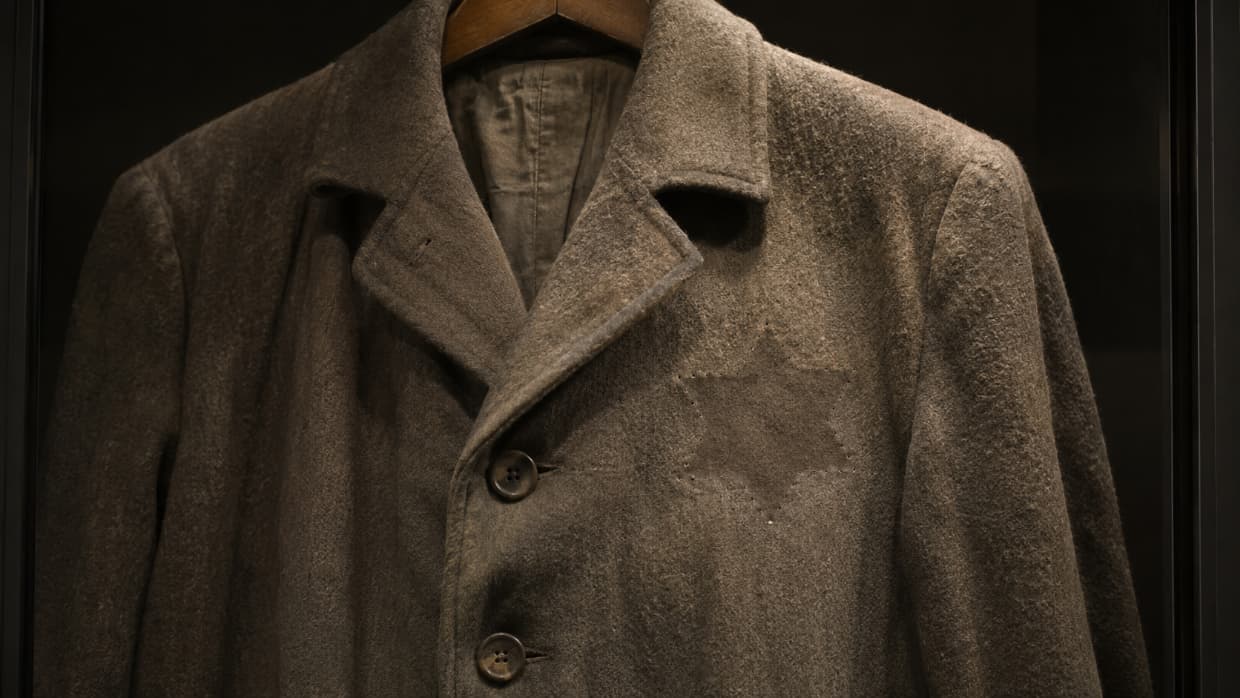
The danger is that the specifically Jewish character of the Holocaust gets swallowed by a broader political narrative. The murder of six million Jews becomes one example in a generic history of oppression, while the Jewish insistence on remembering the Holocaust as an assault on the Jewish people is dismissed as narrow tribalism.
David M. Seymour, in his study Holocaust Memory: Between Universal and Particular, examines exactly this tendency. He argues that dissolving the Holocaust’s Jewish dimensions into an abstract universal story can make recognizing Jewish particularity seem illegitimate.
The irony is that the Holocaust itself shows the danger of demanding that Jews give up their particular identity. The Nazis did not murder Jews for being insufficiently universalist. They murdered them because they saw Jewish identity as an existential threat to their racial and political vision.
There’s another dimension to this debate. Treating Jewish particularity as politically suspect increasingly overlaps with how Israel is treated. Zionism predates the Holocaust by decades, and the Jewish connection to the Land of Israel by thousands of years. The Holocaust strengthened the case for Jewish sovereignty, but it did not create the Jewish national movement.
Yet Israel is routinely portrayed today as a colonial project, with Jewish national identity recast as an illegitimate form of European power. In that climate, efforts to reinterpret Holocaust memory through decolonial theory deserve careful scrutiny. They risk creating an intellectual environment where Jewish suffering is acknowledged only when it’s cut off from the Jewish people’s ongoing identity and national aspirations.
None of this means Holocaust museums should be immune from criticism, that other victims of Nazi persecution should be overlooked, or that Israel should be exempt from scrutiny. The Holocaust carries universal lessons. Racism, persecution, authoritarianism, and the cost of indifference are not exclusively Jewish concerns.
But universalism should deepen our understanding of particular histories, not erase them.
Universalism should deepen our understanding of particular histories, not erase them.
For thousands of years, the Jewish people have balanced their particular covenant with their universal moral obligations. They have never needed to abandon one to fulfill the other.
Perhaps the real difficulty for an increasingly secular world that feels threatened by this idea is accepting that a people can keep a distinct identity, collective memory, and national existence while believing its moral responsibilities extend to all of humanity.
The answer is not to decolonize Jewish history, dilute the Holocaust, or make Jewish identity more palatable to today’s ideological fashions. It is to recognize that particularity and universality are not enemies. In Judaism, they have always belonged together.å