
 Biblical Imagery in Dolly Parton’s Music





9 min read


It is not in the heavens, that you should say, “Who among us can go up to the heavens and get it?” (Devarim 30:12)
What mitzvah would you give the Jewish nation as their inaugural task upon entering the Land of Israel?
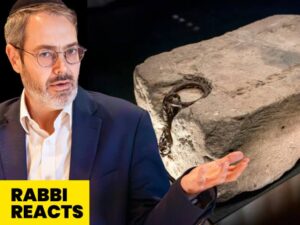
In this week’s Torah portion, we discover that mitzvah. But rather than conquering Jerusalem or building a grand altar, God instructs the Jewish people to erect massive stones and engrave them with the entire Torah in all 70 of the world's major languages (Devarim 27:1-8). The verses repeat this commandment three times, which the Talmud 1 interprets as an instruction to erect and inscribe three sets of stones.
To grasp the magnitude of this mitzvah, let's do a little math:
And remember: Every letter must be carved into stone without modern tools or technology. Among all the Torah’s commandments, this mitzvah ranks as perhaps the most labor intensive. That leaves us to wonder, why does God choose such a “monumental” task as top priority upon entering the Land of Israel?
The Ramban, the renowned 13th century leader of Spanish Jewry, offers two beautiful interpretations:
While these teachings illuminate our fundamental mission in Israel, they don't fully explain the specific characteristics that make this mitzvah so extraordinary. We’re still left wondering:
To answer these questions, we need context from an earlier story of the Torah. Before entering the Land, the Israelites sent 12 leaders to scout ahead and bring back a report. The mission bore disastrous consequences; the spies returned with devastating slander about God’s Land. Upon hearing the report, the Jews despaired, cursing God for taking them out of Egypt. God responded in kind, condemning the generation to wander the desert for 40 years.
But why did these distinguished leaders give such a negative report? According to the revolutionary interpretation of the Alter Rebbe, founder of Chabad, the spies wanted to maintain their elevated spiritual state without engaging in earthly pursuits. Desert life offered pure transcendence:
Israel meant messy reality:
When the spies describe Israel as "a land that consumes its inhabitants," the Alter Rebbe interprets their words to mean that the Land consumes one's time and energy with worldly demands, stifling one's capacity to study Torah and meditate upon its truths.
In essence, the spies refused to renounce the spiritual utopia of the desert for the entanglements of an earthbound life in the Land of Israel.
But were the spies so wrong for wanting to devote their time and energy to achieving lofty spiritual heights? If anything, that seems like a holy and noble goal! Maybe we should celebrate these spiritual purists rather than condemn them.
This view represents a fundamental misunderstanding of Jewish spirituality. Think about it: if God wanted pure spirituality, why did He put us in physical bodies in a physical universe? Clearly, He wants us to engage with the world around us! This paradigm appears throughout Torah—almost every commandment demands interaction with the physical world: Tefillin requires actual leather boxes on human arms. Challah needs genuine dough and real ovens. Succah calls for dwelling within a tangible hut in physical space. The Jewish approach doesn't transcend physicality—it transforms it. We use material elements to serve spiritual goals, elevating the physical world through our divine service.
So what does this have to do with the Land of Israel?
The Land of Israel represents where our mission of sanctifying physicality reaches maximum potential. Many essential mitzvot depend entirely on being in the Land: pilgrimage festivals, leaving crops for the poor, building the Temple, and much more. Furthermore, as the spies feared, the Land would force us to engage with the physical world—earning a living, protecting borders, managing earthly concerns. But contrary to the spies' assumption, these tasks represent the highest form of spirituality: bringing heaven down to earth. To embed this essential truth in the people's hearts, God gave them the mitzvah of carving the entire Torah into stone as their inaugural act upon arrival.
A stone represents the coarsest expression of physicality—heavy, dense, lifeless. God's Word—the Torah—is the opposite—sublime, transcendent, divine. Carving the Torah into stone manifests the Divine within the mundane, encapsulating the very purpose of Jewish people in the Land of Israel.2
As we mentioned earlier, God commands the Nation to repeat this carving process three times. Looking closely at the verses, the location of the command changes in each repetition: once on the riverbed of the Jordan, the next on the plains of Gilgal, and finally on Mount Eival. Notice a trend?
What's the message? Each place has its own particular and unique potential, but the mission never changes. We must elevate all aspects of the physical world to serve the Divine.
One last detail that we need to illuminate: Why 70 languages? Because to truly bring the Torah out into the world and Godliness down to earth, the Jewish people must become a light unto the nations. The Talmud teaches that humanity divides into 70 distinct nations speaking 70 languages.3 The 70 languages on the stones enabled every visitor, regardless of origin, to access God's wisdom in their native tongue. The message is clear: if the Nation carries out its mission properly, anyone who comes to the Land should sense the tangible connection between heaven and earth and feel inspired to follow God’s way.4
The stone-carving project served as more than a public declaration—it functioned like a corporate retreat before launching a major initiative. As the nation carved each character in each language, they internalized every aspect of their calling:
This internalized mission would guide the Jewish people for generations, both in the Land and throughout their exile.
Rabbi Yisrael Salanter, the Mussar movement's founder, embodied this heaven-to-earth principle magnificently. Before one Yom Kippur, word spread that this legendary figure would lead prayers. Crowds flocked from everywhere to hear him on Judaism's holiest day.
The synagogue packed. The moment arrived. Everyone waited... and waited. But he never came.
They'd later discover that, on his way to shul, R. Yisrael heard a child crying incessantly. He waited for a family member to assist the baby, but no one arrived. Realizing the parents had left their child to hear him pray, he entered their home and cared for the baby until they returned.
The parents had mistakenly assumed they needed to travel to the synagogue to connect with spirituality. Rabbi Salanter understood that true spirituality begins with attending to urgent earthly responsibilities.5
The colossal mitzvah of the engraved stones reminds us that no spiritual act surpasses one with tangible impact on the world around us. Of course, we must also carve out time to develop an inner spiritual world.6 We can only enter the Land after we’ve dwelt in the desert. But ultimately, our mission requires us to infuse the physical world with spirituality—bringing the heavens down to earth.
As you approach the High Holidays, examine your life circumstances: "Am I in a season of dwelling in the desert or is my mission to work the Land? Where do I need to rebalance these two aspects of divine service?"
If you're heavily invested in spiritual growth—yeshiva, rabbinics, contemplative practices—ask yourself: "Have I focused so intensely on inner development that I've neglected earthly responsibilities? Where do my insights need to become actions?"
If you're heavily invested in the physical world, ask yourself: "Am I bringing Torah's higher ideals into my work, finances, and home life? How can I elevate my daily activities into spiritual service?"
May we find strength to manifest Godliness in life's most mundane moments!
Shabbat Shalom,
Avraham