







 The FlyDubai Miracle
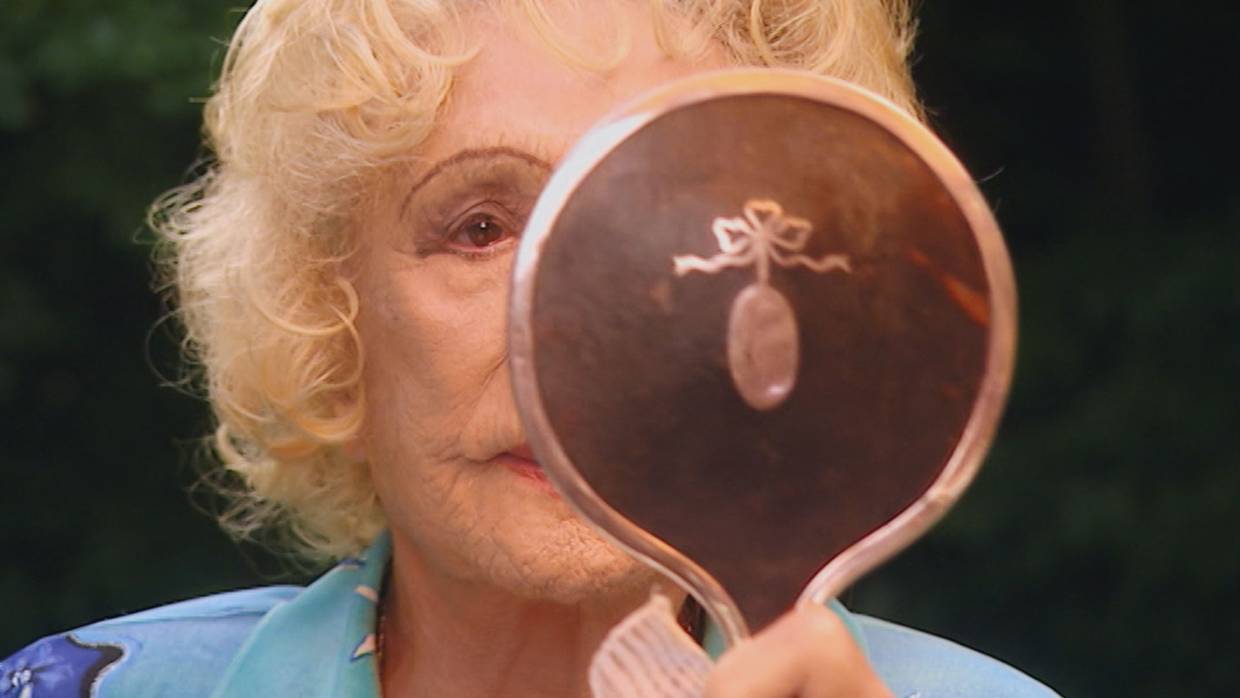








Behind Hitler’s propaganda stood Leni Riefenstahl—filmmaker, artist, denier. A new documentary, drawn from her private archives, reveals the truths she never admitted.
Leni Riefenstahl remains one of the most polarizing figures of the 20th century. A gifted filmmaker whose propaganda films for Adolf Hitler helped shape the image of the Nazi regime, she spent the decades after World War II insisting she neither embraced Nazi ideology nor knew about the Holocaust.
Now, a new documentary, Riefenstahl, draws from never-before-seen materials in her estate—photographs, film reels, recordings, and letters. Director Andres Veiel reveals a far more troubling portrait: evidence suggesting that Riefenstahl may have been well aware of the atrocities unfolding around her.
Veiel and producer Sandra Maischberger were granted unprecedented, unrestricted access to Riefenstahl’s personal archives. They were surprised by what they found.
Veiel’s journey began when he and producer Sandra Maischberger were granted unprecedented, unrestricted access to Riefenstahl’s personal archives.
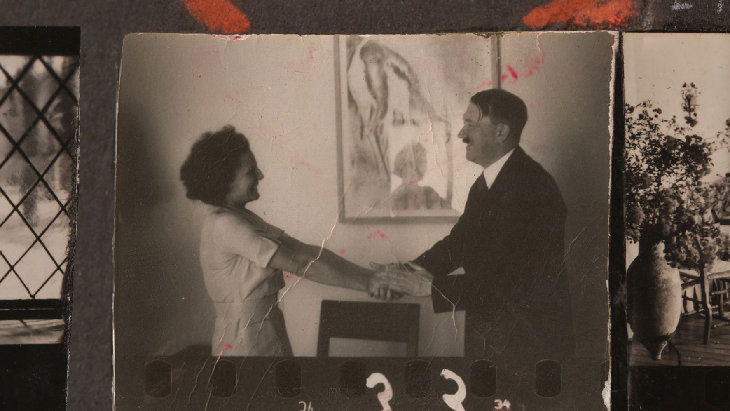
“I was thrilled,” he told Aish.com. “Before we could even think about editing, we had to sift through 700 boxes—roughly 200,000 photographs, hundreds of hours of private conversations and phone calls, and countless reels of personal film. The big question was whether her estate actually contained fresh insights. After all, it seemed likely that Riefenstahl had carefully curated and sanitized her archive before her death.”
To his surprise, the deeper Veiel dug, the more unfiltered material he uncovered: handwritten notes, a diary, even drafts of her memoirs—sources that painted a different picture than the one she had presented to the world.
“Among these was a collection of about 25 pages describing her childhood, which differed fundamentally from the published memoirs, particularly regarding her experiences of violence at the hands of her father.”
The documentary traces Riefenstahl’s ascent in the German film industry—first as a celebrated actress, then as a director whose debut captured Hitler’s attention and secured her a commission from the Nazi regime. It also confronts her darkest role: participating in the filming of propaganda scenes that exploited child inmates from a nearby concentration camp as extras.
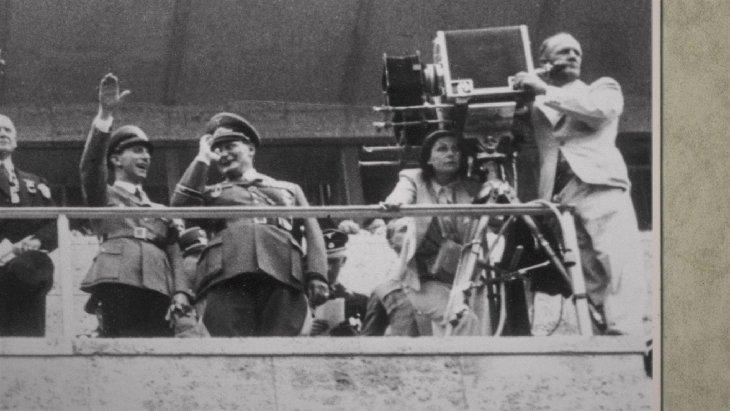
Beyond her personal archives, Veiel and Maischberger scoured additional collections and reviewed television footage from around the world, piecing together the fullest picture yet of Riefenstahl’s career and complicity.
“We called this the ‘701st box,’ containing everything that was missing from her estate. For instance, we found only a small reference to an interview with Riefenstahl in the Daily Express from 1934, but the interview itself was missing. We then obtained it from the newspaper’s archive. In it, Riefenstahl admitted that in 1932, she had read Hitler’s Mein Kampf and, after just the first few pages, had become an enthusiastic National Socialist.”
Veiel also noted a striking omission: numerous interrogation transcripts from American and French intelligence agencies after Germany’s surrender—records that never made it into Riefenstahl’s carefully managed estate.
Veiel was surprised to discover the depth of Riefenstahl’s emotional ties to Nazism—connections that stood in stark contrast to her lifelong denials.
“In addition, our years-long research uncovered further findings—letters to one of Riefenstahl’s lovers from the postwar years, or private behind-the-scenes footage from the filming of her movie Tiefland. These discoveries particularly intrigued me, as they broadened the narrative beyond the well-worn paths.”
What surprised Veiel most was discovering the depth of Riefenstahl’s emotional ties to Nazism—connections that stood in stark contrast to her lifelong denials.
“Riefenstahl remained loyal to the ideology of the Nazi regime even after the war. That shocked me. I had not expected her to truly repent, but at least to have shown, in private, a bit more critical reflection on her own role. Sadly, that was not the case.”
 Director Andres Veiel
One of the film’s pivotal moments comes when Veiel highlights a speech by Joseph Goebbels—an antisemitic tirade whose chilling rhetoric feels disturbingly resonant even today.
“Antisemitic resentment is currently experiencing a massive recurrence, combined with the longing for a nation state in which everything was supposedly better, more orderly and safer in the past. In this context we also quote Leni Riefenstahl. While she was still alive, she hoped that the German people would return to decency and morality; after all, she felt, they had the ability to do so. This quote could also have come from prominent representatives of the AfD, Germany’s far-right, nationalist party.”
Riefenstahl’s constant masking of the truth was the biggest challenge to Veiel.
“She lied the moment she opened her mouth. She denied any shared responsibility for the crimes of the Nazi regime. The older she became, the more rigid she grew. At times, this made it exhausting to engage with her again and again—until I realized: we need to take it one step further, to understand why she lies.”
Veiel points to Riefenstahl’s involvement in the Konskie massacre—an episode that may help explain her lifelong refusal to acknowledge any guilt.
“She wanted to film the funeral of four German soldiers in Konskie, Poland. A group of Jews had been forced to dig a grave for the dead in the village square. The digging men apparently disturbed Riefenstahl’s aesthetic sense. According to an adjutant’s postwar account, she is said to have shouted: ‘Get the Jews out of the picture.’ As a result of her direction, the situation reportedly escalated: the Jews were beaten, tried to flee, shots were fired, and 22 were killed.
“Was her guilt too great, perhaps because she had, however unintentionally, helped trigger one of the first massacres of Jews in the Second World War?... It would make her responsibility far greater than previously assumed.”
“Riefenstahl” will be available on VOD on October 21st on Amazon, Apple, and Google Play.












fascinating article
The only good thing I can say for Leni Riefenstahl, whom I never doubted was an ardent Nazi, is her selection of composer Herbert Windt (another ardent Nazi) who made her film, "Olympia 1936" more than just a collection of bits and pieces of athletic performances. The musical accompaniment is stunning.
I've thrown into the garbage lots of stuff on the Nazis and WW2, but the DVD of this film is a keeper. Too bad, American Jewish athletes were kept out of it by Olympic Committee chairman, Avery Brundage.
Although the truth is coming out long after Riefenstahl’s involvement with the Nazi regime, at least the truth will be known from this point forward. May her true involvement in the deaths of millions be broadcast far and wide as the horrid person she was. Thank you for revealing what should never have been covered up.
I hope she’s burning in hell with the rest of those bastards. It hurts my heart to read about the Jews digging the graves then being killed. When I think of that period and what my parents’ families went through it puts me in a terrible funk for a couple of hours. But it’s good to be reminded so that we can be grateful for being able to live in the USA.
Kudos to the director and producer for tasking pains to uncover the truth after so long.
What a cruel and depraved individual.