







 What Two Hebrew Words Reveal About Israeli Democracy
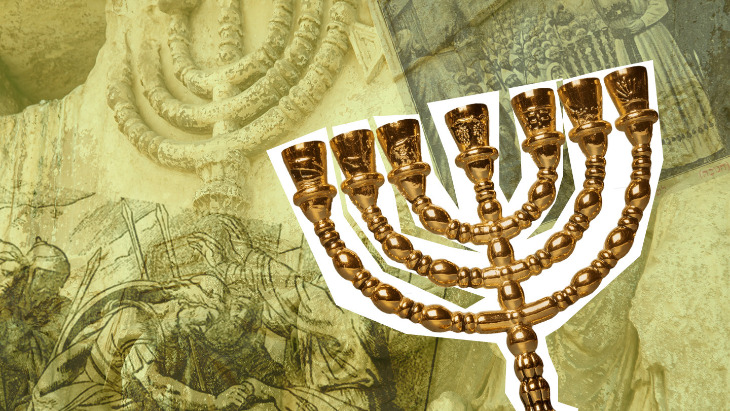






Delving into the history of Hanukkah to understand the deeper meaning of the holiday.
Why has Hanukkah stood the test of time? We have no shortage of days on our calendar when they tried to kill us and we miraculously won. And whatever salvation was achieved at the time of Hanukkah was short-lived. So, why an everlasting holiday?
Let's delve into the history of Hanukkah to understand the deeper meaning of the holiday. In 313 BCE, Alexander the Great had solidified his rule over the Persian empire. His attention had been drawn to political unrest in Judah1. Since the Jew’s return in 350 BCE, their sovereignty had been continuously challenged by the (not so good) Samaritans who had occupied the land of Israel during the Jew’s exile to Babylon.
As a sign of appreciation towards the Greek Emperor, every baby boy born that year was given the name Alexander.
With the rise of Alexander over the Persians, who had sponsored the Jews' return to Israel, the Samaritans saw their chance to retake the land. After originally permitting the Samaritans to destroy the Holy Temple in Jerusalem, Alexander rescinded after meeting Shimon haTzadik, the head of the Jewish community at the time, and allowed the population of Judah to continue living their Jewish lives. As a sign of appreciation towards the Greek Emperor, every baby boy born that year was given the name Alexander2. Well, if you can name your child Alexander, you can also name him Antignos, Hyrcanus, Aritobulos, etc. and so Greek culture started to seep into Israel.
Jumping forward to Alexander the Great’s untimely death in 307 BCE at the age of 33, there was no succession plan in place. The vacuum of leadership resulted in fights, squabbles, and all-out wars between his leading generals. For our purposes, we will focus on Ptolemy, the leader of the Egyptian portion of the Empire, and Seleucus, the leader of the Mesopotamian part of the Empire. The line of scrimmage between these two was none other than the land of Israel3.
Initially, the Ptolemaic Empire was in control of Judah, and for the most part, continued Alexander’s policy of religious freedom for the Jews. In 246 BCE, the Ptolemaic King commissioned 72 rabbis to write a Greek translation of the Torah known as the Septuagint. While there were many miracles surrounding this event, ultimately, it is remembered as a dark time in Jewish history.4 The ultimate goal of the Greeks was to assimilate Jews into their Empire. Through translating the Torah, they were subtly saying that there is nothing special about this knowledge; it’s the same as any other Greek text. Add it to the shelves of our vast libraries and forget about it. Furthermore, the Septuagint served as a catalyst of assimilation for Jews seeking out Hellenism. They could use the Greek text to learn the language, bringing Hellenistic culture one step closer.
Hellenism continues its slow and steady influence in Israel. By 161 BCE the Seleucid Greeks, based in Syria, had gained the upper hand in Israel and set out to conquer the Egyptian portion of the Greek Empire5. They mounted their conquest from Israel, forcing Jewish residents to house their soldiers and finance the war through taxation. The Seleucids were greater in strength and number than their Egyptian rivals, and the war should have been an easy one, yet victory eluded them.
When the Seleucid Generals strategized and worked on finding a reason for their failed conquest, their eyes naturally fell on the Jews. This wasn’t the first time in history that the Jewish people were made the scapegoat, nor would it be the last. The Greeks concluded that the reason they kept losing was that the Greek gods were irate with them. Here they were mounting their war from a land where the populous rejected them and their culture. If they could only get the Jews to accept Greek culture, and with it their gods, success would be theirs.
If they could only get the Jews to accept Greek culture, and with it their gods, success would be theirs.
Now, the Greeks had allies in Judah. By this time, Hellenism had made tremendous inroads into the Jewish country. Greek gymnasiums and theaters had started popping up in Jerusalem. As the Greek anti-Jewish policies were being rolled out, they found a formative group of Hellenized Jews more than willing to help. A man named Menelaus served as the High Priest in the Temple and was aligned with the Greeks6. He put into effect policies that at first limited the Temple services, and eventually canceled them altogether. A Greek leader by the name of Apustomus burnt a Torah Scroll, and a statue of the Greek god Zeus was erected in the Temple compound. A citadel known as the Acra was built overlooking the Temple to show Greek supremacy.
The Greeks and their Jewish collaborators knew that strangling the religion from the top would not be enough to squash the Jewish spirit, so they further implemented laws making the observance of Judaism illegal. Shabbat, Rosh Chodesh (the New Month), Brit Milah (circumcision) all became punishable by death. The study of Torah was outlawed. Probably the most nefarious of these laws was a decree that any Jewish girl, before being with her husband on her wedding day, must first be with a member of the local Greek authority, as if to say there is nothing special about you, your husband, and the people that you are a part of7.
This was the environment in Israel for more than a decade. Those who remained true and committed to Judaism went underground. They would hide out in the Judean Hills to learn Torah and practice Judaism. Eventually, the situation became overwhelming. A family descending from the High Priesthood looked at the situation and concluded that something must be done.
Yes, conventional wisdom, especially in a time of so much political unrest in the world, would say ‘Wait it out, stay in hiding, this too shall pass.’ But this family, known to us as the Hasmoneans, saw it differently. Here they were, in the Jewish homeland, practicing Judaism in hiding, while the Temple in Jerusalem laid cold and fallow with a statue of Zeus inside. The desecration of the Almighty was of monumental proportions and could go unchecked no longer. The Maccabees, as they became known, knew they didn't stand a chance against the powerful Greeks, but they needed to send a message to the world, even if they would have to pay with their lives. There were still some Jews that cared, and what was going on was far from okay.
The Maccabees knew they didn't stand a chance against the powerful Greeks, but they needed to send a message to the world, even if they would have to pay with their lives.
There are several stories told as to what sparked the rebellion. One such episode tells of the wedding of Yehudit, one of the daughters of the Hasmoneans where the bride got up in front of all the guests and disrobed. People were aghast. They wanted to put her to death. She announced “Oh, you are all so religious? You can’t look at me like this, but the local Greek governor can?!?” The situation so incensed her brothers that they sprang into action. That night, when she was to be with the Greek, she fed him some milk and cheese, making him drowsy. She proceeded to pull out a dagger, end his life, and the rebellion was officially underway. This is the source of the custom to eat dairy on Hanukkah8.
Another such story finds us in Modi’in, the town that the Hasmoneans lived in. As they often did, the Greeks came into the town square and demanded the local Jews participate in a sacrifice to one of the Greek gods. The animal of choice was a pig. The Greek asked for a local volunteer to participate in the service. One of the local Hellenized Jews was all too quick to oblige. Matisyahu, the patriarch of the Hasmoneans, pulled out a dagger and slaughtered the man. His sons proceeded to pull out their daggers and kill all the Greeks and their sympathizers that were present, and the rebellion was underway.
The Maccabees were fighting for the right to practice Judaism openly and freely in the land of Israel.
The Maccabees could not expect to beat the Greeks through traditional military tactics. Their success came from guerrilla warfare. As much as the threat of the Greek Army was real, the civil war of Jew against Jew was just as threatening with each side fighting for their way of life. The Maccabees were fighting for the right to practice Judaism openly and freely in the land of Israel. The Hellenized Jews were fighting for the right to be Greeks first, and to ignore their Jewish heritage.
The Hasmoneans won one battle after another despite fully expecting to be obliterated in each one. With their success, their numbers increased. Just one year into the war, they fought all the way to the holy city, conquered Jerusalem, subdued the city, and moved on the Temple Mount. After a bloody battle, the group of rebels took over the Acra Citadel, and with that the Temple Mount. They smashed the statue of Zeus, and it was now time to finally reintroduce the Temple service after more than a decade of dormancy.
The Maccabees went through painstaking efforts to purify the Temple as quickly as possible. In truth, this was not completely required. The purity laws are lenient when the entirety of the Jewish people is in a state of impurity, and the Temple service can be performed without purification. Following the battles, this was the situation in Judah. But the Hasmoneans considered, they had just fought a war that never should have been fought, and they just won a war that they never should have won. Now they should start cutting corners? Absolutely not! They insisted on completely purifying the Temple before rededication.
They scoured the Temple from top to bottom looking for oil that had not been defiled.
But they lacked pure oil which would take eight days to produce. They scoured the Temple from top to bottom looking for oil that had not been defiled. They didn’t want to cut corners through the use of impure oil, and they didn’t want to delay the service any longer. Finally, they found one jar that was sealed and pure, but it was only enough for one day (roughly 40 oz). With their goal of continuing to go above and beyond, they used all the oil at the rededication of the temple while continuing to look for more oil and beginning the eight-day process to get more oil. Lo and behold, a great miracle happened there and the one jar of oil lasted the full eight days needed to produce more pure oil. The next year, Hanukkah was established as a holiday by Yochanan the High Priest (one of the Hasmonean brothers), and R’ Yehoshua Ben Perachya and Nitai HaArbeli who together led the Sanhedrin9.
But the war wasn’t over. It would rage on for 20 more years. In the end, we would find a situation in Judah not that different from where we started. Israel would be on the brink of yet another civil war. The Hasmoneans would be in control of the country, but they would be more Hellenized than those whom they waged the war against in the first place. Worst yet, the country was on an unrelenting downward trajectory that would lead to the destruction of the Second Temple. For this reason, our sages give very little press to the Hasmoneans in the Mishnah and Talmud.
If this is the case, why the timeless holiday of Hanukkah that we still observe and love?
I believe an answer lies in the Menorah. The Talmud10 teaches us how we fulfill the mitzvah of lighting the candles on Hanukkah. The minimum requirement is one candle per household per night. The Talmud goes on to teach that if you want to enhance the performance, everyone in the house can light one candle each of the eight nights. Finally, says the Talmud, if you want to do the mitzvah in the best possible way, you light one candle on the first night, two on the second, three on the third, and so on (according to the academy of Hillel).
This teaching is strange. Why does the Talmud give us options like this? Furthermore, when it comes to lighting the Menorah, everyone lights in the best possible way! When was the last time you walked into someone’s house on the fifth night of Hanukkah just to find one candle lit?
The Maccabees refused to accept the status quo. They went above and beyond, willing to give up their lives fighting for religious freedom and eternal Jewish values.
Hanukkah is not about a military victory or national sovereignty. The holiday celebrates the fact that at one point in history there was a group of Jews in the world that went above and beyond to send a loud and clear message to the world that Judaism is worth fighting for. That clarion call has been passed from generation to generation, inspiring Jews in the most difficult of circumstances to stand up and defend the Jewish people. We find ourselves today in a world of both rising antisemitism and rampant assimilation. The Maccabee inside all of us should take action against these trends, and not just sit back and wait for things to improve.
The Maccabees refused to accept the status quo. They went above and beyond, willing to give up their lives fighting for religious freedom and eternal Jewish values. And because they went against all the odds, miraculous things happened.
When we light the menorah on Hanukkah, we don’t settle for good enough (one candle per household, each night). We don’t settle for slightly elevated (each person, one candle every night). No, we go above in beyond (each person adding a candle every night). We are showing that we desire to be with the Maccabees of yore, we want to be Jews who go above and beyond.
The first celebration of Hanukkah took place after the Maccabees recaptured and purified the Temple in 164 BCE. They removed the Greek idols, rebuilt the altar, and lit the menorah with one small cruse of pure olive oil, which miraculously lasted eight days instead of one. The following year, Hanukkah was established as a formal holiday by members of the Sanhedrin.
No, Hanukkah is not mentioned in the Tanakh, the Hebrew Bible, as the story took place after it was written. We learn about Hanukkah from the Books of the Maccabees and parts of the Talmud.








Just to point out: It was in the "interest" of the Catholics (the "earliest Christians") to canonize the Books of Judith and Maccabees since by doing so, they could "counter" the Jewish claim that Prophecy had ceased.
One of the [several] reasons that Jews do not "accept" the Christian Bible is because we assert that there was no longer any "prophecy" by that time such that the "gospel texts" were not prophetic.
Originally, there was a JC movement of pacifists who were martyrs, especially in Rome. This movement became Christianity under the Emperor Constantine. A bishop headed each community. Eventually there was a schism between the Eastern (Greek) bishopric and that in Rome. At that point, they became the Roman “Catholic” church and the (Greek) Eastern “orthodox” religion.
Thanks for elucidating why Jews (and Protestants) don’t accept the apocryphal books as scripture. They make interesting reading as a partial history of that period.
To follow up on Previous comments:
Though the name of G-d is not [explicitly] mentioned in the Megillah, the Talmud clearly considers it to have been written "prophetically". Because there is no "direct" message to the Jews (and the institutions of the Mitzvoth of Purim are not clearly "stated" therein -- so those are considered "rabbinical enactments"), the Megillah is in the section of the Jewish Bible known as "Kesuvim". But because it WAS "prophetic", it was included in the Jewish Bible.
Prophecy "ceased" around the time when the Second Temple was completed. At the time of the [much later] events of Chanukh, there was no more prophecy. Hence no canonization for texts describing Chanukah.
The "Jewish Bible" (known as "TaNaCh") includes more than "just" Torah ("5 Books of Moses"), what is included are only texts authored "prophetically". In Tractate Bava Batra there is a discussion of who authored the various texts that were "canonized" as part of the TaNaCh.
TaNaCh includes as follows:
T(a) == Torah == "5 Books of Moses"contains the mitzvoth that we observe.
Na == "Navi'im" == Prophets. The Prophets who had specific messages for the Jewish People either through "History" or "directly".
Ch == "Kesuvim" == "Writings". Prophetically written texts that were not "directed" to the Jews but which they should study.
Miracles / events of Chanukah took place after Prophecy ceased. Therefore no canonization.
There are several books called the Apochrypha, written originally in Greek, including the Book of Judith and the Book of Maccabees. These are included in the Catholic version of the “Old Testament”, but not in the version used by Protestants. I have never been able to find out why they are likewise not included in our Megillot, just as the Book of Esther, for example, was written well after the Torah was given. I would appreciate it if Rabbi Landis can offer an explanation.
Tremendous! Never before I heard the complete story
"...Since the Jew’s return in 350 BCE..."
The accepted date of the Judeans' (and, possibly, also some Israelites') return to the land from which they were exiled by Babylonian King Nebuchadnezzar is about 538 BCE.
The return was permitted by Persian King Cyrus, who conquered Babylonia in 539 BCE.
The date 350 BCE relates to the completion of the Second Temple; but accounts differ: some say it was completed circa 518 BCE.
If one believes that the Second Temple was completed within the lifetime of Ezra and Nechemia, the earlier date would be more accurate. Perhaps the later date indicates the final renovation.
To be sure, King Herod, a great---even megalomanic---builder, totally renovated the Second Temple and Temple Mount towards the beginning of the Millenium.