






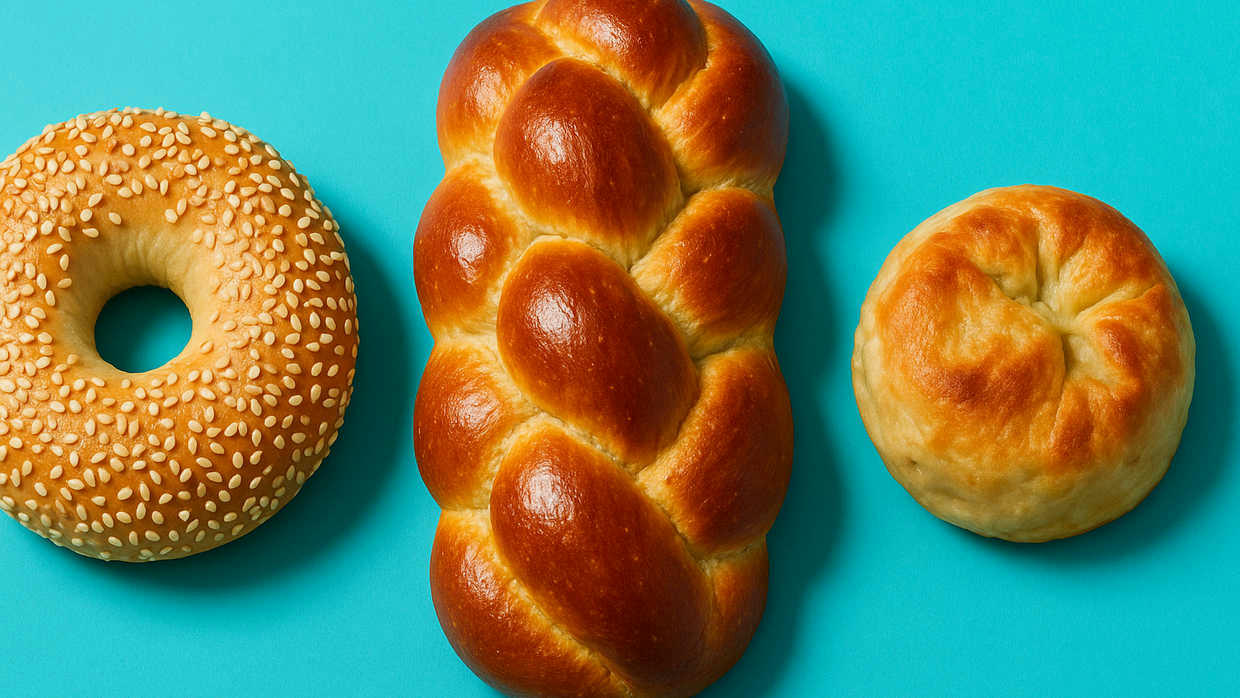
Challah, bagels, knishes, and kugel aren’t just delicious staples—they’re edible heirlooms, carrying a resilient Jewish identity in every bite.
Jewish comfort food is more than food. It’s a Shabbat table, a grandmother’s kitchen, the sound of blessings over bread. The mitzvah of savoring life. Resilience kneaded into dough, boiled in water, fried in oil. These dishes testify that even in exile, Jews nourished more than bodies—they preserved the soul.
Here’s the history behind some of the most common Jewish comfort foods.
Challah: Braided Bread, Braided History
Every Shabbat, Jewish homes present challah—braided, golden, slightly sweet—blessed with “Hamotzi lechem min ha’aretz.” But challah is more than ceremonial bread. The Torah commands that a portion of dough be set aside as an offering (Numbers 15:20), a ritual continued today in the symbolic ḥafrashat challah, separation of challah burned to remember the priestly gift.
As food historian Gil Marks wrote in Encyclopedia of Jewish Food, “Jews in 15th-century Austria and southern Germany adopted a new form of Sabbath bread—oval, sweet, and braided—modeled on the festive loaves of their neighbors.” According to another scholar, Hélène Jawhara Piñer, this braid may echo a 13th‑century Arabic recipe described as peot or “braids,” which Jewish refugees brought north after being expelled from Spain.
That braid symbolizes spiritual interweaving: strands representing mitzvot, tradition, and communal continuity—even when exile demanded adaptation.
Bagels: The Breakfast with a Passport
The boiled-then-baked ring we call a bagel wasn’t invented in a modern bakery—it emerged as a Jewish staple long ago. According to Maria Balinska in The Bagel: The Surprising History of a Modest Bread, “The earliest known written record of the bagel appears in Kraków’s 1610 Jewish community regulations, which instructed that bagels be distributed to women after childbirth.” As Balinska notes, the Yiddish beigen (“to bend”) gives rise to bagel’s rounded shape and meaning.
Bagels weren’t just tasty—they were practical. Their chewiness and longer shelf life made them ideal for harsh winters. Guild laws in Poland often barred Jews from traditional bakers, but boiled rings could be sold by street vendors—allowing Jewish immigrants in Eastern Europe to support growing communities.
When they arrived in New York in the late 19th century, bagels weren’t merely breakfast—they were a piece of home in a new world, a portable identity passed down one poppy-seed crust at a time.
Homemade Bagels

Knishes: Portable Comfort New York City Loved
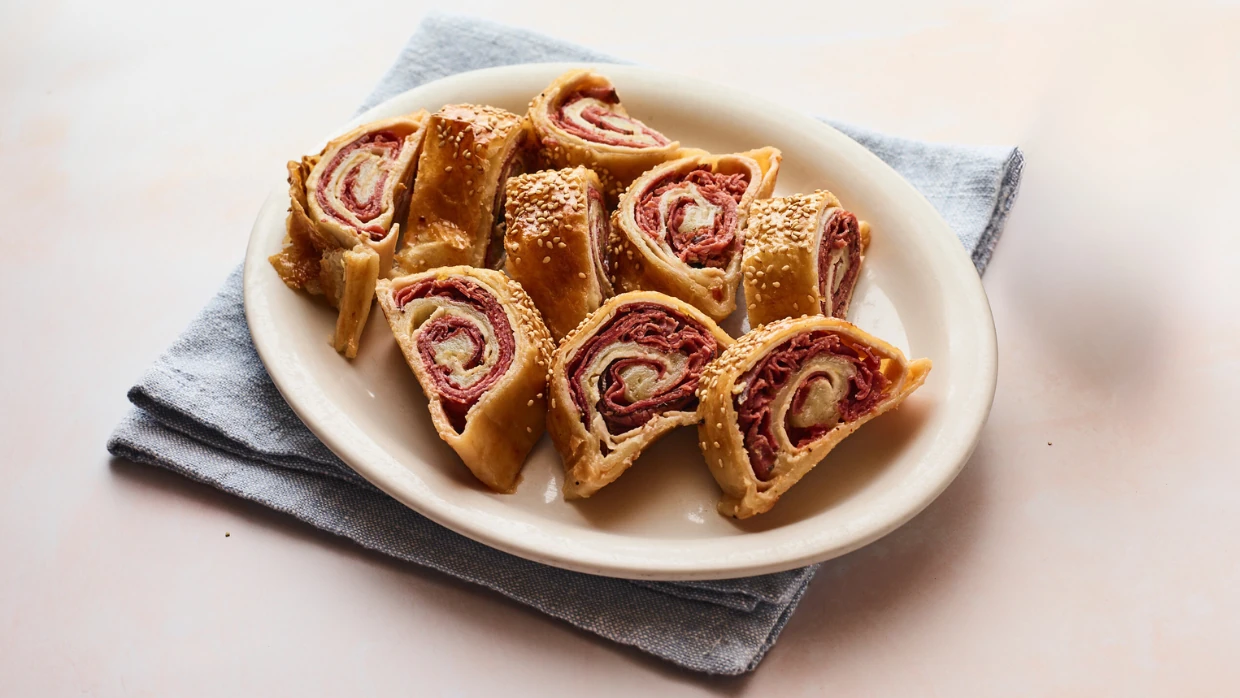
If bagels represented breakfast, knishes offered sustenance on the go. These dough-wrapped pillows—stuffed with potato, kasha, or meat—became perfect fare for Eastern European laborers.
By 1910, knishes dominated the Lower East Side food scene. In the notorious Great Knish War of 1916, two competing pushcart vendors battled over price and market share—a conflict recorded in The New York Times. Today, knishes are recalled as symbols of immigrant resilience and working-class Jewish pride—“portable comfort…taste of persistence and community.”
These knishes didn’t just fill bellies—they nourished identity.

Resilience on a Plate
What unites challah, bagels, and knishes—beyond flour and water—is their role in carrying Jewish identity through hardship.
Judaism teaches that honoring Shabbat requires special meals, even in scarcity. Families would stretch limited ingredients to bake challah, simmer soup, pour wine, and bless bread—affirming hope and tradition under pressure.
During persecution, recipes evolved, ingredients changed and methods shifted. But baking continued, blessings persisted and food became an act of covenantal memory—even when survival demanded adaptation.
Today, challah is pre-sliced, bagels are delivered, knishes are frozen. But their deeper meaning endures—if we choose to remember.
Tearing into warm challah connects us to every Jew who welcomed Shabbat before us. Spreading cream cheese on a bagel recalls those Polish and New York streets filled with hope. Biting into a knish tastes tenements, perseverance, and community.
In our hyper-accelerated lives, these dishes remind us that heritage can be savored, not just inherited.


















Great article! Would love to see sources for the Jewish food history if you have them handy.
Here in Golders Green, all these baked goods are available, even in Sainsbury's