






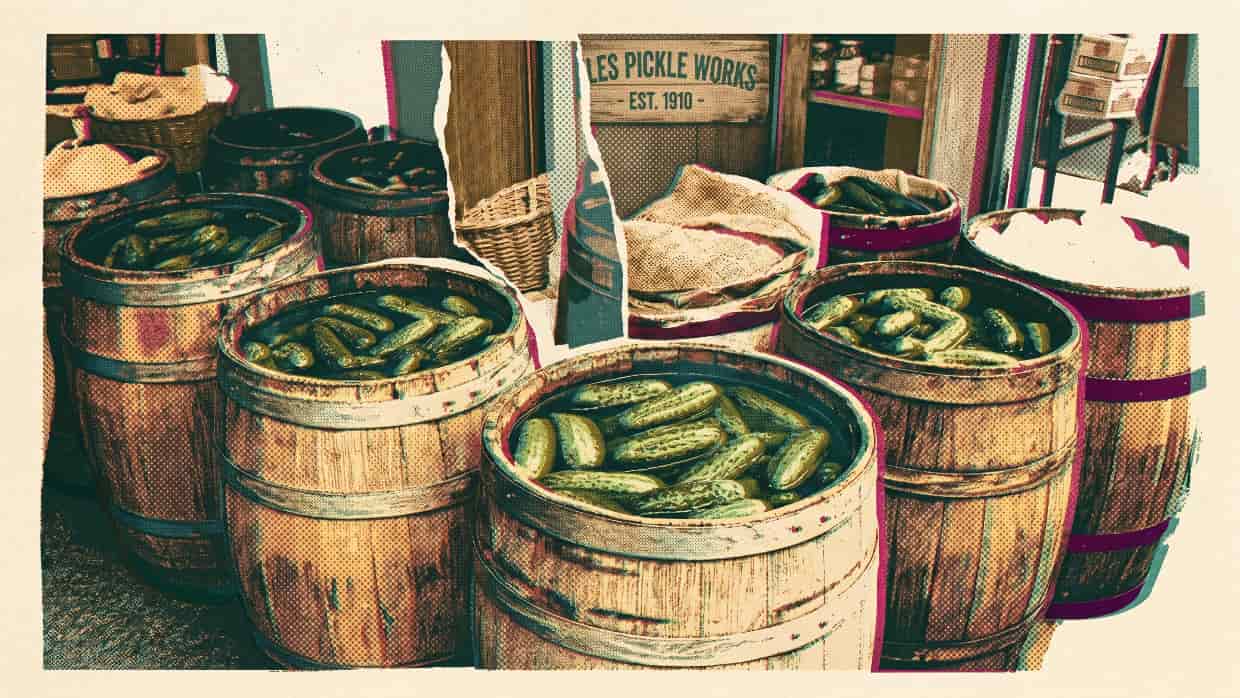
The pickle didn't conquer New York by accident. It arrived in a barrel, on a pushcart, hauled by Jewish immigrants who had been brining vegetables to survive Eastern European winters for generations. They brought the technique, the garlic, the dill, and the hustle, and within a generation they had transformed a preservation technique into a New York obsession that endures to this day.
It begins in the shtetls of Eastern Europe, where pickling was survival. Long winters, scarce produce, and tight budgets meant families relied on salt brine to preserve whatever they could. Vinegar was expensive, so Jewish households perfected the art of saltwater fermentation. The Talmud even nods to the practice, noting that "salting is like heating and marinating is like cooking." Pickling was practical, cultural, and often a source of income for women who sold their homemade goods.
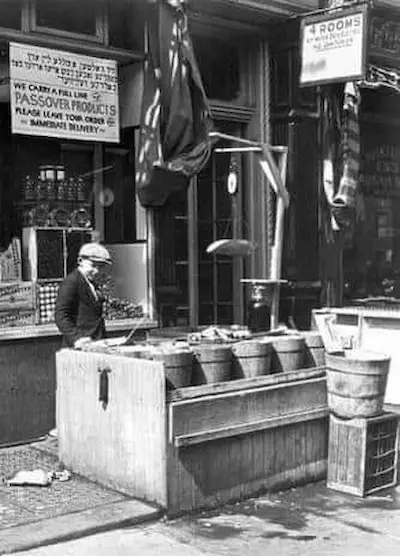 Pickles on Lower East Side, circa 1925
When Jewish immigrants arrived on Manhattan's Lower East Side, they brought this pickling culture with them, recipes, techniques, and the entrepreneurial instinct to turn a barrel of cucumbers into a livelihood. By the early 1900s the neighborhood had become America's first true pickle district. More than 80 pickle vendors crowded the streets in the 1920s, many starting with rented pushcarts before graduating to storefronts like the now legendary Guss' Pickles. The smell of garlic and dill practically became part of the neighborhood's identity.
And then came the innovation that changed American snacking forever: the kosher dill. Earlier Dutch and German settlers had introduced vinegar pickles to New York, but Jewish picklers rewrote the recipe with salt-brined, garlic-heavy, dill-packed cucumbers. The flavor was bold, crunchy, and addictive. It became so popular that even non-Jewish companies like Heinz adopted the style and sought kosher certification to meet demand.
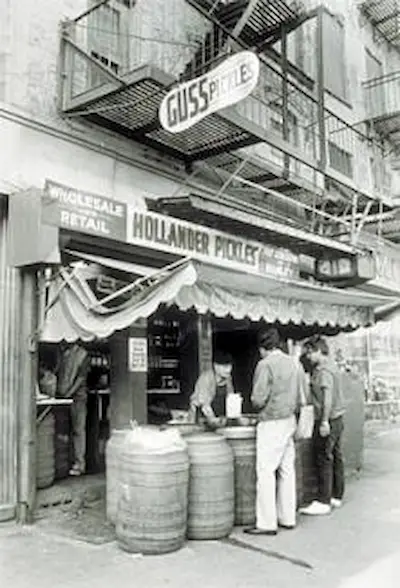
Jacob Riis, chronicler of tenement life, famously observed that pickles were "a favorite food in Jewtown," (1) cheap enough to feed children and flavorful enough to brighten otherwise meager meals. In a neighborhood defined by struggle and reinvention, the pickle became a symbol of resilience: taking something humble, even bitter, and transforming it into something lasting and delicious.
Ancient Origins
There are two methods to pickling. Marinating food in vinegar or other acidic liquids kills most bacteria, allowing pickled foods to last for years without refrigeration. Brine pickling, using a salty liquid, triggers fermentation, which encourages edible bacteria and crowds out the harmful kind that cause spoilage. (2)
Pickling's ancient history began in South Asia, where cucumbers were first cultivated in India and later grown in Mesopotamia around 2400 BCE. From the start, preserved foods carried an aura of vitality. The Bible references a taste for brined produce ("the cucumbers, and the melons, and the leeks..." in Numbers 11:5). Across the ancient Mediterranean, Cleopatra credited pickles for her beauty, Julius Caesar issued them to soldiers for strength, and Aristotle praised their medicinal value.
As the technique spread west, Greeks and Romans refined it with vinegar and spices, and medieval Europeans adapted it to colder climates, leaning on salt brining to keep vegetables edible through long winters.
By the Age of Exploration, pickling was so essential that Columbus carried cucumber plants to the New World, and barrels of pickles aboard his ships helped stave off scurvy. A straight line runs from ancient brine jars to medieval cellars to ocean voyages and eventually to the New World: pickles were always about preservation, health, and survival.
Eastern Europe
Pickling traditions that had traveled for millennia finally took on a distinctly Jewish shape in the communities of Eastern Europe, where brining became both inheritance and necessity. As Claudia Roden (3) notes in The Book of Jewish Food (1996), these fermented vegetables were staples across the region, valued not only for preserving vital nutrients but for adding a sharp, welcome jolt to an otherwise bland diet.
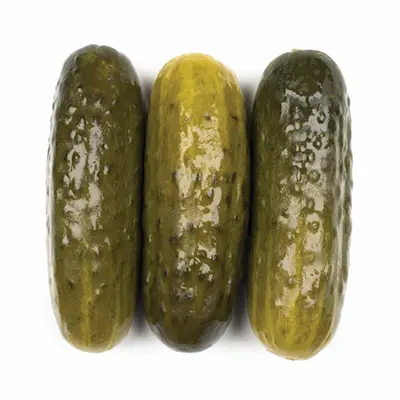 Jewish housewives prepared barrels of provisions each autumn, left them to ferment in cellars and outhouses, and sold them at country markets where peasants brought produce and Jewish women brought pickles. Across thousands of years, the logic barely changed: brine meant security. By the 1800s, pickling had become a defining feature of Eastern European Jewish food culture.
The Lower East Side
Dutch settlers in old New Amsterdam were the first to farm and preserve cucumbers, and later German immigrants kept the pickle habit alive. But it was the Eastern European Jews who turned pickles into a full-blown New York institution. By the early 1900s they had built the city's first commercial pickle district, starting with rented pushcarts and eventually flooding the Lower East Side with scores of pickle purveyors.
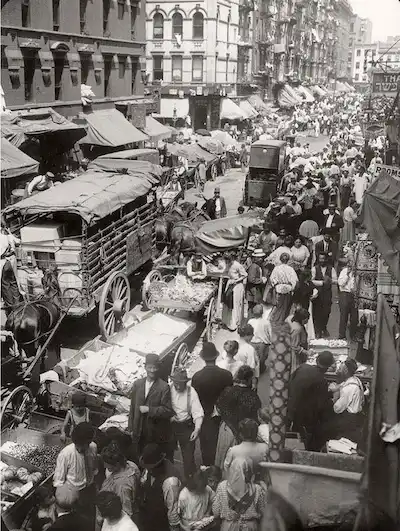 The Lower East Side
Their signature twist was the brine itself. Vinegar was pricey in Europe, so Jewish cooks relied on saltwater and soon amplified it with garlic and dill. That simple swap created the kosher pickle, a tangy hit that quickly won over Jews and non-Jews alike.
From there came the whole pickle family: sours (long, full fermentation), half sours (a quick two to four weeks), and sweets (brined with a dose of sugar). Together they became the unmistakable taste of Jewish New York.
Families in New York's tenements would toss cucumbers, cabbage, and beets, whatever was cheap and plentiful in summer, into big brine barrels, then stash them in cool basements to quietly pickle through the winter. A simple trick that guaranteed vegetables on the table, even if they came with a tang.
And if you didn't pickle at home, no problem. Jewish neighborhoods were swimming in the stuff. By the 1920s, the Lower East Side alone boasted around 80 kosher pickle factories.
Cheap, ready to eat, and available year round, pickles fed crowded tenements and gave Eastern European immigrants a sharp, familiar taste of the homes they had left behind.
New York's pickle royalty included Guss' Pickles, The Pickleman, The Pickle Guys, Russ & Daughters, Katz's Deli, and Ba Tampte, names every deli lover knows by heart.
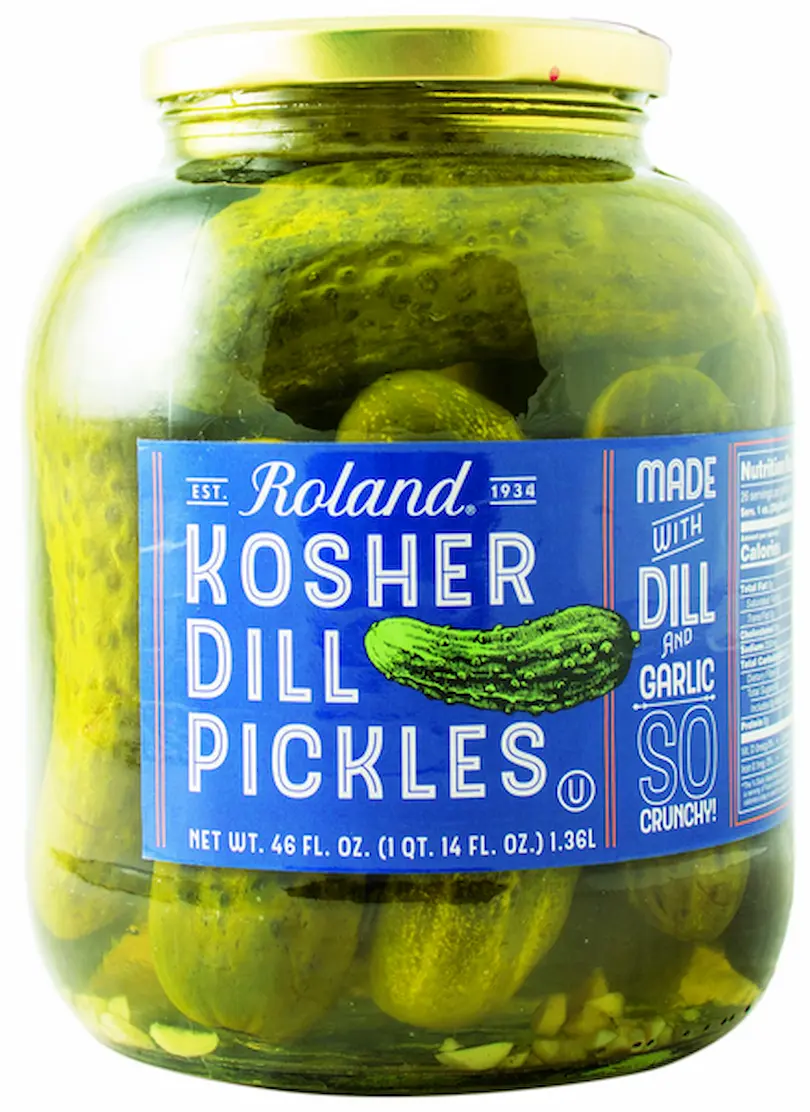 Over the decades, the pickle evolved into a universally loved snack, a gourmet condiment, and, incredibly, a TikTok sensation.
The Great Pickle Boom
Between 2023 and 2025, anything that could be pickled was pickled: beer, salad dressing, cotton candy, pizza, smoothies, hummus, popcorn, potato chips, ice cream, and nuts. If it existed, someone dunked it in dill and filmed it for TikTok.
Pickle culture exploded. Festivals from Pittsburgh to Portland sold out. Pickleback shots (whiskey chased with pickle brine) resurfaced. Pop-ups couldn't ferment jars fast enough.
TikTok turned pickles into content currency. #Pickles racked up over nine billion views (4) as creators crunched through pickle challenges and filmed "pickle only" day-in-the-life videos. The Chamoy Pickle Kit, usually a jumbo dill pickle dyed red and soaked in Mexican spices, became the era's neon-red cultural relic, lovingly unwrapped on camera like a Wonka prize.
Pickles became a personality type. "Pickle Girl" entered the lexicon as shorthand for quirky, chaotic women who love pickles loudly and unapologetically. Brands jumped in with merch, candles, and brine-themed lip balms, sprays, and beauty products. Then came the "Glickle," a pink glitter-covered pickle unveiled by influencers alongside a creepy voice singing "Ooh, pretty pickle."
Why did pickles stage such a comeback? Nostalgia plus maximalist flavors plus gut-health hype plus an extremely photogenic crunch, all converging in a perfect storm of brine-powered internet chaos.
Legacy
How many things can you name that have spanned the generations from ancient Mesopotamia to the age of TikTok?
In the end, the pickle is more than a snack. It's a vessel of memory and survival, proof that with salt, patience, and a little creativity, even the toughest ingredients can become something remarkable. A reminder that food carries history, bridges communities, and keeps the spirit of those who came before us crisp and alive.
Additional Reading: Jews and Pickles: 7 Facts
- Riis, Jacob. How the Other Half Lives: Studies Among the Tenements of New York. New York: Charles Scribner's Sons, 1890. Chapter X, "Jewtown."
- A sweet and sour history of Jews and pickles | The Jewish Star | www.thejewishstar.com
- Ibid.
- 'Glickles' Are The Newest Pickle Trend Going Viral On TikTok














Half sour pickles are fantastic. The gut benefits of fermented, not pastuerized vegetables are over the top. Great article. Thanks.
When I was a kid my mom always made pickles. We went to the farmers market and bought 1/2 a bushel of kirby cucumbers and a lot of fresh dill and hot peppers. She would put them in clean Ball jars. We packed the cucumbers added a bunch of dill, pickling spice, garlic cloves, pepper corns, 1 hot pepper and boiling water--put them on the shelves. Pickles in November were sour, pickles by January were very sour. the pickles next to the pepper in the jar were hot. She also pickled green tomatoes. Maybe I'll try them again!
Thanks for sharing those wonderful memories, Melanie.
Have you ever tried pickled chitlins?
yes its quite please Nien out of ten i would give it.
Jews and pickles go together beautifully, so a Jewish author I think his name is Yacov Bee, made a comic story about the hero called" Pickle Boy" and this comic story story is featured in Mispacha Treeo magazine a supplement of Mispacha magazine, it is like a version of superman or another superhero made up by Jewish comic book writers, I also think in the movie "crossing Delancy" ( which was on the lower East Side they might of showed and mentioned Guss pickles) in a scene in the movie
The 'pickle ' article could have been written about my grandparents, my father's family who migrated from Eastern Europe to Boston, Massachusetts just as described. They grew their business, ' Rosoff's', successfully throughout New England and New York.
You could find their products in coolers and in small grocery stores and supermarkets in both refrigerated and shelf stable form in barrels, gallon jugs and various size bottles.
They supplied restaurants and small sandwich shops, and catering companies.
Eventually, they perfected recipes for horseradish (red and white), half sour green tomatoes and pickles, fresh sourkraut (not canned), sour pickles, relish etc .
After two generations they were bought out by Hebrew National and then National Foods.
Great post Suzanne. thanks for sharing those sweet memories.
I remember Guss' Pickles!! To me, they were the best in the world.
Guss’ Pickles. The Best Pickles On The Planet !
In Hebrew, the word for "pickling" and the word for "conquest" share a root and the same letters. It makes for a nice pun.