







 The Macklemore Mess: What Pink Got Right and Everyone Else Got Wrong
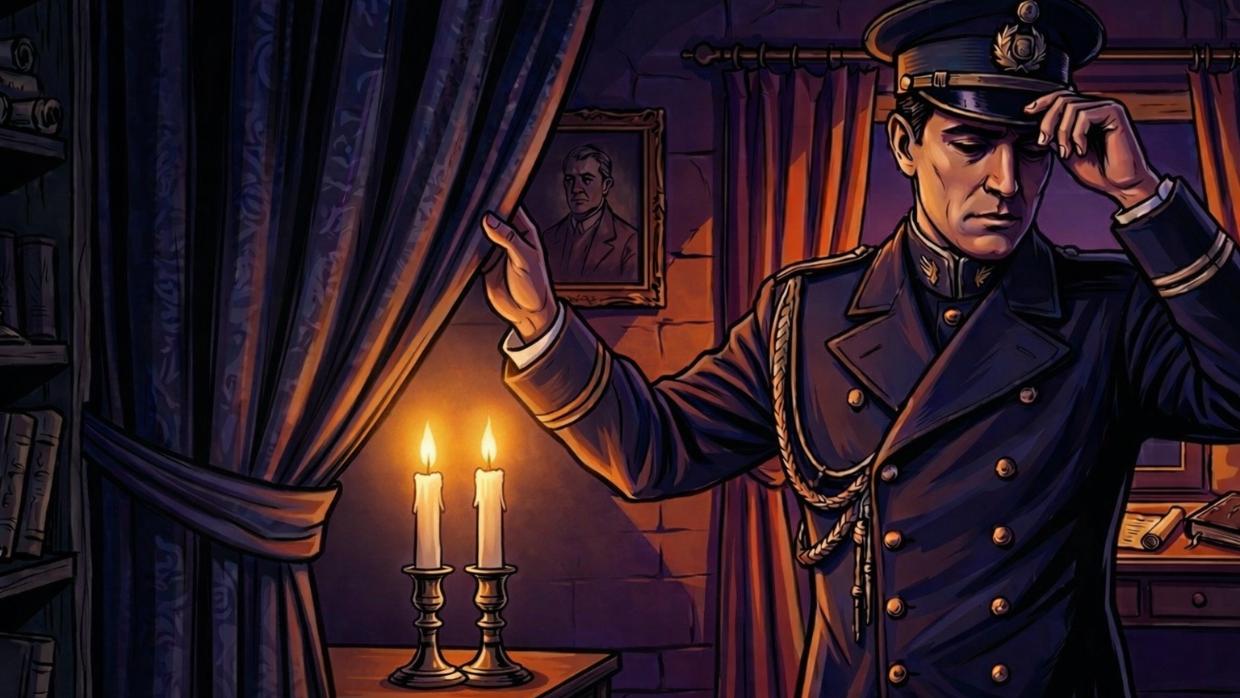








For centuries, families in northern Portugal lit candles on Friday nights without knowing why. A Portuguese army captain set out to tell them.
In the mountain villages of northern Portugal, behind closed doors and drawn curtains, families for centuries had been keeping secrets they could not fully explain. They lit candles on Friday evenings without knowing why. They avoided certain foods. They murmured prayers in garbled fragments of a language their grandparents' grandparents had once spoken freely. They were Catholic and yet something older and half-remembered persisted in their homes like an ember that had never quite gone out.
These were the descendants of Portugal's forcibly converted Jews, the Crypto-Jews or Marranos, whose ancestors had been given a stark choice during the Inquisition: convert, flee, or die. Most converted. And across the generations, what remained of their Jewish identity retreated inward, encoded in ritual fragments and hushed family customs, stripped of its name and its structure but never entirely extinguished.
It was into this world that Captain Arturo Carlos de Barros Basto stepped in the 1920s, bearing a conviction that would define — and ultimately destroy — his military career: that these hidden communities deserved to come home.
Arturo Carlos de Barros Basto was born on December 18, 1887, in Amarante, Portugal. Raised within Catholic society, he came to believe that his own family descended from forcibly converted Jews. As a young man he pursued a military career and distinguished himself in the Portuguese army, eventually attaining the rank of captain.
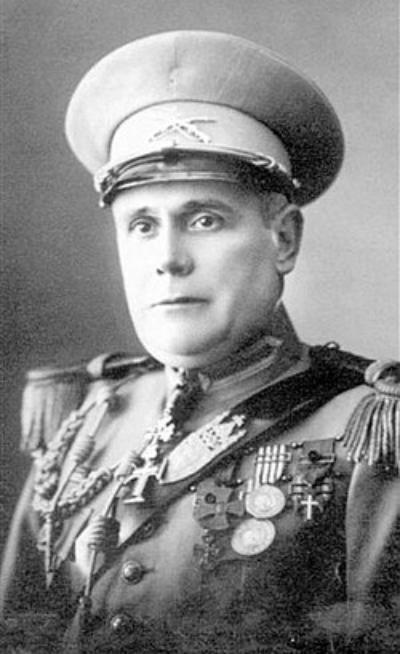 Arturo Carlos de Barros Basto
His return to Judaism was neither symbolic nor private. In 1920, Barros Basto traveled to Tangier, Morocco, where he formally converted before a recognized rabbinical court and adopted the Hebrew name Abraham Israel Ben-Rosh1.
Upon returning to Portugal, he married Lea Azancot, a member of a prominent Sephardic Jewish family in Lisbon2, placing his personal religious commitment firmly within established Jewish communal structures.
By the mid-1920s, Barros Basto began articulating a broader vision. He maintained that the descendants of Portugal's Crypto-Jews constituted a dispersed yet continuous fragment of the Jewish people. Their situation, in his view, was not the result of voluntary assimilation but of historical coercion.
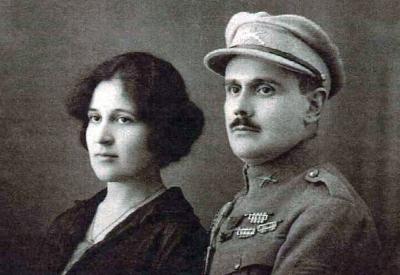 Lea Azancot and Arturo Carlos de Barros Basto
This conviction took institutional form in what he called the Obra do Resgate ("Work of Redemption"), an organized effort to reconnect families of Crypto-Jewish descent with structured Jewish education and communal life. The initiative combined outreach, instruction, and the gradual rebuilding of public Jewish presence in northern Portugal.
In 1927, he founded Ha-Lapid, a newspaper intended to give voice to this mission. The inaugural issue articulated its purpose in explicit terms: "Our Community has just lit up this small flare… and with our effort we will soon bring redemption to thousands of Portuguese… who live a spiritual life with vague reminiscences of their ancestors' religion."3
The imagery running through Lapid ("The Torch") was telling. Barros Basto returned again and again to the metaphor of light and rekindling — a flame not newly lit, but reignited after having been suppressed. He did not imagine himself creating Jewish identity anew; he believed he was helping restore an interrupted inheritance.4
Barros Basto's program did not remain confined to print or theory. Beginning in the 1920s, he undertook journeys throughout northern Portugal, seeking out families who preserved vestiges of Jewish practice within their homes. Many of these communities lived in rural areas where traditions had been transmitted privately across generations, often stripped of formal rabbinic structure, but retaining identifiable ritual traces.5
Some families welcomed the possibility of structured reconnection; others hesitated, shaped by centuries of caution and fear. The legacy of the Inquisition had not disappeared from communal memory, and public identification carried real social and economic risks. Barros Basto's efforts required patience, negotiation, and sustained engagement.
Through instruction, communal organization, and the gradual rebuilding of institutional life, he sought to transform dispersed memory into visible community. His work culminated in the construction of the Kadoorie Mekor Haim Synagogue in Porto, inaugurated in 1938, a public declaration of Jewish presence in a country where such presence had long been obscured.6
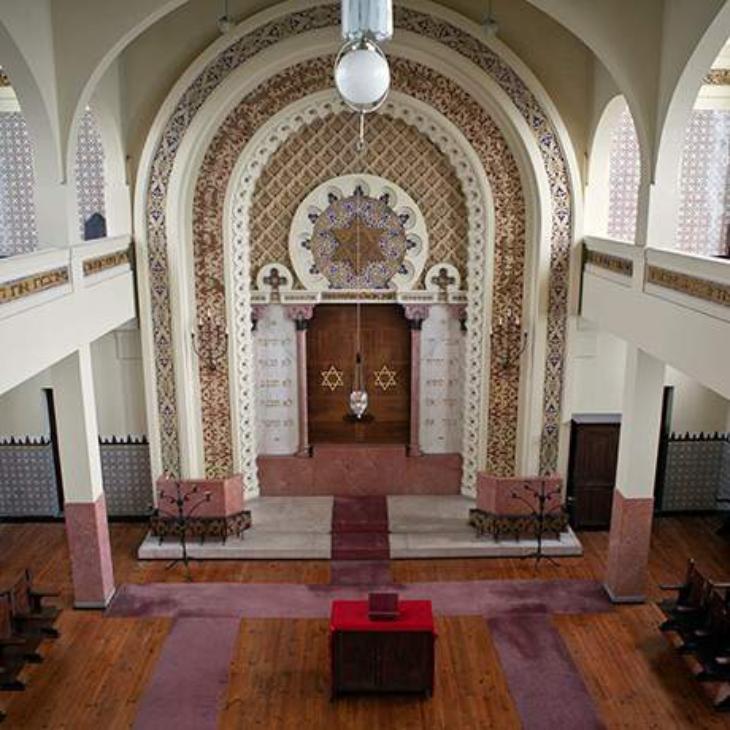 Inside the Kadoorie Mekor Haim Synagogue (Photo Credit: https://www.pathsoffaith.com/en/jewish-legacy/kadoorie-mekor-haim-synagogue-porto)
Yet the very visibility he helped create would soon provoke opposition.
In 1937, Barros Basto was brought before a military tribunal that would abruptly alter the course of his life. Officially, he was accused of "immoral conduct," a charge linked to his supervision of circumcision procedures performed as part of the religious instruction of new adherents.7 The proceedings resulted in his expulsion from the Portuguese army.
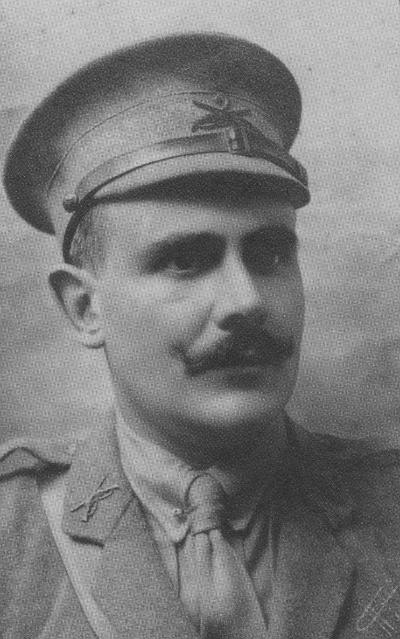 The decision effectively dismantled his public authority and curtailed his ability to continue the Obra do Resgate. What followed was a period of prolonged isolation.8
The tribunal disrupted the momentum of the restoration effort and reinforced the fragility of Jewish reemergence in Portugal, a reminder that the forces which had once driven Jewish life underground had not entirely lost their power.9
Nevertheless, Barros Basto's work did not disappear. Decades later, in 2012, the Portuguese Parliament formally annulled the military decision against him, explicitly recognizing that he had been "a target of political and religious segregation in 1937." The resolution restored his honor posthumously.10 The parliament resolution explicitly recognized that he had been “a target of political and religious segregation in 1937.”11
Barros Basto did not live to see the full restoration of the work he had begun. The synagogue in Porto endured, and the historical reality he had sought to confront — the persistence of Jewish memory among Portugal's descendants of forced converts — remained long after he was gone.
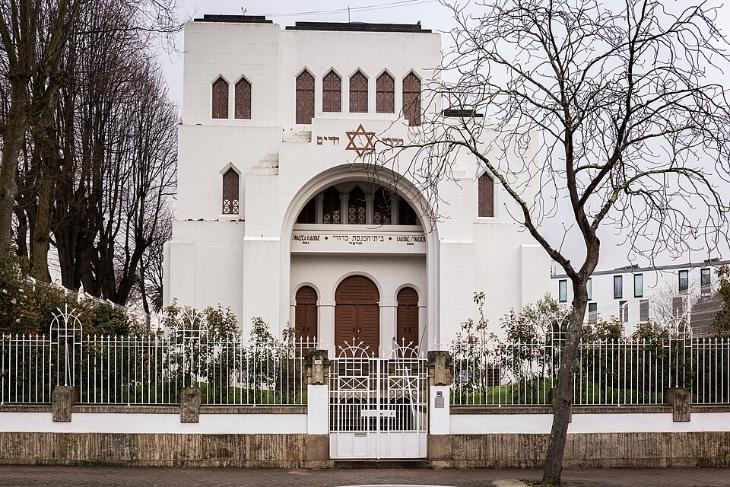 The Kadoorie Mekor Haim Synagogue, 2017 (Wikipedia, ComunidadeIsraelitaPorto)
His story illustrates both the vulnerability and the resilience of historical memory. The centuries of silence imposed by coercion could not entirely extinguish identity, nor could the opposition he faced permanently halt its reawakening. The return he envisioned unfolded unevenly, interrupted and contested, yet never fully abandoned.
Those Shabbat candles, lit in northern Portuguese villages by families who had forgotten the word Shabbat but remembered the gesture, were still burning. Barros Basto simply helped them find their name again. That the effort remains unfinished is perhaps the most honest measure of how deep the silence once ran, and how long a true return can take.12











My wife and I were 5 times in Israel but also in Portugal. We were in Belmonte where a small Jewish community lives and stayed at hotel where serve kasher meals.
It was an unforgetable experience.
I attended Yom Kippur services at the Kadoorie Mekor Haim Synagogue in 2022. It was very spirited -- a lot of ruach.
There were famous Rabbis from Spain and Portugal that must of went to Muslim countries or Amsterdam to escape the inquisition, well now Spain and Portugal are pro Palestinian and not pro Jews and pro Israel, so if I was these 2 countries I would not their citizenship
Thank you, Judi, for your thoughtful reflection. Indeed, many Sephardic Jews rebuilt their lives in places such as Amsterdam and across the Ottoman world after the Inquisition.
What I found especially moving in Barros Basto’s story is a different moment—one of return and renewal, as he sought to reestablish Jewish life within Portugal itself.
The bulk of conversos who know they are conversos live on the lee side of the island of Majorca. They’ve been approached a million times by various emissaries, rabbis and the Jewish Agency with offers of both Aliya or simply help returning to Judaism in situ; the emissaries have always been turned down flat.
Thank you for this perspective. Indeed, the history of converso communities is complex, and responses to outreach have varied greatly across time and place.
What drew me to Barros Basto’s story is precisely that it reflects a different trajectory—one in which individuals and communities chose to reconnect, even after generations of distance.
It is this tension between continuity, silence, and return that makes the history so compelling.
Recently - Portugal & Spain - took citizenship applications from those who could PROVE - a historical familial connection to their countries. One of the validations that was accepted was- speaking Ladino/Sephardi. Although - I had some vague - hazy possible connections, I was worried that - like in the past - Jews who returned at invitation - after having been EXPELLED FOR BEING JEWISH - later could be TAXED heavily as citizens.
Thank you, Gershon, for sharing this. The recent citizenship initiatives in Portugal and Spain have indeed opened meaningful conversations about historical connection, identity, and belonging.
At the same time, as you suggest, history carries its own memories, and for many, return is not without hesitation. Barros Basto’s story reflects one such moment—where the desire to reconnect emerged alongside the weight of the past.
It is precisely this interplay between memory and renewal that continues to shape these conversations today.
My name is Eliahou Shababo. I live in England and I am 90 years of age. My late father, Rabbi Jacob Shababo, Z"L, was part of the attempt to bring back some conversos to Judaism. In 1935, 1936, 1937 we lived in Braganca, a tras de montes, where some Jews escaped to escape the INQUISITION.
Dear Mr. Shababo,
Thank you for sharing this with me. Your message touched me deeply.
To know that your father was part of those efforts, and that you yourself lived among those communities, gives such life and truth to this history. It reminds me that what we write about is not only the past—it is memory, lived and carried across generations.
Thank you for allowing me to glimpse that continuity.
With warm regards,
Rifka Epstein
They can try to extinguish our flame, but it continues to burn. Excellent article. A new name to add to a long list of righteous people
I rephrase from righteous to "Unsung Empowering Hero."
He demonstrated "Courage" , "Arevoot" and "K'lal-Yisrael"
may his name be of a blessed memory
Amen
Thank you for these powerful words.
“Unsung Empowering Hero” feels especially fitting.
Barros Basto’s life seems to embody that quiet courage and deep sense of arevut—a responsibility not only to oneself, but to the entire people.
May his memory be a blessing, and his legacy continue to inspire.
Thank you, Deena, for this beautiful reflection. The idea of a flame that cannot be extinguished feels especially true in this story.
Barros Basto’s legacy reminds us how resilience can take the form of a quiet, steadfast light—
perhaps the deepest story of all, one of continuity, carried from one soul to another.
May his work continue to bear fruit for endless generations!
Amen
Amen—such a meaningful wish, Sarah Estela
Barros Basto’s work reminds us how one person’s vision can continue to bear fruit across generations.
Very Interested to learn of any current synagogues in Portugal now
Thank you for your interest, Karen—yes, there are active synagogues today, especially in Lisbon and Porto, along with smaller communities in places like Belmonte.
It is truly moving to see Jewish life flourishing again in places where it once had to remain hidden.