







 The FlyDubai Miracle








Why would the illustrious Gentile writer resist the antisemitism of her time and devote her prodigious talent into a novel about Jews and Zionism?
George Eliot’s novel, “Daniel Deronda,” was credited with re-awakening the Zionist dream before the term Zionism had been minted. Twenty years after Deronda was published, Herzl himself was rereading the novel en route to addressing the first Zionist Congress in 1897, probably, I bet, looking to borrow a few choice lines.
If your jaw hasn’t dropped by now, it should. George Eliot (nee Mary Ann Evans) was the literary rock star of the Victorian era. Middlemarch is considered by many critics to be the best novel ever written in English — and is my personal favorite. What then induced the celebrated 19th century non-Jewish novelist to entirely switch gears, immerse herself in Torah study to carefully and tenderly create her Jewish characters? And no, she had no interest in embracing Judaism. By the time Eliot reached adulthood she had shed her Evangelical upbringing, become an agnostic and had little taste for organized religion.
So why would the illustrious writer devote her prodigious talent and skill into a novel about Jews, of all unseemly topics?
Nothing in her social milieu would explain her sympathetic treatment. She herself wrote in a letter in 1848, “Everything specifically Jewish is of a low grade,” a condescension which was a piece of her times.
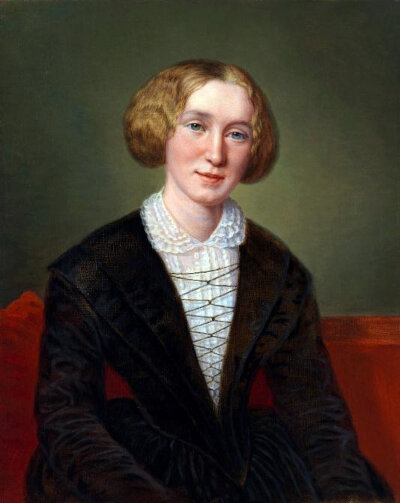 George Eliot by François D’Albert Durade (1804–1886) - National Portrait Gallery (Wiki)
By the 19th century, even as some restrictions against Jews were lifted and conditions became more tolerable, the condescension and often revulsion remained, and definitely seeped into the books of England’s most fabled authors. Sometimes I’ll be enjoying a novel, say by Evelyn Waugh or even a mystery by Agatha Christie, and when I least expect it, a slur pops up about the hook-nosed Jew, the greedy thieving conniving vengeful Jew — startling me, not so much for its venom but the casual assumptions that undergird the remark.
Eliot gave her Jewish characters depth, both spiritual and intellectual. Her depiction of noble Jews was groundbreaking and brave, for going against the prevailing tide.
Not only did Eliot avoid the above entrenched stereotypes, she gave her Jewish characters depth, both spiritual and intellectual. Her depiction of noble Jews was groundbreaking and brave, for going against the prevailing tide.
That alone was an achievement. But then this Gentile writer did something really outrageous. She infused her Jewish characters with a passion and yearning to not only reclaim their ancestral homeland, but to embrace their unique heritage and destiny among the nations, insisting that both movements are inextricably linked.
“The soul of Judaism is not dead,” declaims Mordechai, the scholar-visionary who is a central character in the novel. “Revive the organic center… [let us] choose our full heritage, claim the brotherhood of our nation, and carry into it a new brotherhood with the nations of the Gentiles.”
What in the world did Eliot know of the “soul of Judaism”?
She knew a lot, as it turned out, and a lot more than Herzl, Ben Gurion or Chaim Weitzman ever would.
Mordechai expresses a rich, grand, and warm Zionism infused with Jewish soulfulness. He sees the reclaiming of one’s ancestral homeland not in terms of providing Jews a safe haven from persecution but as a spiritual and historical imperative, the fulfillment of the promise of Judaism.
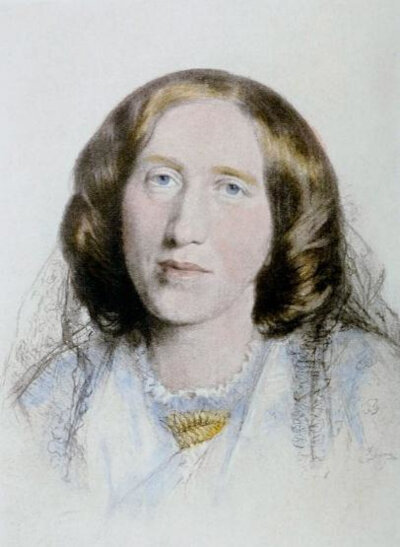 Portrait by Frederick William Burton, 1864
Herzl’s Zionism on the other hand, which was 20 years down the road, was almost entirely a reaction to antisemitism. If Europe had accepted or at least tolerated its Jews, Herzl never would’ve bothered with pursuing Jewish statehood. His Zionism was utilitarian, which perhaps explains his initial idea of converting Jews en masse to Christianity as an answer to the Jewish Question. Herzl’s solution sprang from a sincere desire to keep Jews alive, even if it meant obliterating their essential Jewishness in the process. Only someone indifferent or clueless about his heritage could conceive of such an idea.
The miracle of Deronda is that Eliot, a Victorian novelist and highly regarded intellectual, filled the Zionism dream with warmth and soul.
Daniel Deronda centers on Gwendolyn, a headstrong beauty caught in a marriage with a rich, despicably controlling man. She is drawn to Daniel, an idealistic young gentleman of unknown parentage, who is haunted by his past and is brought into the orbit of Jewish thinkers. (Gwendolyn has been widely thought to be a self-portrait of George Eliot, but the two couldn’t be more different. Gwendolyn is frivolous, indifferently educated, entitled, unashamedly selfish, and magnificently gorgeous, while Eliot is her exact opposite, especially in physical appearance, with her long jaw, small eyes and bulbous nose. The only trait they share is charm.)
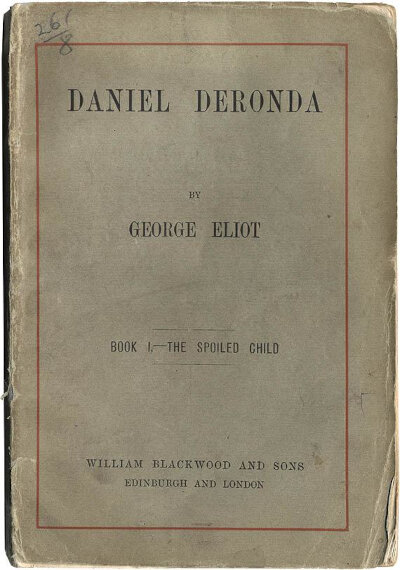 Title page of the first edition
Though not nearly as accomplished as her other novels, Daniel Deronda sold wildly and was translated into several languages. (BBC made it into a mini-series in 2002.) It would be her last novel and many say, her most impactful. Deronda caused seismic shifts, particularly among Jews:
If Herzl is regarded as the father of Zionism, then George Eliot-Mary Ann Evans — is surely its bubbe, or grandma.
And still, the question. Why did Eliot veer so wildly off course, for this, her last novel?
There’s a hidden story here:
In 1866, Emanuel Deutsch, a young Jewish scholar who works as a low paid curator in the British Museum, meets Eliot in a social setting and afterward Deutsch mails her his recently published controversial 60-page article about the Babylonian Talmud. Eliot actually reads and is quite taken with the article. She hires him to teach her Hebrew and becomes captivated by his intriguing ideas and fascinated by the Jewish texts and laws he introduces her to.
In her letters she calls him rabbi. The curator clearly upends everything she ever thought about Jews. Deutsch is learned, refined, deeply moral, brimming with philosophy and spiritual yearnings she doesn’t quite grasp but wants to.
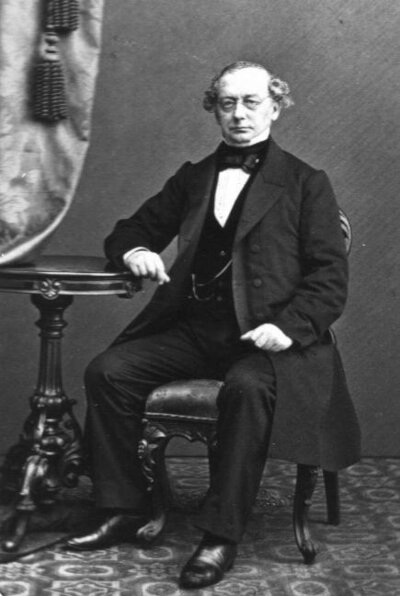 Emanuel Deutsch
Though no longer a believer in religion, in his presence, Eliot feels something of a divine pulse animating her spirit. She dares to go outside the box assigned to her.
“Between the dusty archivist and the wealthiest self-made woman in England flashed a spark that would change the world and transform the godless Eliot into a Messiah of the Jews” is how Norman Lebrecht puts it in his masterful article.
The real-life Deutsch, curator at the British Museum, and the fictional visionary Jew Mordechai meld into one. Both are philosophers with a poet’s tongue. Both consider it their life’s work to bring the Jewish people to their ancestral homeland and establish self-governance. Both are sickly, underpaid and overlooked.
Mordechai dies at the end of the novel, but not before entrusting his dream of a sovereign state to Deronda, his — it turns out — Jewish disciple, to actualize. As for Emanuel Deutsch, he dies en route to Palestine, in Egypt. Similarly, Deutsch passes on the torch to his most devoted and accomplished student, willing Eliot to bring his dream to fruition through her literary genius.
A few months after Deutsch’s death, she throws herself into researching the novel Deutsch entrusted her to write. She gets a hold of his papers, pores over his essays. She immerses herself in Mishna, Talmud, Jewish history, kabbalah, and fills her notebook with copious notes.
She meets rabbis, attends shul, familiarizes herself with halacha, Jewish law. The novel gets completed and everyone who reads the unpublished manuscript begs her to omit the Jewish thread, because, well, it doesn’t hold a candle to the Gwendolyn thread. I‘m assuming Eliot knew this — how could she not? — but it makes no difference to Eliot, which astounds me. My writerly pride wouldn’t allow me to include material that undermines the book’s overall quality and reception. But Eliot has become so invested with the ideas and themes in the novel, she subordinates her art for the message.
Maybe that’s a novelist’s ultimate sacrificial act — sacrificing the art for the message — and the message wasn’t even hers, but Deutsch’s, but over time it became hers, too.
Of course Eliot — or rather Deutsch — didn’t invent the idea of Zionism.
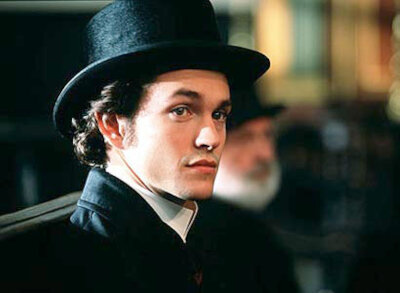 Hugh Dancy as Daniel Deronda in the BBC production
Throughout the millennia, the desire to return to Israel permeated every aspect of Jewish existence. You couldn’t go ten minutes without bumping into a prayer about Jerusalem, the ingathering of the exiles, the rebuilding of the Temple. Individuals and small groups were always seeking to return — or at least be buried there. A few succeeded, mostly elderly old men who the Ottoman Empire allowed entry. Most Jews didn’t even try, that's how bad conditions were in Palestine: earthquakes, famine, marauders, plague, no way to make a living, conscription of males. They did however send desperately needed money to their brethren in the Holy Land. The prayerful yearning had devolved into a ritualistic longing, Next Year in Jerusalem, the exclamation point at the end of the Passover Seder.
Eliot woke Jews up to the possible.
And what of Emanuel Deutsch? My thoughts linger on the “dusty archivist” buried in the Jewish cemetery in Alexandria, Egypt, so close and yet so far from the land of his longing. His desire to dwell in the Jewish homeland will never be consummated. Maybe it’s time to disinter his body and bury him where he belongs.
Sources:
Ruchama's award-winning novel, In the Courtyard of the Kabbalist was just republished with a short story sequel.










Nice article. Thanks. But the author undervalues the novel and, I think, misses its main point. I think it is better than Middlemarch. It's point, I suggest, is not Zionism but that there is peculiar Jewish character that always has and always will separate Jews from those they live among. It's because of this character that Zionism is a legitimate end. Eliot's description of this character is the real breakthrough and shock of the novel.
Fascinating, thank you. I was always curious about this book, but never picked it up.
A modern-day equivalent would be the novel “Otra Vez Adios,” by exile Cuban Author Carlos Alberto Montaner, of blessed memory. It’s a story about Jews caught up in and escaping nazified Europe. The main character lands in Cuba, then flees there later to the USA because of the communist takeover. Throughout the story there is a great deal of reference to Jewish history, traditions, and rituals; plus most of the main characters are Jewish. All this from an author who was Catholic.
Terrific article. Thank you.
The book seems especially relevant to Pesah. Deronda is raised by an aristocratic non-Jew (who traces his roots to the Conquest); he does not learn his mother’s identity until he reaches adulthood; and he returns to the Holyland to redeem his people. He is not Herzl but Moshe. (His life is not saved by being drawn from the water, but he saves his future wife Mirah this way.)
She is mistreated by a male relative, and, unlike her mother, has no interest in wealth or fame, but wants Daniel’s simple, loving companionship. The connection to Shir haShirim is such that I think it is no coincidence that both Mirah and her mother are singers.
clever!
Although it is not the focus of the article, I am curious about where the author find casual antisemitism in Agatha Christie's novels. In the Mysterious Affair at Styles, a character opines that Jewish blood makes a person more interesting---and another expresses anger by describing a desire to hang someone as "high as Haman," a phrase that shows Christie's casual familiarity with Tanakh. To be sure, there is an unflattering description of Jewish character in The Peril at End House, but the book concludes by admiring the character's yiddishe kop. I've read barely half her books, but I cannot recall anything really offensive.
https://aish.com/agatha-christies-antisemitism/ it's possible she repented. She was just reflecting the ugliness of her times and class. I wouldn't call her a genuine anti-semite. She offended everybody with her slurs --equal opportunity-- but I believe she shifted.
My father fought under General Patton and described him the same way. He was no more unkind to Jews than to anyone else.
Yes, I came across some really anti Semitic lines in Christie”s books, like “he licked his thick Semitic lips”, and some others. I wish I could remember exactly which ones, I read most of her books.
Fabulous article! It educated me and at the same time inspired me with the idea that George Eliot was willing to sacrifice her writer's pride for the sake of the unpopular message. And it's always a pleasure to read anything Ruchama Feuerman writes.
Ah, that was my favorite part, too, Sara Yocheved!
I guess George Eliot was unique in her time period, to write a book to look at Jews favorable and even discuss zionism, a very Jewish concept maybe she really did study a lot, about the Jewish people, also it interesting that this lady had a man's name, especially in the time period she lived in, I was impressed and found it interesting to read the story about her
The time period in which she lived is what explains (in part) her male nom de plume. It helped her get published.
There is an earlier English novel, "Harrington" by the Irish writer Maria Edgeworth. It was written in the early 1800s and portrays its Jewish character as matching the ideal image of the English gentleman. This was a radical break from the usual way Jews were portrayed in English fiction. However, in Castle Rackrent, Edgeworth used antisemitic Jewish images, so I have not yet worked out how to relate to her opinions.
Let's not forget Sir Walter Scott's Ivanhoe, in which he describes the character 'Rebecca' very positively. This Jewess in his novel was based on Rebecca Gratz of Philadelphia, whom he heard of from his friend, Washington Irving, who frequented Miss Gratz' 'salons' and admired her steadfast refusal to consider proposals of marriage from the elite of American society in the early 1800's. Though there was no mention of Zionism, this novel did introduce a favorable view of Jews, through the characters who save the knight / king and tend to him, without regard for his station or possible remuneration. This countered the commonly held view of Jews as 'money hungry' (so what else is new?), and showed them as 'loyal British subjects'.
Not a big fan of Eliot but absolutely loved Daniel Deronda!
George Eliot is my favorite novelist. I read this book and loved it. It was so accurate about Jewish life and the community. The same arguments about moving to Israel are still with us today.
Love this article. Thank you!
Wow, amazing - and fascinating!
Britain had a Jewish prime minister in 1868
They could use one now, considering Britain's current antisemitic attitudes.
Thank you for this excellent article. I am a big Eliot fan and love this book. I have always wondered about the back story on the writing. And now we know. Todah!
For decades, most Israeli English teachers have taught, especially before Rosh HaShanah, Eliot's brief, two stanza poem, "Count that Day Lost." Every year we try to view it with fresh eyes, but it always come back to her simple message, "we are here to do good to others." And, yes, she sacrificed form for message. Your well-written article has deeply endeared her to me even more.
Excellent article
A pity so few teenagers read books these days.
For years I have been enamored by George Eliot quotes, one of which, "What do we live for, if not to make life less difficult for each other?" is almost pulled from the Pirkei Avot. Now I understand why, thanks for the article.
The BBC also did this in 1970 with Robert Hardy as the villainous husband and Martha Henry as the heroine (of sorts). John Nolan played Daniel.
George Eliot was a master of the English language, but it would not surprise me if she were now off the syllabus in English schools. To begin with, her novels lack the woke messages the Starmer government wants to push. Secondly, I fear that a decline in literacy will make it too challenging for many students to appreciate the richness of her language.