








 Those Shameful Thoughts and What They Really Say about You
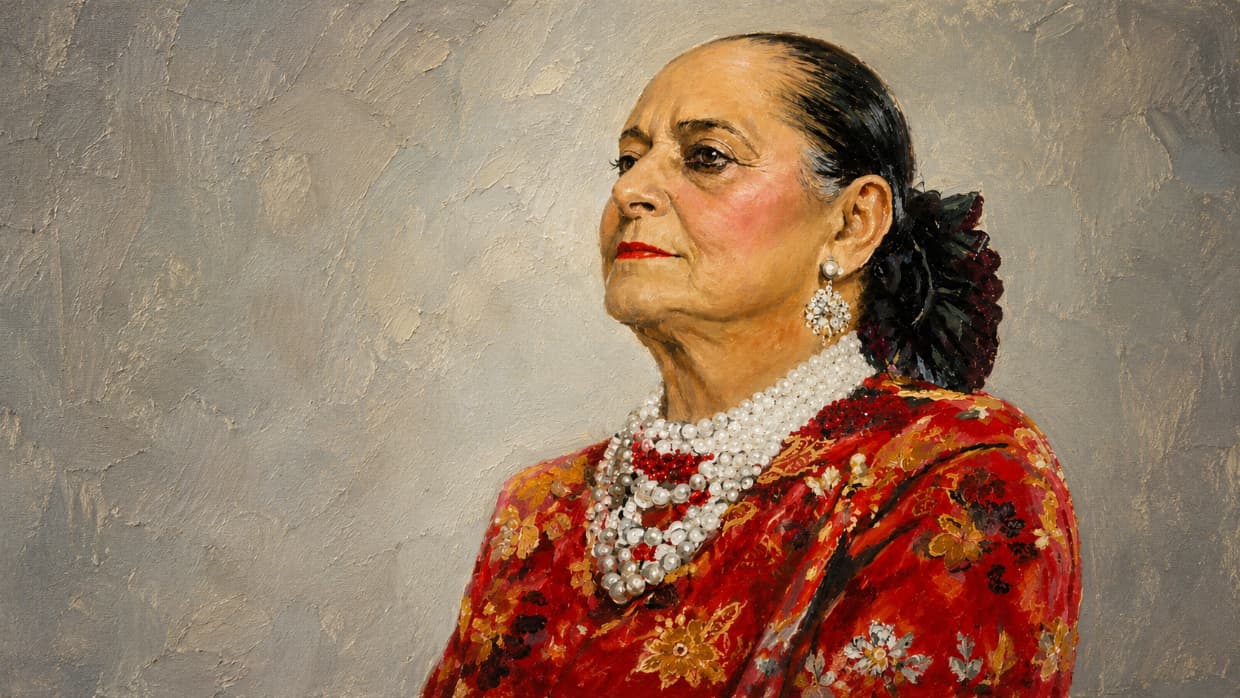






A penniless Jewish girl from Kraków turned her own persona into a global marketing engine decades ahead of her time.
The lipstick was beautiful, in a sleek black case with the elegant "HR" monogram, with that satisfying weight of a luxury object in the palm of your hand. I was standing in a drugstore in Kazimierz, Kraków's old Jewish quarter, turning it over, admiring it. Then I checked the price tag and put it gently back on the shelf. Helena Rubinstein is not a brand for a student's budget.
But you have to have dreams, I told myself on the way out. And here in Poland, dreaming seemed almost obligatory. Because a few minutes' walk from that shelf of luxury cosmetics, at 14 Szeroka Street, in the very heart of the Jewish quarter, the woman behind that global brand grew up — in a poor family, the eldest of eight daughters of a small-time merchant who traded in kerosene and eggs. Her name was not yet Helena. It was Chaja.
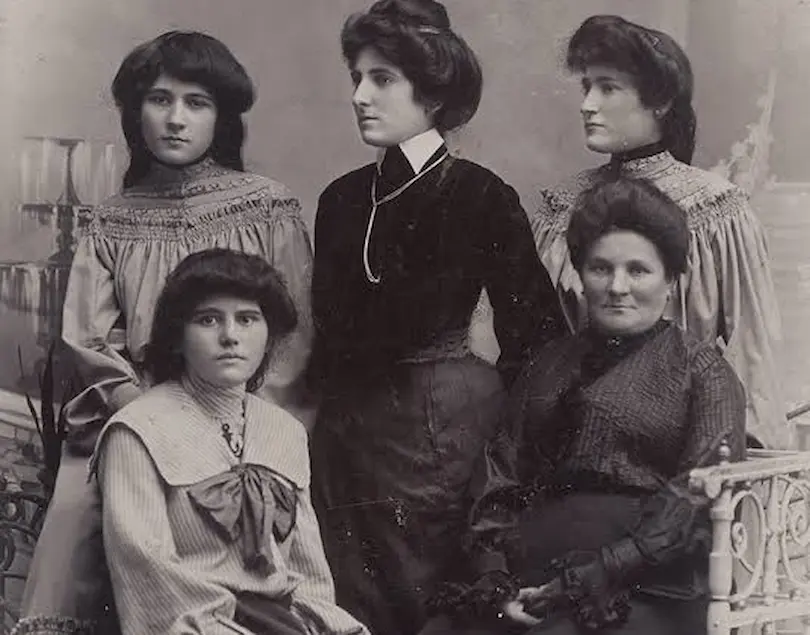 Helena (Chaja) Rubinstein standing alongside her mother and three of her sisters in Kraków, Poland. Taken around 1905
Chaja Rubinstein was born on December 25, 1872, most likely across the river in Podgórze, though her identity was forever tied to Kazimierz, into a traditional Jewish home in a city where a girl's future was usually decided by a matchmaker. That girl became Madame Helena Rubinstein: the woman Jean Cocteau crowned "the Empress of Beauty," creator of one of the first global beauty empires of the twentieth century, who died in 1965 as one of the wealthiest self-made women in the world.
I met Madame properly for the first time in January 2023, at the Galicia Jewish Museum in Kazimierz, 300 meters from the Rubinstein family home on Szeroka Street. The exhibition, "Helena Rubinstein. First Lady of Beauty," created with the Jewish Museum Vienna to mark the 150th anniversary of her birth, told the story of a journey: Kraków, Vienna, Melbourne, London, Paris, New York. What moved me then was the geography — the sheer improbability of the distance between that crowded apartment at Szeroka 14 and the penthouses of Manhattan.
This summer, we met again, in Warsaw. The POLIN Museum of the History of Polish Jews has devoted its Legacy Gallery to her in the exhibition "Helena Rubinstein. Beauty is your destination," on view through early September 2026. Curated by Marta Frączkiewicz and Monika Harchut, the Warsaw show asks a deeper question than the biographical one: How did a young Jewish woman with no money, no diploma, and no connections transform herself into a global brand?
Chaja's story begins, like so many stories of remarkable Jewish women, with a refusal. At around 24, she turned down the marriage her father had arranged. In 1896, she boarded a ship for Australia, arriving in the small town of Coleraine, Victoria, to live near relatives — a young woman from Galicia who barely spoke English, carrying (as legend has it) jars of face cream in her luggage.
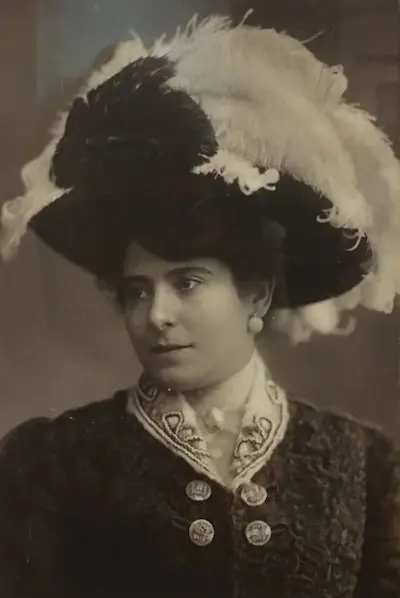 Somewhere on that voyage, Chaja became Helena: on the passenger list she signed herself, with typical audacity, "Helena Juliet Rubinstein."
What she noticed in Australia was opportunity disguised as a problem. The harsh sun ruined women's skin, and the country had sheep, millions of them, producing lanolin, a natural moisturizing fat. Helena blended lanolin with botanicals and began selling Crème Valaze. Women were soon writing to her from across the continent. By 1902 she had opened a salon in Melbourne; by 1908 her Australian business had earned enough — a fortune of £100,000 — to fund a salon in London. Paris followed in 1912, New York in 1915.
Helena was an outsider three times over — a woman, a Jew, a foreigner.
Think about what this meant. A Jewish immigrant woman opened a business in Edwardian London at a time when women could not vote and could barely open a bank account without a husband's signature. She was an outsider three times over — a woman, a Jew, a foreigner. Her response was to act as though the categories simply did not apply to her.
The POLIN exhibition convincingly argues that Helena Rubinstein was a celebrity influencer before the term even existed, the first Jewish woman to turn her own persona into a global marketing engine.
Everything we associate with modern personal branding, she did first. She put on a white lab coat for advertisements, presenting beauty as science; she pioneered the idea of diagnosing "skin types" and prescribing individualized treatment, a concept every cosmetics counter still uses today. She made her own face, her jewels, her art-filled apartments the advertisement: her homes were photographed for magazines, her parties were legendary, and she commissioned portraits of herself from the greatest artists of the century — Salvador Dalí, Marie Laurencin, Graham Sutherland, and eventually Andy Warhol's circle. She collected African sculpture, modernist paintings, and couture the way other tycoons collected railroads.
She sold no product more successfully than she sold Madame Rubinstein.
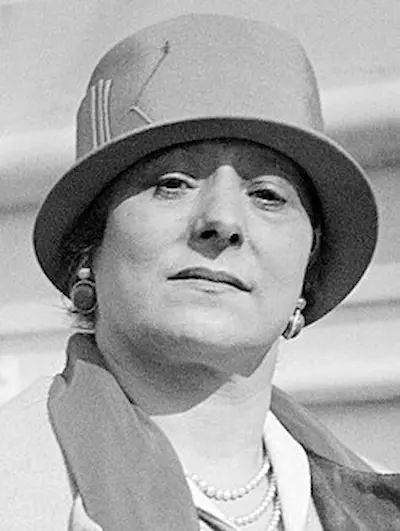 In an era before social media, she grasped that people don't buy creams; they buy a story about who they might become. Her story — the tiny, four-foot-ten powerhouse in Chanel and pearls, barking orders in a Polish accent across three continents — was irresistible. Her decades-long rivalry with Elizabeth Arden was the stuff of tabloids and, much later, a Broadway musical.
Even her business decisions became legend: she sold her American company to Lehman Brothers in 1928 for $7.3 million, then bought it back for a fraction of the price after the 1929 crash and rebuilt it into an empire worth $100 million.
When asked about the secret of her success, she offered the line that still adorns beauty salons around the world: "There are no ugly women, only lazy ones."
And yet she never stopped being Chaja.
She could not have forgotten if she tried. In the 1940s, at the height of her fame and fortune, she attempted to buy an apartment on Park Avenue and was refused because she was Jewish. Her response was pure Rubinstein: she bought the entire building.
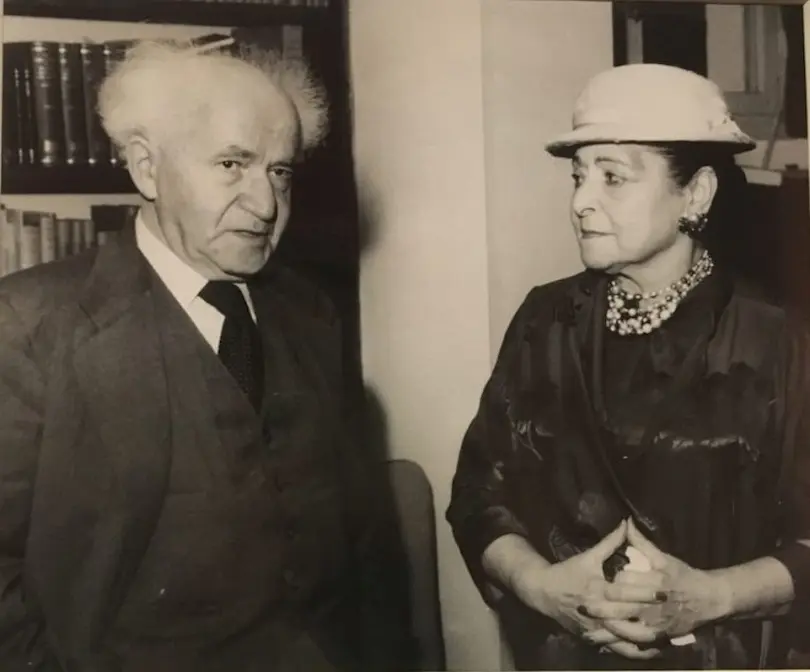 With David Ben Gurion in Israel in 1958
Her Jewishness was not incidental to her story; it shaped it at every turn. She was a cousin of the philosopher Martin Buber. She supported Jewish causes throughout her life, and her devotion to the young State of Israel was concrete and lasting: the Helena Rubinstein Pavilion of Contemporary Art, which she funded at the Tel Aviv Museum of Art, still bears her name, and her foundation, established in 1953, gave away some $130 million to education, the arts, and community organizations over the following decades.
Eight of her family members were murdered in the Holocaust. The glittering Madame of Paris and New York carried Kraków with her, its losses as well as its lessons.
As I left the Legacy Gallery at POLIN, I kept thinking about a verse from Eshet Chayil, the hymn to the woman of valor sung at Shabbat tables, sung, surely, in the Rubinstein home on Szeroka Street: "Charm is deceptive and beauty is fleeting, but a woman who fears God shall be praised."
It seems, at first, like an indictment of everything Helena Rubinstein stood for. She built an empire precisely on charm and beauty. But walk through the exhibition and you see the deeper truth. The creams and lipsticks were never really the point. The point was what she said beauty could do: "Beauty is power," she insisted, and what she meant was that a woman who took herself seriously, who invested in herself, who refused to be invisible, could claim a place in a world built to exclude her.
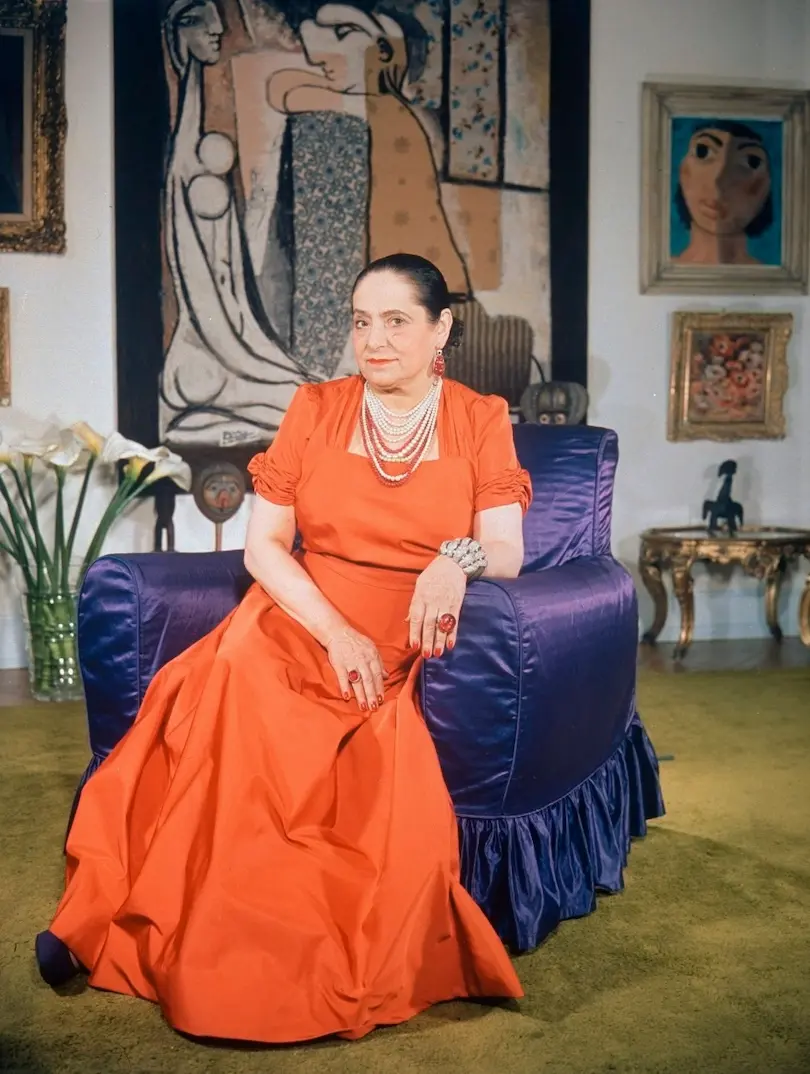
The beauty faded, as the verse promises it would. The jars of Crème Valaze are museum pieces now, displayed behind glass a few kilometers from where the Warsaw Ghetto once stood. What remains is the valor: the chutzpah of a merchant's daughter who refused the life assigned to her, crossed the world alone, out-thought the men who underestimated her, answered antisemitism by buying the building, and gave her fortune away to museums, students, and the State of Israel.
Someday, perhaps, I'll walk back into that drugstore in Kazimierz and buy the lipstick. Until then, I'm keeping the dream. Madame would approve. Her name, after all, was Chaja. In Hebrew, it means "life." She lived up to it.
"Helena Rubinstein. Beauty is your destination" is on view at the Legacy Gallery of the POLIN Museum of the History of Polish Jews in Warsaw through September 7, 2026. Admission is free.











Why is Navad writing insulting things about ,Jews and especially Jewish women, I feel the opposite she was a pioneer for Jewish women for outer beauty and Sarah Schneider goal was to protect the inner beauty of Jewish women
She was aggressively exploitative, molded herself around popular, biologically-based prejudices about Jews and she preyed on the very low self esteem of Jewish women.
The old saying stills rings true, "if you have nothing nice to say, DON'T".
It seems to me that in her work she did not focus on Jewish women and their self-esteem. Besides, has the self-esteem of Jewish women ever been low?
Beautiful! Thank you for sharing.
I was so glad to see this article on Aish, Please consider doing a profile on Bobbi Brown. She is another Jewish woman who became a makeup artist and formed her own company. She wrote a book for adolescent girls and emphasized developing themselves both internally as well as externally.
Look outside the box.
Sara Schenirer was another young woman of Cracow of the same era. Her reaction to the then over-emphasis on matters of purely external beauty was to innovate Jewish education for girls and young women!
Your comment is interesting one Jewish woman Sarah Schneider concentrated on inner beauty a Jewish education and Helena Rubinstein concentrated on outer beauty, and they would both from Krakow, and both women were innovative in their own way, one in Jewish education Bais Yacov schools and one is using Helena Rubinstein beauty products, both of theses Jewish women's legacies live on till this day
Xymena: Great article! It is important that we are educated about Jewish heroes.
You're absolutely right Avraham. Thank you for reading the article.
read her book, My Life for Beauty. it is an extraordinary story
Thanks for the tip!
I was about 11 in 1967 when my mother bought me silk sheen cream rinse by Helena Rubinstein I had long dark hair, italian and jewish I had beautiful olive skin. People used to say my hair looked like a velvet blanket. I still remember the plastic bottle it came in . It was white and I think the writing was a royal blue. It was an amazing product .
Fascinating, enjoyable article.
In the family picture, the caption should indicate if she is on the right or left of her mother.
Thank you, I'm glad you enjoyed reading it.
Wonderful and inspiring story!! Thank you so much!!
Ashraf- I am so grateful to you and your interest in, and efforts to fight antisemitism-
What a noble and heroic human being you are!! Please do not give up the fight (esp due to an insensitive response or no response). There are many Jewish agencies and community centers all over the US and world who may be able to assist you. And if not thru them, you probably have great influence on individuals in your personal circles and community- just by sharing your knowledge and perspective with those who are not aware. Thank you for your efforts.
Thank you for reading the article, Ben. I'm happy you like it.
This is an inspiring, empowering article, well-written and engaging. Yes, at first I'd write Helena Rubinstein off as someone committed to externals. Xymena opened my eyes to deeper truths. I'd like to read more articles by Xymena. Just as Chaya changed her name to Helena, perhaps, Xymena, it's time for you to take a Hebrew name, one that your fellow Jews can pronounce.
Hi Sara! Xymena is a Polonized spelling of the name Ximena (Jimena), which functioned among Sephardic Jews as a feminine form of the Hebrew name Simon (Simeon), equivalent to the French name Simone 🙂
Great piece!
Thank You!
How could you have met her in 2023? She would have been 151 years old.
She didn't mean she met the actual human being in the flesh. She meant that she met her through learning about her at the gallery dedicated to her.
she didn't mean in person - she says in an exhibit about her
For over a year, I tried to contact several organizations working to combat antisemitism to present an Arabic educational project aimed at reducing hatred and misinformation, but I never received a single response. How am I supposed to face this overwhelming tide of antisemitism around me completely alone? It pains me to read about the importance of these efforts while someone genuinely trying to contribute cannot even get the opportunity to start a conversation.
I see PLENTY of INFLUENCERS online, confronting anti-Semitism. Have you thought of doing the same???
That's a nasty response to Ashraf. Couldn't you suggest something more original and not use caps? Ashraf, I am a Jew and appreciate what you are trying to do. I apologize for this person's off-handed response to you.
Ashraf, what city do you live in?
Ashraf, Who have you contacted? What types of materials do you have? This sounds very interesting and worth pursuing.
Try to get in touch with Mansoor Hussein Laghari via LinkedIn.
And thank you!
worked for company on long island in early 1970s and was great place for a young jewish college grad to learn his way wonderful experience till company was sold to Colgate Palmolive in mid 70s
Simply amazing! Thank you I learned a lot about Madame Helena! She was a powerhouse for sure and inspiration for all women!
Thank you for reading the article. You're right, Madame is a hero to many including myself.