




 Why Hitler Saw Jews as a Threat to Humanity






7 min read


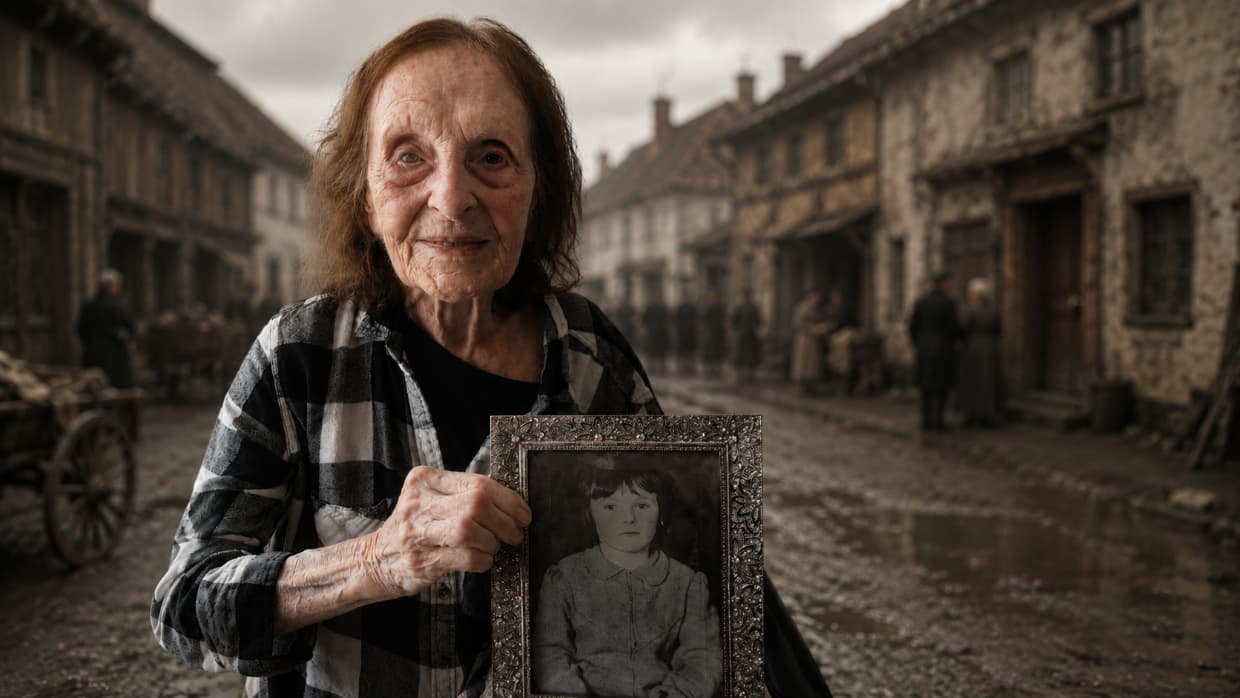
Helena Swerdlik survived the Holocaust by hiding in plain sight. Her father was betrayed for five pounds of sugar.
Helena Swerdlik, originally Kitenkorn, was born on October 20, 1935, in Lublin, Poland, into a modest Jewish home filled with faith, kindness, and the rhythms of simple family life. Her father, Reuven, was a shoemaker who worked with his hands and touched many lives through his generosity and kind heart. He made shoes from scratch, often giving them away to those who could not afford to pay. Her mother, Kyla, carried heavy tins of milk from door to door and sold fruit in the marketplace just to make ends meet.
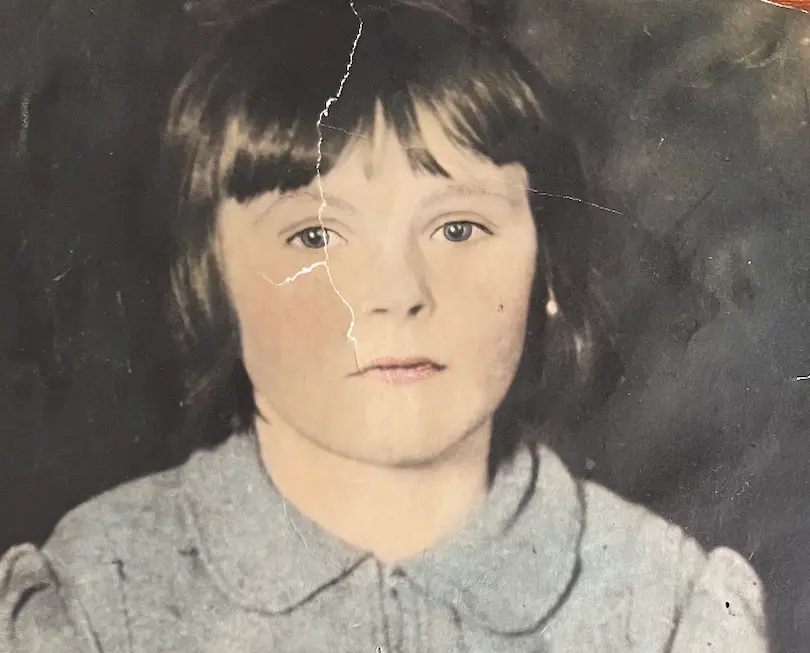 Helena, age 7, 1942
The family of four shared tight quarters and Helena remembers how her father crafted paper figures from newspapers so she could have something to play with. For Shabbat her mother prepared food with whatever was saved from the entire week, often without meat. Helena remembers how her family went to synagogue dressed in the finest clothing they owned. Despite poverty, Jewish life was woven into the rhythm of their days. That world began to collapse in 1939.
When the Germans entered Poland, everything changed. Jews were no longer allowed to work freely. Shops were closed. Movement became restricted. People needed permits just to cross the street. Helena’s older sister, Doba Rivka, was forced to leave school. Jews were ordered to wear identifying stars. Helena remembers wearing one, though her mother often removed it, willing to defy orders to preserve her children’s dignity.
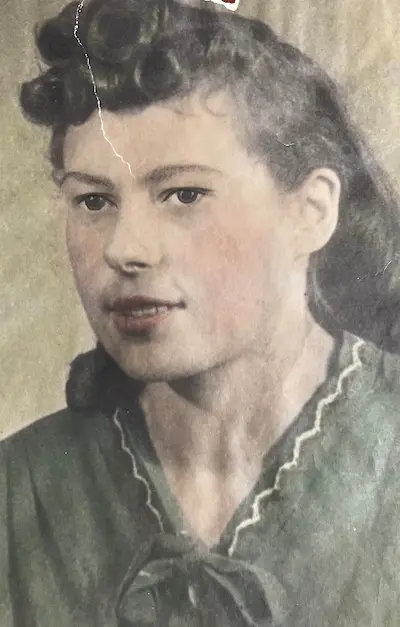 Helena’s older sister, Doba Rivka
Helena come close to death when she contracted typhus in Lublin in 1941. Her mother did not want her sent to the hospital. She feared what might happen there, yet neighbors reported Helena’s illness, and authorities forced her to be admitted.
Helena remembers, “The hospital was overcrowded and filled with suffering. Two patients shared a single bed. Disease spread everywhere. My mother sensed danger and pleaded for her daughter’s release and somehow succeeded in bringing her home.
The following day, the patients who remained behind were killed. Her mother’s decision saved Helena’s life.
By the end of 1941, the danger for Jews escalated even further. Jews were rounded up, street by street, and taken away. Families disappeared overnight. Helena’s parents understood that staying meant death.
Her father went into hiding, hoping to reach the partisans and eventually obtain food for the family. Years later, after the war ended, the family learned what had happened. Rubin never reached safety. A local boy recognized him on the street and informed the Gestapo that the man he saw was a Jew. Reuven was murdered right after and the boy who informed on him received five pounds of sugar as a reward. Helena could never reconcile with the fact that her father’s life had been exchanged for a few pounds of sugar.
Helena, her sister, and their mother wandered from place to place searching for food. There was no certainty about the next day, no guarantee of shelter, and no place that felt safe.
At one point, Helena was hidden with a Polish family. They kept Helena at the risk of their own lives. Helena remembers that they had little food, and shared what they could. Even their own children were not told Helena’s true identity because a single word could mean death for everyone in the house.
Her sister Dobah Rivka was hidden elsewhere and eventually forced into hard labor. She worked long hours milking cows and was forced to do physically exhausting farm work. When their mother eventually found her daughter, Doba Rivka’s hands were raw and bleeding.
Helena shares how at one point Doba Rivka went looking for her family and accidentally arrived at the wrong house because the family she sought shared the same surname as another family hiding her sister. Innocently, she told the strangers she was searching for her Jewish mother and sister. This mistake could have caused them their lives. The man who answered the door could have reported her immediately but miraculously, he remained quiet and simply told her it was a wrong house.
Realizing that hiding could not last much longer, Helena’s mother devised a desperate plan. Through the help of a Polish woman named Pani Flatova, a righteous gentle she obtained false identity papers for the name of 'Sophia Vatris". The girls' mother became Sophia and Doba Rivka was 'renamed' Maria, since her name was identifiably Jewish. Helena was told she could continue to keep her name. Pani Flatova knew the family from before the war and knew how much kindness Reuven did for others through his work as a shoemaker. The goodness he had shown others was now returned to his wife and daughters in their darkest hour.
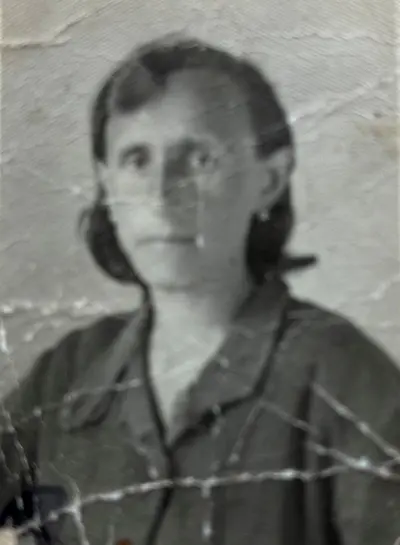 Helena’s mother, 1942
Using these papers, Helena’s mother registered herself as Sophia Vatris and her daughters Maria and Helena as Polish workers volunteering to go to Germany. It was a dangerous decision but one that offered a chance at life.
Helena remembers how they were transported in a cargo train with almost no food or water. “When the train stopped, people rushed outside for basic needs. I was so thirsty, I drank from puddles on the ground.”
At one point during their transport to Germany, the train stopped at Bergen-Belsen. Helena will never forget how they waited several days for onward transport there. “No words can describe the horror of what I saw as a little girl. People were dying from starvation. We were given watery soup filled with potato peels, dirt, and sand. We slept on wooden bunks, multiple people crowded into each space, surrounded by crying, sickness, and despair.”
After several days, they boarded another transport and continued deeper into Germany, eventually reaching an area near Göttingen and Hanover.
There, Helena’s mother and sister were assigned to farm labor. They worked with cows, cleaned barns, removed manure, and collected eggs. Helena was too young to work.
Every day required them to maintain their false identities. Helena remembers the stress of everyday life, “One wrong word could expose them. Our false papers, endangered us daily and despite blue eyes and blond hair, there was no guarantee that we would be able to pass as non-Jewish Poles.” Helena still is in awe of the miracle that they didn’t get caught.
Entire branches of the family were murdered. After the war, the Red Cross helped confirm what the family already feared, Most of their extended family did not survive.
In May of 1945 when the war finally ended, the family was first taken to a Polish displaced person’s camp and later transferred to a Jewish displaced person’s camp. Like countless survivors, they had to begin again with almost nothing. Four years later, in 1949, Helena arrived in America.
Helena carried with her the memories of Lublin, her father’s legacy, the appreciation for her mother’s courage and all the suffering she had witnessed in order to enhance her determination to build a future.
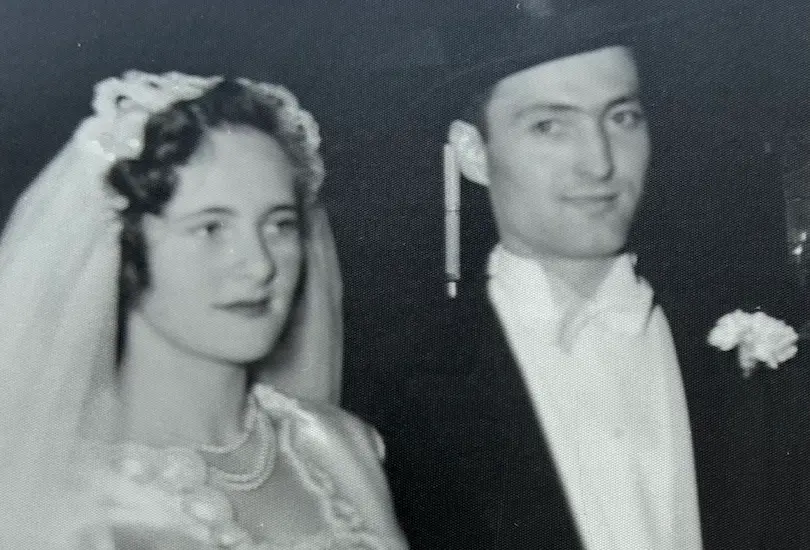 Helen and Samuel’s wedding day, Nov 9, 1952
She met Samuel in Philadelphia through a friend in Strawberry Mansion. They married in 1952 and remained together for seventy-one years. Samuel worked first in a factory and later as a bookkeeper and accountant. Together they had four children, and lived to see grandchildren, and great-grandchildren.
When asked the secret to such a long marriage, Helena answered with characteristic simplicity: “You have to get along. You have to give and take. We were patient with each other. I witnessed so much pain as a child, so perhaps I didn’t take each disagreement too seriously.”
Helena survived, blossomed and became the matriarch of generations.
The Holocaust was not only a history of destruction but a revelation of the extraordinary resilience of the human spirit. Helena’s life stands as a testament to this strength and courage to the triumph of light over darkness.
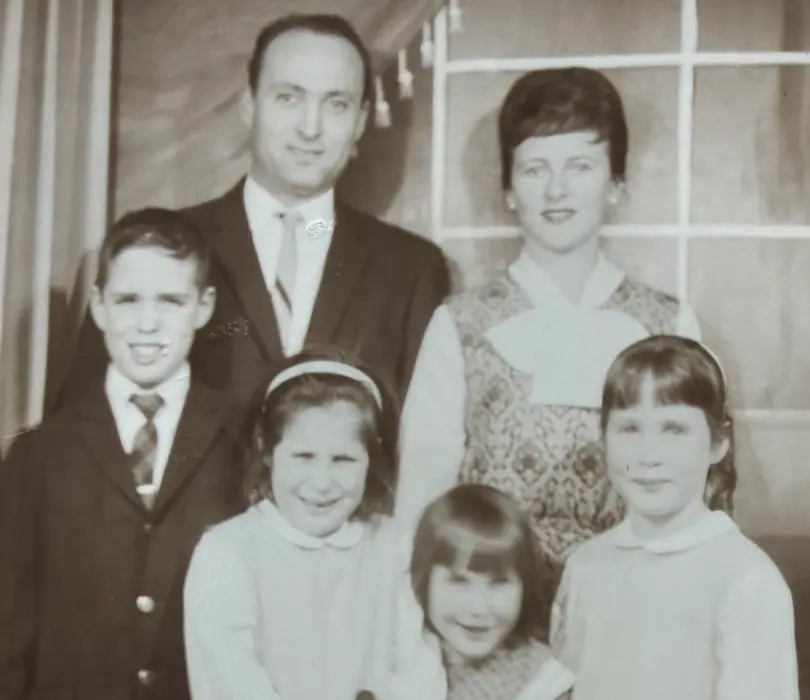 Samuel and Helena and their family, Philadelphia, 1965
May we be blessed to carry these stories forward, and to inspire future generations to stand proud of our Jewish heritage, faith and resilience.
Join Aish for a powerful, once-in-a-lifetime experience in Poland with a Holocaust Survivor.
This subsidized trip is open to all adults ages 20+ throughout North America.
For details and registration, visit:
livinglegacy.aish.com











Wow. Such an incredible story b”H. What attracted me to this story, actually, was her name. My husband’s grandfather was a Swerdlik- we thought he had absolutely no family left!!! How can we find out if they were related somehow?!!
Where did your husband's grandfather come from? My grandfather came from Chelm and traveled to South Africa. His surname was similar
Crying, Thank You For Sharing…Strawberry Mansion, God Keeps His Promises
Thank you for sharing this!
I remember Helena well from my childhood. Such a sweet, sweet woman!May she have tons of Yiddishe nachas from her family.
Hi Tzivia, I noticed you say that your were childhood friends With Helena Swedlik. Do you have any contact with their families. If so, My mother Was CLARA SWERDLIK. Please let me know, I want to see if I have extended family
Toda Rabba
May her life and the lives of her husband, children, grandchildren, and greatgrandchildren and her mother and sister be for a blessing and those righteous who saved them be remembered in the Book of Life
Very inspiring story of Helena n family but finally rewarding