






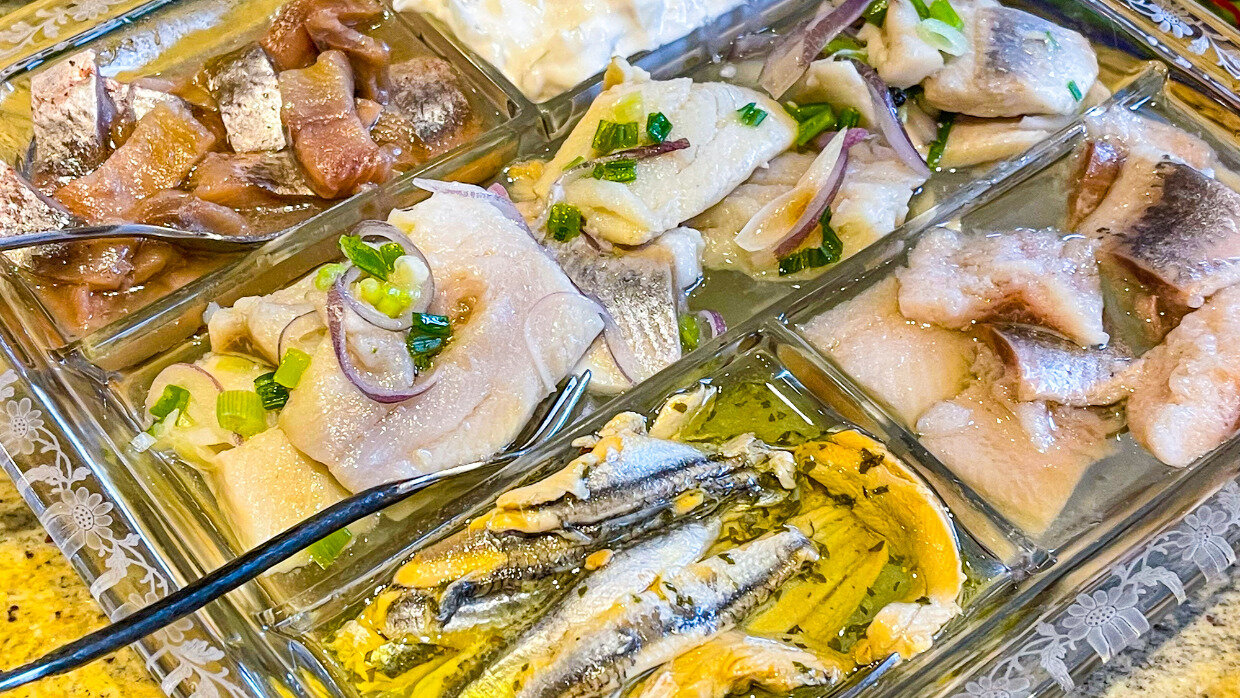
Jews from Eastern Europe emigrated to America and Israel at the turn of the 20th century, coming from the same culinary background, but into two different societies and different economic conditions. While some staples from their culinary heritage remained in both countries, like the matzo ball soup, kugel and gefilte fish, it’s interesting to follow the different paths the herring trade took in both places.

According to Shmil Holland, an Israeli food historian, herring trade in Eastern Europe was dominated by Jews since the 15th century and was aimed mainly at Jewish clientele. “Some were in charge of making the barrels, some of buying the fish, pickling, shipping, and selling.” The salted herring barrels found their way to Jewish communities in Germany, Poland, Russia and more, where they were sold.
Things changed when the herring made aliyah to Israel. While it continued being served at every kiddush in the synagogues, and was pickled and enjoyed in Ashkenazi homes, the rest of the country did not join the herring-club. “It was always popular with orthodox and Eastern European communities in Israel,” said Shmil. “Them and the pubs.”

“But eating herring, and other Ashkenazi staples, was considered shtetl-like by the Zionist movement,” Shmil continued, “while Mizrachi cuisine was considered authentic.” Even the beloved chicken soup got the unflattering nickname “laundered chicken”.
One example is that of Miki Delicatessen, a major cured fish manufacturer in Israel that operates since 1936, that added a line of Mizrachi mezze in the 70’s, with salads like hummus, tahini and babaganoush.
In Israel, Jews from the Balkan added their cured fish to the Ashkenazi table, in a typical Israeli fusion, with a delicacy like lakerda, cured bonito fish from Turkey, and ikra, carp roe dip from Romania, that were accepted by the Polish Jews with great enthusiasm.
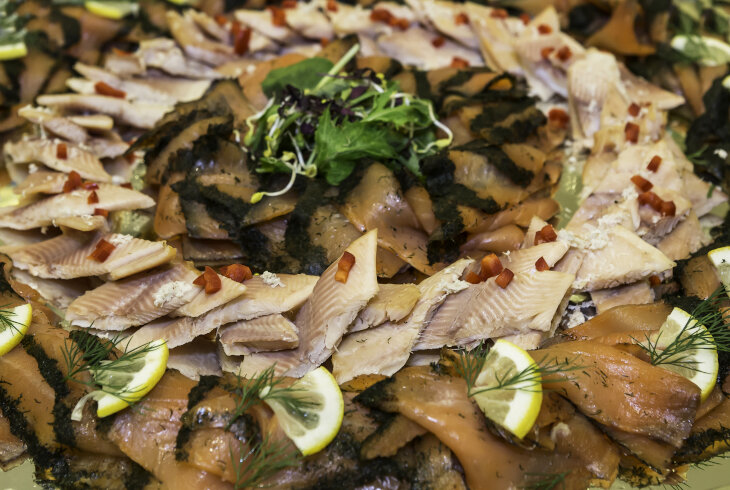
In the Lower East Side, popular Jewish appetizing stores started adding lox to their inventory (a name that derives from the Yiddish word for salmon, laks, or the German lachs.) A huge amount of salmon from the Pacific Ocean, that were brined in heavily salted water, were transported by train to New York (a lot of it on its way to Europe), but some stayed in the city and made its way to the Lower East Side. “It was very cheap in those days,” said Mark. “Even into the 1930’s, lox was selling for 35 cents a pound. Now it’s 35 dollars a pound.”
“The Jews have now entered the smoke house business, which was pretty much a German business,” continued Mark. But while in Europe the common curing method was dry curing, salting the body of the salmon directly, the American lox was wet-cured in brine, then cold smoked at 75 degrees. To this day, appetizing stores in Manhattan offer an impressive collection of cured and smoked salmon, as well as the schmaltz herring, matjes, and many more, popular among both the older and newer generations.
During the 1930’s, writes Gil Marks in the Encyclopedia of Jewish Food, Jews were looking for an alternative to the popular, yet non-kosher eggs Benedict. They replaced the English muffin with a bagel, the hollandaise sauce with cream cheese and the ham with lox. An American staple to this day.
“In the last fifteen to twenty years, people in Israel are longing for Ashkenazi food,” says Shmil. The Russian immigration contributed to the herring comeback, as well as the culture of drinking in bars, where herring and other cured fish are a perfect match. Cured fish are trendy, served by top chefs in hipster places, but still didn’t make it to the mainstream. Abraham Karbelnikov from the Fish HaCarmel (formerly Fish Center) in Shuk HaCarmel says gourmet guided tours bring new clients to his store. “This is a historic place,” he says. But when I ask him about the possibility of a fourth generation in the store that his grandfather built, he says this generation has found their own paths. Still, every supermarket in the country holds a line of pickled and smoked fish, including herring, right next to the hummus and baba ganoush containers.
In NY these original Jewish stores are now serving clients from all backgrounds. Pickled fish and herring is hip. There is even an annual sold out event pairing Herring with gin, vodka and aquavit. “The humble herring has become haute cuisine.”
















What about the health benefits!!!!!!
Brain food!!!!!!
Yes so true, good point.