The tangy and sweet flavor explosion bursting within every tomato is one of the most unique and captivating in the world of fruit (yes, yes, tomatoes are fruit.) It's a wonder how only in the late 1800s did people begin to discover the joy of a tomato.
Bloody Tomatoes

Many stigmas surrounded the bright red tomato in the years following their discovery by Hernan Cortez. Some believed they contained toxins and hallucinogenic compounds and were wary of eating them since they were a part of the nightshade family. Most Eastern European Jews had associated tomatoes with blood due to their red hue. Since eating blood is against the kosher dietary laws, many Jews avoided tomatoes entirely or cooked them extra long the way treated meat.
“However, Roman Jews knew better,” celebrity chef Joan Nathan writes in her book “King Solomon’s Table.” “Many Jewish physicians knew of tomatoes’ and eggplants’ healthy properties and spread the word within the community about them. And Jews, too, were often the merchants selling this new produce around the ports of Europe.”
This is also how the eggplant, a once shunned vegetable became adopted by Roman Jewry and given its proper credit.
The First Family's Jewish Gardener

One of the first people to recognize the truth about tomatoes in America was Thomas Jefferson's father's Jewish doctor. Doctor De Sequeyra recommended Jefferson add tomatoes to his diet because he believed daily consumption of the tomato helped maintain good health and even prolong life. He was so enraptured by the plant that Jefferson began to plant tomatoes himself at his home in Monticello.
According to records of the time period Jefferson had created a stir when he made a display of eating a tomato in public. The entire audience were apprehensive to see their president enjoy what to them was considered a poisonous fruit at the time. Jefferson survived, and Americans began to incorporate tomatoes into their diets.
The Great Cherry Tomato Debate
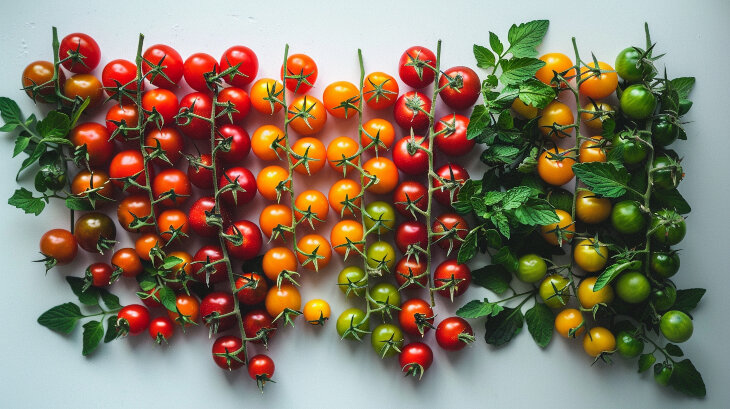
It's long been a point of national pride to mention that the cherry tomato was a product of Israeli ingenuity and innovation. However in the past few years that fun fact has come under question.
According to descriptions from historians of the time it seems that tomatoes shaped like cherries date all the way back to before the 1600s. However it's clear that these tomatoes were different from the tomatoes we enjoy at our tables today. Up until the 1980s mini tomatoes were used only as a decorative fruit to garnish dishes.
While it may not have been Israelis that first invented the mighty cherry tomato, its undebatable that Professors Rabinowitch and Nachum Kedar of the Hebrew University were the ones who were able to transform the cherry tomato from a tasteless garnish to a sublime fruit in its own right. By extending their shelf life and giving them all the juiciness of regular tomatoes they became marketable to Western societies.
The Jewish Tomato
There is not a lot of information about this variety of tomato, but it is real and you may be able to grow it yourself. According to planters, the Jewish tomato varietal is a rather large ox heart tomato that grows on vigorous vines. It is an indeterminate heirloom that produces 10 -14 oz fruit that is multi-color red with yellow markings. The flavor is good and they are great for canning as they are dense with meat but produce little seeds. These are great for sauces as they have dense meat. However, they are a little sweet so will need to add a little acid when canning to maintain PH level. Great for salads as the colors show really well when sliced.
Shai Agnon and the Tomato
Shai Agnon, the famed Israeli playwright and storyteller, told the story of Itzhak. An Eastern European immigrant who made his way to Israel. In this “fish out of water” story, Itzhak discovers for the first time that tomatoes are a real human food. “Itzhak did not know tomatoes are a food for humans, for in his town [in Galicia] people used to call tomatoes ‘foolish apple’ and clever people would avoid them,” Agnon wrote.
“All of a sudden, hunger came and told him—eat! He took a piece of bread and a few olives, one of the seven species with which the land of Israel is blessed, but could not touch a tomato. When he tasted the olives, he distorted his face in dislike. When his host saw him he smiled and said ‘Just as you distorted your face from them today, so you will be happy for them tomorrow because you will be so hungry … there is nothing else to eat. Take a tomato and eat.’ After Itzhak ate a slice of tomato, he could not continue. He thought, ‘I will have none of your sweet and none of your sour acid.’ His friend responded, ‘If you want to be a son of the land of Israel, you must eat whatever you find.’ ”
There was a learning curve but in the end even Itzhak learned to appreciate the tomato regardless of his preconceived notions.
In essence this is the process civilization has gone through with every new plant discovery. To our taste buds, the only flavor that we are born to enjoy is sweetness. This is because our brains condition us to treat any bitter, sour or spicy flavors as potential threats to our health and safety.
Over time, we learn that an orange or broccoli isn't going to poison us and we begin to acquire that taste. For some foods it takes longer, like spicy chilis and bitter licorice. In the end this is how we expand our palates, by trying new things and being open to new possibilities.
The lesson Agnon teaches us is that we must keep an open mind to what is not familiar, because if we close ourselves off we too are bound to miss out on the wonderful treats God has in store for us. This is exactly what the story of the tomato exemplifies. A fruit that was neglected for centuries, until we opened our minds to the hidden possibilities inside its sweet red exterior.
Now let’s get cooking! Here are 5 deliciously Jewish recipes featuring tomatoes.
Summer Kasha

Spiced Tomato Hilbeh, Yemenite Fenugreek Dip

Shakshuka

Israeli Chopped Salad

Matbucha