






 In Poland, Even Winnie-the-Pooh Has a Holocaust Story


9 min read
9 min read



7 min read


In a time of turmoil, we chose Israel—not as an escape, but as home.
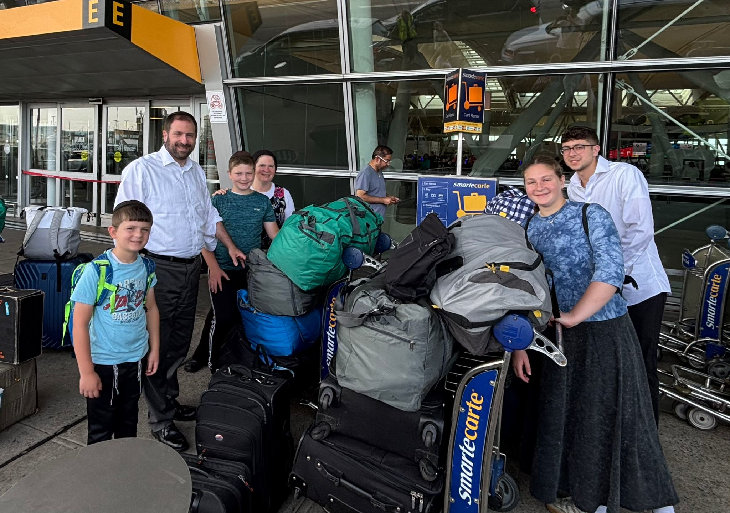
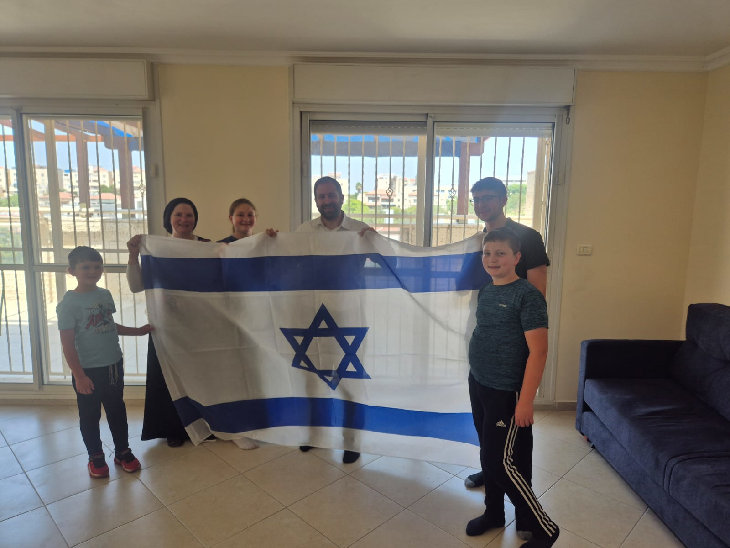
My wife and I, along with four of our children, recently moved to Israel. Why now, of all times?
The past two years have been marked by relentless turmoil: the horrific attack of October 7th; thousands of Israelis called to battle terrorists in Gaza; Hezbollah rockets raining down in the north; mass protests demanding the return of hostages; missiles launched from Yemen by the Houthis; and even open war with Iran. Most people would see this as a reason to stay far away. Yet we picked up our family and left New Jersey behind to live in the holy land.
Why?
It wasn’t out of fear of living in America. Yes, the situation there is deeply troubling. Jews feel vulnerable, abandoned by many, and anxious about what may come next. My brother was at work at Blackstone in July when two Jewish women were shot and killed in Manhattan. Our synagogue in New Jersey has added extra security. Antisemitism feels painfully close to home.
But our move to Israel was not an escape. It was a choice to be part of something greater.
Here the three main reasons we made aliyah.
The Jewish people have always been bound to the Land of Israel. From the moment our first ancestor, Abraham, was called to leave his birthplace and journey here, Israel has stood at the center of our destiny. We all know the story of the Exodus from Egypt, but often forget the very purpose of that freedom: to enter the Land of Israel.
From David defeating Goliath to the Maccabees overcoming the Greeks, Jewish history has always unfolded in this land. Even after exile, the dream never faded. For centuries, Jews across the world faced Jerusalem in prayer, yearning for return. “Next year in Jerusalem,” we declared each Passover, holding fast to that hope.
Then, against all odds, after 2,000 years, the Jewish people did return—a miracle that defied the rules of history, for no nation had ever come back to its homeland after such a span. Today, we live in the continuation of that story, rebuilding Jewish life in the Land of the Jews.
Our family yearns to be part of that story—the story at the very heart of our Jewish identity.
I loved living in America. It is a great country, built on ideals of freedom, equality, justice, diversity, and responsibility—values that are both noble and inspiring.
But as a Jew in America, I was always part of a minority. While America protects minority rights and I never felt persecuted or excluded, I still knew: it was not my country. I was a guest in someone else’s home.
That has been the Jewish condition for 2,000 years of exile—living as guests. Sometimes welcomed, often less so. But always guests.
In Israel, everything changes. Here, we are home. This is my country. Just last week, I went into a store and stumbled through Hebrew with the man behind the counter. As a new immigrant, I excused my clumsy Hebrew by explaining that my family and I had only just arrived. His face lit up with a wide smile as he exclaimed, “Baruch HaBa!”—Welcome Home!
That moment captured it for me. Yes, missiles may still be falling, but I am home, where I am supposed to be, with my brothers and sisters.
Judaism calls on us to live spiritually. While we must engage with the physical world, our ultimate goal is to elevate ourselves and live as souls. Israel is uniquely a place of heightened spirituality.
I remember years ago when I was studying at Aish in Jerusalem, I returned home to visit family. A friend, troubled by the conflict between Jews and Arabs, remarked, “They’re just fighting over rocks and dirt!” On one level, yes—Israel is full of rocks and dirt. But here, even the rocks and dirt are infused with holiness and carry spiritual meaning.
Just 100 yards from our new apartment is a small park. As I watched my kids play soon after we arrived, I noticed what looked like an excavation site in the corner. A sign explained that it was the remains of a 2,000-year-old olive press—the very presses that produced the oil used in the Temple in Jerusalem and to light menorahs throughout Israel after its destruction.
But it’s not just the rocks. Spirituality fills the air in Israel. The siren that sounds across the city on Friday afternoons, announcing the arrival of Shabbat. The shofars that echo early each morning as communities prepare for Rosh Hashanah. Here, Judaism is not something you practice on the side—it’s woven into the very rhythm of life.
In school, we study history—but I’m not sure I ever felt, growing up, that I was truly part of it. Yet here in Israel, the entire world’s gaze is fixed on this tiny land, no larger than New Jersey. It’s astonishing how much attention it commands—whether in media, academia, politics, social media, international organizations, or even the arts.
The sheer volume of editorials, protests, YouTube videos, political debates, and public statements devoted to Israel is wildly out of proportion to its size or seeming influence. And yet, the world watches—closely, relentlessly.
I don’t want to remain a spectator. I want to be part of the story.
One of the first things I only realized after arriving in Israel is how deeply people feel that we’re all in this together. This is our home where we are one family, constantly looking out for each other.
Just a few days after we arrived, there was a knock at our door in the middle of the day. I was home with my 14-year-old daughter (school hadn’t started yet), while my wife was at the park with our 11- and 8-year-old boys. At the door stood our neighbor and her son. “I just want to let you know,” she said, “that I think a siren is about to go off.” The moment she finished her sentence, the siren wailed across Beit Shemesh and beyond—an incoming missile from Yemen.
Our neighbor knew we didn’t yet have the app that alerts Israelis seconds before a siren, so her first instinct was to warn the new family from New Jersey.
We rushed into our safe room and I called my wife. She and the boys had quickly found cover at the park. Thankfully, the missile was intercepted before it entered Israeli airspace and everyone was safe. My kids took it all in stride. But what stayed with me most was that knock on the door. She received an early warning and her first thought to knock on the door of the family from New Jersey. That conscientious act of care spoke volumes: You’re part of us now. It was, in every sense, a “Welcome to Israel” moment.
Having lived in America for decades, I always respected those who urged others to make aliyah, but I also felt it wasn’t right to guilt people—everyone’s circumstances are different. I still believe that. I feel blessed to have brought my family here, giving my children the gift of experiencing life in this extraordinary place. Not everyone can right now, and that’s okay. But it shouldn’t lessen the truth that we all need to acknowledge: Israel is a very special place.
Of course, we’re facing frustrations—struggling with Hebrew, adjusting to cultural quirks, impatient drivers, new schools, or strangers offering unsolicited advice on the bus. But those challenges pale beside the overwhelming joy of finally being home.













I wish you success but the title of this article is all wrong. You did not "move to Israel" -- you can move anywhere. You made ALIYAH.
Are you going to join the IDF?
Thank you for sharing your aliyah experience, and welcome!
With all due respect, I was taught that the purpose of Yetzias Mitzraim was so that we could receive the Torah and be free to serve Hashem. (Though that sounds paradoxical, it's actually the loftiest calling we can aspire to!)
Surely, Eretz Yisrael was the geographical destination, but that's secondary to receiving the Torah, our Divine guidebook for turning the Land—from which its previous sinful inhabitants were expelled—into Eretz Hakodesh.
And it's the Torah that clearly says Israel (whether it's called that or any other name – e.g., Judea, Palestina / Palestine) is Hashem's gift to us, His nation.
I’m not sure the point you are trying to make here. That Jews shouldn’t move to Israel? He just explained his reason for why he moved to Israel with his family. This is a weird take.
I was only reacting to the article's statement that Israel was the purpose of the exodus from Egypt because that's not entirely so: The primary purpose was receiving the Torah and living by its precepts in the Holy Land.
This is easily proven by the fact that Am Yisrael has existed outside of Israel after the exile by virtue of keeping the Torah because that's what defines us as a people. (In fact, our enemies claim we can't use the Bible as proof of our right to the Land if we don't observe the laws therein.)
Of course it's wonderful that we've been able to come back (I made aliyah many years ago), but Torah is what's inseparable from authentic Judaism.
In what other developed country is it normal to have safe rooms and bomb shelters? In Israel it’s part of everyday life. They even have an app! Does anyone else reading this find that outrageous?
We are still in exile. There is a exilein Amerca. And a exile in Israel. You have to choose which exile. It probably comes down to an individual (possibly complex) decision in halacha.
There's an old Yiddish saying about how most people would pick up their own "pekeleh of tzaros" (bundle of troubles) if theirs and everyone else's were lined up in front of them and they could choose any package.
I think that saying applies quite well in this case: Golus is certainly no picnic wherever one might be, but you're better off at home!
Inspiring! Thank you Rabbi Mathias! Shana Tova Tikatavu!
ani mekaneh etchem -- I am jealous of you!
I found myself nodding yes, especially when you wrote about being a guest in America. Welcome home!
Strangers on the bus offering advice shouldn’t be seen as a frustration; it comes from the same source as your neighbour’s warning about the imminent missile attack. One needn’t take the advice, after all.
Very well noted-both are what family does!