








 Those Shameful Thoughts and What They Really Say about You

17 min read
8 min read





Veronica Dronsky trained with the New York City Ballet and survived October 7th. She found her Jewish soul through the art she almost abandoned.
"Use what God gave you."
That's the message Veronica Dronsky strives to live by. But it took losing everything to truly understand what it means.
When Veronica’s parents immigrated from Russia, they knew practically nothing about Judaism despite being born Jewish.
"My mother's parents hid matzah inside newspapers and lit Shabbat candles in a closet. They never said a word about what they were doing. My father's parents told him exactly once, 'You're Jewish. Remember that one day.' Nothing else was ever said."
When Veronica's parents arrived in New York they didn't know the difference between the various streams of Judaism. They only knew one thing: they were Jewish. They tried attending different Manhattan synagogues but no one let them in, except Park East Synagogue, which happened to be Orthodox.
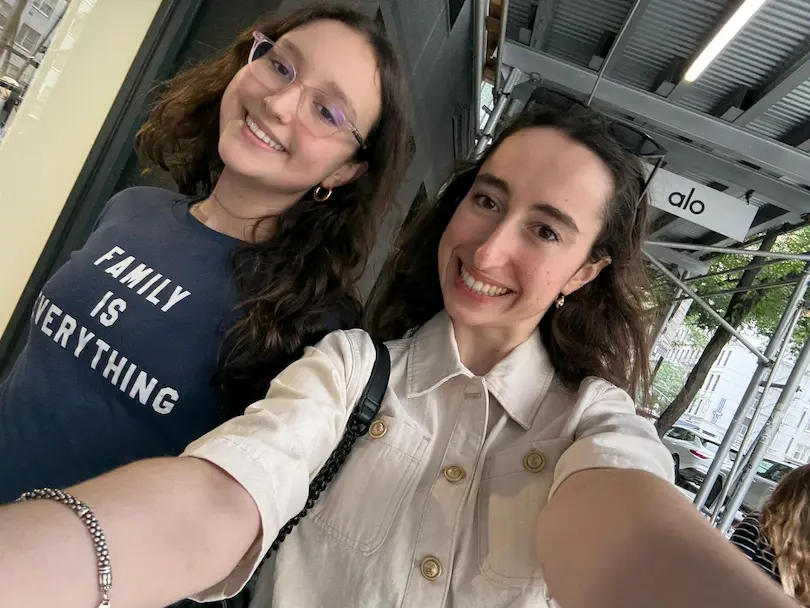 Veronica, right, with her sister Maia
The family attended Shabbat services occasionally, then headed to the park with a friend Veronica had made at synagogue. "We didn't keep much else, but that friend became a lifelong connection."
When Veronica was two, her parents went looking for an activity for her. "They chose ballet because we're from Russia and it's graceful."
By age six, she was accepted into an elite dance school that feeds into the New York City Ballet.
The family stopped attending synagogue. Veronica danced six hours a day, seven days a week. To her, this felt completely normal.
"My father's a surgeon. I grew up watching him work nonstop. Effort was the standard in my home. So I never questioned the intensity. If you want to be good at something, you put in the work."
Veronica loved dancing. Lincoln Center felt like home. But she auditioned for The Nutcracker three years in a row without getting in.
She recalls the summer before her fourth audition. She was 11, practicing in front of the TV. "I knew roles were based on height, so I knew what I'd be eligible for. I kept imitating those dancers, over and over."
"At the audition, the judge kept looking at me and smiling. Finally she said, 'Yes! You're in. You're going to get a spot.'
"Getting that role was an out-of-body feeling. Pure joy."
That year, Veronica was an angel in The Nutcracker. In subsequent years, a mouse and a candy cane, prestigious roles for a child her age. She danced with the New York City Ballet from ages 11 to 14, surrounded by excellence and influential figures like the company's director, Peter Martins.
Some days she danced more than she slept. She didn't call it work. "It was self-expression. I loved being on stage. I wasn't scared. I felt I belonged."
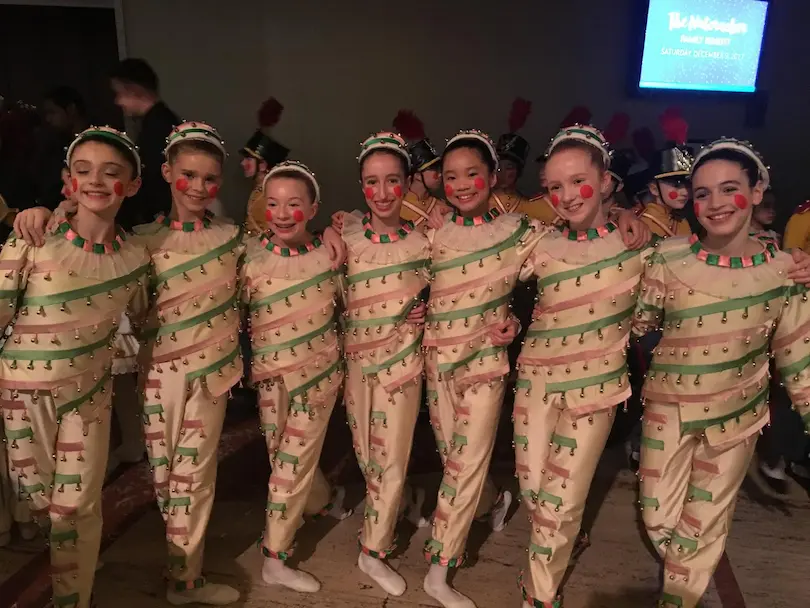 Veronica in the center
But she also knew the odds. "By 16, many dancers are cut and replaced by stronger kids from smaller schools across the country. I always knew most of my class would get wiped out."
At 14, she got the news she'd always dreaded: there was no longer a place for her.
Veronica pushed forward anyway. She enrolled in a smaller school focused on strict Russian technique and competed in YAGP eventually earning a spot at the Rock School for Dance Education in Philadelphia.
She convinced her parents to let her go and take online classes. "I structured my entire day — academics, training, AP classes at night. I learned discipline, independence, and took ownership over my life at a young age."
She had always planned to attend college. She applied early decision to NYU, got in, then took a gap year to dance professionally. She prepared her resume, filmed herself, took headshots, and traveled for auditions.
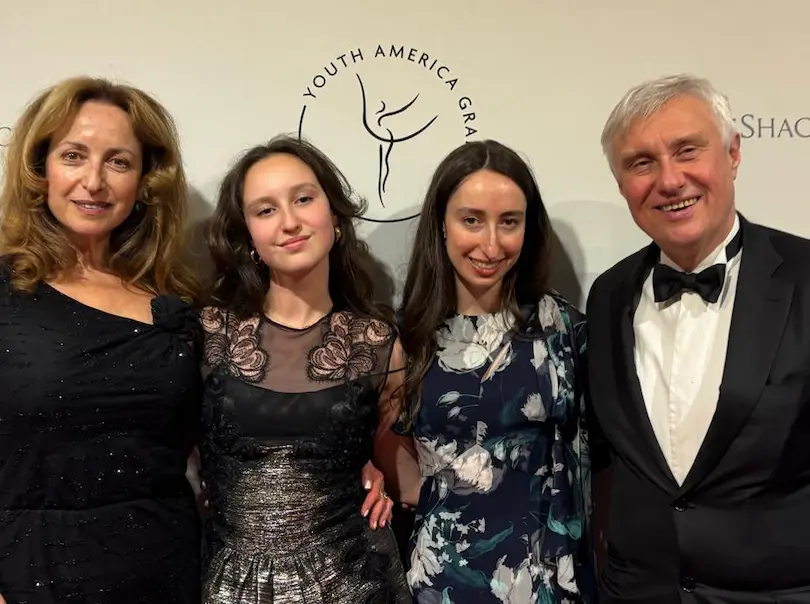 Veronica with her family
The reality of the business hit hard. "The industry is saturated. There are more dancers than jobs." Every position she was offered was low-level, requiring dancers to pay for the privilege. They called them "training programs." She thought, This isn't worth it.
Then everything changed.
Her roommate, a Russian-Israeli, connected her with the Israel Ballet Company. They offered her an audition.
Veronica flew to Israel. When she landed and saw the Israeli flag, something shifted inside her. She felt she could finally breathe.
She was supposed to stay with her roommate's family, but a last-minute change landed her with a family in Petach Tikva, a city near Tel Aviv.
"Shabbat with them changed my life."
She had never experienced a full Shabbat before. "I heard Kiddush and saw people walk to synagogue. I watched neighbors treat each other like family. I saw warmth I'd never known."
She noticed how doors were always open, how people actually talked to their neighbors. "I never even spoke to my neighbors in New York."
She noticed the pace, too. People walked slowly, greeted each other calmly in the streets. "I had always been raised to go, go, go — work harder, push more. Here, people were actually present. I know this sounds strange, but it felt like the ground of Israel was above the rest of the world."
After a strong audition, she was accepted to the Israel Ballet Company. She began exploring Judaism while dancing in various productions with them. She started keeping Shabbat, turning off her phone. The Petach Tikva family answered her questions and guided her.
An Israeli friend taught her to read and write Hebrew. "I was 18 and could finally follow along and read the words Shema Yisrael. I had memorized them but was never able to read them from the prayer book. That moment, I felt something stir deep inside and I started to cry."
On October 7th, Veronica was living in Tel Aviv, keeping Shabbat.
She was in her apartment that morning when she had an instinct to turn on her phone. She saw messages from the Artistic Director: everyone stay put.
The previous night she had been reading the weekly Torah portion, specifically the last word: Israel. She had learned that the last letter of the Torah and the first letter spell lev — heart. She thought it was beautiful. Learning Torah transforms your heart.
When sirens sounded, she grabbed her Bible, prayer book, and a tiny backpack and ran down rickety bamboo stairs to the bomb shelter. "The moment I reached the basement, there was a massive explosion. Glass and debris brushed my back. Ten seconds later and I could have died."
A rocket arsenal had struck. The Iron Dome partially intercepted it; the rest crashed into the building across from hers.
Veronica tried to leave the building, but the door was stuck from the heat. IDF soldiers finally forced it open.
She and her roommates debated what to do next. A friend drove to pick them up. "I remember not wanting to go with them, but I also didn't want to be left alone."
During the drive, sirens went off again. They got out of the car and lay face down on the side of the highway. "It was a scene from a horror movie. Cars everywhere, no people in any of them."
She sat up. She looked at the sky as the missiles flew overhead and prayed. "God, two hours ago I was learning Your Torah. Why is this happening?"
After October 7th Veronica returned to the U.S. but felt lost. She finished her gap year studying at a seminary during the week and working for a dance company on weekends.
If God gave you something — a talent, a gift — use it.
In the fall, she started NYU. By then, she had become fully Shabbat-observant but felt conflicted. "I had stepped away from ballet and wasn't sure I was living authentically."
She thought being observant meant giving up ballet. Over time she understood: "I wasn't meant to give up dance. I was meant to elevate it."
Veronica made two decisions: she returned to ballet and transferred to Yeshiva University, where she felt she could grow both academically and spiritually. The decision came fast — she applied during finals at NYU and committed almost immediately.
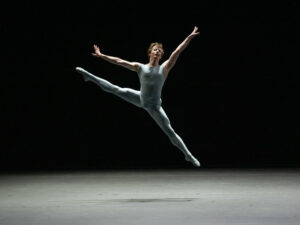
For Veronica, dance has become more than movement. It has become a form of gratitude, expressed through her body. Today she connects to God through dance. "I dance every day — except Shabbat. I dress modestly and don't dance with men. Becoming observant gave my ballet purpose."
She hopes to keep growing and to use her passion to help others. "I want to build a studio for Jewish women — to give them a space to connect through movement."
Today, Veronica performs again, including a recent showcase at Stern College. She is a dancer and a committed Jewish woman, and she has stopped seeing those as separate things.
"There is no straight line to becoming who you're meant to be. But if God gave you something — a talent, a gift — use it. Don't doubt yourself, because the world needs it. And through it, you might just find your soul."












An incredibly inspiring story. Definitely chase your dream and open a dance studio for Jewish women! We have a Jewish girls ballet class in Boston which really lets girls shine and use their skills and love for dance, and brings light to the whole community. Many women and girls would love this opportunity. Yeshar Koach!
they do!!!!! in YISHUV ITAMAR
I have no words. What a powerful story. Veronica is such an inspiring and incredible young woman, may Hashem continue to bless her in everything
As one who goes to the ballet with my wife, I applaud anyone who goes into this very difficult art. It is extremely difficult. Bless her.
As someone who also loves dance and is Jewish, this article really touched me. I’m so proud of Veronica and the way she found meaning through both ballet and Judaism. I truly believe every experience in our lives becomes another layer of wisdom, strength, and growth. God gives us what we need exactly when we need it, even if we don’t understand it in the moment. She is still so young and already inspiring so many people — I know she will continue to do amazing things 🤍
As a lover of dance, especially ballet, I was heart warmed by this story. I have always felt that the body can express silent devotion and love for HaShem. Perhaps this is why there are nigunim and we have so much movement in shul during services. We stand and we sit, we rock back and forth, we are never totally still. Our joy in HaShem cannot be contained. Our voices burst forth in song, even if our mouths don't know the words. Miriam danced proclaiming G-d's miracles.
I hope she might return to Israel. The American weekend is structured so that most performances of dance, theatre, etc are built around shows on Fridays and Saturdays. I have heard that it’s easier in Israel.
Breathtaking story may Hashem continue to bless this beautiful woman