







 As Jewish as a Ham Sandwich

6 min read




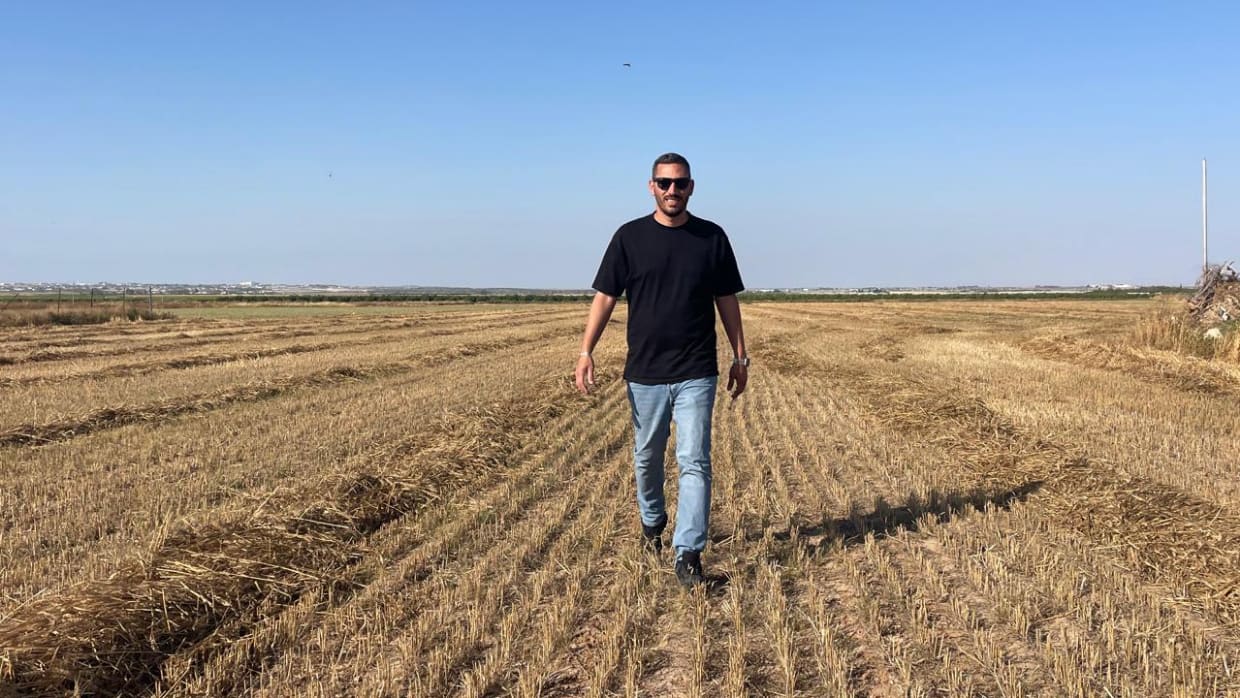
Oren Laufer drove unarmed into a war zone and spent 15 hours rescuing strangers who kept sending him their locations.
When Oren Laufer's six-year-old daughter woke him early on October 7th, 2023 to tell him about a siren, he figured she'd had a bad dream. Then he heard one too. His phone lit up with alerts: a massive rocket attack from Gaza.
Oren's home in Patish, 10 miles from the Gaza border, has no bomb shelter but his in-laws live next door. He and his wife rushed their three kids over. It was Simchat Torah and the whole extended family had gathered to celebrate. The shelter wasn't big enough for everyone. Oren got his wife and children safely inside, then stayed outside with his father-in-law, Rami Davidian.
"We stood there watching the 'fireworks' in the sky when we heard gunshots nearby," Oren recalls. "We looked at each other and said, ‘What's going on?'"
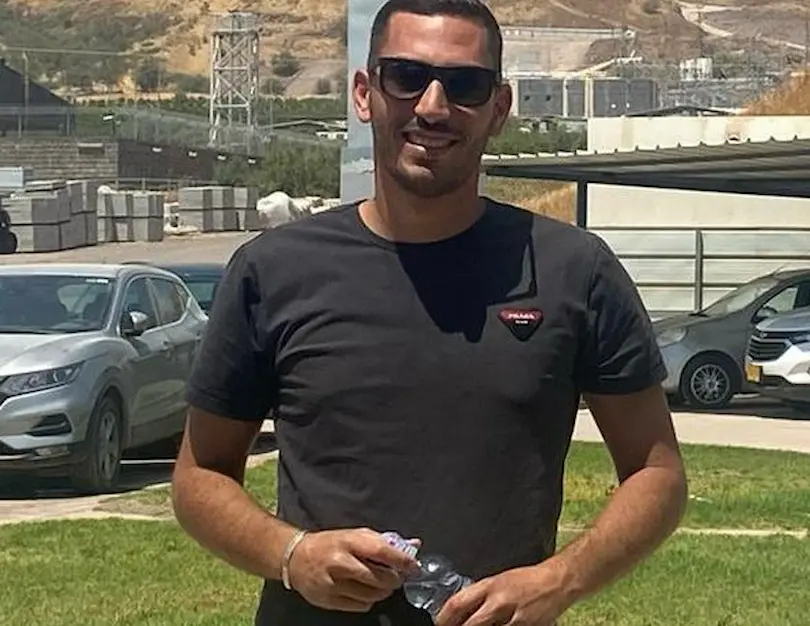
Rami drove to the entrance of their village to assess the situation. He called Oren and asked him to come with his work van.
"I didn't ask any questions," Oren says. "I just got in the van and went."
Neither man was armed. Neither had any idea what they were driving into.
The Urim army base sits next to Patish. When Oren arrived, he found roughly 25 young men and women in full panic. "Some were missing shirts, others were missing shoes. Everyone was crying," he recalls. He didn't know where they'd come from, but with gunfire audible nearby, there was no time to ask. He told them to get in the van and drove them back to Patish.
On the way, the passengers tried to explain: they'd been at a party when terrorists arrived. Oren didn't believe it at first. Then they continued. They'd fled the Nova Festival in their cars, run into terrorists on the road, been shot at, abandoned their cars and ran. One young man told Oren that his girlfriend had been shot dead in their car. He asked if Oren could retrieve the body.
Oren agreed, but first asked: were there survivors still out there who needed to be rescued? Could their friends send him locations?
That was the beginning. For the rest of the day, Oren's phone filled with hundreds of locations where Nova survivors were hiding, waiting, and hoping someone would show up. Together with his friend Asaf, Oren drove the area, picking up whoever he could find. At one field, they discovered dozens of people hiding in the bushes.
"We drove from place to place," says Oren. "Once, at a farm, a policeman drew his gun at us. We stopped and raised our hands, yelling, 'Don't shoot! We're from Patish! We came to help!' He called out to others, 'Rescuers are here!' And directed survivors to our van."
Identifying friend from enemy was genuinely difficult. Some terrorists were wearing Israeli army uniforms. But Oren didn't have the luxury of analyzing anything. He and his friends were moving at a "crazy pace." "We didn't give up on any location we received," he says. "We picked up everyone. Unfortunately, by the time we reached some locations, the people there were no longer alive."
Back in Patish, residents set up a drop-off station where survivors could get food, water, and medical attention. The whole village pitched in.
Around 1 p.m., Oren noticed an unfamiliar car driving fast, the driver looking lost. He'd heard that terrorists were stealing Israeli cars. He grabbed a metal bar, jumped in front of the vehicle, and demanded to know who was behind the wheel.
"The driver said, 'Calm down! I'm Leon from Gedera. I came to help. I'm on your side.'"
Oren got in Leon's car and helped him navigate to survivors for the next several hours. It was Leon who first told him that terrorists had reached Sderot and other Israeli towns. For the first time, Oren began to understand the scale of what was happening.
Eventually, their rescue work brought them to the Nova Festival site itself. "On the way, we'd already seen many burnt bodies," says Oren. "We would stop and cover them with sand, using our bare hands. We saw people slaughtered, bodies of terrorists, cars on fire. Very difficult sights."
At the site, someone pointed them to a makeshift police command tent guarded by a handful of soldiers. Inside were many wounded, some critically, some already dead. Oren and Leon decided to split up: Leon would evacuate the most seriously wounded to a hospital, while Oren and Asaf took the lightly wounded.
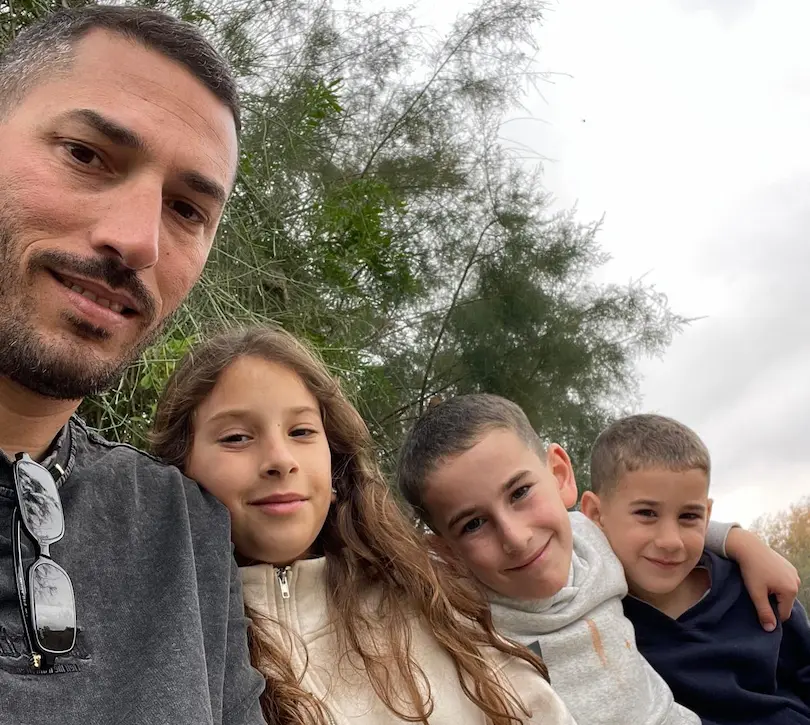 Oren and his children
Leaving the Nova site, Oren thought he heard something from the bar area. "All I saw were dead bodies," he says. "But when I opened one of the refrigerators, a young woman came out. She was the only survivor from that whole area. We took her with us."
He and another Patish resident, Ami, kept driving and looking. "We found two or three more people who were alive. We brought them to Asaf."
Though he heard gunshots nearby throughout the day, Oren never came face to face with a terrorist. He did see looters. "They were young, children really," he says. "They came from Gaza to steal from the abandoned cars and the bodies."
The hardest rescue of the day came around 3 p.m. A fellow rescuer called Oren about four wounded people at a location he couldn't reach himself. He sent Oren the address and their phone numbers.
Oren called one of the numbers. A young man named Roee answered. He said that many people had promised to come. Nobody had. Oren told him he was on his way, and stayed on the line for the seven minutes it took to get there.
When they arrived, two of the four, both young women, were already dead, still in their car. "I closed the car door, looked at them one last time, and went to find Roee," Oren recalls.
Roee and his friend Maayan were hiding in a roadside pit, covered in leaves and weeds. As Oren assessed the situation, a military vehicle pulled up, initially suspecting Oren and Ami were threats. After they identified themselves, Oren asked for help. Both young men were wounded and couldn't climb out on their own.
They loaded Roee, who was less seriously hurt, into the military vehicle. The driver rushed him to a hospital.
Maayan had a stomach wound. When Oren tried to lift him, blood poured out. "I'm not a doctor," Oren says, "but I've watched a lot of movies. I stuck two fingers into the wound and pressed hard. He screamed, but I pulled him into the back seat with me, kept my fingers in, and told Ami, 'Go! Go, or he won't make it!'"
For the forty-minute drive to the hospital, Oren held Maayan and pressed on the wound. He talked to him, tried to calm him down. "The whole way, I kept pointing to the sky and saying, ‘Abba (father in Hebrew) is watching over you every day, and He'll watch over you today.' Maayan didn't understand which father I meant. He said, 'My father doesn't know I'm here.' I said, 'But my Father knows we're here. Don't worry. He's watching over us, and we will get home today.'"
Maayan lost consciousness several times during the drive. At one point he whispered, "I'm not going to make it. My mother's name is Smadar. Tell her I love her."
"Don't say that!" Oren shot back. "You are going home!"
Maayan was still breathing when they reached the hospital. The doctor told Oren to remove his fingers from the wound. Oren said he couldn't. The doctor insisted. The moment Oren pulled his fingers out, blood gushed again. "Stop!" the doctor yelled. "Hold it again!"
Once the doctors got the bleeding under control, they noticed Oren was soaked in blood and assumed he was wounded too. He explained it wasn't his.
He and Ami walked back to the car, intending to go home and change. Oren's phone rang. A young woman was begging him to rescue her sister.
It was around 5 p.m. He asked if her sister hadn't been rescued by now, was she certain she was still alive? The woman said she'd spoken to her on the phone just minutes ago.
Oren called the sister, stayed on the line, and drove back out. They found four young women hiding near the same spot where they'd rescued Roee and Maayan.
"Didn't you see us when we rescued two men from here?" Oren asked.
"We saw you," they said. "But we thought you might be terrorists."
As Oren and Ami helped the women into the car, they were spotted. Terrorists opened fire. "Thank God, no bullet reached us," Oren says. "They were too far." They got the women to safety, picking up several more survivors along the way.
It was 11 p.m. when Oren finally got home. He showered, changed, and then made what he calls "a big mistake." He opened Telegram.
"That's when I began to understand. The terrorists had invaded all the kibbutzim where I grew up and murdered or kidnapped my childhood friends. I recognized the burnt houses. I saw my good friend Yarden Bibas and his wife Shiri being taken hostage. I asked my wife what had happened. She said, 'You don't know?!' I said, 'No.'"
He started calling family and friends. Nobody answered. That, he says, was the hardest part of the entire day.
Oren grew up in Kibbutz Sufa, near the Gaza border, where his parents still live. They survived, though his father spent hours fighting off terrorists. The kibbutz lost three men but managed to repel the attack. Oren found that out days later.
"I lost many good friends on October 7th," he says. "Childhood friends, soul friends. One of them is always in my heart. I carry his picture wherever I go. I stay in touch with his father and see him several times a week. It's not easy, but we have to stay strong for our children."
The next morning, Oren wanted to go back out. His wife, who had spent the previous day not knowing if her husband was alive, said no. By then, the army and police had taken over rescue and recovery.
In the afternoon, he spoke with Leon by phone. Leon was in Sderot, still helping people. Oren invited him over to shower and eat. Leon accepted. Driving from Sderot to Patish, he was ambushed by terrorists and killed.
More grief followed that day. Asaf's daughter, who had been stationed at an army base, had been murdered on October 7th.
That evening, Oren drove his family to Eilat, where his parents and other evacuees had gathered. It was a relief to see them and a shock to take in what had been lost. Nothing would be the same.
In his day job, Oren works in sales. After October 7th, he became a tireless advocate for Israel. He brings tour groups from the United States and other countries to the Nova site and describes what he saw there. "I rescued hundreds of people," he says, "but as I see it, I was just a messenger. I was doing what God was asking of me."
Oren didn't grow up religious. He felt a pull toward God during his army service, and when he moved to Patish, a traditional village, he was embarrassed not to know his way around the synagogue. He made sure his children would. They attend religious schools.
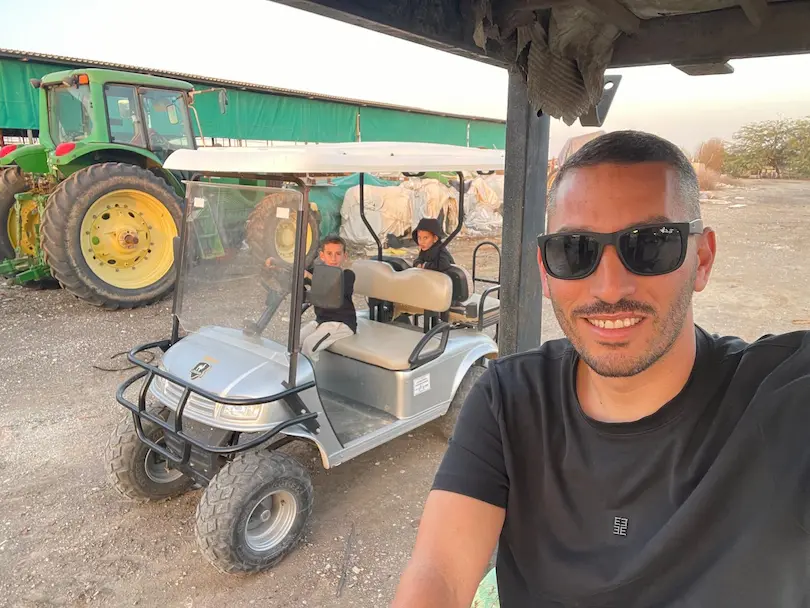
"My connection to God deepened after October 7th," he says. "I spent many sleepless nights trying to understand how I'm still alive. I saw what happened out there. How did I walk away unscathed? I came to believe that I was protected from above."
During a tour organized by Project Inspire, an American visitor named Shalom Brickman asked Oren how he expressed his gratitude to God. Oren was embarrassed to realize he didn't have an answer. Shalom asked if he owned a pair of tefillin (the small leather boxes with Torah verses that Jewish men bind to their arm and head during morning prayer). Oren said no. Shalom offered to send him a pair.
"I wore tefillin at my bar mitzvah," Oren says, "and a couple times in the army. But I never had my own pair. I really wanted one."
Shalom sent them. "I put them on every day, and I feel it," Oren says. "It's my direct connection with God. My kids watch me pray every morning. My young son comes under my tallit and says the Shema with me."
Oren has stayed in touch with many of the people he rescued. He's attended several of their weddings, which were moving beyond words.
The most powerful reunion came as a surprise. Oren was invited to speak at the Project Inspire Convention in the United States. "It was my first time in America, and my first time giving a speech in English," he says. "I was incredibly nervous."
After his speech, the next speaker was called to the stage. It was Maayan.
"I couldn't believe it," says Oren. "I have no words for how moved I was." He hadn't seen Maayan since dropping him at the hospital. They embraced. Maayan thanked him for saving his life.
Today, Oren keeps telling his story, carrying his friends' memories, and reminding whoever will listen that even in the worst moments, one person showing up can change everything.
View this post on Instagram








How sad that the other hero Leon( obm) did not make it out alive, he(obm) saved a lot of people and got murdered in the end, how very sad to hear this he( obm) was a true hero till his( obm) last breathe, his ( obm) soul should have a aliyah
What an incredibly inspiring,beautiful , amazing person , dear Oren !! Dear Oren...wow, ...such giving, such mesirut..incredible. Such a bracha to have you in our family ...beyond expression how much nachat you give אבינו שבשמים !!!! Thankyou
A HERO. Would make a great movie.
Amazing, beautiful story thank you for sharing it.
Très fort et très émouvant. Ce Juif s'est transformé en Ange de Hachem et il a fait des merveilles. Nous sommes un PEUPLE EXCEPTIONNEL
Beautiful article. Our enemies will never understand us—we will never stop protecting one another and doing all we can to raise children who keep Torah and mitzvot.
Am Yisrael Chai!
My eyes are filled with tears after seeing the reunion between Oren and Maayan. God bless you, Oren. And indeed you have been blessed.
Same here!