







 The Red Cross’s Jewish Problem
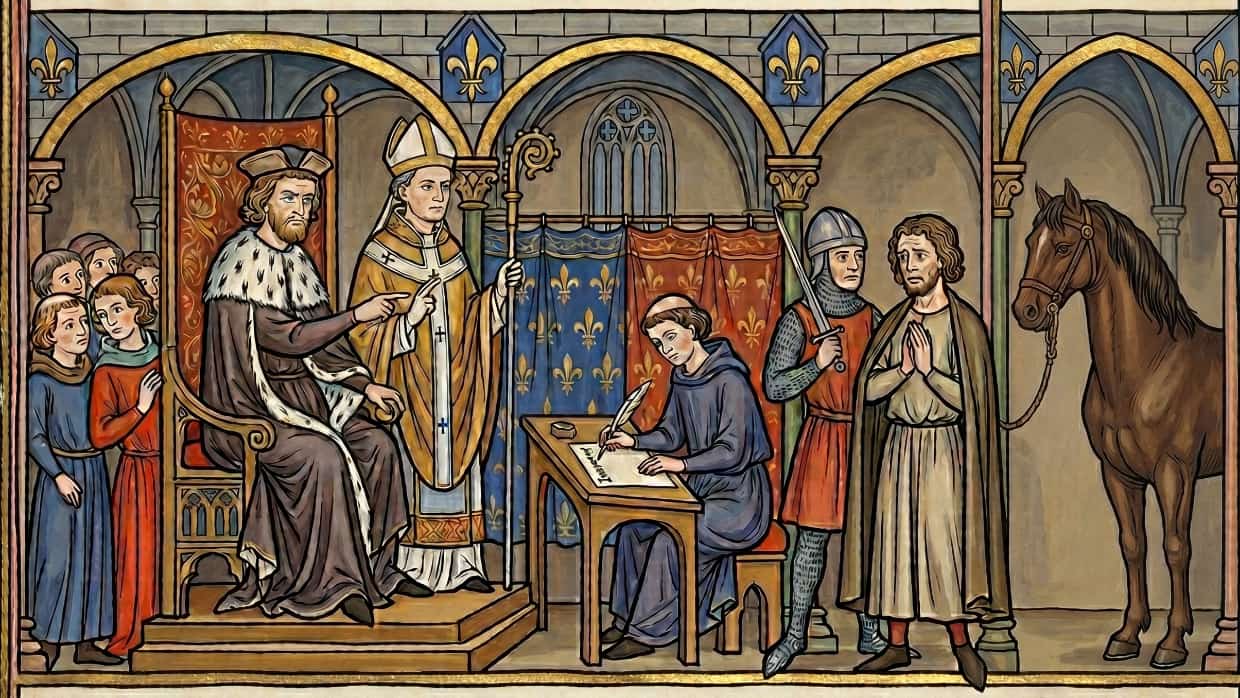






When powerful medieval rulers conspired to profit from a deadly blood libel.
Eight hundred years ago, a frightened horse and a servant's imagination were enough to send 30 Jews of Blois, France to the stake. Today, a single unverified account from an unnamed source was enough for a New York Times columnist to claim that Israel trains dogs to rape Palestinian prisoners. The mechanics haven't changed: a shocking accusation, powerful institutions willing to amplify it, and a Jewish community scrambling to prove a negative. The story of Blois is a reminder that blood libels don't require evidence. They only require an audience.
When Isaac ben Elazar of Blois stopped by the Loire River to water his horse, he had no idea what was coming. It was spring 1171, Thursday evening, around dusk. He was returning from a fur trapper from whom he had purchased some fresh hides, which he carried under his cloak.
At the river, an edge of a hide slipped out. At the same moment, a Christian man, a nobleman's servant, approached to water his master's horse. When the horse caught a flash of white hide in the fading light, it spooked and jumped back. The servant, unable to control the horse, gave up and turned around.
The servant told the nobleman he had seen a Jew throw the body of a Christian child into the river.
Isaac went home and forgot all about it. The servant, on the other hand, was so shaken that when he returned to his master, he told him a far more terrifying story.
The servant told the nobleman he had seen a Jew throw the body of a Christian child into the river. He insisted the Jews had murdered the child and that the horse had refused to drink because of the body in the water.
We don’t know if the servant believed his own morbid tale. The nobleman almost certainly didn't. But he saw an opportunity to take revenge on the Jews of Blois in general, and on one Jewish woman in particular.
The next morning, he rode to the ruler of Blois, Count Theobald V, and accused the Jews of ritual murder.
Like the nobleman, Count Theobald almost certainly didn't believe the outrageous accusation. But he too jumped at the opportunity. He immediately ordered the arrest of the approximately 40 Jews living in Blois. The hapless Jews were seized and thrown into prison. Only one prisoner was treated with any respect and spared iron chains. Her name was Pulcelina.
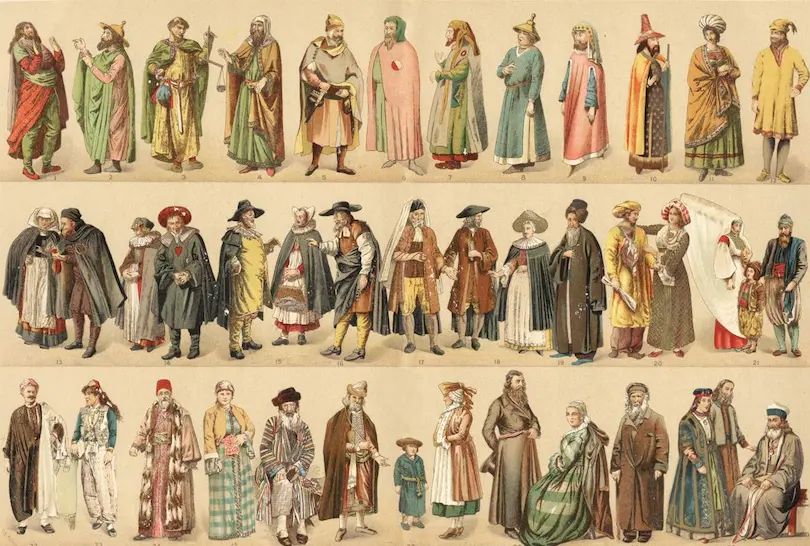 French Jews in the Middle Ages. From The Jewish Encyclopedia. Singer, Isidore, 1859-1939; Adler, Cyrus, 1863-1940, Public domain, via Wikimedia Commons
Pulcelina was an influential widow, mother of two daughters, and a successful moneylender who ran her business with an iron hand. A contemporary letter describes her as "harsh as a rock... She dealt arrogantly with all who came in contact with her.1” Among her clients2: Count Theobald himself.
What Pulcelina didn't know was that Theobald was drowning in debt. The second son of Count Theobald IV ("the Great"), he had inherited the lesser lands of Blois while his older brother Henry ruled the far more prosperous county of Champagne. Historian E.M. Rose wrote3 that by the end of the twelfth century, Blois "gradually sank into relative obscurity... small and fairly insignificant, considered a backwater."
To strengthen his position, Theobald's father had arranged his marriage to Alix, a daughter of King Louis VII of France and Eleanor of Aquitaine. Henry married the older sister, Marie. King Louis VII then married Henry and Theobald's sister Adela, cementing the ties between the royal family and the counts.
Alix had come to Blois as a young girl, raised in a monastery until she was old enough to marry. At the time of the blood libel she was twenty years old, accustomed to wealth and luxury, and deeply disappointed by life in Blois. Rose4 describes a household straining under financial pressure: the grand church that was meant to be a family showpiece was left half-built, probably for lack of funds. A popular song circulating through royal courts implied that Marie gave generously to the ransom of King Richard the Lionheart while Alix refused to contribute.
The struggling count and countess had borrowed heavily from Pulcelina. She pressed them for repayment just as she pressed everyone else5. The count grew resentful. The countess considered her an enemy. The nobleman who brought the original accusation likely owed her money too.
When the servant's lie landed, all three of them seized it.
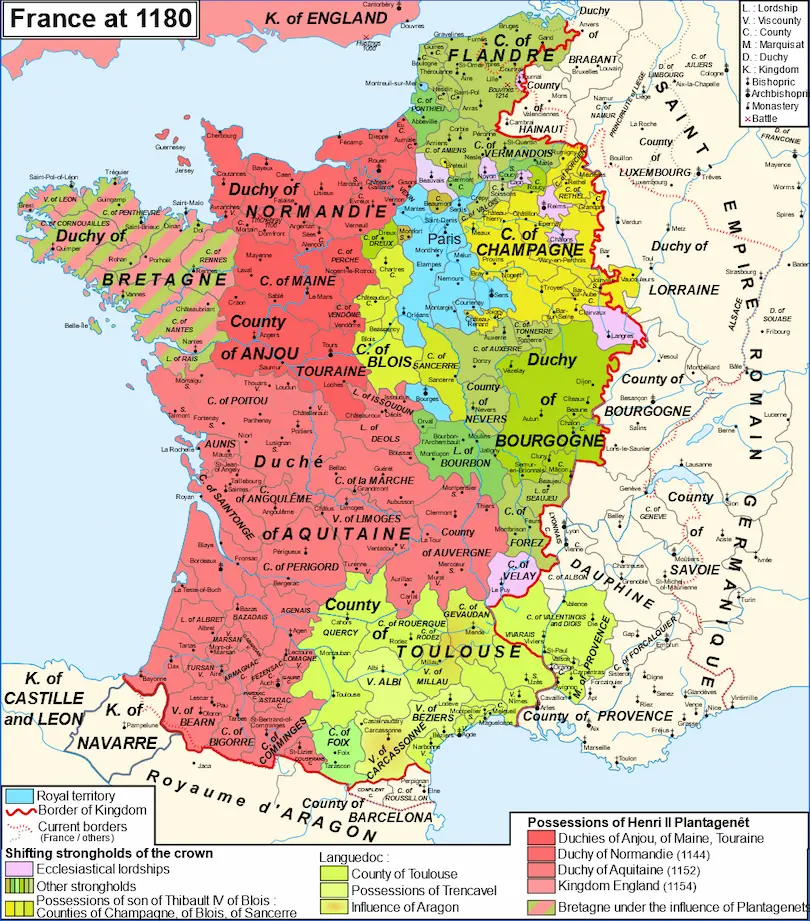 Map of France in 1180, with Blois County roughly in the center. Source: Zigeuner, CC BY-SA 3.0 <https://creativecommons.org/licenses/by-sa/3.0>, via Wikimedia Commons
Even in prison, Pulcelina held onto her belief in the count's goodwill. She encouraged her fellow Jewish prisoners, worked to keep spirits up, and lobbied Blois's influential figures to reason with the count. When she asked to speak with Theobald directly, his servants refused her, apparently afraid that with her force of personality she might actually change his mind.
No corpse had ever been found. No Christian child from the surrounding area was missing. No one had brought any complaint. The case should have collapsed.
Meanwhile, besides the servant's testimony, there was no evidence against the Jews of Blois. No corpse had ever been found. No Christian child from the surrounding area was missing. No family was grieving. No one had brought any complaint. The case should have collapsed.
Then a priest appeared, reframed the entire affair as a religious matter, and turned the criminal investigation into a religious affair.
The priest proposed submitting the servant who had made the accusation to the ordeal of water, a medieval method of seeking supernatural verification of testimony.
A contemporary, Rabbi Ephraim of Bonn, described the proceedings6:
"The ruler commanded and they brought him [the servant], took off his clothes, and put him into a tank filled with holy water to see what would happen. If he floated, his words were true; if he sank, he had lied. Such are the laws of the Christians who judge by ordeals, bad laws and customs by which one cannot live! The Christians arranged it in accordance with their wish so that the servant floated, and they took him out and thus they declared the wicked innocent and the righteous guilty."
On the basis of the ordeal by water, the Jews of Blois were sentenced to death.
 Ruins of Count Theobald V's fortress with a dungeon for criminals. Source: Daniel Jolivet, CC BY 2.0 <https://creativecommons.org/licenses/by/2.0>, via Wikimedia Commons
Shocked by the sentence, the Jewish community tried to bribe their way out. Two representatives, Baruch ben David Hacohen and Isaac ben Judah, presumably from outside Blois, met with Theobald and negotiated. The most they could offer was 280 pounds.
A contemporary letter records what happened next7: "When the count heard, he was angry and ceased speaking with them. Because of his anger, he did not listen to them. He turned only to the priest and did all that he ordered."
On the morning of the 20th of Sivan (May 26, 1171), Pulcelina and about 30 Jews, among them pregnant women and babies, were led out of prison and tied to a stake. Before the flame was lit, they were offered pardon if they converted to Christianity. Every one of them refused, each one encouraging the others in their faith.
A contemporary letter described their deaths8:
"As the day grew warm, in the morning, the fire was lit. As the flames rose, the Jews sang together; they lifted their voices sweetly. Indeed the Christians came and told us of this, asking: 'What is your song that is so sweet? We have never heard such sweetness.' For at first the sound was low. But at the end they raised their voices mightily, singing Aleynu le-shabeah; at that point the fire blazed forth."
The Aleynu prayer expresses gratitude to God for creating the Jews as a distinct people. Perhaps the Jews of Blois, betrayed by local Christians who had cruelly weaponized religion for their own profit , chose to die rather than become what had destroyed them.
Baruch ben David Hacohen, one of the negotiators, had witnessed the execution. Fearing for his own life, he fled to Orleans and reported everything to the local leaders.
The tragedy pulled the Jews of France together. The Orleans Jewish community, shaken to its core, moved fast. Their immediate goals were to secure proper burial for the victims and to ransom the surviving Jews of Blois, especially the young children who had been taken from their parents and forcibly converted to Christianity. Their long-term goal was to do everything possible to prevent this from ever happening again.
The count refused to give them a proper burial. The contemporary letter records: "Those burned at Blois were not accorded burial, as a result of our great sins. But the site of the burning was a low area, and the count ordered that the bodies be covered with dirt and stones."
The ransom effort was more successful since it put money directly in the count's pocket. Nathan ben Meshullam, a prominent community leader, paid a bribe of 120 pounds to the bishop of Sens, Theobald's younger brother, with another 100 promised to the count. The survivors of Blois were free. Count Theobald had gotten exactly what he wanted.
While the ransom negotiations were underway, the Jews of Orleans were reaching out to other French Jewish communities about preventing future blood libels. After consulting with rabbis and lay leaders in Paris, Troyes, and nearby communities, a Jewish delegation went to King Louis VII.
"Theobald has sinned grievously... I do not believe that the Jews ever killed a Christian. Fear not, for I shall enhance the respect accorded you."
His response was unambiguous9: "Theobald has sinned grievously... I do not believe that the Jews ever killed a Christian. Fear not, for I shall enhance the respect accorded you." He announced throughout his kingdom that Jews were to be accorded extra protection.
Theobald's own brother, Count Henry, condemned the execution as well.
The Jewish community thought it wise to bring him a monetary gift regardless.
The story of the Jews of Blois was preserved in numerous letters, chronicle entries, and poetic kinot (elegies). The rabbis of the time instituted a fast day on the 20th of Sivan, the date of the burning, to commemorate the victims. They also required mourning practices from the surrounding communities.
Some things are worth remembering precisely because they keep happening. Eight hundred years later, the libel looks different but the playbook is the same. So is the answer: remain a proud Jew, speak up for your people, and don't let the lie stand.











horrifying to read this article
What wonderful women!
Think of the courage it takes to choose to die by fire at the stake rather than convert and so save their lives!
May these women sit at the right hand of HaShem!
Why not talk about today's blood liable such as Fareed Zacharia 'The Jews made us go to war', or the NY Times 'the Jews use dogs to rape Palestinians'. Simply note that the accusations are still present.
The article opened with a reference to the NYT article.
And the end states “the libel look different but the playbook is the same”.