 Greece’s Minister of Health is Baffled by the Jews




3 min read


The real cost of the destruction of the Temple keeps adding up, generation after generation.
This week, Jews around the world will mark Tisha B'Av, the ninth day of the Hebrew month of Av and the saddest day on the Jewish calendar. It is a fast day that mourns the destruction of both Temples in Jerusalem, the first by Babylon over 2,500 years ago and the second by Rome in the year 70.
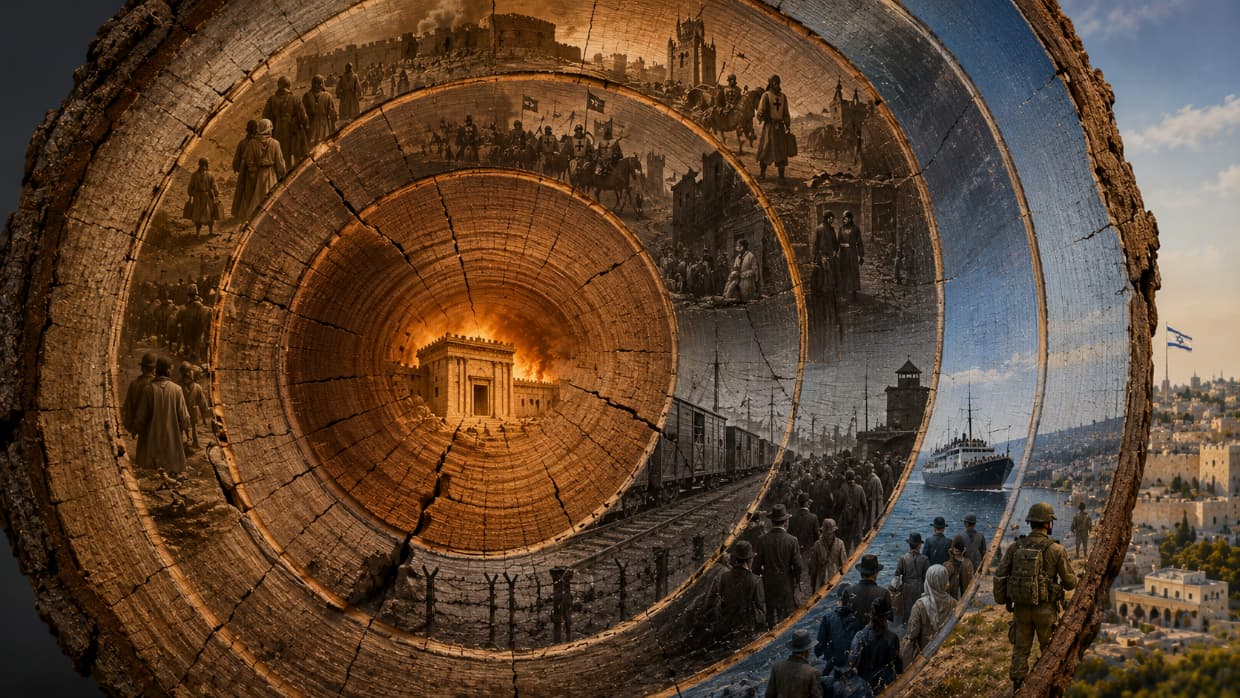
When we mourn on Tisha B'Av, we tend to travel backward in time. We place ourselves at the moment the Temple stood ablaze. We picture Jews sold as slaves and thrown to the lions in Roman amphitheaters. We focus on what was lost then.
The full weight of a catastrophe is not measured at the moment of impact. It is measured in everything that follows.
The full weight of a catastrophe is not measured at the moment of impact. It is measured in everything that follows.
The Temple's fall was the climax of something larger: the collapse of the Jewish people as a functioning, independent nation in its own land. For nearly two thousand years, we lived without sovereignty, without security, without a home. We became a vulnerable people. The expulsions, the ghettos, the pogroms, the wandering from land to land, all of it flows from that break. Even today, the challenges to the legitimacy of the Jewish people in the Land of Israel draw their force from that long discontinuity. We were not a sovereign nation in our land for all those centuries, and the world has not let us forget it.
The Jerusalem Talmud teaches that every generation in which the Temple is not rebuilt is regarded as if it destroyed it. On first reading, that sounds unfair. What did we do? We were not there.
But the statement makes perfect sense once you grasp the principle. The destruction is not a sealed event in the past; it’s an ongoing condition. Each generation lives inside its consequences, and each generation that does not repair the break becomes part of its story. Every generation adds another chapter to the cost. Every generation sees more of what was lost.
Which means the pain of the destruction has not gotten easier with time. It has gotten worse because we understand more fully what was set in motion when they burned.
So this Tisha B'Av, when you sit on the floor and hear the Book of Lamentations chanted in the dark, try these two exercises. First, do what Jews have always done. Go back and stand in Jerusalem as it burns. Feel the heat of the flames. Listen to the cries of the people. Experience the loss as they felt it.
Then come forward. Trace the line from that fire to everything it ignited: the wandering, the vulnerability, the two thousand years of homelessness, the Holocaust, the arguments still raging today about whether the Jewish people belong in their own land. Ask what it cost your great-grandparents. Ask what it costs you.
We are not merely remembering Tisha B'Av; we are still living inside it.
Jewish tradition insists that this darkest of days carries a seed of light. An ancient teaching holds that the Messiah is born on Tisha B'Av. The day that marks the deepest break also holds the promise of repair. Mourning that grows with understanding is the measure of how much there is to rebuild.
May we merit to see the rebuilding, speedily and in our days.