








 After the Manchester Synagogue Attack, They Danced Through Their Tears

6 min read
7 min read
4 min read
6 min read




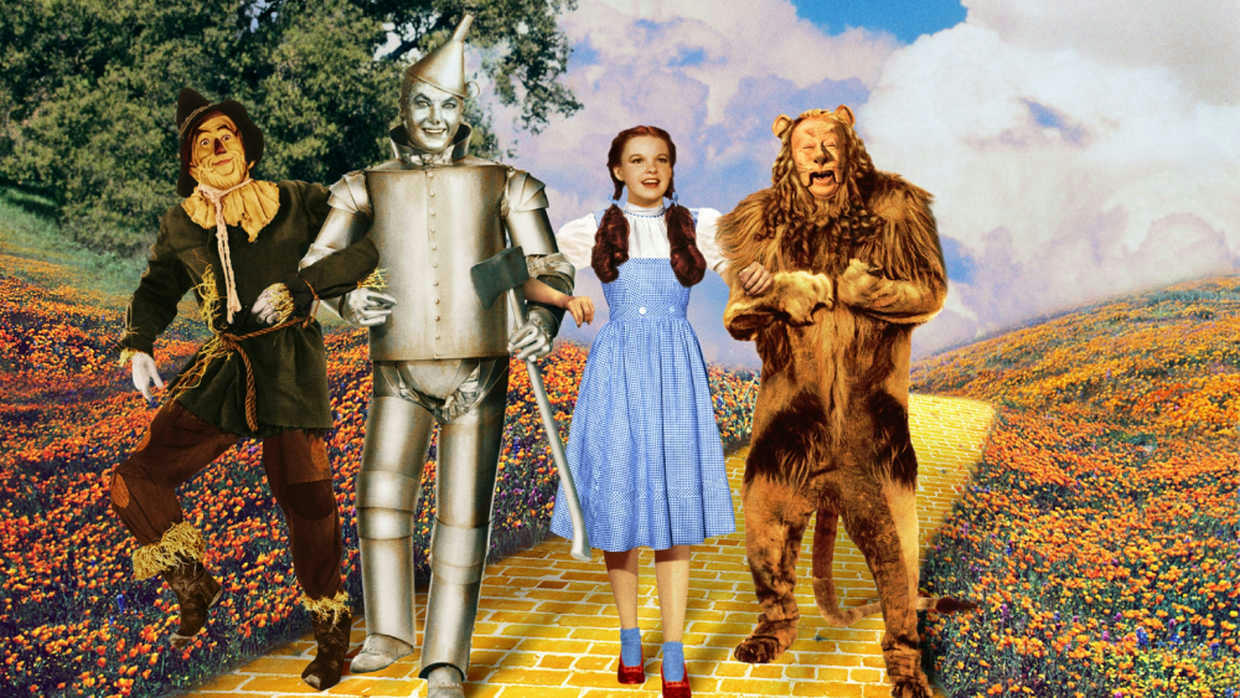
Behind the magic of The Wizard of Oz lies a story of Jewish pain, hope, and creativity—from its antisemitic author to the Jewish artists who transformed it into an immortal anthem of longing for home.
As audiences start flocking to the new film Wicked: For Good, many are rediscovering the world behind Oz—its friendships, its moral questions, and its deeper cultural roots. That renewed fascination has sparked fresh interest in the original story that inspired it all. And now, in Las Vegas, fans can step even closer into that universe.
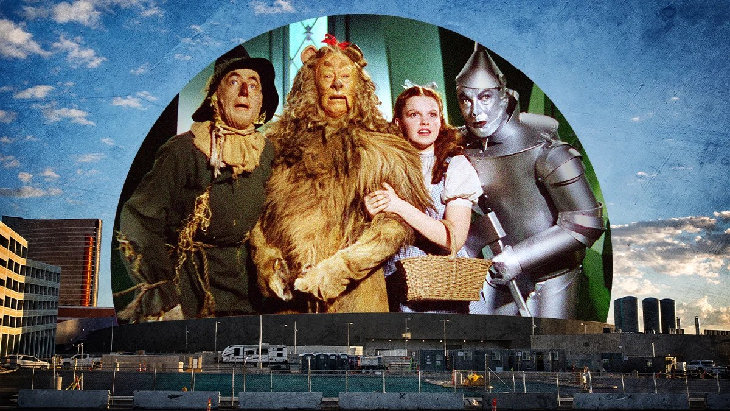
Visitors to Las Vegas are raving about The Wizard of Oz at the Sphere, an immersive experience that reimagines the beloved film with cutting-edge special effects—a life-size tornado, flying objects, and a fresh soundtrack. “Who hasn’t wanted to walk down that Yellow Brick Road themselves?” asks Oscar-nominated producer Jane Rosenthal, who helped bring this dazzling new version to life.
Her latest project introduces The Wizard of Oz to a new generation of theatre-goers, some of whom may be surprised to learn that the film was created largely by Jewish artists—and is infused with Jewish themes.
Journalist and writer L. Frank Baum published The Wonderful Wizard of Oz in 1900, followed by 13 sequels. Although billed as fantastical tales for children, historians note that Baum’s work reflected the politics of the 19th-century Populist movement.
Scholar Henry Littlefield argued that the story served as an allegory for the era’s bitter battles between “Gold bugs,” who supported the Gold Standard, and “Silverites,” who advocated backing U.S. currency with both silver and gold. Westerners like Baum, who lived in South Dakota, supported the latter. In Baum’s original books, Dorothy’s slippers are silver, and she walks a gold path toward a Washington-like city ruled by a befuddled leader. The Tinman represents factory workers; the Scarecrow stands in for downtrodden farmers; and the Cowardly Lion is widely seen as William Jennings Bryan, a politician who championed farmers and the lower classes.
Baum himself insisted the book was “pure inspiration.” (That same year he also published The Art of Decorating Dry Goods Windows and Interiors—a far less popular work.) In a 1939 interview, Baum suggested he had received inspiration from a higher being while writing Oz.
This idea fit with Baum’s eccentric religious leanings. He and his wife Maude converted from Methodism to Theosophy, an occult movement founded by Russian mystic Helena Blavatsky. Blavatsky’s writings were steeped in antisemitism, portraying Jews as “semi-human” and describing Judaism as a “religion of hate and malice.”
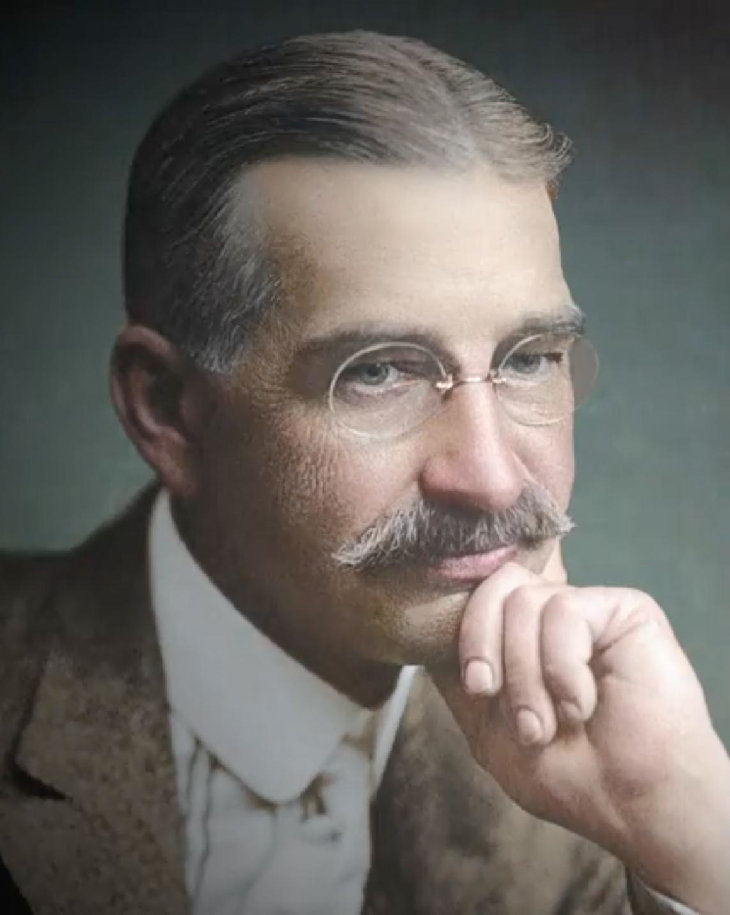 L. Frank Baum
Even before embracing Theosophy, Baum displayed virulent prejudice. As editor of the Saturday Pioneer newspaper in Aberdeen, South Dakota, in 1890, he called for the “annihilation” of Native Americans, writing after the massacre at Wounded Knee: “Wipe these untamed and untamable creatures off the face of the earth.” Even by the standards of his time, Baum’s racism was extreme. (In 2006, his descendants formally apologized to the Sioux people.)
Not surprisingly, elements of these views seeped into Baum’s Oz books. Over the years, publishers removed the most offensive passages, leaving the sanitized versions familiar to modern readers.
Despite Baum’s antisemitism, the Oz series became a runaway success, selling millions of copies. In the 1930s, Metro-Goldwyn-Mayer adapted it into a Hollywood blockbuster—crafted largely by Jewish talent.
Composer Harold Arlen (born Hyman Arluck in Buffalo, 1905) grew up in a devout Jewish family; his father was a cantor, and young Arlen sang in synagogue. He went on to write the film’s unforgettable score, including the Academy Award–winning “Somewhere Over the Rainbow.”
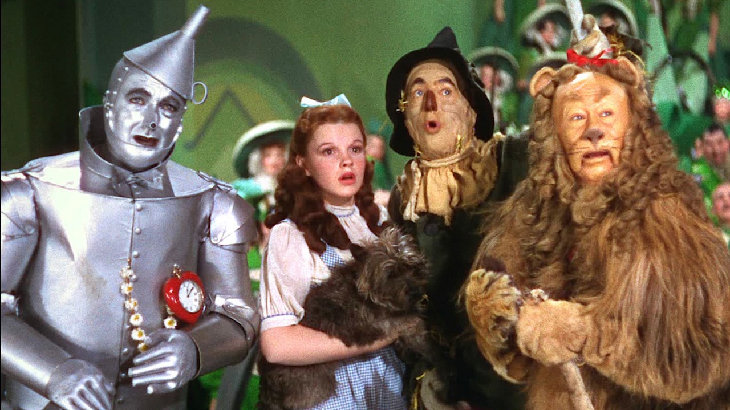
Lyricist E.Y. “Yip” Harburg (born Isadore Hochberg) was the son of Russian Jewish immigrants on New York’s Lower East Side. After losing everything in the 1929 crash, he turned his passion for lyrics into a career—encouraged by his friend Ira Gershwin. Harburg, always socially progressive, later faced blacklisting during the McCarthy era. Among his earlier hits was the Great Depression anthem Brother, Can You Spare a Dime?
The screenplay was created by a largely Jewish group of writers: Herman Mankiewicz grew up in an observant Jewish household in New York City and worked as a journalist, including for a Jewish newspaper, before turning to screenwriting. He was an outspoken critic of Nazism both in his journalism and in his screen work. Irving Brecher grew up in a Jewish home in the Bronx and wrote for the Marx Brothers before joining the Wizard of Oz team. Herbert Fields came from a prominent Jewish songwriting family; his father was the famous vaudeville performer Lew Fields (born Moses Schoenfeld). Samuel Hoffenstein was born in Odessa and moved to the United States, where he became a popular film writer and poet.
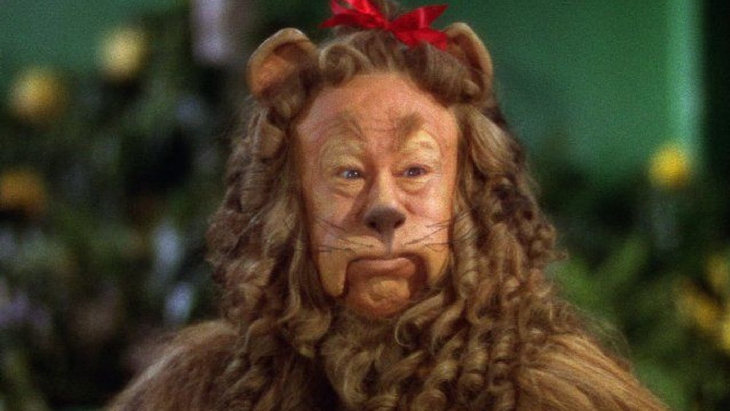
Perhaps the most recognizable Jewish figure in the film was Bert Lahr (born Irving Lahrheim), who played the Cowardly Lion. Raised in a loving Jewish home in New York, Lahr became a beloved comedian whose trademark Brooklyn accent added charm to the role.
The film’s emotional power came in part from the deep anxieties its Jewish creators were experiencing. The Wizard of Oz premiered on August 25, 1939—just days before Nazi Germany invaded Poland. As Arlen, Harburg, Mankiewicz, and others labored on the film, they watched in anguish as relatives in Europe faced persecution and being attacked during Kristallnacht. Their work channeled both desperation and hope, lending the film an enduring resonance.
Dorothy’s desperate attempts to escape the Wicked Witch of the West mirrored the plight of Jewish families trapped in Europe. Her longing to return “home” echoed Jewish liturgy and the yearning to return to the Land of Israel.
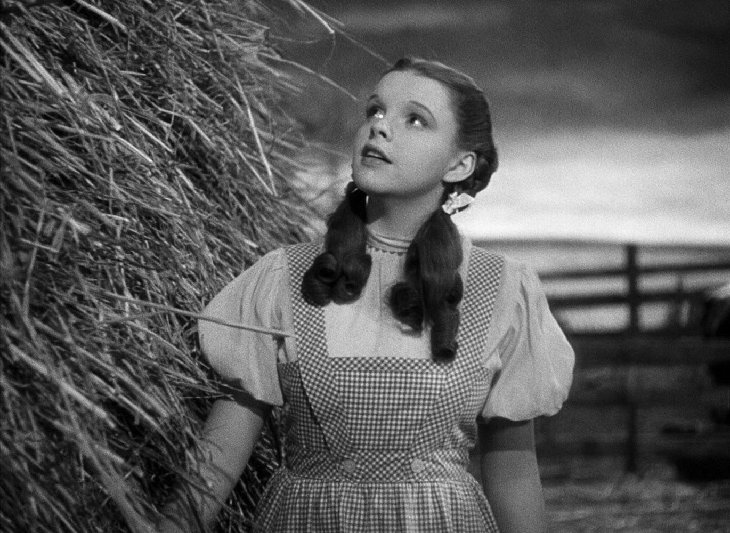
The song Somewhere Over the Rainbow carried particular Jewish resonance. Its poignant line “a land that I heard of once in a lullaby” is thought to draw inspiration from Rozhinkes mit Mandlen (“Raisins and Almonds”), a famous Yiddish lullaby written by Abraham Goldfaden in 1881. That haunting song, describing a mother rocking her child while foretelling hardship and exile, urged Jews never to forget their homeland. The parallel is striking—and moving.
The promise of finding safety, home, and goodness resonates as powerfully today as it did in 1939. In 2014, the Jewish singer Pink performed Somewhere Over the Rainbow at the Oscars. Her mother, Judith Kugel, later reflected that the song captured the longing of its Jewish creators during the rise of Nazism: “I wasn’t thinking about the movie,” she recalled, “I was thinking about the lost Jews of Europe and the immigrants in the United States, and celebrating our struggle for survival in every community and every country where we live, always with the idea of bringing something better to this world.”
With the reimagining of The Wizard of Oz at the Sphere, a new generation is being introduced not only to a classic film, but also to its profound Jewish legacy.








Where is the uncensored version?
. "Over the years, publishers removed the most offensive passages, leaving the sanitized versions familiar to modern readers." What was taken out?
My cousin J.J. Cohen was a top executive at MGM, and he oversaw the production of the Original Wizard of Oz.
This is a fabulous and informative article. Thanks so much.
Hey ! Why no mention of the star JUDY GARLAND who made it ALL come alive? You talk about all the male cast and crew and contributors. You NEVER once ACKNOWLEDGE JUDY, a female. Why?
obviously because the article is focusing on the Jews involved the film. Judy Garland, who is pictured in the article, was not Jewish.
She’s not discussing any of the actors besides the lion because she’s focusing on the Jewish players in the movie.
Because the article is about the impact of the Jews involved in the production and the antisemitic author L. Frank Baum, of which Judy Garland was neither. The article had nothing to do with feminism.
I wonder how one might be able to read the original "Wizard of Oz"? Before the expurgation. I'd like to be aware of what the author said.
Go to any book store and buy an unabridged edition. While The Wonderful Wizard of Oz has been controversial for its positive depiction of magic (this was almost a century before Harry Potter, remember), it is the later Oz books (namely The Patchwork Girl of Oz and Rinkitink in Oz) that have "political incorrect" issues, mostly related to the depiction of the pygmy Tottenhot tribe, which in the text and illustrations are rather egregious caricatures of the Khoikhoi people of southern Africa, popularly known at the time (it is considered a slur now) as Hottentots. Again, you can go to any bookstore (or Gutenber.org) and buy an unabridged edition of the book.
I also wish you a Shana Tova
The song in " The Wizard Of Oz " " Somewhere Over The Rainbow " doesn't have to do with America but, it has to do with the land of Israel which describes Jews wanting to return to their homeland
WOW LOVED IT!
Well done!
Thank you Dr. Miller. Your articles always well researched and written, informative and engaging. I learn a lot from you. You are a real asset to Aish. Have a Shanah Tovah!
Very informative! One correction: although the award-winning writer Herman Mankiewicz was born in New York City, shortly after, his family moved to Wilkes-Barre, PA, where he spent his childhood and grew up. He moved to NYC as an adult, then to Hollywood, eventually writing the screenplay to Citizen Kane with Orson Welles
Simon Schama has suggested that Over the Rainbow represented how European Jews felt about America “the goldene Medene”
The person that said that is totally off the point, the song is about the land of Israel the Jewish people's homeland written I think by Russian Jews around the time of the Holocaust according what I read
The song is about wanting to leave a boring home life.
I read someplace the song has to do with the land of Israel, I never heard your spin of the story, it turns out in the end it was only her dream
Interesting, and more credible than the theory about the land of Israel.
L. Frank Baum died in 1919. The quote about inspiration comes from an article written in 1939.
The alleged political allegory of the Wonderful Wizard of Oz is just that--alleged. In fact, Henry Littlefield, the New York history teacher who wrote "The Wizard of Oz: A Parable on Populism" in 1964 was just using the book as the framing device of his history lessons on the Progressive Era, not actually suggesting this was Baum's intention. See https://www.nytimes.com/1992/02/07/opinion/l-oz-author-kept-intentions-to-himself-526392.html
Always very worth readinr, no mater what you write about.
WOW! What a wonderful, inspiring, and thought-provoking article! Thank you so much, Dr. Miller!
Thank you for this information. I knew some of the songwriters were Jewish but not to the extent you described. Didn't know Burt Lahr was Jewish. This is one of my favorite movies.
Such an interesting article. Dr. Yvette Alt Miller has done it again!