







 After the Manchester Synagogue Attack, They Danced Through Their Tears

7 min read
12 min read
4 min read
7 min read





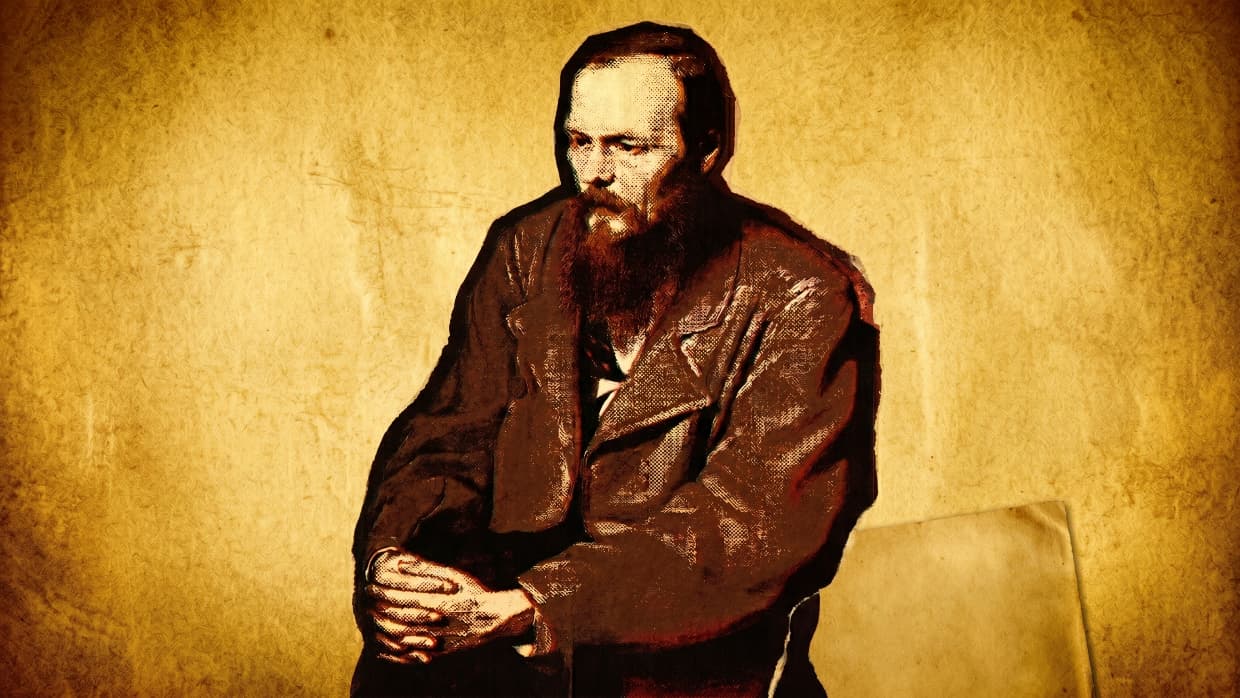
Dostoevsky's Brothers Karamazov is considered by many to be the greatest novel ever written. It's also laced with antisemitism. Here's how to hold both truths at once.
Over the long winter, I spent many hours finishing The Brothers Karamazov, Fyodor Dostoevsky’s thousand-page masterpiece, regarded by many as the greatest novel ever written. Like generations of Jewish readers before me, I found myself both mesmerized by its psychological depth and moral vision, and unsettled by occasional antisemitic remarks scattered throughout its pages.
How could one of modernity’s most powerful voices of compassion and humanity succumb to one of history’s oldest and ugliest hatreds? What am I supposed to do with a book like this, one that moves me to my core, yet disturbs me morally? Should I treasure it, allow it to shape my inner world, or just push it away entirely?
How could one of modernity’s most powerful voices of compassion and humanity succumb to one of history’s oldest and ugliest hatreds?
Dostoevsky’s literary genius has already left its mark on me. But alongside its profound impact, I cannot ignore the hostility toward Jews that exists like a virus. To navigate this contradiction, I think Jewish readers of Dostoevsky need to appreciate both the beauty of his writing and the blind spot of his life.
The Brothers Karamazov is an unusual book by contemporary standards. Originally published in monthly installments in a Russian magazine over two years (1879–1880), it tells the story of three feuding brothers and their abusive, alcoholic father. On the surface, it slowly builds toward a climactic murder trial to determine which brother is guilty of patricide.
But beneath this narrative lies something far more ambitious. Dostoevsky uses the novel as a vehicle to explore the most fundamental religious and philosophical questions of human existence—faith and doubt, suffering and justice, freedom and responsibility.
Dostoevsky, a deeply devout Christian, often allows his characters to carry out these explorations through extended dialogues. One of the most famous chapters in Western literature is a section in which Ivan, the brother who represents intellect absent faith, reads a composition he wrote entitled the “Grand Inquisitor.” It is a haunting meditation on whether human beings truly want the freedom that religion and politics often cry for, or whether they would prefer comfort, security, and authority instead.
For many readers, especially for those drawn to religious life, the most compelling figure is Alyosha, the youngest brother and a novice monk. Through Alyosha and his relationship with the elder monk Father Zosima, Dostoevsky presents a vision of radical compassion, humility, and love.
One of Zosima’s most famous teachings is that “Each of us is responsible for all, and for everything, and I more than all the others.” This counter-intuitive statement urges personal responsibility for the suffering of others and for each person to see themselves as bound up in the fate of all humanity. It had a profound impact on the Jewish philosopher Emmanuel Levinas, who would later describe ethics as an infinite, asymmetrical responsibility for the other.
And yet, at the very moment that Dostoevsky articulates such a sweeping vision of compassion and moral responsibility, a troubling inconsistency emerges. The universal ethic he so powerfully describes does not seem to extend to Jews.
In one scene, during a discussion about the inexplicable suffering of children, Alyosha is confronted with a question reflecting a widespread and destructive myth: is it true “that at Passover the Yids (Jews) steal and slaughter children?” Rather than rejecting the outrageous claim, he responds uncertainly: “I don’t know.” For a character who otherwise embodies moral clarity and spiritual sensitivity, the answer is disturbing to say the least.
Biographer Joseph Frank concluded that Dostoevsky was a “guilty antisemite”, a thinker whose moral and spiritual commitments did not fully overcome the prejudices he inherited.
While some have tried to dismiss this repugnant reply as part of the author’s artistic license, a wider view of Dostoyevsky’s life only makes the case for antisemitism stronger. His journalistic work that was compiled into Diary of a Writer describes the Jews as a “state within a state,” associates them with financial exploitation, and questions their belonging in Russian society. As the biographer Joseph Frank concluded, Dostoevsky was a “guilty antisemite”, a thinker whose moral and spiritual commitments did not fully overcome the prejudices he inherited.
And this is not only a historical problem. Dostoevsky’s immense popularity has ensured that his ideas continue to resonate. For some readers, his writings served not as a source of genuine insight, but as a troubling source of validation for longstanding prejudices about Jews.
It is worth noting that Dostoevsky did not see himself as a simple hater of Jews. In his own life, he denied being an antisemite, at times advocated for the extension of rights to Jews in Russia, and maintained correspondence with Jewish acquaintances. Scholars debate if he changed his views towards Jews by the end of his life.
Dostoevsky also endured immense personal suffering. As a young man, he was arrested and brought before a firing squad, only to be spared at the last moment and sent instead to years of hard labor in Siberia. Later in life, he was devastated by the death of his young son Alyosha, an event that haunted him deeply and shaped the emotional and spiritual world of The Brothers Karamazov. His writing emerges from a life marked by trauma, guilt, and an ongoing search for meaning.
And yet, none of this fully resolves the contradiction. The presence of antisemitic ideas in his work remains difficult to reconcile with the moral vision he so powerfully articulates. In some sense, The Brothers Karamazov itself is a novel about the struggle to live up to one’s highest ideals in a broken and complicated world.
Perhaps that is where the deepest lesson lies. As Jews, we are called to be a light unto the nations, to strive toward a vision of justice, compassion, and moral clarity. But we also know how difficult it is to live up to that calling. We are not judged only by the ideals we proclaim, but by the extent to which we succeed in embodying them.
Dostoevsky’s greatness, then, does not lie in his perfection, but in the seriousness with which he grappled with the human condition. We can learn from his insights but also from his failures. And in doing so, we are reminded that true moral and spiritual growth requires not only vision, but the courage to apply it consistently, even when it challenges our deepest assumptions.












It certainly would be better for us if Dostoevsky had made his "good" character deny vigorously that Jews killed Christian children, but considering the time and milieu, the very fact that the character shows doubt rather than upholding the libel is a step in the right direction. And it is possible that the author himself did not know the truth of the matter.
sounds aplogetic to me. he was smart and reasonable yet he did no research on jews before judging all of them as a whole. his journaling works has very *clear and sharp* antisemitic ideas in them as well.
no, I just think he had some good aspects to him but by no way was he not hateful. he was. absolutely was.
so maybe his works are good but him as a man.. well, in some ways he was good and in others terrible. especially when judging him based on his intellectual depth and reasoning which basically ask of him to do his research.
Do we condemn the art or the artist when the artist says something derogatory?
I don’t have the answer, but if we condemn both, then the world would have no art. If the Israelites decided not to follow Moses (the artist) because he struck a rock (the art, so to speak) during the second striking - instead of speaking to it as Hashem instructed - we might never have left Egypt.
umm your allegory is not holding up.
Moshe striked the rock when they already left egypt and were in the desert.
also, him striking the rock didn't somehow made him corrupt, bad or evil..
unlike unreasonable and destructive hate for jews.
Dostoevsky Was an Antisemite. I Still Think You Should Read Him? Absolutely not and your naive idea that most people can separate his "literary genius" form his hate of Jews is dumb. How could someone with such genius be wrong about Jews? His works clearly, subtlety, and not so subtlety promote antisemitism and worse it could turn young and impressionable Jewish minds away from Jews. Your tortured intellectual argument has the reverse effect in reality. You should delete this article.
A book contains words. This article contains words. The opinions of others cannot hurt you, and reading a book won't hurt you. It can only expand your mind. You didn't like the article or the author's message, it's your right. As it's his right to express his opinion.
Dostoevsky belonged to the Russian Orthodoxy, which is extremely antisemitic of all christian confessions.
No.
Polish Catholics are.
Any Jew with a family history from Poland can tell you horror stories about Polish anti-semitism.
really? historically poland was the best for jew compare to all other europeans countries(leaving spain alone)
Really?
You're really going to say you don't know about Polish anti-semitism?
Spain? The Spain that expelled all the Jews in 1492?
That Spain?
The Spain whose Prime Minister said that if he had nuclear weapons, he'd use them on Israel.
That Spain?
I don’t enrich living antisemites by consuming their productions. Dostoevsky is long dead and his work is out of copyright. The same is true of Wagner and many other artists.
If an anti-Semite invented medicine for your beloved, you'd not purchase it? Dostoevsky is hardly in condition to cash your checks. Neither is Wagner. I'm not saying I disagree with you, the question bothers me.
I write fiction. If I have an ignorant or evil character, then I may put words in the character’s mouth that illustrate the character. So if the novice monk’s uncertainty about blood libel is the only example, that alone does not mean that the writer is an antisemite.
There are some Americans who want to ban “The Adventures of Huckleberry Finn” from schools because of the main character’s repeated use of the N word, a racial slur. But Huck is an orphaned teenager who finds himself rafting down the Mississippi River with Jim, an escaping slave. By the end of the book, their relationship has developed to such an extent that Huck decides he will not reveal Jim’s location even if it means he will go to hell.
it is not the only example. look and what he wrote in his journalism works about jews, there is clear antisemitism there
and you did NOT just try to say Mark Twain(someone the wholeheartedly supported blacks to have equal rights etc, and his books are there for entertainment and, as you said, their message is to humanize the blacks in the eyes of racist common folk of that time) is somehow comparable to dostoevsky which had antisemitic opinions IRL and inserted them subtly to his books..
One thing is a constant . No matter how great a writer , philosopher , thinker one may be the Jewish people have survived them all ! outlived their base hatred’s and flourish beyond anyone’s widest imaginations …despite all their “brilliance“ and their true core stupidity hypocrisy and inherited , legacy hatred .. It’s theirANTISEMTISM
WHICH TRULY NULLIFIES THEIR REPUTATION AS GENIUSES !!!
Let's lower the genius to a simpler function. If the man changing your tires is an anti-Semite, does that take away from his skill? How is the skill of a writer any different?
If the man is that much of an antisemite, can I trust him to change my tires without booby-trapping them?
The book "The Icon and the Axe" can throw some light on this subject. The author of that book makes the point that Russia, in the 19th century, thought of itself as the modern 'Chosen People', that Russia, through its struggles, emotions, and intellect was the new Savior of the World. In taking that role, Russia (as a people, as a culture, as a political entity) assumed that G-d's grace no longer fell on the Jewish people, but spread on the Russians. Dostoevsky, as a proponent of that philosophical and moral stance, projected the voice of antisemitism in his character.
One can adjust to such failings from our teachings: all people, including great people, have flaws. We might never achieve perfection, but failure to be perfect is no reason to stop trying.
The worst cultural appropriation in the history of the world is the Christian and Muslim adoption of our holy books which they then take out of context and use for their own purposes. Americans did the same, justifying slavery because it’s not banned by the Bible.
"[Slavery]...banned by the Bible?" Slavery is ACKNOWLEDGED by the Bible, there's even a PROHIBITION FREE a Cana'anite slave! MANY, if not MOST, societies had slavery, INCLUDING RUSSIA, which held many of their OWN PEOPLE as slaves, complete with the consent of MASTERS for shiddukhim (though NOT droit du seigneur). Biblical slavery divides into 1) Hebrew slave (indentured servant) 2) Cana'anite slave (a non-Jewish slave who agrees to be sold to a Jew & undergoes an actual CONVERSION, obligated to all of the Biblical commandments that Jewish women are, including shabbath & kashruth. IF his master frees him, he automatically becomes a full Jew. Such manumission is done because of accidental loss of certain limbs of the slave or a communal need...
My final sentence said that “slavery is not banned by the Bible.”
when taking into account the time the tanach was written in, the tanach approach to slavery is insanely humane and literally try to reform this entire branch that was absolutely part of everyday life at the time.
if you ask me, if the tanach was written today, slavery was prohibited completely.
the tanach was given to people at the time/written by people of that time.. and we should see it from that viewpoint rather than judge it by our standards and upbringing because it is not a realistic nor true view on history and historical texts/ideas.
I would suppose that a person is measured by his actions, and, I would think, particularly a fiction author, who certainly has the artistic license to invent just about anything regarding his characters. Such inventions , I don't believe , necessitate representing the creative author. Was Dostoevsky an Antisemite in his real life behavior? That's what measures him. (I don't know, I'm not a man of general literature beyond what I was forced to read in high school and college; and admittedly, I was totally lost since most of the required reading was from periods and idioms that were totally foreign to me; and my teachers, almost across the board, were literary snobs who looked down on students that didn't measure up to their snobbish vocabulary standards).
So Dostoevsky was an anti-semite.
So what?
So was Shakespeare, Wagner, Tolstoy, Solzhenytsin, Dahl etc.
Look at America where Harvard and the Democrats are full of anti-semites and have made anti-semitism respectable.
It is the Jews who are the worst anti-semites, Jews for Palestine, Neturai Karta, Satmar Hasidim etc.
If anything could be done about anti-semitism, it would have been done already.
Nothing to do except shrug your shoulders and live with it.
I disagree with you about Shakespeare. Shylock is a tragic figure, pushed to his limits by the bigotry of the Venetians. He is not a villain.
"The Jews...are the worst anti-Semites?" Jews for Palestine, Neturai Karta, Satmar et al are the WORST??? Are you sure about that? Have they rounded up Jws for ghettos, robbed, raped, tortured & murdered them? The 1st two groups are extremely small, Satmar is painfully misguided & I expect their change one day.
The Kapos served their Nazi masters extremely well.
They were more brutal than the Germans.
I agree some self hating Jews are worst than actual anti semites
That is all very well, until a Hitler emerges and kills 6 million of us, including my Mother and most of the rest of my family.
Waaaay too simplistic!!!!
Great and deep article
The French writer Emile Zola wrote J'Accuse, a strong defense of Captain Dreyfus and at the same time describes Jews in the most antisemitic manner in L'Argent.
A very good French movie, Le Vieil homme et l'enfant, depicts the same type of person. An old man, very antisemite, hosts and hides in his house a young Jewish child. He cares very well for the boy and at the same time has long monolgues about the Jews being overall and controlling the world.
We're all familiar with the: "but you are different".
The world IS blessed through the Jews, so, we DO "control" the world, but not in the way they think. Our sages say if the Gentiles would understand how good Jews BENEFIT THEM, they'd put armed guards around us to PROTECT US!! The best lies need a kernel of truth.
What excellent timing! Just began reading The Brothers Karamazov and am up to page 70. Saw the first sign of the author's antisemitism a bit earlier and did a quick online search to delve into it further. Was disappointing to see but (of course) not totally surprising. Looking forward to continuing with the book. Fascinating thus far.