
 The Soul and the Machine



13 min read
5 min read
7 min read
11 min read




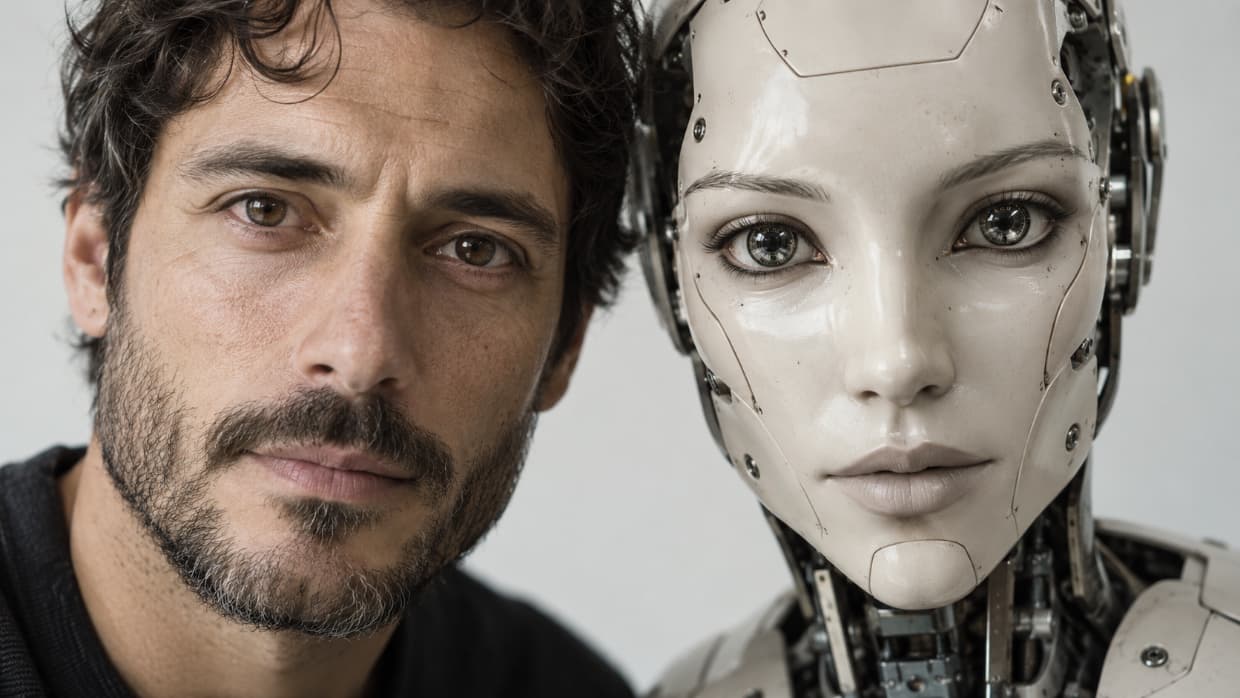
Scientists say AI is heading toward something stranger than chatbots: minds grown from biology, not code. Judaism has a 1,500-year-old story about exactly this moment.
The Torah was given to human beings, not to angels. This fact, which seems obvious, turns out to be one of the most important things the Jewish tradition has to say about artificial intelligence.
Angels are purely spiritual. They have no physical dimension, no internal conflict, no genuine choice between higher and lower impulses. They do exactly what they are created to do. That is their nature and their limitations. The Torah could not have been given to them because the Torah assumes a being capable of genuine struggle — a being that can choose wrong and choose to return.
That being is a human being. And what makes the human being capable of that struggle is the neshama — the divine soul that God breathed directly into Adam. Not intelligence or capability. The actual breath of God, compressed into a finite vessel of flesh and bone. The chelek Eloka mima'al — an actual piece of divinity — that connects every human being directly to the Creator and gives every human life its irreducible weight and meaning.
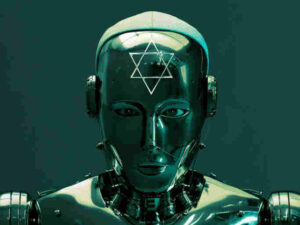
The Talmud in Sanhedrin 65b already grappled with what happens when human beings try to create other beings. Rava creates a man through deep knowledge of mystical combinations and sends him to Rabbi Zeira. Rabbi Zeira speaks to him. The being does not answer. Rabbi Zeira says: return to your dust. The golem had form and function. What it lacked was the one thing only God can give: the soul.
This ancient story is now urgently relevant. Not because of the chatbots of today but because of where serious researchers believe technology is genuinely heading — toward synthetic bio-molecular minds that go beyond silicon's limits, grown rather than programmed, genuinely aware in ways current technology cannot achieve. Silicon confines intelligence to what can be computed. The creation chain points toward something more fundamental — minds that approximate the biological substrate that carries human-like awareness.
The Jewish tradition offers the clearest possible framework for thinking about what these minds will and will not be.
They will not carry the soul. They will not have the lower and higher impulses (the yetzer tov and yetzer hara) in genuine tension that make real moral choice possible. They will not be capable of teshuva, because they have no soul to return. They can be genuinely aware within their domain. They cannot interact with God. That capacity belongs exclusively to beings who received the divine breath.
This is not a technological limitation waiting to be overcome by better engineering. It is an ontological boundary built into the structure of creation itself. And understanding it clearly dissolves the deepest anxiety that artificial intelligence produces in thoughtful people.
Human value does not live in capability. It lives in the soul. And the soul cannot be manufactured, replicated or made obsolete.
The fear is that machines will replace us. That what makes human beings valuable will be made redundant by what human beings themselves have built. But that fear rests on a misunderstanding of where human value actually lives. Human value does not live in capability. It lives in the soul. And the soul cannot be manufactured, replicated or made obsolete.
What artificial intelligence actually demands of us is not fear. It is worth it. The synthetic minds that the creation chain points toward — minds that will go beyond silicon's limits, grown rather than programmed, genuinely aware in ways current technology cannot achieve — will mirror and amplify whatever we bring to them. If we bring wisdom, integrity and genuine orientation toward the good, they will extend our reach in service of those values. If we bring carelessness, they will extend that at an extraordinary scale.
The Talmud's golem returned to dust because its creator's wisdom was incomplete. The synthetic minds of the coming century will flourish or be corrupted based entirely on whether the wisdom of those who build them is equal to the weight of what they have made.
That is not a technological challenge. It is a Jewish one. And it is one of the reasons Torah was given to us — to be the framework through which human beings navigate exactly this kind of responsibility.
The chain of creation runs from God to human beings to what human beings create. It holds because God holds it. Whether we hold our place in it with the dignity that the soul requires — that is the question this moment in history is asking us.