






 The Shofar Is Silent, Remember to Breathe


>20 min read
10 min read
8 min read

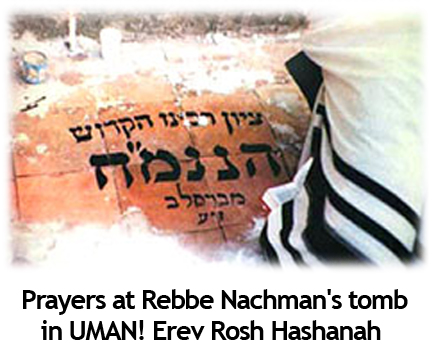



If God is perfectly good, why did He create a world with pain, failure, and evil? Unpack the Jewish view of creation, choice, and how moral struggle gives life its deepest meaning.
Judaism teaches that the very act of creating the world was born from a place of boundless love. According to the Talmudic sage Rabbi Akiva, “Everything God does is for good.”1 In other words, the universe itself is an expression of divine kindness — not random, not utilitarian, but intentional and generous.
God, in His infinite goodness, desired to share that goodness with another — a being capable of recognizing, receiving, and appreciating it. To make this possible, He brought an entire world into existence, crafted with purpose and precision, to house the one creation that could fulfill this role: humanity. Our very existence, then, is meant to be a vessel for receiving divine good — the ultimate act of giving, and the deepest reason for being.
But then we look around.
Life is messy, painful, and confusing. People face hardship, disappointment, and failure. If God is all-knowing and all-loving, why does human life feel so imperfect?
Life doesn’t always feel like a gift. It often feels more like a struggle — messy, painful, and confusing. People face hardship, disappointment, and failure. If God is all-knowing and all-loving, why does human life feel so imperfect? Why would a world created out of kindness feel so relentlessly challenging? Why not design a reality that’s easier, smoother, more immediately fulfilling?
These questions lie at the heart of a profound spiritual tension — one that challenges us to rethink what divine goodness truly means.
To understand how God’s goodness operates — and why it remains absolute even in a world filled with hardship — we must first grasp a fundamental truth about God: He is entirely self-sufficient. Unlike human beings, whose actions are often swayed by ego, pressure, or external reward, God is influenced by nothing outside Himself. His choices are not reactions. They are pure expressions of His essence.
When people perform acts of kindness, their motives can be complex. A generous gesture might be driven by a desire for approval, the need to be admired, or even a hidden agenda. Sometimes goodness is genuine, but still shaped by societal expectations or emotional pressure. In contrast, God’s goodness is untouched by such constraints. It flows from Him freely, uncompelled and untainted — not because He must, not because He gains, but because He is good. Always. Without exception.
The greatest gift God can bestow upon His creation is the opportunity to be like Him.2 And what does it mean to be like God? It means to choose goodness — to act with kindness, compassion, and selflessness. When we make those choices, we emulate the divine.3
If we were programmed to act properly, like robots with no will of our own, our actions would carry no moral weight — and no resemblance to God’s greatness.
But there's a crucial condition: the goodness must be chosen freely. If we were programmed to act properly, like robots with no will of our own, our actions would carry no moral weight — and no resemblance to God’s greatness. After all, God is not compelled to do good; He chooses it, always and entirely of His own volition. If we are to be made in God’s image, we must have the same capacity: the freedom to choose how we act.4
That freedom, however, demands the presence of real alternatives. For goodness to be meaningful, its opposite must also exist. And so, to create a world where moral choice is possible, God introduced the concept of evil. As the prophet Isaiah declares, “It is I, God, who forms light and creates darkness, who makes peace and creates evil — I do all these things.”5 In other words, even the darker dimensions of existence serve a higher purpose: to give our choices depth, dignity, and divine potential.
At first glance, the presence of both good and evil in the world might suggest a cosmic tug-of-war — two opposing forces locked in eternal conflict. This was the belief of ancient systems like Zoroastrianism, which imagined a world ruled by dual spiritual powers: one good, one evil. But the prophet Isaiah firmly rejects this notion. He teaches that both good and evil originate from a single source — the one God.6 “I form light and create darkness,” God proclaims, “I make peace and create evil.”
This raises a profound question: Why would a God of pure goodness bring evil into existence?
The answer lies in the nature of moral choice. For humanity to truly reflect the divine, we must possess the freedom to choose between right and wrong.7 Without that freedom — without the possibility of doing wrong — goodness would be empty, and our actions would be no more than mechanical obedience. We would be incapable of resembling God in any meaningful way.
The Torah hints at this truth in its description of the first moral awakening: “And you will be like God, knowing good and evil.”8 It is this capacity for moral discernment — for weighing, choosing, and striving — that makes us like God.9 Free will is not just a feature of the human experience; it is the foundation of our spiritual potential.
This fundamental idea that humanity is governed by its own decisions is explicitly spelled out in the Torah. “See! Today I have set before you [a free choice] between life and good [on one side] and death and evil [on the other]. I call heaven and earth as witnesses! Before you I have placed life and death, the blessing and the curse. You must choose life.”10
There is yet another profound reason why God granted humanity the freedom to choose morality rather than hardwiring it into our nature: the deep and lasting joy of earning one’s goodness. There is no comparison between receiving a gift and achieving something through personal effort. A person who builds financial stability through years of hard work feels a pride and fulfillment far greater than one who simply inherits a fortune. Likewise, a scientist who struggles for years toward a discovery feels a deep sense of identity and purpose — one that a lucky accident could never provide.
A person who builds financial stability through years of hard work feels a pride and fulfillment far greater than one who simply inherits a fortune.
It's not just the destination that matters; the journey, with all its effort and growth, is what makes the result truly meaningful.
Human beings instinctively understand this. Many willingly sacrifice comfort, pleasure, and even basic needs in pursuit of mastery, legacy, or a sense of accomplishment. In fact, the feeling of having earned something — of being the author of one’s own goodness — often surpasses any sensory indulgence.11 It is one of the most profound pleasures known to the human soul.
This truth is captured in a powerful teaching from the Talmud: “One who eats that which is not theirs is ashamed to look at the face of their benefactor.”12 Kabbalistic tradition13 understands this not merely as social commentary, but as a cosmic principle. If we were simply handed goodness without having chosen or struggled for it, we would be consuming what the mystics call the bread of shame14 — receiving divine kindness passively, without dignity or identity.
But God, in His love, withheld that shame. By embedding within us the possibility to choose wrong — by giving us real moral tension and inner conflict — He gave us something far greater than ease: He gave us the gift of self-creation. In the face of temptation, every choice for good becomes an act of becoming. And in that becoming, we do not merely receive God’s goodness — we begin to reflect it.
This perspective also sheds light on a puzzling and seemingly harsh statement in the Talmud: “Whoever says that God overlooks sin is overlooking his own life.”15 At first glance, this appears to contradict the very idea of divine mercy. How can we speak of a compassionate God who never lets a misdeed go?
Every action — good or bad — leaves a real imprint on the soul.
The answer lies in the spiritual architecture God built into our lives. Every action — good or bad — leaves a real imprint on the soul.16 God, in His wisdom, doesn’t arbitrarily reward or punish from outside; instead, He designed a reality in which our choices shape us. The consequence of a deed is not imposed — it’s embedded.
If, hypothetically, God simply erased the effects of wrongdoing as if they never happened, then the weight of our moral choices would disappear. Our lives would be reduced to something like a video game with unlimited cheat codes — effortless, consequence-free, and ultimately meaningless. But by linking our actions to genuine, lasting spiritual consequences, God dignifies our freedom and magnifies the meaning of our goodness.
This is not the absence of mercy — it is the highest expression of it. By making our moral lives real, God gives us the opportunity to create something of eternal value. Every mistake carries weight — but so does every triumph.
What does it truly mean to possess free will? How do we define — or even begin to measure — this essential aspect of the human condition?
The experience of making free choices is deceptively hard to explain. We often know what the right thing to do is. We understand what’s good, noble, and wise. And yet, time and again, we make decisions that go against that very knowledge. If we’re capable of such profound self-awareness and insight, why do we act in ways that betray it? Why do we, who can dissect ideas and weigh consequences with great intellect, still fall into patterns of self-sabotage and contradiction?
To help us understand this inner conflict, a great Jewish thinker once offered a powerful analogy:17
Imagine a smoker sitting in his doctor’s office. The doctor delivers a sobering message: he stands at a critical juncture. If he quits smoking now, his lungs will begin to heal and he’ll reclaim years of life. But if he continues, the damage will soon become irreversible, shortening his life dramatically.
The tension between the inner competing voices – what we want versus what we feel like – creates choice.
Shaken, the man leaves the appointment committed to change. But only hours later, back at home, the craving strikes. He tells himself, “Just one more cigarette — then I’ll get serious.” Deep down, he knows the truth: one more will lead to another, and the habit will return full force. The rational, long-term thinker in him pleads to hold the line. But the emotional, impulse-driven part counters with false logic and tempting what-ifs: “It’s only one. Maybe this time will be different.”
In that moment, the battle between clarity and desire, future and present, conscience and craving plays out. The ability to delude ourselves creates the theater of free will. Do we choose what we really know is the correct decision, or do we convince ourselves that what we would like to do in the moment is a perfectly acceptable choice and tune out the part of our brains screaming “Stop!”
The tension between the inner competing voices – what we want versus what we feel like – creates choice.
The Torah writes “It (the good) is something that is very close to you. It is in your mouth and in your heart, so that you can keep it.”18
The power to become our highest selves is already within us — in our hearts, in our thoughts, and even on the tip of our tongues.19 Deep down, we know the right path. The only thing left is to choose it.
When we consistently choose goodness over impulse, growth over comfort — we begin to shape ourselves into who we were meant to be. We don’t just receive our identity; we forge it.
And when we do — when we consistently choose goodness over impulse, growth over comfort — we begin to shape ourselves into who we were meant to be. We don’t just receive our identity; we forge it. Through every moral decision, every act of restraint, every moment we push back against our baser instincts, we sculpt a soul that reflects the image of God.
The reward for that struggle is not merely a place in the next world, but something profoundly present: a sense of deep, lasting fulfillment. A soul that has earned its shape knows a joy no pleasure can rival — the joy of having become.
In time, we come to see that true happiness isn’t found in material gain or public acclaim. It lives in the quiet dignity of a life well-lived — a life of integrity, courage, and Godliness. And from that vantage point, we recognize something else too: this world, so often perplexing and challenging, is in fact a perfect place — precisely because it gave us the chance to become.










BUT... teshuva IS like a reset button. Teshuva, existed before the creation of the world and does not follow natural laws.. When one does teshuva on yom kippur, he is not simply forgiven for his sins. The impact those sins have on his soul cease and are removed - the "genuine, lasting spiritual consequences - (of our sins) - no longer exist. That's why YK is called the happiest day of the year. We are able to start fresh, to repent, to learn from our mistakes, to try again..
Cont of the books about the near death experiences of people they changed for the better and learned the lesson of love, family, learning, and knowledge, and doing good in your life, also there is more important things in life besides money, when you pass away you can't take it with you, and you are born the same way, and I personally believe in the Jewish version of reincarnation, this book had different people from different religions also people that didn't believe in a creator too, and then this experience changed their lives for the better, there should be a Jewish version of a book like that because people don't believe in a person has a soul and your physical body gets buried but your soul lives on and can be the Jewish version reincarnated in another body
When I was a teenager on my way to a flight to Israel, I wanted something to read on the plane so I went to a store that sold books and I picked up 2 books one was called " Life After Life" the second one was called " Reflections Of Life After Life" by the author Raymond Moody and later on he wrote the book " Beyond Life After Life" by Raymond Moody who is non Jewish I think, it is a book that talks about near death experiences about going through a tunnel then seeing a light and then seeing your life in a flash it is like it says in the " Ethics Of Our Fathers" everything is recorded what ever you do good or bad, and you see relatives who passed some people went to gan eden or thapey had a unpleasant experience if they went the other way,
Yes, we all have free will. Look at Asad and his wife from Syria. Mass, mass murderers of their own people. And before he was offered to be head of Syria, he was a brain surgeon in the U.S. saving lives every day! Indescribably horrific choices they made, obviously.
I feel like the media brainwashes, affecting our free choice. We need to remind ourselves not to be influenced. Look at Chip and Johana and their 5 kids, a beautiful family. He was charged for cheating on taxes and not being a very nice employer, not paying for overtime, etc. Now, I'm not saying this guy is a tzadik. And if he was my kid, I'd be devastated. But I can't help wondering if the media treating this guy like a mass murderer affected her decision to take her kids and move out.
Assad was an ophthalmologist in the UK, not a brain surgeon in the US. Nevertheless, despite living in a Western democracy for a number of years and being aware of its values, he chose to follow in the footsteps of his father and oppress the Syrian people in terrible ways instead of introducing democratic values.
Why are some people compared Judaism with Christianity, and Islam first came Judaism then came the 2 other religions so the other religions took concepts from Judaism not the other way around which they corrupted and put in a warped way, people look at Christianity and Islam as a guideline while Judaism is the mother religion so to speak and both Christianity and Islam have a problem with the so calk3d parent religion was is insanity, there wouldn't be Christianity and Islam without Judaism, so people should look at Judaism instead of the knock offs of our religion
Besides Judaism talking about the next world and going to gan eden or the other direction, there is a concept in Judaism that many don't know the Jewish concept of reincarnation or in Hebrew the wheels of the soul wre you get a do over, which is not only a eastern religion concept but a Jewish one, I am interested in concepts like this because I am a child of a Holocaust Survivor( obm) and my relatives were murdered for Kaddish Hashem and so many others that were very righteous people, and reincarnation is a comfort for me that those that were murdered get a second chance to live a again as Jews or not
If people did not have a evil inclination we wo7ld be like robots or angels, by having a evil inclination it is harder to choose good over evil, before the sin of the forbidden fruit in the garden of eden the evil inclination was outside our bodies after the sin the evil inclination was in our bodies in psychology there is ego, I'd and superego( ego= good, id= evil, superego= choosing which one good or evil, that explains the struggle we all have to face in life, doing good isn't so simple anymore, I think when Moshiach comes evil won't exist anymore, his the evil inclination also the angel you see when a person dies, and I read a story about Alexander the great about getting a token of heaven
The Jews got the Torah as a antidote to the evil inclination, Hashem created good and evil and there is a saying in the ethics of our father who is strong, the one that overcomes their evil inclination like a person uses something that could be evil for good for instance a surgeon, uses his or her evil inclination to help others, or a person being a model, like King David fought wars for Hashem when he was king of Israel, the righteous people use the evil inclination for good, like the story about the guy that was a gladiator and/ or a highway man and met a rabbi and did Jewish repentance and became a rabbi, and help ransom people, and used his strength to help people, some people channel their evil inclination to do good instead
It surprises me that this anthropocentric view of the world is able to persist now that we know how small mankind is in the grand scheme of things. Mankind has only been here for a sliver of the billions of years since the world was created.
The questions that you raise are universal and are present in all human societies. They need to be examined and discussed without masking their underlying reality using unscientific religious explanations.
Just ask the question: why do we, all of us, sometimes choose "evil" over "good" in our actions? Understanding what motivates us is key to controlling our choices.
Just get real. The Torah tells us "the imagination of man's heart is evil from his youth". We can't change our nature.
In Judaism a person receives his good inclination at 13, and a her good inclination at 12, when you are born you only have a bad inclination because babies and toddlers are selfish and the right parents teaching their children how to share and the golden rule " being a Jew on one foot", Ann Frank that wrote her diary said " all people are good at herat" and then she realized otherwise, they are evil and put her in a concentration camp and there is evil in the world, in psychology it is called the id, in Judaism two parts to a person the animalistic side and the spiritual/ human side, the story I think about Dr. Jeklye and Mr. Hyde could be based and actual facts one side was good the other side was the evil side
WONDERFUL!
1) Most people could do better with less evil in the world.
2) "If we were programmed to act properly, like robots with no will of our own, our actions would carry no moral weight — and no resemblance to God’s greatness."
And yet this is the ultimate goal, only chosen.
3) Re: Free will. God exercises his own, and seriously interfered with the balance of power impacting humanity to this very day by not smiting Ham for his crimes against Noah and his future progeny, the same crimes he had just destroyed humanity for.
To this very day all humanity is suffering for this warped power balance, and failure of duty.
4) You are essentially saying good and evil are all things equal to God because they are from him. I agree they are from him, but they are not equal. Not in the least.
God did not justify war in his vision of future.
It has always been about performance of duty, war and evil not being an essential component.
If the job was done simply and properly, war and evil would not even need to exist.
War and evil never had to makeup part of the fulcrum of balance. It could have been made up of good, and best.
If you disagree, explain how the proposed messianic age would be able to exist.
Torah is a program of control, and it is simple and direct:
Devarim 28 defines national outcome cycles based on obedience or disobedience to Torah.
Key verses describe:
Blessings: rain, prosperity, security
Curses: invasion, destruction, exile, violence
War may have become necessary, but it is mitzvahs that matter.
Actually, the commentaries of the Torah says G - d created and destroyed, many worlds before created this world that is around 6000 years old, plus humans don't know how G - d measures time, I think King David wrote about it in Psalms, so a day for G - d could be a thousand or millions of years, in the bible it says about the fallen ones it could be important people or angels, the bible never mentioned aliens, do aliens truly exist or they a invention of science fiction, there was a cartoon/ comic about aliens in my Jewish Press newspaper about " earthlings are obsessed with Jews"
This is a beautiful explanation of the nature of G-d and why pain exists. However, I’m wondering if the rabbi can respond to my confusion:
What about the many tragedies that just happen to people? I’m thinking of the young, innocent campers in Texas, who had no agency to make choices, no way to make themselves into the image of G-d.
One minute they were living, then poof - they were gone.
Their loved ones can of course make choices of courage and compassion, but these little girls had no more opportunity to choose anything.
I wonder the same thing about the Holocaust
Important to understand how to learn the Tanach. The prophets looked at the best Jews with a microscope and magnified all minor flaws in order to help purify them and make them even better.
My question is that if one believes in a reward in the next life, is that really free moral will? Thanks.
Also on the other side if the coin is punishment, if you do the wrong things, and sometimes some crimes repentance fix it
This article is outstanding. It is written with such clarity and does grasp so perfectly the underlying purpose of our existence. THANK YOU for sharing it!!