








 Those Shameful Thoughts and What They Really Say about You
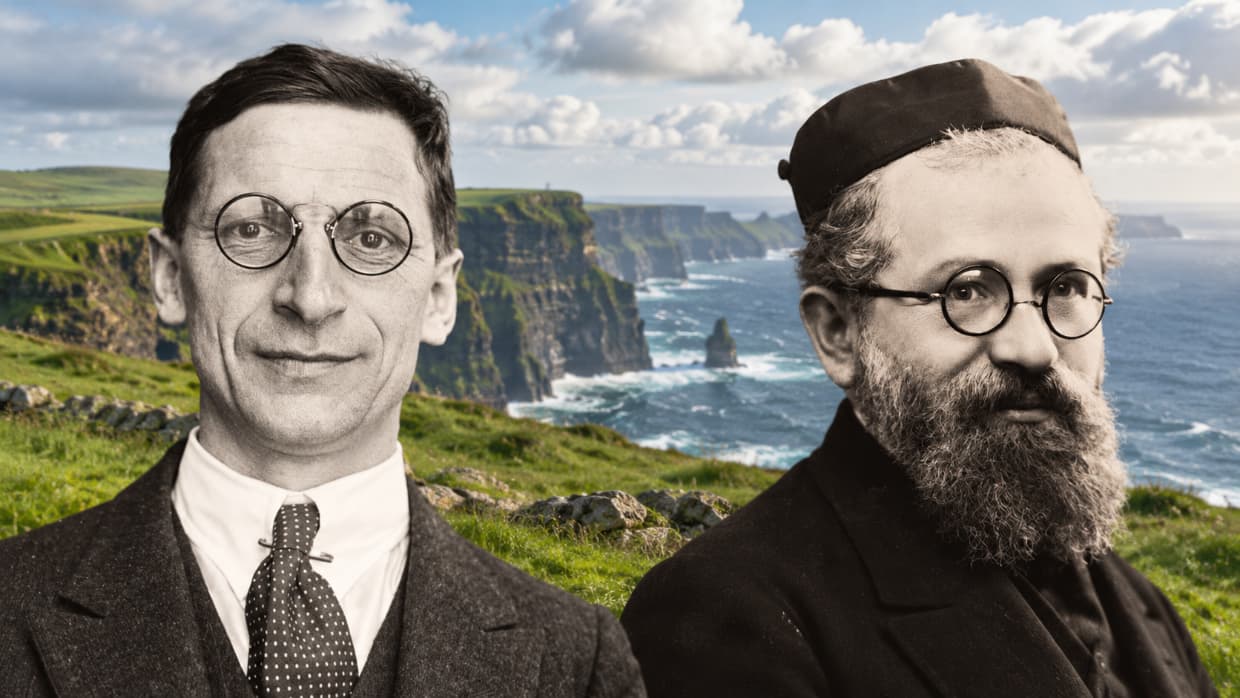





Before Irish footballers bowed their heads through Israel's anthem, Ireland's chief rabbi hid Éamon de Valera from his enemies. That rabbi's grandson is Israel's president today.
Ireland’s dislike for Israel has reached the point where its national team’s soccer players literally can’t stand being on the field with Israelis.
In two recent Nations League matches against the Jewish state, Ireland’s players wore black armbands in protest over the war in Gaza, bowed their heads during Israel’s national anthem, and refused the customary pre-match handshakes.
The second match, played this past Sunday in Serbia and ending in a 1-1 draw after Ireland had won the first 3-0, came after the teams had been forced to play at neutral venues without spectators, an Irish player boycotted the first match, and a pre-contest press conference descended into a shouting match after an Israeli journalist accused Irish players of racist abuse, a charge Irish officials called “completely untrue,” before taking his microphone and abruptly ending the proceedings.
The historic irony of the Irish player’s ignorance runs deep. They seem unaware that there was a time when Ireland’s struggle for national independence inspired extraordinary sympathy from an unlikely quarter: its chief rabbi, whose grandson, named for him, serves as Israel’s president today.
Rabbi Isaac HaLevi Herzog, born in Łomża in Russian Poland, arrived in Ireland in 1915 in his late twenties. Herzog was a highly-educated polymath. In 1897, he studied oriental languages at the Sorbonne in Paris. He matriculated at the University of London in 1905, where he graduated with a Bachelor of Arts in classical and modern languages and mathematics in 1909. He then obtained a Masters of Arts in Semitics from the University of London in 1911, and a doctorate in literature from the same university in 1914.
Herzog first served as rabbi of Belfast (1915–19) and then moved to Dublin. Over roughly two decades in Ireland, Herzog became Chief Rabbi of the Irish Free State and a prominent advocate for its Jewish community, maintaining relationships with political and religious leaders, intervening on behalf of Jews seeking employment and religious accommodations, and defending Jewish religious practice. He also became unusually engaged with Irish public life, learning the Irish language and sympathizing with the movement for Irish independence.
This was hardly easy or safe work. Recalling this tumultuous time, Chaim Herzog, Rabbi Herzog’s son, who would become Israel’s president in 1983, recounted how one time, "I was approximately three years old at the time, and I remember a gunfight on the street in front of our house. From the window I could see a dead body being carted away. The activity aroused my curiosity and I went outside, fully exposed to the grave danger, in order to get a closer look. I felt a strong pull on my neck: my mother had run behind me and brought me back inside, strongly reprimanding me and commanding me to go to the bathroom in the basement, the most secure room in the house."
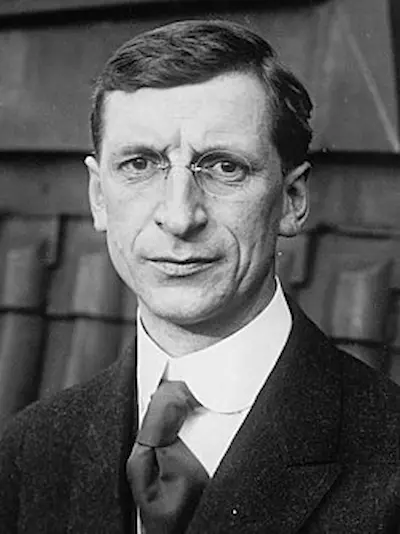 Éamon de Valera
Rabbi Herzog’s support for Ireland’s independence led to a remarkable friendship with Éamon de Valera, one of the leading figures in the Irish struggle against British rule. He had commanded rebels in the Easter Rising of 1916, an armed revolt in Dublin that sought to establish an independent Irish republic; after its defeat, he emerged as one of the central figures of the independence movement. The struggle eventually produced the Irish Free State, while a bitter split over the terms of independence led to civil war.
Historian Dermot Keogh, in Jews in Twentieth-Century Ireland: Refugees, Anti-Semitism and the Holocaust (Cork University Press, 1998), reports that Rabbi Herzog sheltered Éamon de Valera while he was on the run during the Irish Civil War.
De Valera subsequently made the transition from revolutionary to constitutional politician, becoming head of the Irish government in 1932 and later president of Ireland. Herzog, meanwhile, became known as the “Sinn Féin Rabbi,” a reference to the principal Irish nationalist/republican political movement during the struggle for Irish independence.
Shaul Mayzlish, in his The Rabbinate in Stormy Days: The Life and Teachings of Rabbi Yitzhak Isaac HaLevi Herzog, recounts that Herzog’s scholarship not only impressed his freedom-fighting friend, it solved Jewish communal challenges as well. Mayzlish writes:
When opposition arose to kosher slaughter in Ireland, Rabbi Herzog’s calculated presentation to the governmental committee thwarted the initiative. The rabbi proved that kosher slaughter, which is so important for Jews, is humane and causes less anguish for the animals than other forms of slaughter… The members of the committee were so impressed that they decided that the city of Dublin would budget £4,200 for the building of a special slaughterhouse for the Jews. The chair of the committee wrote in the official account of the House of Representatives: "Blessed is the community that you represent, blessed is the community which has an advocate such as you, who presented the case from all its angles with such clarity."
Meanwhile, Herzog and de Valera’s friendship endured through their respective career advancements. According to historian Dermot Keogh, de Valera consulted Herzog more than once while Ireland’s 1937 Constitution was being finalized; the Dictionary of Irish Biography likewise records that de Valera consulted Herzog about the constitution’s framing.
The former chief rabbi of Ireland was now chief rabbi of the Jewish state, welcoming the former Irish revolutionary who had become one of the founders and leading statesmen of modern Ireland.
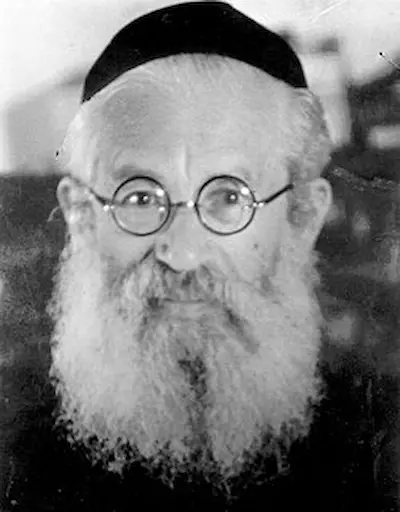 Rabbi Herzog
The friendship then had a remarkable coda in the early years of the Jewish state. In July 1950, two years after Israel’s establishment, de Valera, who was then leader of the opposition in Ireland, visited Israel during a Holy Year pilgrimage. One of his first stops was a formal visit to Herzog, now Israel’s chief rabbi. Contemporary JTA reporting noted that de Valera “immediately paid a formal visit to Chief Rabbi Isaac Herzog, who was once the Chief Rabbi in Eire.” Herzog hosted a dinner in his honor that evening, attended by Prime Minister David Ben-Gurion and other Israeli leaders. The former chief rabbi of Ireland was now chief rabbi of the Jewish state, welcoming the former Irish revolutionary who had become one of the founders and leading statesmen of modern Ireland.
One can only hope that future footballers from the country that owes a debt of gratitude to its dedicated first Chief Rabbi will come to appreciate the contributions Jews made to their own country’s flourishing and freedom.







I fell in love first with Irish music over 60 years ago, relating to the partition of Ireland and the British partition of Israel. The struggle against the true colonial power (Great Britain) that both Irish people and we Jews shared is something that sadly, most Irish today have forgotten. The travesty of trying to rename one of I believe, Dublin's parks and strip away the name of Herzog is a crying shame.
It hurts my heart that a country like Ireland should associate itself with real terrorists.
I feel, like one of my father(z"l) favorite songs - "Tell me where can I go?" The only place where even with sirens' alarms that a Jew can truly feel at ease at least toward being a Jew, is Israel. Am Yisrael Chai!
Unfortunately, the hopeful last line of the article is unlikely to become a reality: Among Jew &/or Israel haters, the ungrateful and ignorant Irish hold a high place of [dis]honor, something they ironically share with their nemesis, the Brits!
Today, unfortunately, the historic IRA-PLO harmony plus sheer Jew hated (as Tobi Tebenboim revealed in a clip - the motivation behind "pro palestine" in Ireland: 'Watch: Anti-Semitic tirade at Irish bar.' Israel National News. Apr 16, 2019) is a venomous cocktail that promotes the genoLIE.
I believe Sinn Fein also trained PLO terrorists on Irish soil (in the 60's and 70's?). That is the dark side of this story not being told.
After the declaration of the Republic of Ireland in 1938, the 26 counties comprising the Republic have been a representative democracy.
The 6 counties remaining in the UK, known as Northern Ireland, remained contentious and exploded into violence after peaceful protestors were fired on by the police on “Bloody Sunday”, precipitating decades of violence between the IRA and the British government (often abetted by Protestant paramilitary groups.)
Sinn Fein since that time has been the political arm of the IRA. It’s like expecting today’s Republican Party in the US to be identical to the Republican Party of Lincoln’s day.
And since the Good Friday Agreement of the late 1990’s, there has largely been an end to sectarian violence in Northern Ireland.