







 Seven Reasons for Hope on October 8
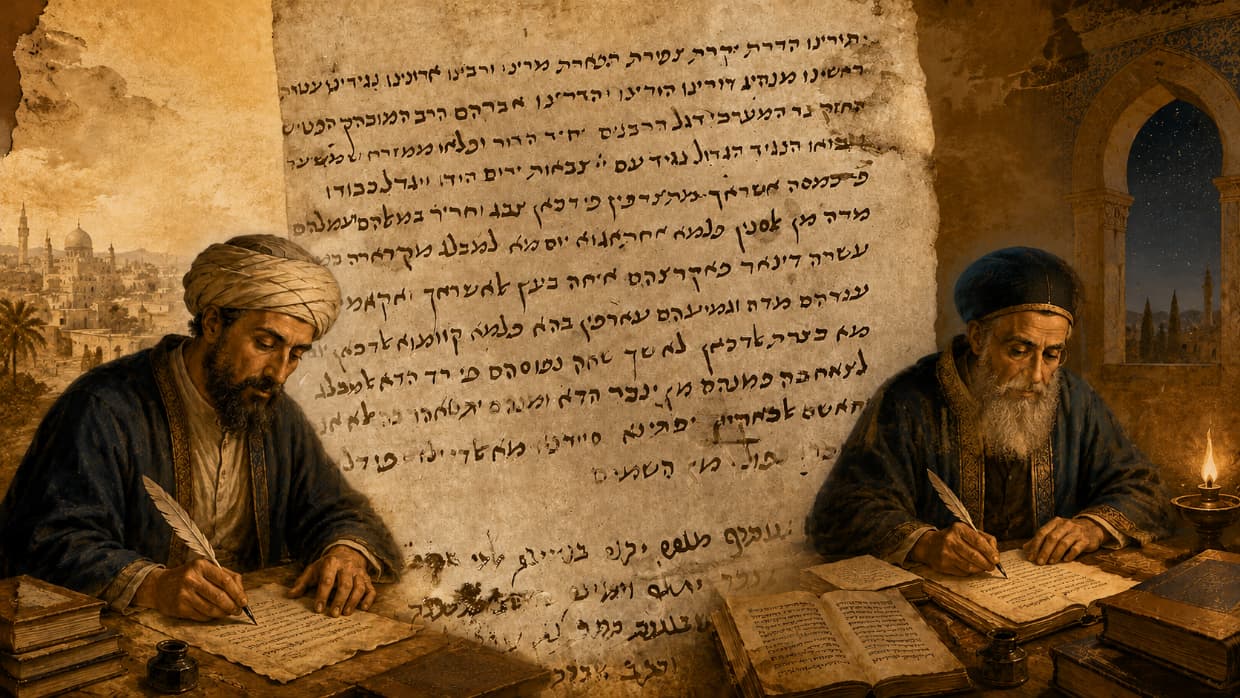






A thousand years ago, 90% of Jews spoke Arabic. The books they wrote still shape Judaism today, but almost no one reads them in the original.
From roughly 850 to 1200 CE, following the rise of the Abbasid Caliphate, an estimated 90% of Jews worldwide lived in the Islamic world and spoke Arabic as their native tongue. But Arabic wasn't merely a new vessel for old ideas. It became the language in which Jews produced original, groundbreaking works of philosophy, grammar, biblical interpretation, and other fields that would shape Judaism for centuries.
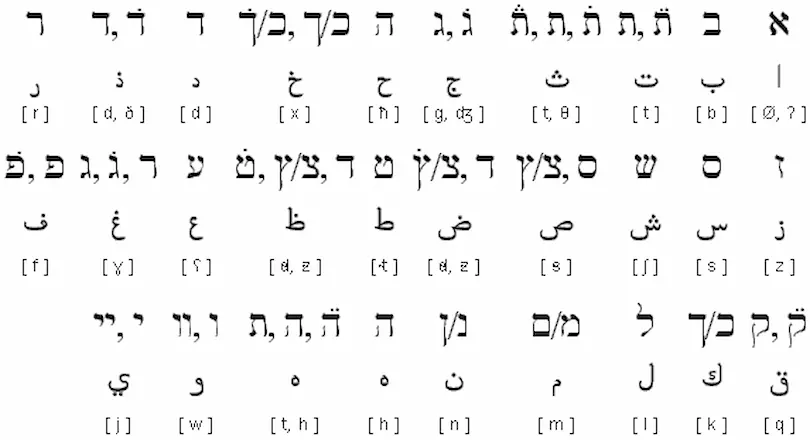
Judeo-Arabic is exactly what it sounds like, and stranger than it sounds. Picture the Hebrew alphabet being used to spell out Arabic words, just as Latin script spells words in English, French, or Spanish. Add a thousand years of Hebrew and Aramaic influence, and the result is a distinct dialect of Arabic that scholars call Judeo-Arabic.
I first discovered this ancient Jewish language in graduate school eight years ago. As a descendant of Iraqi Jews who communicated in Judeo-Arabic for over a thousand years, I fell in love with a world that no longer exists and learned how to read Judeo-Arabic.
But there's also a pragmatic answer for learning this language: a surprising number of the greatest books the Jewish people ever produced were written in a language most Jews have never heard of.
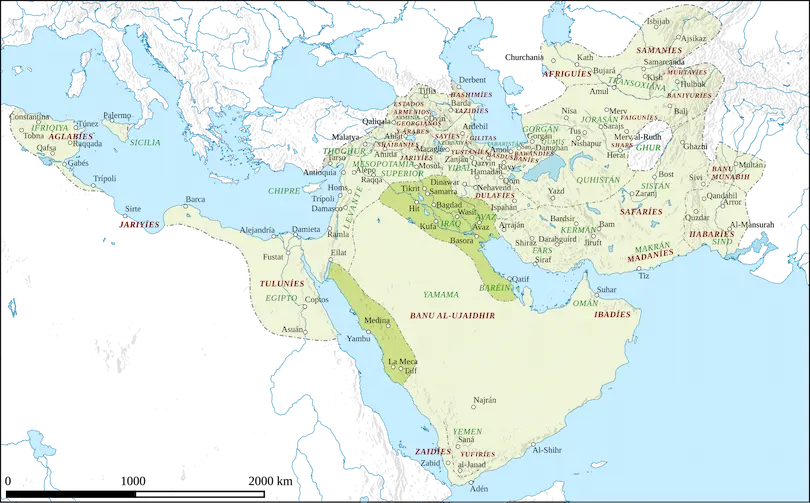 Map of Abbasid Caliphate at the end of the reign of al-Mu'tamid in 891-892. ((Wiki Commons)
Saadia Gaon, the towering sage and leader of tenth-century Baghdad, was the first to fully embrace Arabic as the medium of Jewish intellectual discourse. Writing the first full-length Judeo-Arabic treatises — spanning some two dozen works across every domain of Jewish learning — he pioneered the scientific study of Hebrew grammar, the art of biblical commentary, and gave generations of Jews new tools to understand the Hebrew Bible with greater precision
In his time, the usage of Arabic had become so mainstream that Saadia reported frustration that Jews were no longer able to understand the Torah in its original Hebrew, or the traditional Aramaic translation. So he translated the Torah into an elegant Arabic in a version known as the Tafsir --- it was so popular that it remains in use to this day amongst the small group of Arabic-speaking Jews and even a minority of Christian Arabs.
If Saadia legitimized Judeo-Arabic as a language for Jews to participate in the intellectual conversation of their age, Maimonides proved that some of the most profound ideas of all time belonged in this world. His Dalālat al-Ḥāʾirīn, known as The Guide for the Perplexed, remains the standard textbook of Jewish philosophy to this day, and a classic text of religious philosophy beyond the Jewish community. Written as a letter to a student torn between his faith and the philosophy of his age, it wrestles with the deepest questions a thinking Jew can ask: how to read the Torah when reason seems to pull in a different direction, what it means to speak about God at all, and how a life of Jewish observance connects to the life of the mind.
Since the medieval period, many of these books have been known to non-Arabic speaking Jewish communities across the world through their Hebrew translations. It is said that Maimonides himself was consulted on the Hebrew translation of his own Guide during his lifetime — corresponding with the translator on difficult passages and approving the final result.
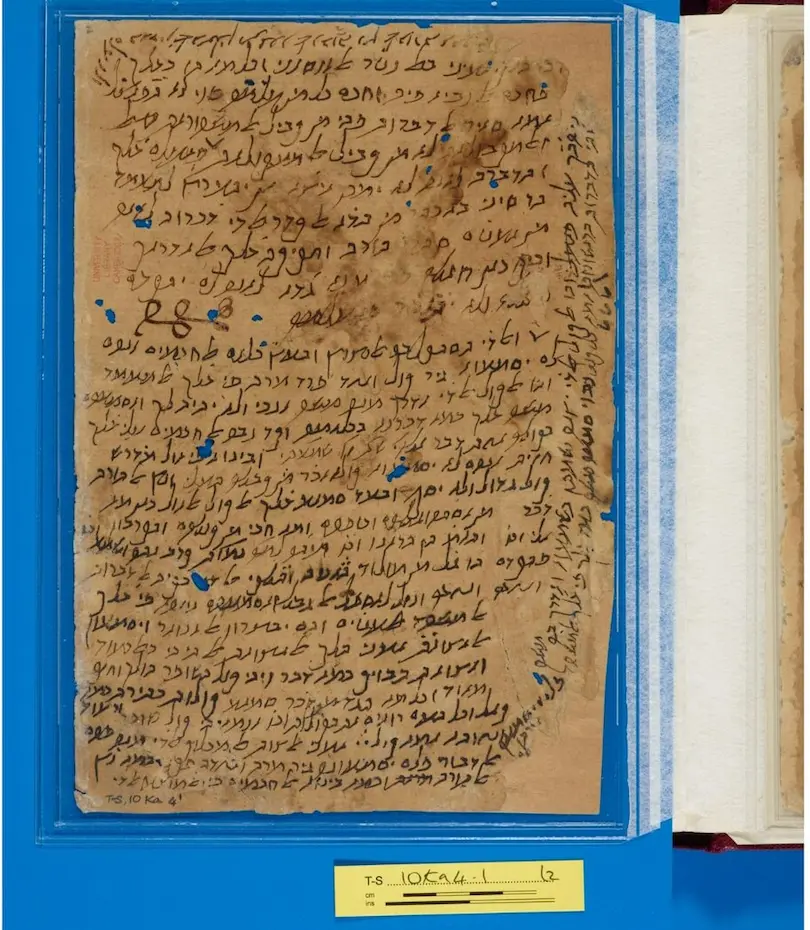 Manuscript page of Maimonides’s Guide to the Perplexed in Judeo-Arabic language. Cambridge University Library
But anyone who has learned a difficult passage, from the Torah or Talmud to medieval Jewish philosophy, knows the truth of the cliche that something is always lost in translation. Reading the text of Maimonides in a version that has passed through rounds of editing from Arabic to Hebrew to English is like reading his words through a curtain. When one slowly gains the proficiency to read his own words in his own language, it is a much more intimate experience of sitting down and conversing with one of the greatest ever Jewish minds.
When nearly a million Jews were expelled from Arab countries in the mid-twentieth century, including my grandfather, their language went with them — and within a generation or two, largely disappeared. Without a visible Jewish minority in the Arab world, a new generation of Jews and Arabs has grown up without a linguistic or cultural bridge between the two sides.
The language and its influence on Jewish history, however, is not gone. New digital tools are making it possible for anyone curious enough to begin reading these texts in the original - I am working on one myself, to teach beginners how to read Arabic in Hebrew letters. With a good amount of practice and patience, anyone can learn to read Saadia, Maimonides, and other Judeo-Arabic sages not through a translator's hand, but in their own words and their own script.
The letters are ours and the words belong to a rich cultural world Jews and Arabs once shared — and perhaps one day, can begin to recover.











The Rabbis wrote their books in Judeo- Arabic, and some of these books got translated in Hebrew and then in English, I am not familiar if Judeo - Arabic is in use today, a lot of languages are a mixture of Hebrew and the native language of land, but I don't think there is a language with Hebrew mixed with English, I don't think it was created yet, it is interesting how Jews used language to communicate separately from the non Jewish population
Worth noting Golden Age Spain was Omayyad not Abassid, but definitely Arabic speaking.
Eliyahu "Freedman" is an Iraqi-Jewish educator living in Jaffa, Israel.
Freedman from Iraq?? You must be kidding...
Tafsir is still used by SOME Yemenite Jews, I hadn't realized it was from Rav Sa'adiyah Gaon! Here's a beautiful clip of how it sounds in Yemenite Hebrew with the Arabic translation (NOT in Yemenite Jewish Arabic). Here's a clip from a Yemenite Jewish guy in Chicago, NOT perfect, but pretty good. https://www.youtube.com/watch?v=pB0oAhHi4Xc BTW, Rav Sa'adiyah was born in...EGYPT! How did Rambam "prove" some of the most profound ideas of all time belonged in this world? What did he base his position on? Was it accepted by Ashkenazim? When German-born Rosh, who summarized the Tosafotists, fled to France, then to Spain, he pulled back from the Rambanic thought he met in Spain. Looks like Ashkenazim never had an equivalent to Tafsir until the late 1800s by Yehoash!
Great to read this, I knew most of it but just to see more information is good. It started in Judeo Arabic around the same time as Jiddish came in eastern Europe, although Jiddish continued up till now