




 In Poland, Even Winnie-the-Pooh Has a Holocaust Story


5 min read




7 min read


You don't have to compromise your values to build bridges with Jews who live differently than you do.
I was 10 years old, standing in my father’s family backyard at a lobster bake, surrounded by food my family and I could not eat. While everyone feasted on shellfish, we unwrapped our kosher tuna fish sandwiches.
No one made a scene. We knew who we were, and we knew why we ate differently. But we were still there, still family, still part of the laughter and conversation around us.
That image captures something essential about my childhood: I learned early that having firm boundaries did not require building walls around myself.
I learned early that having firm boundaries did not require building walls around myself.
While my mother was born Jewish, my father converted and became observant through Aish in the late 1970s. He soon married my mother, who attended Aish’s seminary for women. His decision changed the course of his life and shaped our family. But one of the most powerful things I witnessed growing up was not only his commitment to Torah and Jewish observance. It was the way he maintained a loving and respectful relationship with the family he came from.
I grew up in Providence, Rhode Island, in a small Jewish community and Jewish day school. Many of my classmates did not keep kosher or Shabbat like I did. At Chuck E. Cheese birthday parties, I could play the flashing arcade games with my friends, but I could not touch the slices of pepperoni pizza on the table. I could be in the room, part of the party, and still know that my life had different boundaries. And yet, those children were my friends. We shared a childhood, built memories, and belonged to the same community.
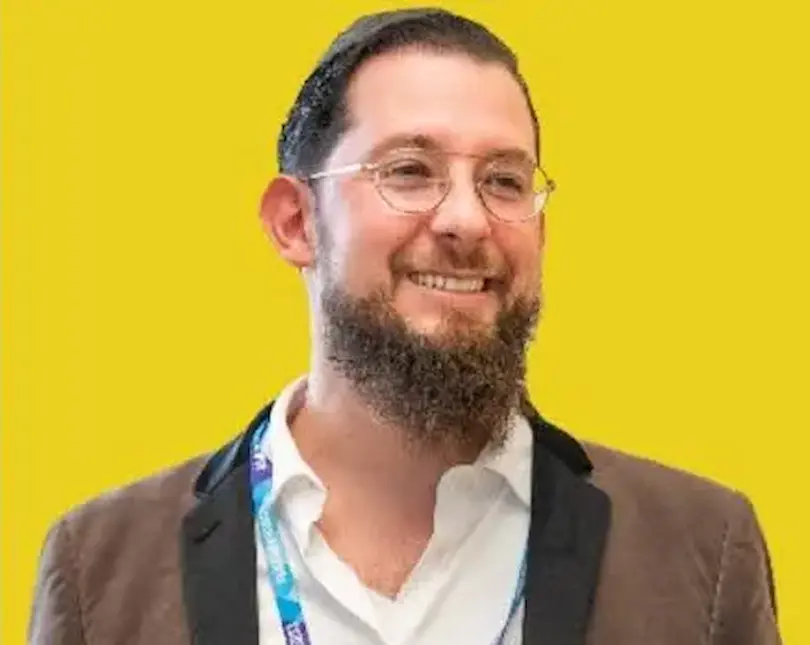 Jonah Halper
Looking back, I realize how formative that was. I did not grow up believing that difference had to create distance. I grew up seeing that people could have various levels of observance, families, and priorities, and still be part of the same Jewish story.
In my high school years in Baltimore, I saw that same lesson play out on a communal level.
There was a major debate over whether the Owings Mills JCC should open on Shabbos. The Orthodox community rallied against it, so it stayed closed. At the time, it would have been easy to think the rally itself was effective. But years later, a mentor of mine in the Baltimore Orthodox community explained that the community’s influence was not due to a single public protest.
It was because Rabbi Herman Neuberger, one of the founders of Ner Israel Rabbinical College, had spent decades building relationships with Federation leaders and with the broader Jewish community. He helped create a culture in which the Orthodox community did not show up only when an issue affected them directly. They had been involved in communal issues over many years, including issues that were not specifically Orthodox concerns.
So when something did matter deeply to the Orthodox community, they had credibility and relationships. They had earned the right to be heard.
That idea followed me into my career.
I have often found myself as the only Orthodox Jew in the room, sometimes explaining my community to the broader Jewish world, and sometimes explaining the broader Jewish world to my own community.
In many ways, I became a bridge between two worlds that too often misunderstand each other.
I knew, early on, I wanted to serve the Jewish people. But I was not interested in serving only the Orthodox community. I wanted to serve the Jewish community at large. That led me into the Jewish Federation system as a fundraiser, where I encountered a familiar point of tension.
In one of my first meetings, a major donor told my boss and I that he did not want to increase his support for the Federation. He said he felt the Orthodox community benefited from communal resources but did not participate enough in supporting the wider Jewish community.
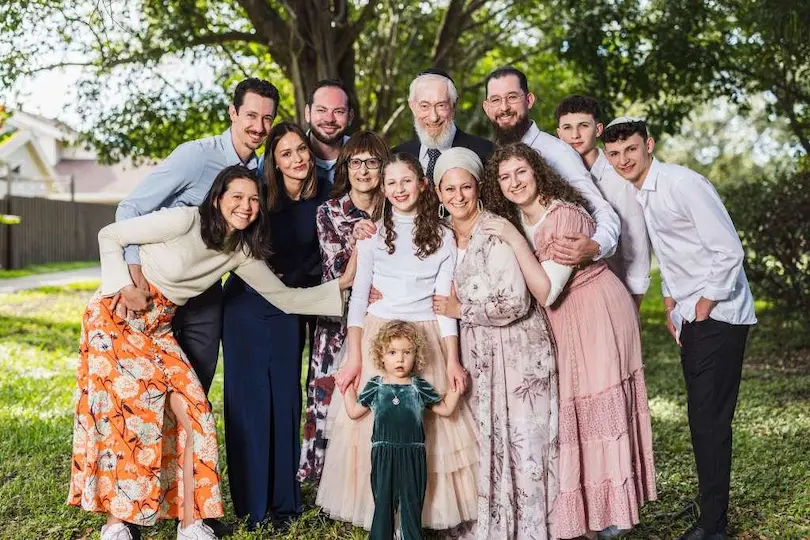 The Halper Family
My boss, who was not Orthodox, pulled out what was known as the Eruv List, essentially the white pages of the Orthodox community in Baltimore. He flipped through it, put his finger about halfway down the list, and said, in effect, “This is the percentage of families in the Orthodox community who support the annual campaign.”
It was a visual answer to the donor’s concern: Orthodox families were not only benefiting from the broader Jewish community. They were actively participating in it.
This moment taught me that even when people disagree with you, they respect the fact that you are part of the communal fabric. You are not standing outside the system, asking only for your own needs to be met. You are invested in the whole.
Too often, communities wait until they feel threatened before they engage. But influence is built long before the crisis, through trust, participation, and shared responsibility.
If we want to be taken seriously by the broader Jewish community, we have to show up as part of it.
That does not require compromising our values or pretending our differences do not matter. It requires something more powerful and meaningful: staying committed to who we are while remaining responsible for one another.
I see this in my work today with Jewish nonprofits, where people from very different backgrounds often accomplish meaningful things together. This only happens when they are willing to trust one another around a shared mission.
A former member of my major gifts coaching team was a platinum-blonde Reform Jew and an exceptional fundraising professional. When my team suggested assigning her to an existing client, a Hasidic girls’ school in Monsey, New York, I hesitated. On paper, it looked like an unlikely pairing: a coach with a very different personal and religious background working closely with a Hasidic rabbi on the school’s fundraising strategy.
But my team believed the alignment was right, so we made the match.
It turned out to be one of the best partnerships we could have hoped for. They genuinely clicked. I started receiving WhatsApp messages from the client telling me that she was the greatest thing that had ever happened to his fundraising efforts.
When there is mutual respect, professionalism, and a shared mission, those differences become part of the strength of the partnership.
That experience reminded me, yet again, that different backgrounds do not have to be obstacles. Sometimes, when there is mutual respect, professionalism, and a shared mission, those differences become part of the strength of the partnership.
Respectful differences can make us stronger.
There are real threats facing the Jewish people. Antisemitism is rising. Jewish institutions need to be more sustainable. Communities need better leadership, stronger infrastructure, and deeper resilience. Our schools, shuls, camps, Federations, social service agencies, outreach organizations, cultural institutions, and advocacy groups all play a role in the larger Jewish ecosystem.
We do not have to agree with every choice another Jew makes to care about their future. We do not have to erase our differences to support a shared institution, campaign, or communal need. And we do not have to become less committed to our own values to treat other Jews with dignity.
I believe the opposite is true. The more grounded we are in who we are, the more capable we become of engaging others with respect.
If we only show up for the parts of the Jewish world that mirror us back to ourselves, we will miss the opportunity to build something larger than ourselves.
When we choose to serve the Jewish people beyond the borders of our own comfort, we do more than strengthen others.
We strengthen all of us.












Thank you for this excellent article. I have been reading here for a couple of years waiting to hear an Orthodox Jew acknowledge that there are Jews who see Judaism differently.
One point I was confused about was concerning whether a JCC could open on Shabbos. If the general principle is to respect that non-religious Jews do not observe Shabbos according to Jewish Orthodoxy, then why is it right to tell us how we must observe Shabbos?
Reading the comments, I can see that there are Orthodox Jews who have no desire to bridge these difference, but let's be clear: Shabbos is an essential part of the Jewish identity but how we integrate Shabbos into our lives is individual.
Hi ADS, very fair question. I think the nuance from the Orthodox perspective is that a communal institution like a JCC that opens on Shabbos is a black mark on the Jewish community writ large, even if the Orthodox community won't be practically using it. Whether that is a compelling reason to close it is another story.
Sorry, I'm still confused. What precisely is the objection to participating at a JCC? Having described it as a "communal institution", I would think that participating at a JCC is the sort of thing that Jews would be encouraged to do on Shabbos. Isn't gathering together as family and community one of the purposes of Shabbos?
What's the black mark? Isn't it a difference in the interpretation of "work"? Is the "work" that goes on at a JCC different from the "work" that goes on at a synagogue?
Sorry for not clarifying. The Orthodox position is that if the JCC is open on Shabbat it will cause Jews to break the Shabbat. A communal institution that knowingly causes its community members to break the Shabbat is something they aren’t ok with. Even if they’re not observant. Orthodox Jews can’t knowingly cause another Jew to break the Shabbat regardless of the Jew’s observance.
What bothers me most about your response is that you don't see anything wrong with it.
"Non-observant" Jews (and most non-Jews, too) generally accept that Orthodox Jews seek a "right way" to observe the Shabbat. That's a given; we respect that. However, some would say that what is right for you might not be right for us. Your way is not the only way to observe the Shabbat (something that was argued at least as far back as the Roman period!). If you can't respect that position, then how do you hope to build a bridge?
I'm just using the Shabbat as an example. A bridge has to allow traffic in both directions.
This is an excellent piece.
Thank you, Rachel!
An absolutely beautiful article, on every level, and in every way! THIS is what Judaism is all about! Thank you, Jonah!
So kind! Thank you, Bob!
Jonah, seems like you're doing everything right!
Can you tell that to my wife? 😂
What a wonderful article. Very true. This hits home.
Our Orthodox Rabbi, also from Monsey, NY, truly lives us to this sentiment: "When we choose to serve the Jewish people beyond the borders of our own comfort, we do more than strengthen others. We strengthen all of us." He is always with his fellow Jews, whether Reform, Conservative, or Orthodox. He's helped non-Jews. He commands respect. And, he has a sense of humor that makes everyone happy.
Thank you, Jenny!
I couldn’t agree more with the comments expressed in this article. When I was in my teens our Reform Temple heard that an Orthodox Synagogue was opening close by to our Shul. We invited their congregation and Rabbi to our Temple to welcome them and pray together. They declined, saying something about their presence giving credence to our form of religion. Rather than coming together as Jews in brotherhood they chose division. This was a sad day.
The problem is that in the term Reform Judaism, only the first word is an honest one because the Torah, which Orthodox Jews regard as the holy words of Hashem – unlike reform Jews, who deny this – canNOT be changed according to human whim, no matter how well meaning!
Thus, there's an inherent irony here: anyone who tries to reform Judaism is actually negating the basic tenets of the religion for their convenience or other reasons.
Former adherents of the reform movement who have become baalei teshuvah are all truth seekers who realized that reformism is akin to nihilism!
That said, it's always right to act politely to co-religionists despite differences, but we certainly cannot "pray together" if basic halachah is being violated, chas v'shalom!!.
With all due respect, (as a Conservative Jew) I urge you not to strip people of their Jew identity. I understand what you're saying about basic halachah.
To show support, you should not keep yourself away. G-d is always with you, G-d knows how you feel. Imagine just by setting an example, like the one mentioned in the article, how many Jews you could draw to your shul. Staying away, and treating some as "not good enough" or "not really 'the right way" is how many churches treat their congregants. We are a faith of learning, growth, and questioning. We are not known for being judgmental.
Absolutely, but the bottom line is that the Orthodox and Reform cannot pray together, as I explained above, because their basic beliefs are mostly polar opposites.
Orthodox & reform Jews pray on a daily basis together at the Western Wall.
The words of the Torah cannot be changed. However, the Torah can and is interpreted. When properly based within the Torah, it all branches from the same source.
The Reform community tends to focus on practical deeds within the community: tikkun olam and social justice. And many are active in Yiddishkeit - being involved in youth groups, Hillels, and Jewish Fraternities and Sororities. Also, expression via music.
This, despite eating kosher-style or not kosher.
Instead of spreading Lashon hara and Rechilus, consider making constructive assistance.
For example, try helping make great kosher food readily available and affordable. Or, help fight for Shabbat and the holidays to be observed.
And what gives you the right to assume that the poster you're responding to doesn't do exactly that?
In any case, your accusation of lashon hora & rechilus is totally unfounded (besides being ironic!) because he/she was simply explaining why Orthodox & Reform can't pray together.
There's absolutely no denial or rejection of whatever good deeds Reform Jews may do; therefore, no need to be so defensive!
Orthodox & reform Jews pray together on a daily basis at the Western Wall.
My point is that most of Tellitlikeitis' response was bashing Reform Judaism.
That is either Lashon Hara or Rechilus.
Whether that individual spends time helping or not, I don't know. However, a certain amount of time also went into bashing Reform Judaism.
Remember that G-d conceded in one particular argument between Rabbi Hillel and Rabbi Shammai. An argument that was similar to that between Moshe and the Angels. Torah is for mankind. We need to be able to understand it and have it in our hearts and minds and souls. If we are not able to, then we may not be able to love G-d or to fear G-d appropriately.
The "trick" here is to reverse your message.
Start with the common ground and be respectful. THEN you can explain why prayer specifically won't be a way you can participate together because of Orthodox standards, and then offer an alternative engagement that still demonstrates that you are overwhelmingly receptive to their desire to come together as Jews with shared values and priorities.
Can you give an example of an "alternative engagement" between 2 groups who are diametrically opposed on issues of religious observance?
The only things that come to mind as possibilities for "common ground" have nothing to do with religion since the Orthodox can explain their belief in Divine law, but the Reform would need to explain their disbelief!
O.T. Mark, Acts of chesed, I think, fit neatly within our shared religious observance. If our options are Torah, Avoda, and Gemillus Chassadim...and Torah and Avoda aren't really an option...then I am sure we can find ways to volunteer together!
(Plus, we CAN learn Torah together if we are supplying the educational content!)
Actually, surveys repeatedly showed that reform Jews were more "religious" than their reform rabbis, same with conservative Jews. It's far more likely that a reform has no opinion about the Torah being from G-d. I appreciate your congregations warmness. I wonder if there is a way that it could have happened. I'm now wondering, what do reform & orthodox Jews agree on. Maybe that's a place to start.
Basic halakha requires derekh eretz. You've accused a young woman of knowing her movement's ideology, when it's not so likely. You accused all reform Jews of denying the Torah is holy words of HaShem. You accuse her of trying to reform Judaism, when that was something done 250 years ago which her family simply stepped into, most likely for social, rather than theological, reasons. You stress condemning her movement, complete with exclamation marks. Plenty of orthodox Jews violate basic halakha, yet pray together. I think if you'd be a marketer, few would buy your product.
Ahhh. Bummer. Bad response on their part. But, perhaps would have been good for Reform group to call and ask to visit them first? And ask if bringing whole fruit as a gift would be ok?
This is unfortunate. There could have been many better reasons for not praying together that communicate Orthodoxy's separate seating requirements, liturgy differences, etc. AND at the same time offer up other ways to come together around common interests and priorities.
I used to teach at a Reform Hebrew School in Southbury, CT. I loved it. The children and their families were wonderful and growth-oriented. I still stay in touch with a few of the congregants (and wish Rabbi Eric a happy birthday when I get the Facebook reminder!).
It is really TOO BAD that the [so-called] Chareidi Community in Israel does not understand this article.
The IDF is stretched terribly thin because of the ongoing conflicts, this community has only a single focus: NOT A SINGLE "Chareidi" Male will serve in the Army".
Exactly how much respect and physical support has been shown by this "Chareidi" community toward all those who are fighting (including MANY Shomer Shabbos Jews)?
Please do not tell me that "the issue is complicated". The definition of Chillul HaShem is when people look at a "Frum Jew" and say: the behavior is awful -- woe to anyone who chooses to raise their children that way.
The article above shows what happens when the Orthodox PARTICIPATE. The Chareidi in Israel have chosen a "different path".
Mr. Weiss,
I am not qualified to defend the chareidi position, but are you objective enough to even care why chareidim believe they can't serve in the present-day IDF?!
And your definition of chillul Hashem is lacking because it includes nothing about doing something against His will, which just happens to be a primary issue in chareidi objection to the IDF' s clearly anti-religious stance.
Apparently, you're unaware of the army's plan to have female combat soldiers within the Hesder yeshivah units, whose (male) soldiers are religious but not chareidi -- and their rabbis and roshei yeshivah are protesting vehemently!
It's quite clear to many that chareidim wouldn't object to army service if the IDF —admirable as their wartime ethics are — acted altogether halachically.
there are some Charedi who serve. The IDF make accomodations.
They should do it, because there are very loose morals, when men and women serve together unfortunately, and men and women should be in separate units if the IDF wants religious Jews to serve in the army, also there should be a higher standard of kosherut and religious practices in the army too
You seem to have ignored the next-to-last paragraph of my original post!
The Hesder Yeshiva is refusing to serve too, if there are females with them in the army unit, if the IDF wants any type of religious soldiers to serve in the IDF they should have separate units for men and women,if religious Jews can't serve in the army they can do national service, when I was in Israel when I was young in moshav located in Gush Hazion there was a religious young woman that said she is doing her national service in on the moshav, I read in ancient biblical Israel there were 3 soldiers in a unit one fought , one learned Torah , and one cooked for them, the IDF should respect religious people and not put males and females together, it is not the right thing to put a monkey wrench , when the Hesder Yeshiva wants in serve in the army,
Couldn't have said it better myself!
I approached the topic with concern, figuring that people might read things into my post that I never intended because it's a sensitive subject.
The best we can do is lead by example. Changing culture is VERY difficult, and it isn't helped by the fact that we all operate in our own echo chambers.
Indeed, achdus is an essential but challenging achievement; however, unity is often misperceived as meaning that some people have to change their standards or compromise their beliefs to get closer to the other side.
The National Religious who serve in the IDF lose 30% of their soldiers to secularism during their service. Another 10% become secular AFTER their service. Now, they've begun sending their DAUGHTERS to the IDF (NOT National Service). I'm ashamed to say what Ezer Weizman called female soldiers. Almost every time I was in an Emergency Room, I saw National Religious girls doing National Service with plenty of young, single, secular males around, many, if not most, ARAB, seeking to give those girls attention. The IDF doesn't want religious Jews in the army, they want to turn them into NONRELIGIOUS Jews.
If people become less religious despite having a Torah upbringing, that indicates that their commitment was not especially strong to begin with.