 On the Ground in Venezuela
5 min read



8 min read


In response to a deadly earthquake, the Jewish community mobilized to assist anyone affected.
It was 6 p.m. on an ordinary Wednesday night, June 24th, 2026. Adriana Tacher, five months pregnant, was in her home in Caracas, Venezuela, with her husband and eight-year-old daughter. With no advanced warning, everything started shaking.
“We live on the eighth floor, and the higher you are, the more you feel it,” says Adriana. “It was horrible. Everything was moving. Things were falling from everywhere: shelves, closets. We had a TV mounted on the wall, and it came right down.”
The family dropped to the floor, trying to protect themselves from falling objects. Adriana was worried for her daughter who was terrified. The earthquake lasted 40 seconds, which “felt like 40 seconds underwater.” For a moment, it seemed like things were quieting down, but then “it started with heavy intensity again.”
There were two earthquakes, 7.2 and 7.5 in magnitude on the Richter scale, the second immediately following the first.
When the shaking finally ended, the family tried to come down from the 8th floor to the lobby of the apartment building. The staircase was full of panicking, screaming neighbors, all trying to get down through puddles of water. “All the water tanks from the apartments are right next to the service doors that go to the staircase,” explains Adriana. “Water was pouring out of the tanks and it felt like it was raining on the stairs. So, you had to go down quickly, because you don't know what's happening with the building, but you need to be calm because everything’s wet and you don't want to slip and fall.”
Though everyone was scared, the neighbors helped each other, especially the elderly. Eventually, all the tenants made it to the lobby. The Tachers stayed there until about 11 p.m., not knowing if their apartment was still livable and afraid of the aftershocks.
Eventually, Adriana’s husband proposed that they go to his parents who live on the second floor, within a five-minute drive from their apartment. They slept there for the next several nights, until their home was inspected and deemed safe.
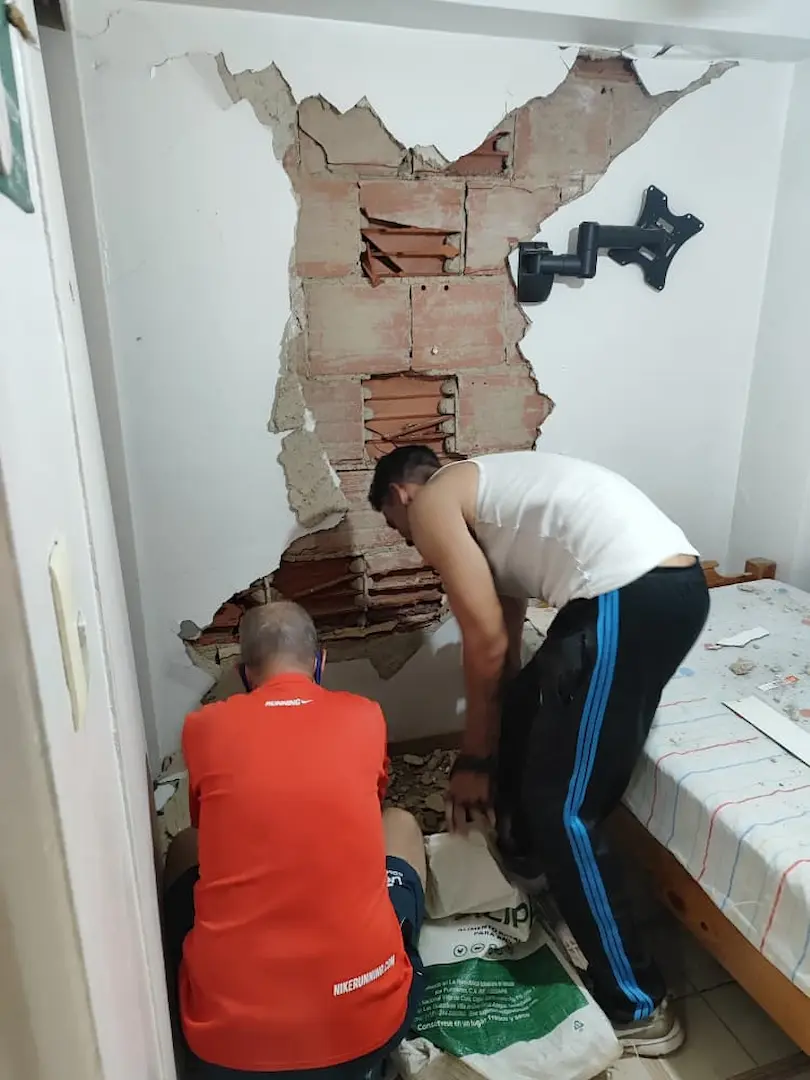
Thankfully, the Tachers’ apartment building withstood the earthquake. There are cracks in the walls, where “you can see the concrete behind the paint,” but no structural damage. Even the glass vases with flowers that fell on the floor during the earthquake miraculously did not shatter.
Their daughter remains traumatized. Two weeks later, she refuses to sleep in her own bed. It was very difficult for her to come back home. “She was scared because she remembers all the things falling,” says Adriana. Once she saw that it was only a few cracks, “she was calmer. We're handling it day by day. I let her express her emotions and I try to help her.”
Adriana works as the director of the dance department in the Hebraica, Caracas’ Jewish community center. The day before the earthquake, the Hebraica held its annual dance festival, with close to a thousand people in attendance. “We thank God that it didn't happen that day,” says Adriana. “It could have been a tragedy.”
Fortunately, the Hebraica campus was mostly empty that night. The building weathered the earthquake relatively well, though there was significant damage in the eastern wing, in the gym area, and some glass walls came down.
The Jewish community in Venezuela numbers about 5,000 people, the vast majority of whom reside in the capital city of Caracas. “Thank God, we have an amazing community of people who help in any way they can,” says Adriana. “Our small community stays together no matter what. We all know each other, and we are there for each other.”
The Hebraica’s director, Ezra Kaim, says that shortly after the earthquake, people began arriving at the campus. “Jewish community members who lost their homes, and also non-Jewish neighbors who requested help and wanted a safe place to be.”
Initially, the Hebraica staff directed people to park their cars in Hebraica’s soccer field and stay there, under open sky, without risk of any building coming down on them.
“The Hebraica quickly turned into a shelter,” says Ezra. “The first night, we hosted 2,000 people. They slept all over the building. The next day, we began to receive donations. We were able to obtain mattresses and bunk beds, as well as significant quantities of food. We opened a communal kitchen.”
Special care is provided to the elderly, including several Holocaust survivors. Those who lost their homes are housed in a quiet room and supplied with necessary medical equipment. The volunteers and staff accommodate their special diets and provide for all of their needs.
Slowly, the displaced families began moving out as they found temporary shelter with relatives, in hotels, and in empty apartments.
The Hebraica leadership is still working with the local civil engineers, social workers, and psychologists to provide help and support to anyone in need. They check on community members and see if there is anything they can do to help.
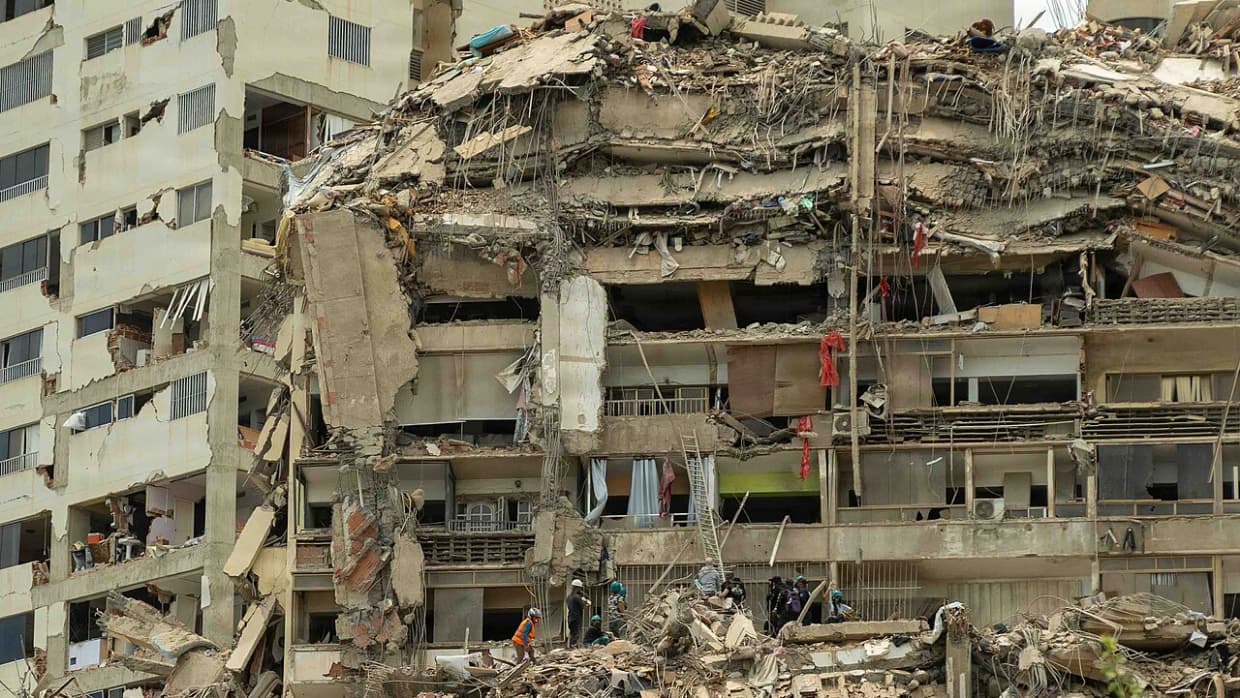
Caracas is relatively far from the earthquake’s epicenter, and most buildings in the Jewish area withstood the earthquake. One building collapsed completely. It was occupied mostly by elderly community members. So far, two bodies, a man and a woman in their nineties, have been recovered from the rubble. The recovery operations are still ongoing. Seven Jewish community members are still missing.
The survivors of the earthquake are recovering. The most seriously injured member of the Jewish community, Mr. Salomon Wanich, underwent a successful surgery and hip replacement in a private clinic.
So far, 19 homes belonging to Jewish community members were deemed unlivable, while 45 homes require repairs. 17 are still awaiting inspection.
Two weeks later, four families who lost their homes are still staying in the Hebraica. One of the families is planning to make aliyah to Israel. The other three are still waiting for some suitable apartments to become available.
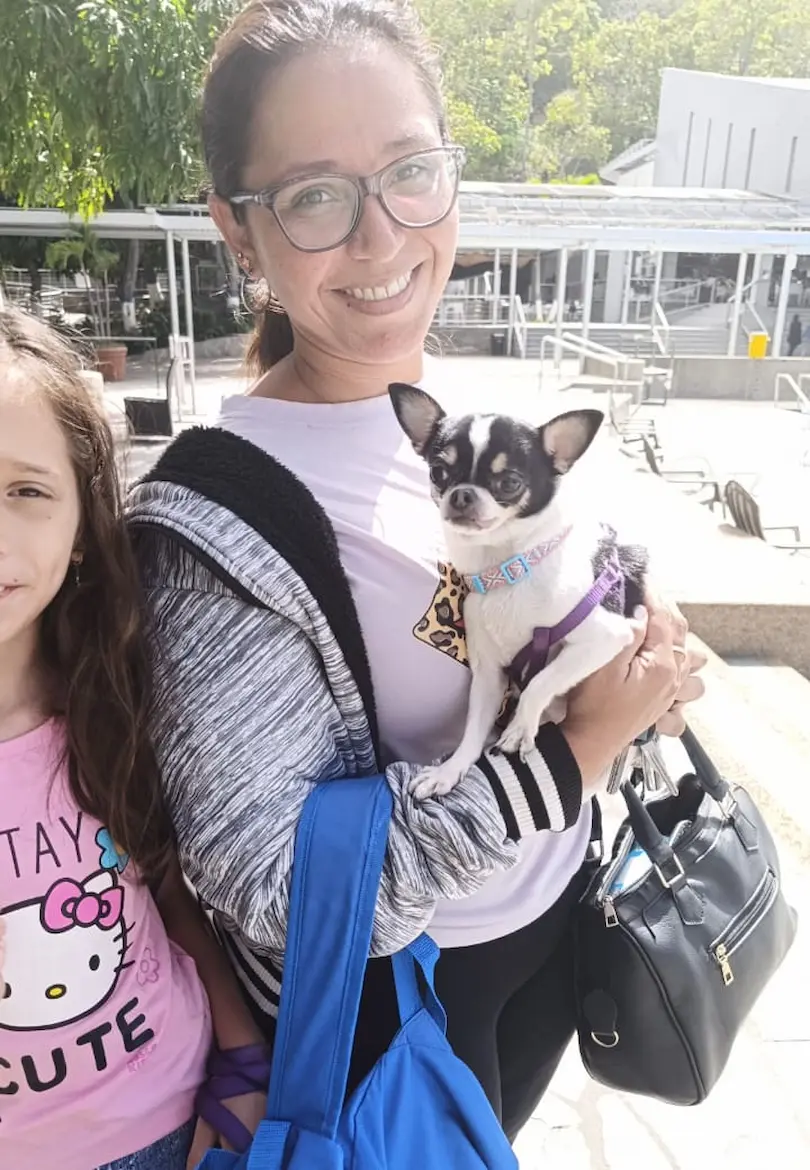
After the earthquake, the Department of Education closed all schools until the school buildings could be inspected for safety. That left the local children not only traumatized but with nothing to do. The staff at Hebraica stepped in, opening a free day camp for the Jewish community’s children, with lunch and snacks provided. About 200 children attend the camp daily, including Adriana’s daughter. Adriana, like the other department heads, is very involved in running the camp.
In addition to the fun activities, “we are teaching the children about solidarity and empathy,” says Adriana. “We speak to them about the tragedy, and we're collecting toys or things that they bring to donate to other kids in need.” The children feel good about contributing to the relief response, which extends beyond the Jewish community to the more affected areas of Venezuela.
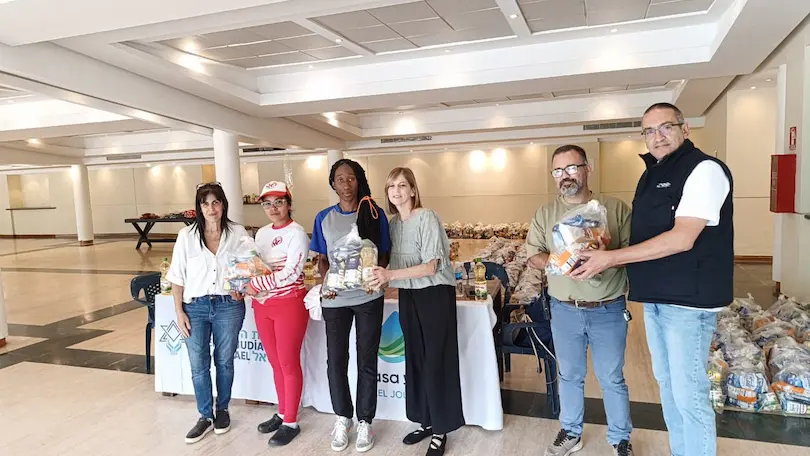
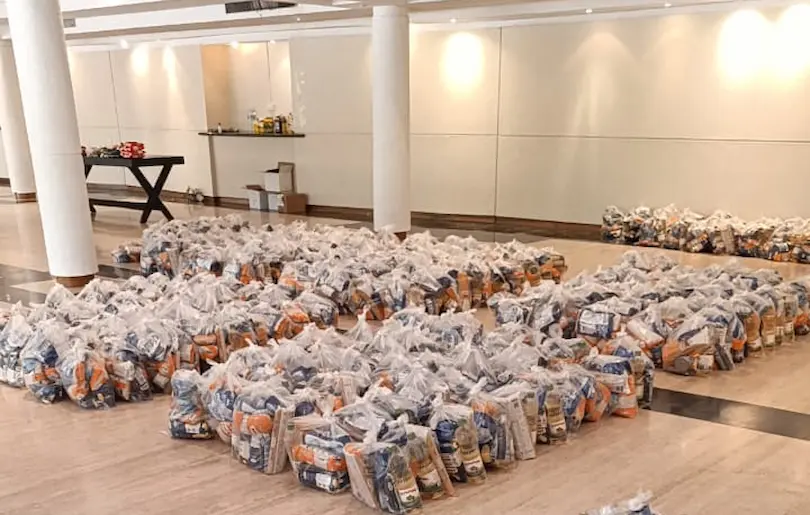
Jewish community members are also involved in food distribution. Adriana explains, “We are putting together food boxes with cans, pasta, rice, flour, oil, tuna, things like that. We are giving them to all the community employees, so people can have a little help from us, too. Also, we get a lot of donations from companies that people in our community own. They help a lot. Every day, we see what is needed. Today you may need medicines and hospital supplies, but tomorrow you may need beds, water, and food. So, we take it day by day.”
“All the workers in Hebraica help with anything that’s needed. I may be in the dance department, but if a different department needs me, I help. That’s our philosophy, so I'm doing what is needed at the moment.”
Many countries and organizations from all over the world sent volunteers, as well as supplies and donations, to assist the community in Caracas. Ezra is grateful to Keren Hayesod, the Jewish Agency, JCC Global, Maccabi World Union, World Jewish Relief, and JDC, as well as to the governments of Israel, Japan, Colombia, Mexico, El Salvador, Spain, and Chile.
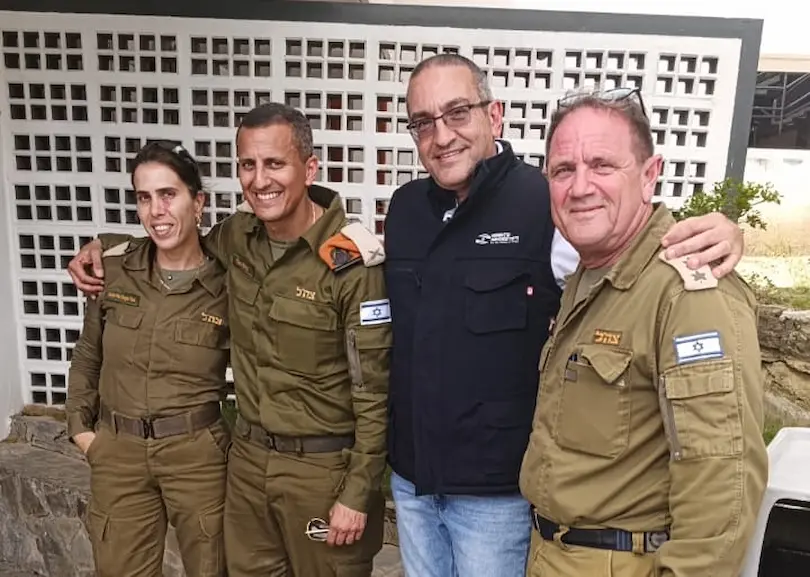 Israeli volunteers
The Israeli volunteers are currently on site in the most affected areas of Venezuela, engaged in search and recovery operations and assistance with body identification. The Venezuelan interim president publicly thanked the Israeli team and praised their professionalism, despite the absence of diplomatic relations between the two countries.
The Jewish community in Venezuela is currently focused on rebuilding and ensuring that every family in the community has a roof over their heads. Not everyone in Venezuela has home insurance, and some of the families that lost their homes are not getting any insurance compensation.
An older building belonging to the Jewish community that was no longer in use is currently being adapted to house displaced families. The community is installing kitchens and bathrooms.
Ezra says, “All the community institutions are working in close coordination and alignment. There are always differences—after all, we are Jewish—and, unfortunately, we function best when there is a crisis.”
Overall, the Jewish community is trying to get back to regular life. “It’s difficult when you have another part of the country that lost everything, and you have to go to work as if nothing happened,” says Adriana. “But people need to support their families, and companies need to produce to pay their employees.”
The donations currently being collected by the Jewish community through a GoFundMe campaign are intended to help local families rebuild. “That’s the priority right now,” says Adriana.