 As a Jewish Coloradan, I Am Afraid





Venezuela called Israel a genocidal, Nazi-like state. Is Israel right in sending a search and rescue team to help them?
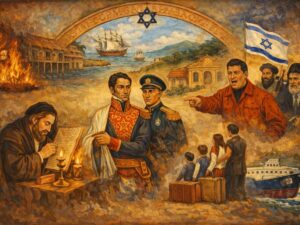
Two years ago, Venezuela's government called Israel a genocidal, Nazi-like state. Its president once said Israelis were guilty of "something similar or perhaps worse than what the Nazis did." Swastikas went up next to Jewish stars in Caracas. Synagogues were attacked. State radio recommended the Protocols of the Elders of Zion as required reading.
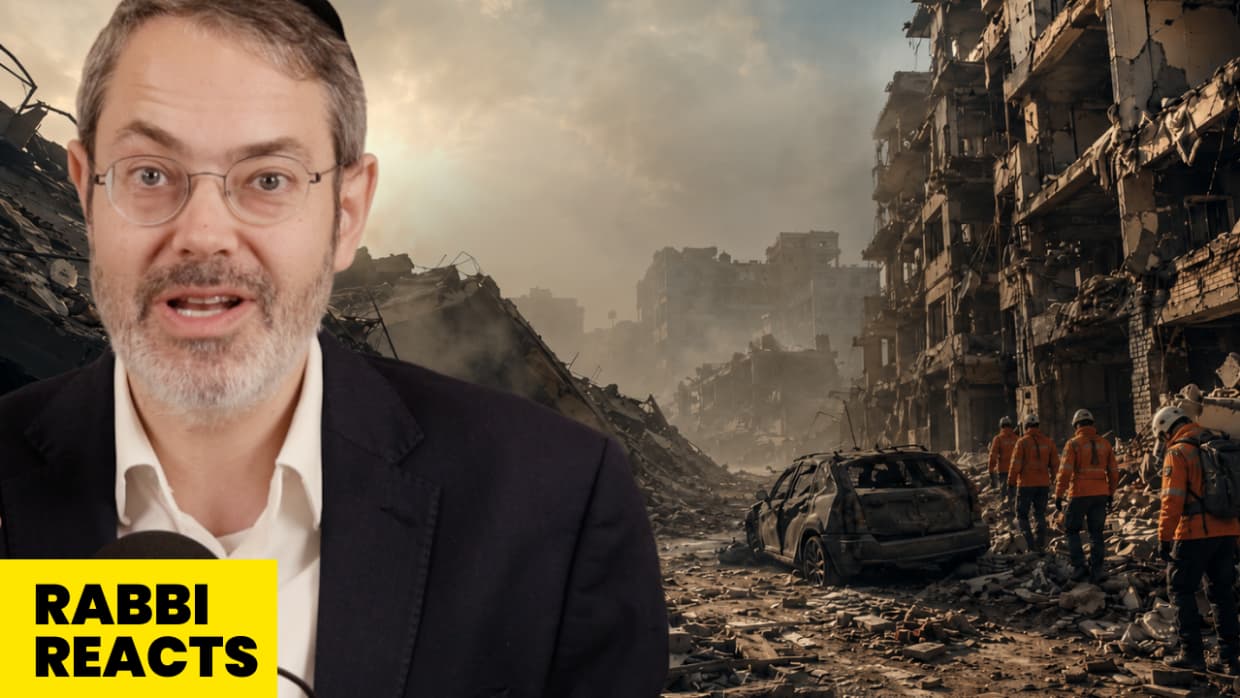
Then, the earth split open. Two massive earthquakes, one measuring 7.2 and another 7.5, the strongest to hit the region since 1900, brought buildings down across Caracas and Valencia. The death toll passed 1,700, with tens of thousands still missing. People were digging through concrete with their bare hands.
Within hours, a 16-person Israeli search and rescue team was on a plane. They landed and went straight to work pulling survivors from the wreckage. Zaka, Israel's Chevra Kadisha and disaster response organization, Natan International, and IsraAID all mobilized within hours. Official delegations from Israel's Foreign Ministry and Home Front Command were sent out on the Prime Minister's direct instructions.
Here's what makes that remarkable: Israel and Venezuela don't have diplomatic relations. There's been no embassy for over 15 years. Venezuela severed ties and has spent two decades leading a global campaign to brand Israel as an apartheid, genocidal, Nazi state.
It wasn't always like this. In 1947, Venezuela voted in favor of establishing the State of Israel. Relations stayed warm for decades until Hugo Chavez took power. In 2006 he recalled Israel's ambassador and accused Israel of committing a holocaust of its own. By 2009, during a war in which Hamas had attacked Israel, he went further, cursing the state and calling it a terrorist, murderous enemy. The Mossad, he claimed, was trying to assassinate him personally. Venezuela's secret service spied on its own Jewish community. Jews were pressured to publicly denounce Israel or be treated as suspects.
This is the government, and this is the country, that Israel dropped everything to rescue.
And it's not an isolated case. Israel runs toward disaster wherever it strikes, Haiti, Turkey, Nepal, Thailand, the Philippines. A country the size of New Jersey, surrounded by enemies and fighting for its own survival, still sends field hospitals and rescue teams around the world. Meanwhile, almost on cue, while the UN debated aid to Venezuela, the discussion twisted back into yet another referendum on Israel, even as Israeli rescuers were the first on the ground pulling Venezuelans from the rubble.
Was Israel right to help? Some would argue that a government which spent decades demonizing you, one that helped give Hamas the confidence to attack you, isn't a government you owe anything to. Shouldn't they be left to deal with their own mess?
The Torah's answer is unambiguous, and it's worth understanding why.
Judaism draws a sharp line between two different kinds of enemies.
The first is the enemy actively trying to kill you right now. The terrorist with a weapon aimed at you. Torah law is unequivocal there: you strike first. You don't wait to be killed. That's not a war crime, that's a moral obligation.
But there's a second kind of enemy: someone who hates you, who has caused you real harm, but who at this exact moment poses no threat. A human being in trouble. And for that enemy, the Torah asks something almost impossible.
In Exodus 23:5, the Torah gives a strange and specific command: if you see the donkey of someone who hates you collapsing under its load, you don't walk past. You stop and help him lift it. Not your friend's donkey, your enemy's. The person who has caused you nothing but grief, who wants to see you fail. The Torah says you help him anyway.
The rabbis of the Talmud push this even further. If two donkeys are struggling at once, one belonging to a friend and one to an enemy, the law is that you help the enemy first. Why? Specifically to break your natural instinct toward revenge, toward "let him deal with his own problem."
King Solomon takes it a step beyond the animal. In Proverbs 25:21 he writes: if your enemy is hungry, feed him; if he's thirsty, give him water. Not his property, him. That line alone could serve as the mission statement for a search and rescue team flying into a country that has spent decades calling you a murderer.
Go back to the very first Jew for the clearest example of all. Sodom stood for everything Abraham opposed. Where Abraham's life was defined by hospitality and kindness to strangers, Sodom made cruelty to the poor into law. Abraham's own nephew Lot had abandoned him to go live there.
Then Sodom got crushed in a war. Four invading kings swept through, captured the city, and took Lot prisoner. Abraham owed Sodom nothing. He could have let them rot. Instead, he raised a militia, went to war, and didn't just rescue his nephew, he freed every captive in the city.
When the King of Sodom offered him the spoils of that victory, Abraham refused every bit of it. "I won't take so much as a thread or a sandal strap," he says in Genesis 14:23. His message was simple: I came to help you because you needed help, not for what I could gain from it. Even if you're my enemy, if I have the power to protect you and feed you, that's what I'm going to do.
Later, when God tells Abraham He's about to destroy Sodom for its evil, Abraham doesn't celebrate. He argues. He bargains. Can we find righteous people there? Is there a way to save it? Can they still turn things around? That instinct, to want your enemy's redemption rather than his ruin, runs through the entire story.
The next generation shows the same idea. As children, Ishmael mocked and, according to the sages, tried to harm his younger half-brother Isaac. It ended with Ishmael and his mother being sent away from the family. Yet years later, it's Isaac himself, the one Ishmael had once tried to hurt, who goes out and brings his brother back into their father's life. Abraham never gave up on him. When Abraham dies, Ishmael and Isaac bury him together, side by side. The commentator Rashi notes that the Torah uses the word reserved for the truly righteous to describe Ishmael at that moment. Two brothers, one who had wronged the other, reunited as equals.
This isn't just a family story. The Torah applies the same rule to entire nations. In Deuteronomy 23:8, Moses tells the Israelites not to despise an Edomite, because he is your brother, and not to despise an Egyptian, because you were once strangers in his land. Think about who these nations were. Egypt enslaved the Jewish people for generations and threw their infant sons into the Nile. Edom later became the empire that destroyed the Temple and drove the Jews into a centuries-long exile. And still, the Torah insists: don't hate them. Remember that Egypt once sheltered you in a famine. Remember that Edom is family. Defend yourself if they come to kill you, but never lose sight of their humanity.
God models this instinct Himself. When the Egyptian army drowned in the sea while chasing the fleeing Israelites, the angels wanted to burst into song in celebration. God stopped them cold: "My creations are drowning in the sea, and you want to sing praises?" That teaching still shapes Jewish practice today. On the last six days of Passover, we recite an abbreviated version of Hallel, the psalms of praise, specifically because those days mark the drowning of the Egyptian army. Even a hated enemy's death is not something to celebrate.
Consider the story of Jonah. God sends him to warn Nineveh, capital of Assyria, the empire destined to one day wipe out ten of the twelve tribes of Israel, that the city will be destroyed unless it repents. Jonah's response is essentially: good, let them be destroyed, they're monsters. He flees rather than deliver the warning, ends up swallowed by a giant fish, and eventually, reluctantly, does the job.
When Nineveh repents and God spares it, Jonah is furious. God's response to him is the heart of the whole book: "Should I not have compassion on Nineveh, that great city with more than 120,000 people who don't know their right hand from their left?" These people may hate you. They may one day threaten you again. But right now they are confused, not dangerous, and they are still God's children.
The Talmud tells a similar story about Rabbi Meir. A violent man in his neighborhood made his life miserable, and Rabbi Meir prayed for God to remove him from the world, meaning, to let him die. His wife corrected him: look closely at the verse you're basing that prayer on, from Psalms 104. It doesn't say "let sinners disappear from the earth." It says let sins disappear. Pray that he stops sinning, not that he dies. Rabbi Meir changed his prayer, and the Talmud tells us the man repented.
King David lived this out too. When King Saul hunted him with an army, intent on killing him, David had chances to strike back and refused. Later, when his own son Absalom led a rebellion and marched against him, David's response wasn't vengeance but a plea: have mercy on him.
The common thread through every one of these stories, Abraham and Sodom, Isaac and Ishmael, the Exodus, Jonah and Nineveh, Rabbi Meir, King David, is this: when someone is actively trying to kill you, you fight, without apology or hesitation. But the moment they stop being a threat, even if they still hate you, even if they've spent years defaming you, your job shifts from self-defense to seeing their humanity. You don't pray for their downfall. You pray for their return to good.
That's the answer to the Venezuela question. Yes, this is a government that called Israel Nazis, hosted swastikas next to Jewish stars, and helped build the global vocabulary now used to demonize the Jewish state. None of that changes what was buried under that rubble: human beings, trapped, terrified, and in desperate need of the very country their government spent years vilifying.
The Torah doesn't tell us to like what Venezuela's leadership has done. It tells us that when your enemy falls, you don't gloat, and when the city comes down on top of him, you get on a plane and dig him out. Not for the cameras. Not for public relations. Because four thousand years of Jewish teaching has turned this into instinct.
We live in a world full of people who hate us. When they pick up weapons, we fight back, without hesitation. When they don't, we help, and we pray that one day they find their way back to their own humanity. That's not weakness. It's the clearest expression of what it means to be a light unto the nations, even to the ones still cursing your name.