




 This Man Is Addressing the Tuition Crisis, One Family at a Time




55 min view


Chen Schimmel photographed the homes, the funerals, and the grief that followed October 7th. What she brought back is something the Jewish world needs to see.
There is a photograph in Chen Schimmel's book that has no title because there are no words. It's a portrait of a hostage's mother. Just grief, unmediated, staring back at you from the page. Chen looked at it for a long time. Then she left it untitled and moved on.
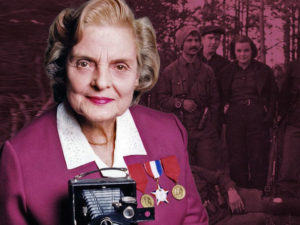
That instinct — to know when language fails and let the image speak alone — is at the heart of who Chen Schimmel is. She is a photojournalist who grew up in London, made aliyah at 18, and spent years doing weddings and pregnancy shoots before a hunger for something more urgent sent her, first, to the earthquake in Morocco in September 2023, and then, one month later, to the worst massacre of Jews since the Holocaust.
On October 7th, Chen was asleep in Jerusalem when the sirens began. Her younger brother, newly drafted into the army, ran into the family's shelter and said the words none of them could process: "Dead bodies. Dead soldiers. Bodies everywhere." By the end of that day, her father had volunteered with Zaka, the Orthodox volunteer organization that collects human remains so the fallen can receive a proper Jewish burial, and Chen had made the decision to go with him the next time he went south.
She didn't have a press vest or a helmet. She had her camera and her father, and that was enough to get her in. What she found in the burned homes of Kibbutz Be'eri, in the ruined rooms where families had lived and died, is documented in her book, October 7th: Bearing Witness. It's a coffee-table volume designed to be held, to be beautiful, to make people want to open it even knowing what's inside. Spare and gallery-like: one photograph per page, generous white space, almost no text. That was deliberate. "People relate to art," she told me. "I wanted them to pick it up. I wanted them to look." The proceeds go to injured soldiers.
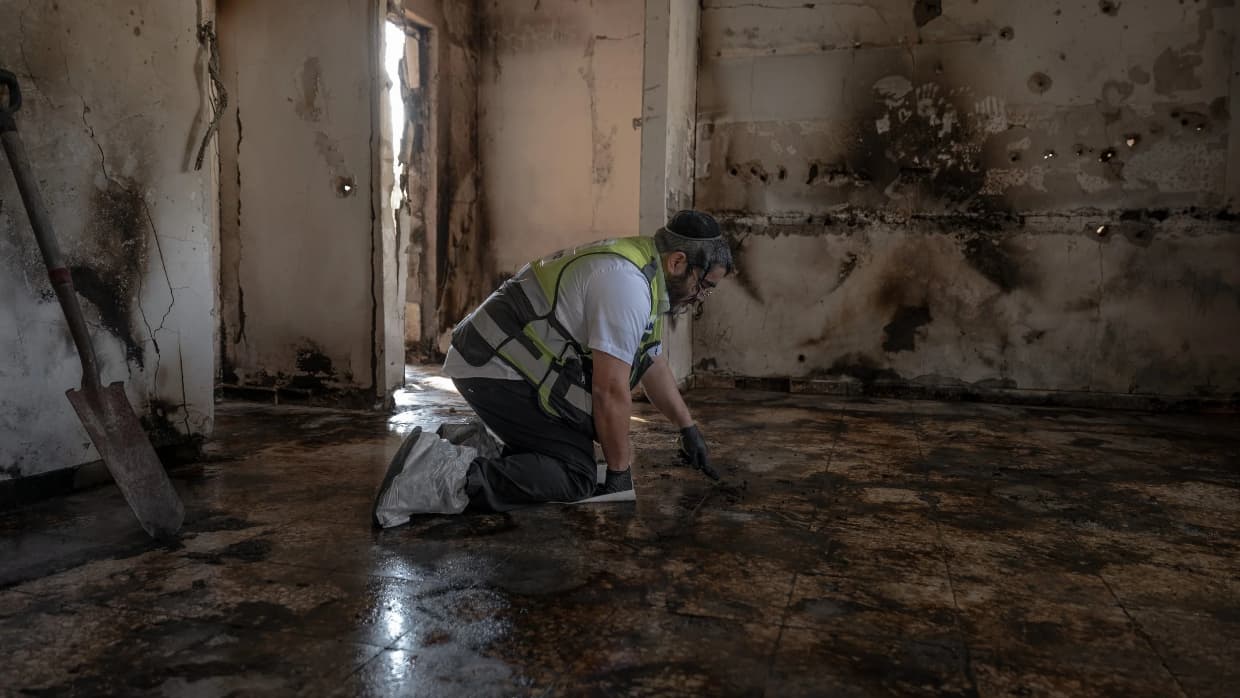
Her photograph "Holy Work" was named Photo of the Year at a major Tel Aviv competition, a city where the Orthodox are rarely seen in a flattering light, let alone celebrated. The image shows a Zaka volunteer on his knees, scrubbing blood from the floor of a home in Be'eri. Chen paired it with a line from Genesis, God's words to Cain after the murder of Abel: "What have you done? The voice of your brother's blood cries out to me from the ground."
When the judges called to tell her she'd won, she cried. "The win wasn't for me," she said. "It was for them. For the holy work they do. They go so unseen, so unheard." The fact that it happened in Tel Aviv made it mean even more.
In the weeks after October 7th, Chen was working with the Jerusalem Post on a series about hostage families. Just before Hanukkah, she went to photograph the mother of a young woman named Eden who had been taken from the Nova music festival. When Chen was done and about to leave, the woman asked her to stay for tea. They sat on the couch. The woman made fresh mint tea and gently played with Chen's hair.
Article continues below. Watch the full interview
"Hanukkah is coming," she said, "and I'm praying for a miracle. That on the last night, which is also my Eden's birthday, she comes home to me."
Four days later, the woman messaged Chen: "There is no miracle. Eden is coming home, but she's not coming home alive."
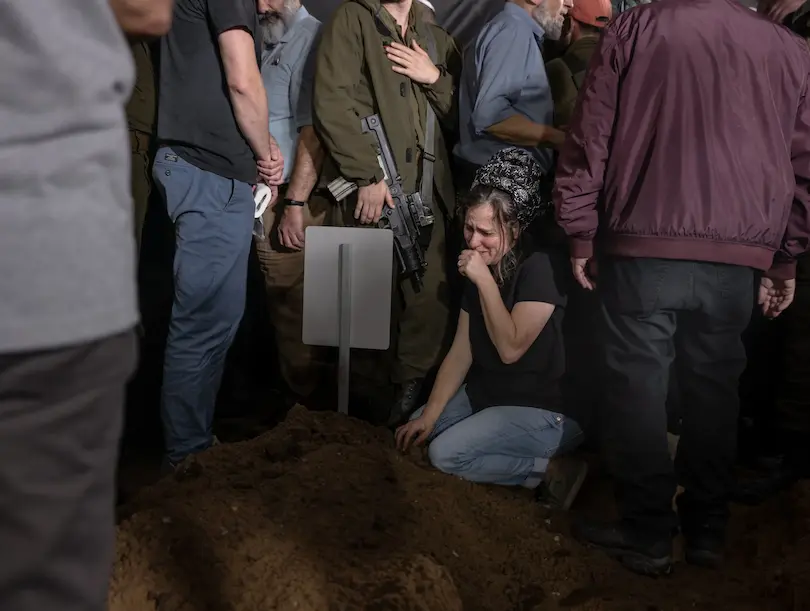
Chen went to the funeral. It was small and private, overlooking the sea. Eden was buried on her birthday. "It was excruciating," Chen told me quietly.
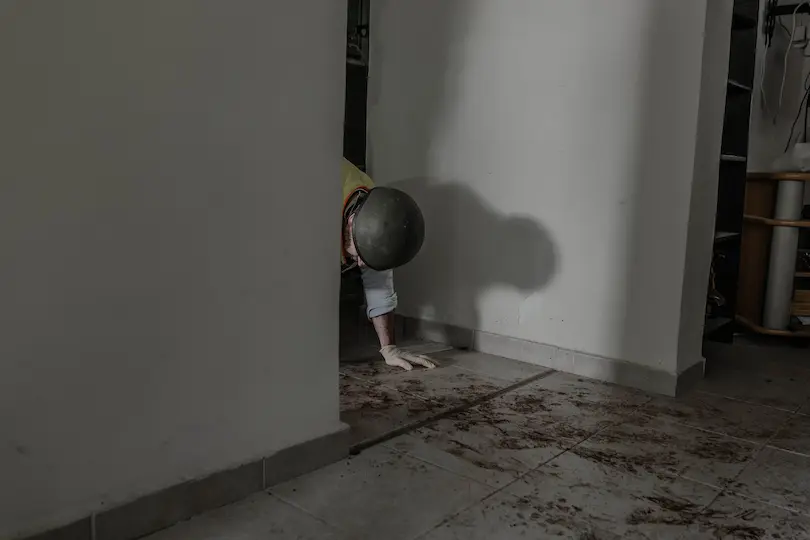
She has photographed hundreds of funerals. She has been inside homes so saturated with dried blood that Zaka volunteers used toothbrushes and industrial chemicals to scrub floors for hours. She has documented hostage families at Shabbat tables with empty chairs, and amputee soldiers relearning how to move through the world.
There are two things, she says, she cannot photograph: the wailing sound of a parent burying their child, and the smell that hung over the kibbutzim in those first weeks. "There are things that just stay with you that I can never portray through a photograph."
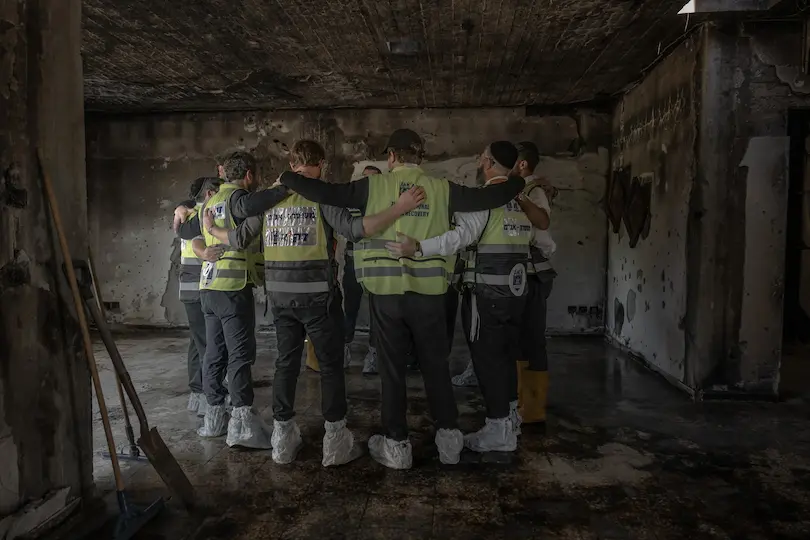
One of her most visceral memories came from a Zaka cleanup operation a full month after October 7th. The first rains of winter had fallen and washed away a layer of ash in a home in Be'eri, revealing blood that had been hidden since the massacre. Chen had stepped outside for air when she heard something faint — a whisper that grew into voices, then into singing. She turned to find the Zaka volunteers on their knees, rising slowly, finding each other's arms, forming a circle in the middle of that bloodied floor, and belting Ani Ma'amin — "I believe with complete faith" — at the top of their lungs.
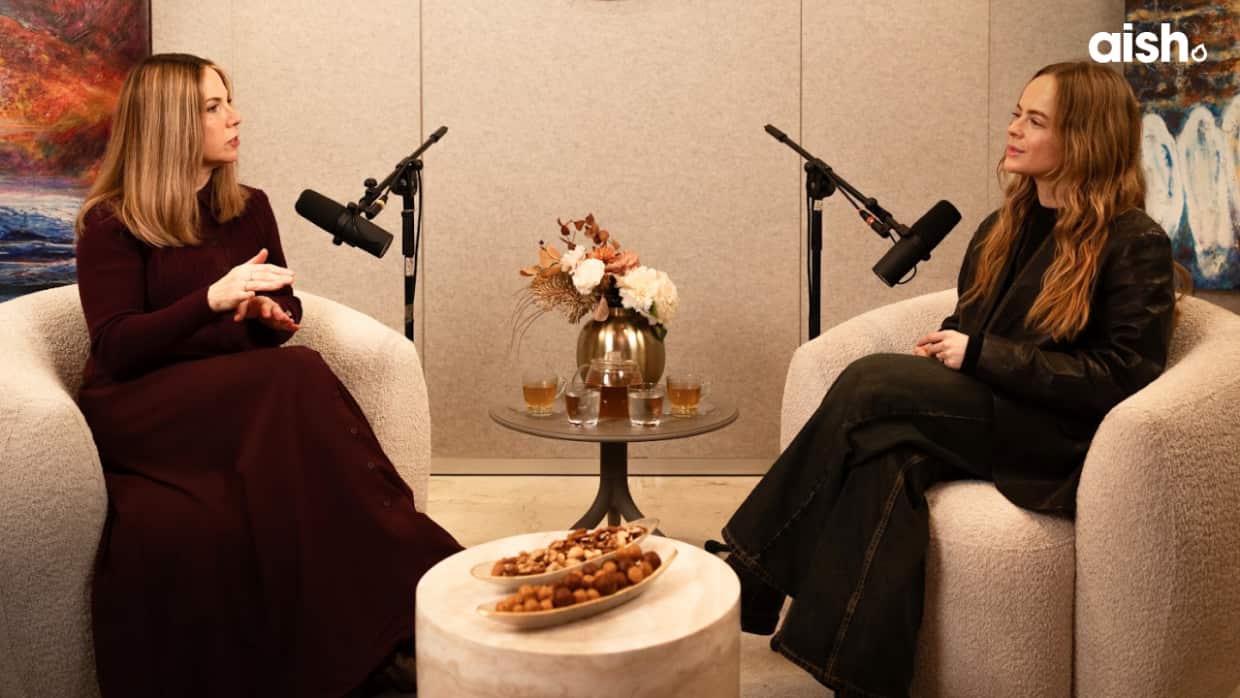 Jamie Geller and Chen Schimmel
"I have chills every time I talk about it," she said.
Before October 7th Chen wasn't accustomed to reciting the morning prayer Modeh Ani — "I give thanks," the traditional words spoken upon waking, thanking God for returning your soul for another day. But she found herself saying it automatically after her first nights photographing down south. Coming home to darkness, waking up, and before anything else: gratitude that she was still here.
What the work taught her, ultimately, is something she arrived at slowly over two years of photographing in some of the hardest places a human being can go. It is not, she says, that light exists within darkness. It is that light and darkness exist side by side, always, inseparable.
"That's what we are as a people," she told me.
Chen Schimmel's book documents the first year following October 7th. All proceeds benefit injured Israeli soldiers. This profile is based on her conversation with Jamie Geller on No Reservations, filmed at the Dan Family Center in Jerusalem.








The world needs to see the entire videos that Hamas filmed! No more holding back! The fact that 3 years later I’m still carrying a pistol and wearing body armor just to go to Shul tells you just how bad it still is! It’s disgusting!
What happened on October 7, 2023 was a mini Holocaust, but at least the Zaka volunteers buried the dead, but Holocaust victims were not buried they were burned in the crematorium, and their ashes were brought to be buried in a Monsey cemetery, and these both went gor Kiddush Hashem and their souls should have a aliyah, one group was murdered brutally in Europe and one group were brutally murdered in theif homeland of Israel, they are both very sad parts of Jewish history both incidents should be remembered by Jews and also around the world, in Israel they " Day of the Holocaust ( in Hebrew) so when should they remember the Nova victims the same day of the Holocaust remembrance day or another day,
- Yup - that's the well known history - to us Jews. What we need - (not a MEEK - PASSIVE - APOLOGETIC DIALOGUE) - is a more hard hitting factual & photographic documentary - that
reaches - teaches & impacts more clearly the hearts & minds of all people - about the TRUTH of Jewish 3350 year history. Which also CLEARLY - IRREFUTABLY CORRECTS - FALSE TEACHINGS & BELIEFS - whether it upsets people or not.
In the introduction - it says something "EVERY JEW NEEDS TO SEE'. With all the writing skills available to those who write articles for AISH - they should be able to come up with an absolutely magnificent piece - FOR ALL MANKIND TO SEE - that will open their hearts & minds - so they will truthfully understand - the Jewish People/Nations historical place - THEN & NOW!
Then in history was the Holocaust, now in history was October 7, 2023 a mini Holocaust, where both murderers had the same goal to make the world and Israel " Judenrein " ( free of Jews) which could be a sign that the blood of our enemies that are from Amelak, like we read before Purim about Amelak