








 The FlyDubai Miracle








Tina Strobos built a secret attic hideout the Nazis never found, stole identity cards, and survived eight Gestapo raids. She lived ten minutes from Anne Frank and never knew.
Tina Strobos was born in Amsterdam in 1920 to a socialist, atheist family that treated resistance as second nature. They were freethinking activists with generations of women who had sheltered refugees long before the Nazis darkened Europe.
By 16 she was studying medicine in a comfortable Amsterdam home, intent on becoming a psychiatrist. But at 19, the German invasion split Tina’s world in two, replacing her quiet academic path with a war that demanded courage. Her studies at the University of Amsterdam’s medical school ended abruptly when she and her classmates refused to swear loyalty to the occupation. Tina, along with hundreds of former university students, gravitated toward the Dutch Resistance.
After the Nazis invasion of the Netherlands on May 10, 1940, Tina entered the resistance to forge identity cards and serve as a courier for the Dutch underground.
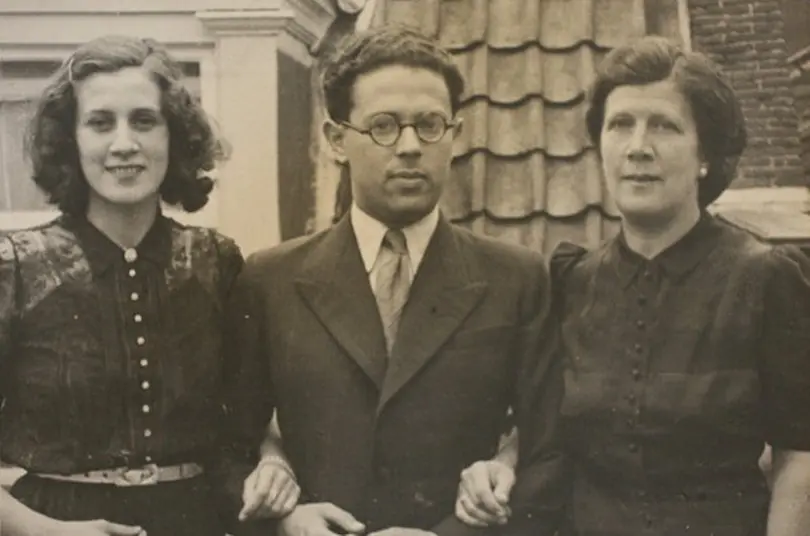 Tina Strobos (left), her fiancé Abraham Pais, and her mother Marie Schotte, c. 1941
At parties and crowded gatherings, she would scan the room for opportunity. While party guests were distracted, she slipped identity cards from their coats, later replacing the photos and fingerprints with those of the Jews she was trying to save.
In her early years with the Resistance, Strobos expanded her role by pedaling for miles with guns, radios, and explosives in her bicycle’s basket. She also delivered ration stamps to Jews hiding on distant farms and firearms to resistance cells. Sometimes entire crates of weapons were hidden in her house. Tina kept a forbidden radio transmitter in her home - a death‑penalty offense - and used it to send coded messages to the BBC.
But as the German grip on the Netherlands grew tighter, she shifted her focus to spiriting Jews out of danger by hiding refugees and forging papers. When social circles couldn’t supply enough documents, she widened the net. She recruited pickpockets to lift identity cards from travelers at Amsterdam train stations, turning petty thieves into quiet partners.
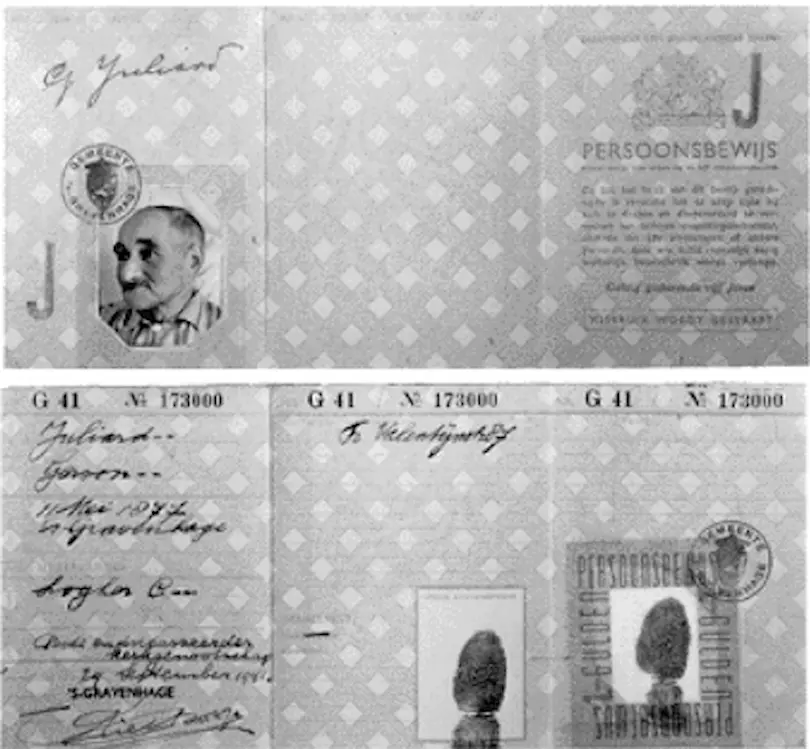 Identity card issued to a Dutch Jew ddurring the Nazi Occupation. Stamped with incriminating "J"
At her own aunt’s funeral, Strobos reached into the coat pockets of mourners and stole their passports, knowing each one could mean a life saved.
Her grandmother, Marie Schotte Abrahams, was no less fearless; she had sheltered refugees during World War I. When a Nazi officer tried to interrogate her, she fixed him with a stare and murmured, “Did I not see you looting a Persian rug from the Mendlessohns’ apartment?” He fled. Strobos recalled the incident years later: “She is the only person I know who scared the Gestapo.”
Working side by side with her mother and grandmother, Strobos turned their boarding house at 282 Nieuwezijds Voorburgwal into a refuge for Jews on the run. The three‑story building, once a city school, quickly became a busy, improvised maze of safe corners and quick exits. Word spread through the Dutch underground, and the family home evolved into one of Amsterdam’s most dependable havens.
Its wide hallways, multiple staircases, and numerous doors made it possible to move people quickly during surprise inspections. Refugees rarely stayed long; Tina and her mother rotated them through the house, sending them on to farms, or other safe houses with forged documents and a new identity.
One day, a man knocked on Tina’s door, carrying a toolbox and no name. He’d been a skilled woodworker, building staircases and repairing shutters; after the occupation, he built spaces for people to survive in
He announced, “I am a carpenter from the underground. Show me the house and I’ll build a hiding place.” 1 His name appears in no surviving source.
Tina took him into the attic and he carefully looked at how the roof and attic were framed. He saw the space he was looking for. Carved out of corners and angles, he created a hiding space that could shelter three people.
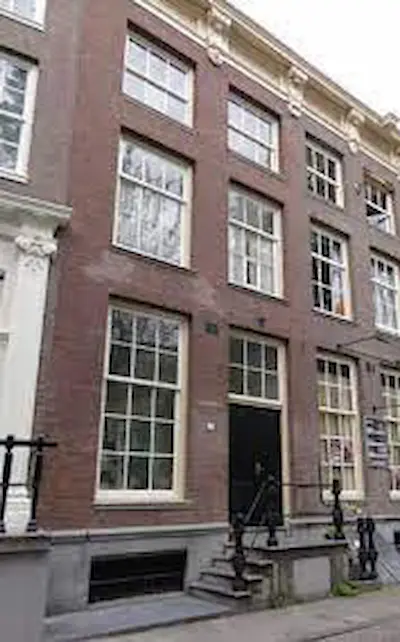 The house at 282 Nieuwezijds Voorburgwal
Strobos later said it was “very hard to find,” even when she returned to the house decades later. After eight Gestapo raids, no officer ever laid eyes on it.
During each three-hour raid, the Gestapo “banged on all the interior walls, but they never discovered anything., they poked bayonets through walls, removed pictures wherever they were hanging, and rolled up carpets. They never found anyone, nor did they discover the weapons, radios, or documents hidden elsewhere in the house.” 2 Tina was often beaten by the Gestapo, and once, she was left unconscious after an official threw her against a wall. 3
Strobos and her mother wired a warning bell system through the house. When they activated it, refugees on the upper floors had only seconds to vanish. If they couldn’t reach the hidden space, they slipped out a window into the adjoining building, disappearing into the city before the Gestapo reached the attic.
Although a few refugees stayed for weeks, the Strobos home was usually a waystation, a place to catch one’s breath before being moved to safer ground. Some were spirited toward Spain or Switzerland; others assumed new identities in the Dutch countryside.
The Strobos home was just a ten‑minute walk from Anne Frank’s hiding place at 263 Prinsengracht, yet the two worlds never connected. Tina never met the young diarist and her family; she didn’t even know they were there.
The Franks were betrayed by an informant and deported to concentration camps, where everyone in the family except Anne’s father died.4 Years later, that knowledge haunted Tina. “If I had known,” she said, “I would have gotten them out of the country.”
When the war ended, Strobos resumed the life she had once planned. She earned her medical degree from the University of Amsterdam in 1946 and crossed the Channel to study psychiatry in London under Anna Freud,
In the 1950s she sailed to New York, began a residency in psychiatry and neurology at Westchester Medical Center, received a Fulbright scholarship, and specialized in child psychiatry.
She built her career as a family psychiatrist with a gift for reaching the mentally impaired and vulnerable. Over the decades, she was honored multiple times, including Yad Vashem naming her and her mother Righteous Among the Nations in 1989. She described her role in the Resistance with these words: “It’s the right thing to do… your conscience tells you to do it… (and) when you’re young, you want to do dangerous things.”5
Tina Strobes practiced medicine until 2009 and died of cancer on February 27, 2012, in Rye, New York, at age 91.
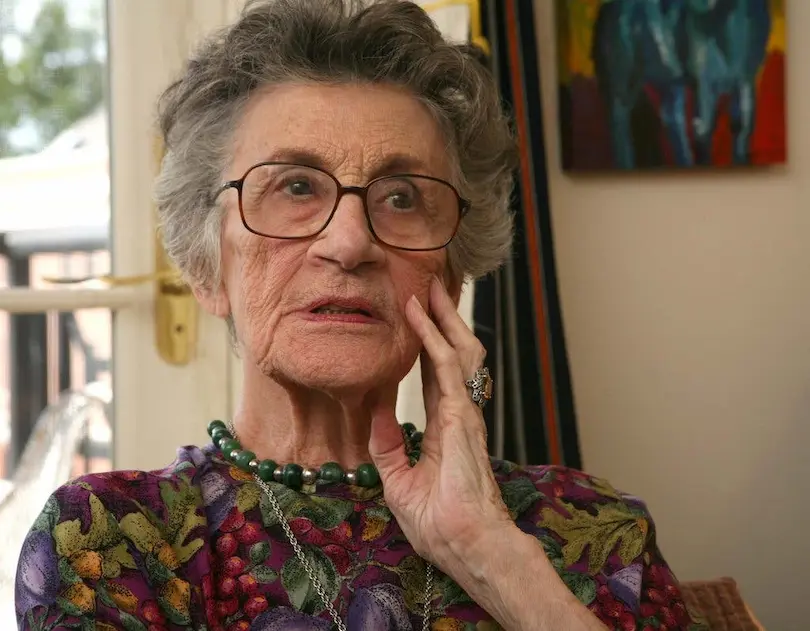 Dr. Tina Strobos. (Photo Credit: Chester Higgins Jr)
She reflected on her life in 2009, saying “It was our natural duty to help them (the Jews) and hide them. I wouldn’t want to live in a society where nobody cared a damn… We knew we couldn’t just stand by while Jewish people were killed. And my mother, Marie Schotte, said: “You know we can get killed” and I said, “Well, I would rather be killed than live in a Nazi society.”
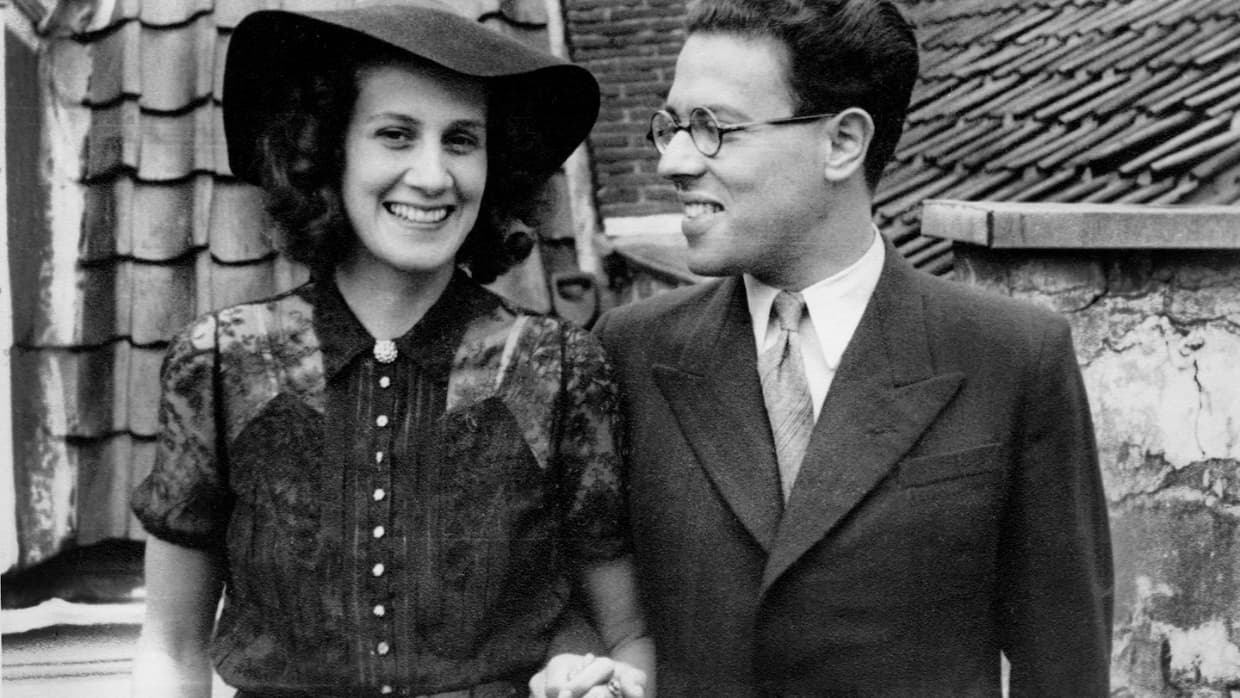
Featured Image: Tina Strobos and her fiance, Abraham Pais, on the rooftop of Dr. Strobos's Amsterdam home where she and her mother hid more than 100 Jews during the Holocaust. (Family Photo restored by Charles Seton)
Join Aish for a powerful, once-in-a-lifetime experience in Poland with a Holocaust Survivor.
This subsidized trip is open to all adults ages 20+ throughout North America.
For details and registration, visit:
livinglegacy.aish.com







A wonderful story. When I read stories of the resistance, I am filled with hope for today’s society.
Very special and wonderful woman. May her memory be a blessing. She was fearless and had an extremely caring heart and soul. If more peywere like her. I can’t even comprehend what the world would be like.
Beautiful woman. May her memory be a blessing ❤️
May their names be for a blessing
I actually met Tina Strobos. To hear her speak about what she did and how she did it was such a deeply moving experience to me - way beyond words.
Her humility and bravery was extraordinary. Tina Strobos, at a such a young age was able to achieve such heights! It was a moment in time I shall never forget.
She is noted among the Righteous Gentiles!
What a fantastic memory that meeting created for you.
This unknown person was a great expert carpenter. Too bad his name is lost to history. This lady had more guts than most of today's politicians.
I never heard of these righteous gentiles , they should be honored by Yad Vashem, after all these years this story comes out, may the family be blessed
Thanks, Judy. She was so honored in 1989
My family and I have been contributors to an organization called The Jewish Foundation for the Righteous (JFR). They support righteous gentiles and their descendants who risked everything to help Jews during the war. Look them up