








 The Macklemore Mess: What Pink Got Right and Everyone Else Got Wrong
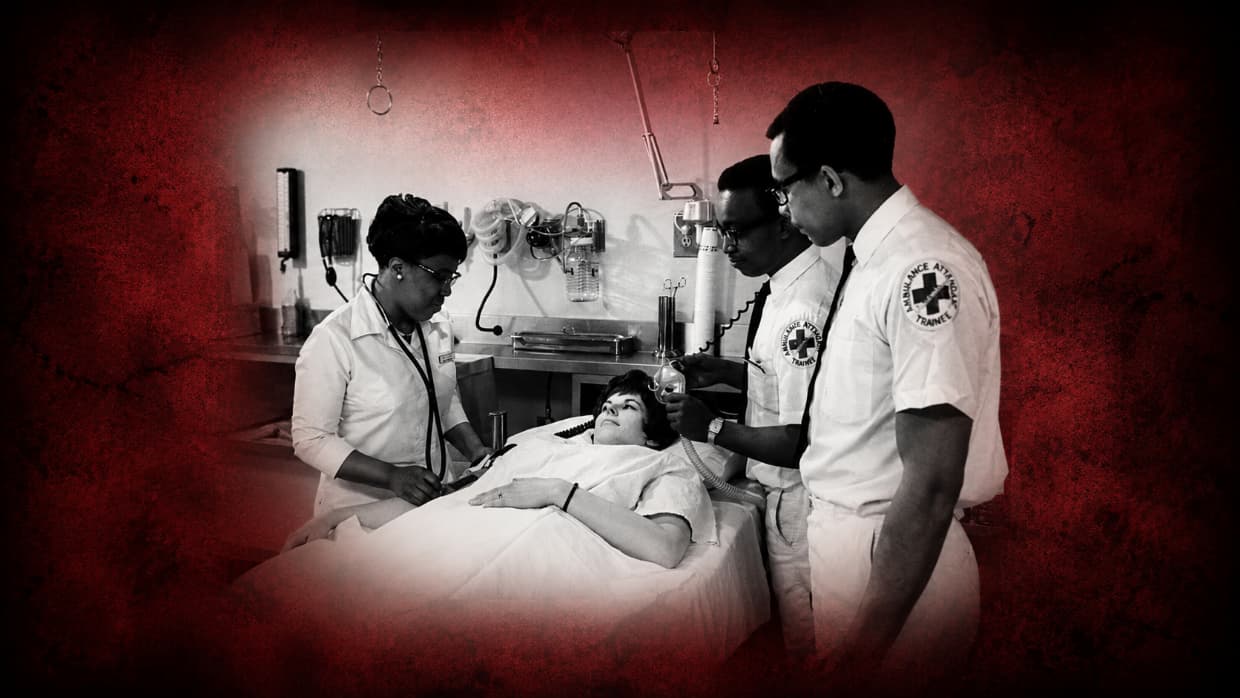








Every life saved in the back of an ambulance traces back to a remarkable group of pioneers in Pittsburgh. This is their story.
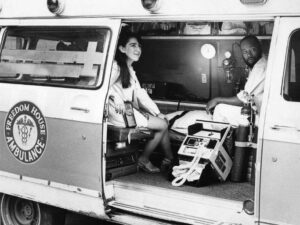
In the hit series The Pitt, an elderly patient stuns ER doctors with his medical knowledge. The reveal: he was once a medic for Freedom House Ambulance Service, founded in Pittsburgh in 1967 — the first emergency medical service in America to train paramedics with advanced medical knowledge, staffed entirely by African Americans.
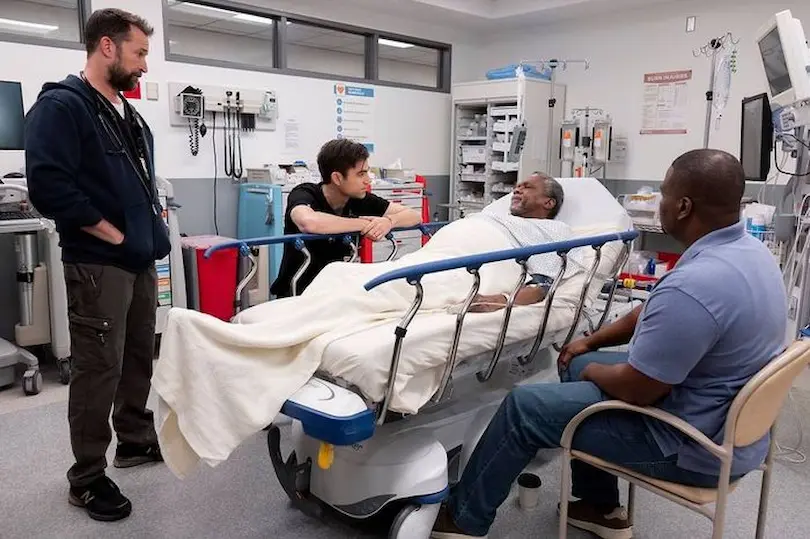 Freedom House ambulance attendant in a scene from The Pitt
The Jewish philanthropist who made it possible died without ever knowing what he'd set in motion.
Maurice Falk was born in 1867 to German Jewish immigrants. He and his brothers Leon and Sigmund built the National Steel Corporation, one of America's largest steel companies, then spent his fortune giving it away.
Tragically, Maurice had a particular interest in helping doctors innovate and save lives. His first wife, Laura Klinordlinger, died relatively young, as did their only child, a son who died in infancy. Maurice remarried and he and his second wife, Selma Wertheimer, embarked on a spree of charitable funding of medical fields. They donated half a million dollars, a fortune in today’s value, to build the Falk Clinic at the University of Pittsburgh, which provided out-patient care. He also heavily funded medical education at the University of Pittsburgh.
Maurice earmarked ten million dollars in memory of his first wife to support charitable causes. Among the causes he supported was the resettlement of European refugees, Montefiore Hospital, the Young Man’s and Women’s Hebrew Associations in Pittsburgh, and Freedom House, an organization that helped African Americans in Pittsburgh develop Black-owned businesses, primarily in the largely Black Hill District neighborhood.
After his death in 1946, Freedom House would grow to organize the first ambulance and paramedics corps in the United States.
Dr. Peter Safar, known as the father of CPR, was born in Vienna in 1924, into a distinguished medical family with Jewish relatives. His father Karl was a pioneering ophthalmologist and his mother Vinca (nee Landauer) was a pediatrician. In 1938, Austria became part of Nazi Germany, and life in the Safars household collapsed. Karl was fired from his job because of his outspoken anti-Nazi views. Vinca was fired because she had a Jewish grandmother. Peter was about to enroll in the University of Vienna’s medical school and suddenly had his registration terminated.
Instead, Peter was conscripted, first into Hitler Youth where he dug defensive ditches, and then into the German army, where he worked as a medical assistant in a military hospital caring for Nazi soldiers who’d been badly burned in battle. Peter evaded more dangerous duty by feigning a serious skin condition, rubbing ointment used to test for tuberculosis into his skin, triggering a rash all over his body. His ruse was successful and Peter spent much of the war caring for wounded men.
In 1943, an official at the University of Vienna Medical School agreed to ignore Peter’s Jewish ancestry and allowed him to register for classes. He spent the remainder of the war studying medicine, qualified as a surgeon in 1948, and moved to the United States, along with his wife Eva, in 1949. He created the first medical-surgical intensive care unit (ICU) in the United States, in Baltimore, before moving to Pittsburgh, where he built the world’s first ICU training program. He was a pioneer in resuscitating people who’d experienced cardiac arrest, and helped develop the practice of Cardio-Pulmonary Resuscitation (CPR) that is in use today.
In the 1960s, there was no standardized method for transporting people who were experiencing a medical emergency to the hospital. Ambulances had long been used in war zones, but they weren’t always used during peace time. Some hospitals operated their own ambulance services, yet in many locations ambulance service was unavailable.
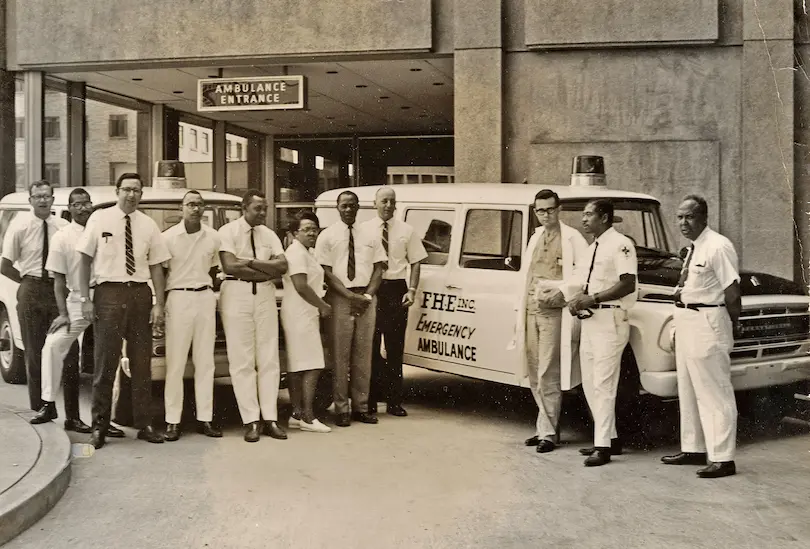
Take Pittsburgh’s majority-Black Hill District. When residents needed emergency care, white police officers provided emergency transport to hospitals, when they responded at all. In a 2023 WQED documentary “Freedom House Ambulance: The First Responders”, one former resident recalled that police officers “decided whether they wanted to come, how long they wanted to take to get there or whether they wanted to transport you to the emergency room.”
Patients received no medical care during their transport to a hospital. That’s what happened one day in 1966 when Peter Safar was at a medical conference and his 11-year-old daughter Elizabeth experienced an asthma attack at home and was rushed to the hospital. She received no care on the way and by the time she arrived at the hospital, she’d lost consciousness. She never woke up. Peter realized that if medically trained professionals had been able to help her immediately, she might not have died.
Later that year, lack of immediate medical care contributed to the death of a more high-profile Pittsburgh resident. Former mayor (and former Pennsylvania governor) David L. Lawrence was giving a speech in Pittsburgh's Syria Mosque when he had a heart attack. A nurse happened to be present and began CPR, the new lifesaving technique recently pioneered by Dr. Peter Safar in the city. Police officers loaded Lawrence into an emergency wagon and drove him to a local hospital. The nurse accompanied him, trying to provide lifesaving care, but she was unable to help because the wagon swayed so much she couldn’t brace herself to continue CPR. Medical equipment in the wagon was broken and unusable.
Lawrence was revived at the hospital but had already suffered brain damage and died two weeks later. His needless death convinced Pittsburgh city officials that something needed to change.
In 1967, city leaders decided to purchase a dedicated city ambulance to transport patients to local hospitals in a timely manner. The only question was: who would staff this fledgling new emergency service? T
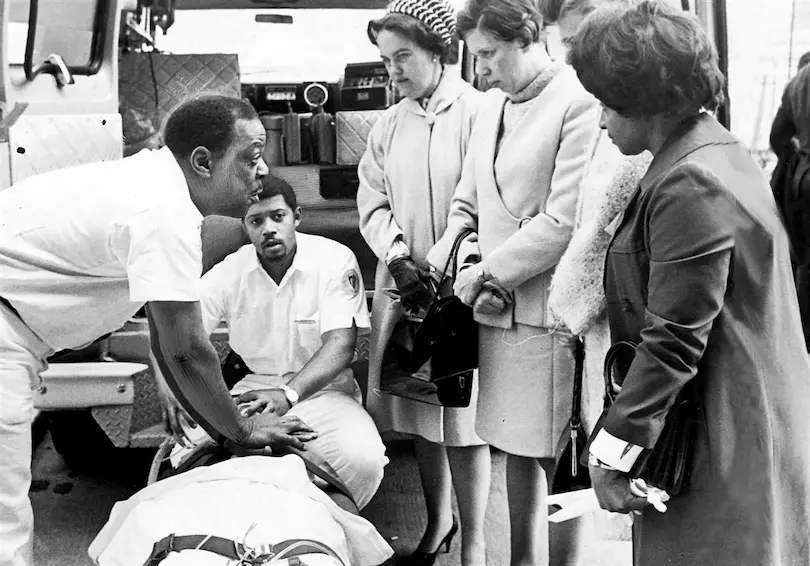
The answer was shocking to many Pittsburgh residents: working with the Maurice Falk Medical Fund’s Freedom House, Dr. Peter Safar recruited Black residents from the city’s poor Hill District and trained these young men, people whom much of the city had written off, to become the nation’s first cadre of highly skilled emergency technicians.
The first cohort of Freedom House paramedics was 25 young Black men. Most of them were in their twenties. The group included Vietnam veterans, high school dropouts, and former criminals. Dr. Peter Safar established an intense nine-month training program; students spent 300 hours working in operating rooms and x-ray labs, learning how to administer IVs, intubate patients, resuscitate, and read EKGs. They operated two second-hand ambulances.
Freedom House’s ambulance service became the first in the country to run an ambulance service that was entirely staffed by trained Emergency Medical Technicians.
John Moon was working as a hospital orderly when he witnessed something he could never have imagined: Black men bringing a patient into his hospital and giving orders to the medical staff there. John had never seen Black men tell white people what to do, let alone giving orders to doctors and other medical professionals. When he realized these were emergency medical technicians from Freedom House, he signed up to join them.
Years later, he recalled Dr. Peter Safar marching him into an operating room, telling the anesthesiologist to make room, then instructing Moon how to intubate a patient. The rest of the day, Moon performed any needed intubations.
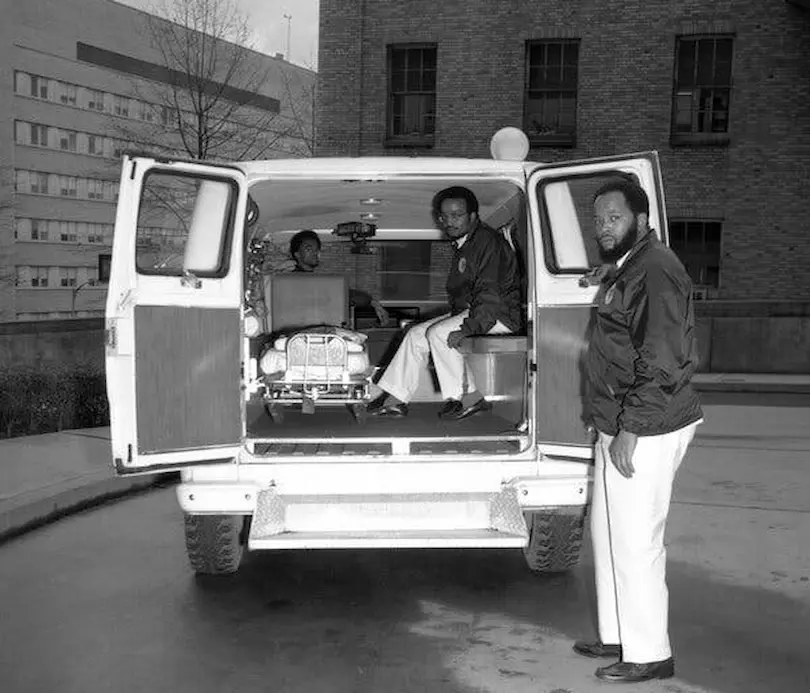
Between 1968 and 1974, Freedom House saved countless lives, transporting about 6,000 patients to local hospitals each year. Eventually it operated but throughout the entire city of Pittsburgh. Yet racism haunted the program. Despite its incredible success, city officials stymied the Freedom House ambulances. Pittsburgh Mayor Pete Flaherty was openly hostile to the service and publicly encouraged Pittsburgh residents to call police officers, not Freedom House ambulances, when they needed help.
Despite its incredible successes, by 1974, the program was on the brink of collapse. Dr. Safar turned to Dr. Nancy Caroline, a young, female, Jewish physician to take over the program. She managed to restructure it and leave a lasting imprint on emergency medicine around the globe, creating today’s gold standard of emergency medical training.
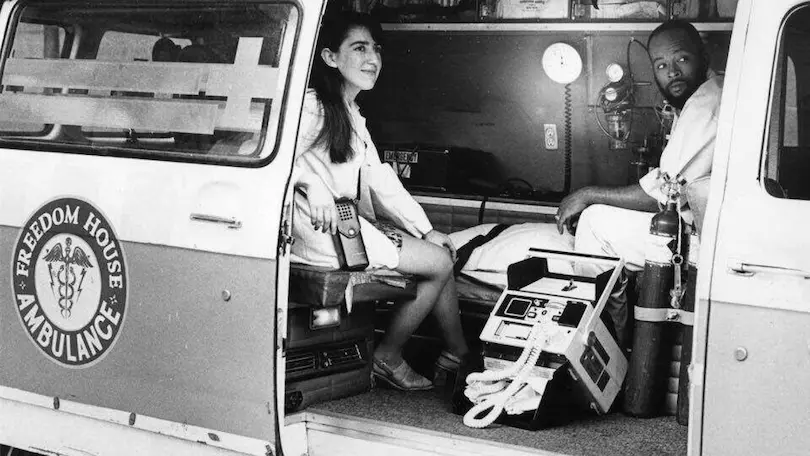 Dr. Nancy Caroline
When Nancy became medical director of the Freedom House ambulance service in 1974, she ran what she jokingly called a "reign of terror" — but her staff loved her. She accompanied paramedics on emergency runs, monitored a police radio so she wouldn't miss a call, and when exhausted, slept on a cot in one of the ambulances.
Dr. Peter Safar later said: "One reason for her great impact was the fact that she is a caring, dynamic, compassionate 'super doctor,' a Renaissance woman and an eloquent writer…The (Freedom House) program gave Caroline the opportunity to demonstrate her exceptional skills in laying hands on victims in emergencies outside the hospital."
She was also a fierce advocate for her paramedics, pushing back when they were dismissed because of their race. One story she loved to tell: a nurse turned her back on paramedic John Moon, dismissing him entirely. John walked up to the ER doctor with military precision and delivered a flawless patient history — pulse, blood pressure, EKG findings, full diagnosis. Nancy and John laughed about it the whole way back to base.
"There were many times she'd be walking down the hall with five Freedom House paramedics walking with her, going into the ICU to look at a particular patient," recalled EMT John Moon.
Under Nancy's leadership, Freedom House paramedics hosted an international symposium on critical care medicine and helped establish the US Department of Transportation's national standards for ambulance equipment and training. Years later, while living and working in Israel, Nancy wrote Emergency Care in the Streets, for many years the standard paramedic textbook, drawing on her years with Freedom House.
In 1975, Mayor Pete Flaherty ended Pittsburgh's contract with Freedom House, replacing it with a mostly white city ambulance service. The Freedom House professionals received no special consideration; they had to pass a battery of tests just to apply. About a dozen joined the new force; others went into medical careers, while some returned to unskilled work.
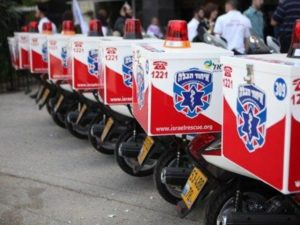
The following year, Nancy moved to Israel, where she built another pioneering paramedic program. In 1979, she launched Israel's first paramedic training course with Magen David Adom, Israel's equivalent of the Red Cross. Under her guidance, Israel became only the third country in the world to deploy specially trained paramedics in mobile intensive care units.
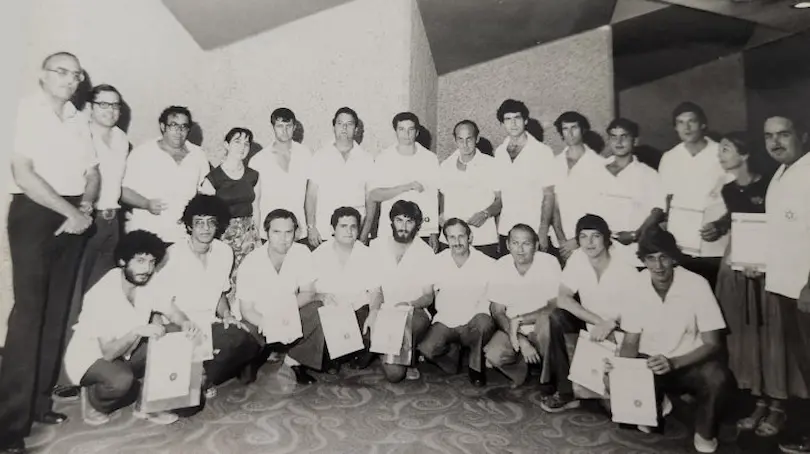 Magen David Adom’s first class of paramedics with Dr. Caroline, back row, fourth from left.
Nancy also established an emergency medicine center in Kiryat Shmona, a northern Israeli town under fire from PLO forces across the Lebanese border. In 1981, PLO terrorists launched Soviet-made Katyusha rockets at the city, killing and wounding civilians. Nancy narrowly escaped one attack and treated the victims. She also founded a hospice in northern Israel, providing palliative care for cancer patients and their families.
Freedom House’s remarkable legacy.
Today, most of us take for granted that a trained paramedic will be working to save your life before you ever reach the hospital. It's easy to forget that this is barely a generation old.
Freedom House made that possible. The workers and visionaries who built it set the standard for emergency care that the entire world now follows. Every paramedic, every life saved in the back of an ambulance, is part of their legacy.









Jews and Blacks? I didn’t know being a Jew was a race but a religion. The writer needs to visit Nigeria, Ethiopia and places to get a fact check.
I never heard about this story, about someone with Jewish ancestry helped blacks get the right care, when being transported in a ambulance, after freedom house was founded in the USA the people involved started the Israeli ambulance that I s used till today Magen David Adom, which is the most interesting part of the whole story
Fascinating, as usual.
A great read, but a 'nit to pick'. The first paramedic program in the US was the Jacobi Hospital program in the Bronx in the early 70's, 'Medical Technicians', now called EMTs were found in the ambulances of that time, the advanced skills of intubation and such were only in the hospital. There have been some additional designation in some states, like EMT Advanced, or Intermediate, with some training beyond EMT, but in most cases it's being simplified to either EMT or paramedic.