




 Toy Story Lets Its Characters Grow Up




9 min read


Yitskhok Rudashevski’s stunning journal becomes an interactive, online museum exhibit.
On the 8th of July (1941) the decree is issued that the Vilna Jewish population must put on a yellow patch front and back, a circle with a J in it… I felt ashamed to appear with them in the street, not because I am a Jew, but because I am ashamed of what has been done to us. I was ashamed of our helplessness… The patch sits on our coat, but it has not touched our sense of who we are. We now have so much awareness of who we are that we can say that we feel no shame with the patches! Let those who hung them on us feel shame. Let them burn inside every conscious German who tries to ponder the future of his people. – From the diary of Yitskhok Rudashevski, age 13
These words are from an extraordinary diary, one that has inspired a new online, interactive exhibit at the YIVO Institute for Jewish Research in New York, “Yitskhok Rudashevski: A Teenager’s Account of Life and Death in the Vilna Ghetto.” The exhibit opened on July 17 and is available free of charge at museum.yivo.org.
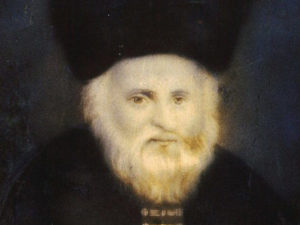
 Photo of Yitskhok Rudashevski in the 1930s. (Courtesy of Ghetto Fighters' House Museum, Israel/ Photo Archive and YIVO Institute for Jewish Research)
Yitskhok and his parents were imprisoned in the ghetto and later murdered by the Nazis in April 1943, when Yitskhok was 15. The discovery of the diary was a small miracle. It was found after the war by Sore Voloshin, a cousin of Yitskhok’s, the sole survivor among 11 people who had shared a hiding place in Vilna after the ghetto had been liquidated. The Nazis detected them and took them out to be killed, but Sore managed to run away. When she returned to the hiding place to see what, if anything, remained, she found her cousin’s diary.
This journal was immediately recognized by cultural historians as something remarkable for its startling literary quality by a writer so young, as well as his eyewitness accounts of life in the ghetto, and passionate determination to embrace life while he could. That passion was underscored by a commitment to studying and engaging in Jewish culture through reading Yiddish literature and poetry and even staging plays. He also participated to some extent in resistance efforts, mostly through documenting what he saw. His diary was eventually given to the YIVO Institute for Jewish Research, which had it translated in a more accessible English version.
The exhibit is organized chronologically and thematically, giving context to pre-war life in Vilna; the world’s political backdrop to World War II; life in the ghetto; and post-war rebuilding. Each section includes dozens of artifacts, along with animation, graphic novels, and video dramatizations based on excerpts from Yitskhok Rudashevski’s diary. These personalize the otherwise macro and unfathomable experience of Holocaust victims.
Particularly intriguing are the “moral dilemmas” posed to viewers throughout the exhibit: What would you risk in order to save one life? Would you risk more to save 10 lives, or 100? Museum curators hope these questions will serve as a valuable framework for Holocaust education, especially among young people.
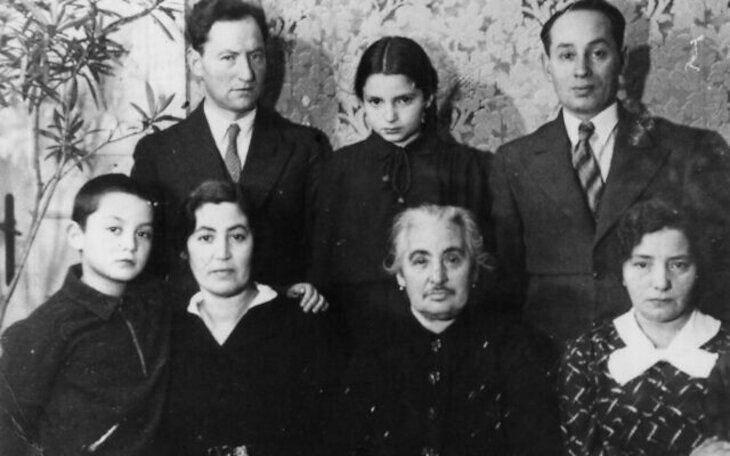 Yitskhok Rudashevski, bottom left, with family, including his father, mother, and grandmother, in an undated photo. (Courtesy of Ghetto Fighters’ House Museum, Israel/ Photo Archive)
Individual elements of the online exhibit have been used before, but Karolina Ziulkoski, Chief Curator of the online museum observed, “What is groundbreaking is how the exhibition was conceived. It was never meant to resemble in-person exhibitions, but somewhere between a movie, online newspapers, and exhibitions.” The interactive and media elements each tell part of a story that is both historical and personal.
Among teenaged diaries from the Holocaust, Anne Frank’s is the most famous, and likely the only one people know. But Yitskhok’s stands out because it powerfully “describes the cultural resistance among Jews facing the brutality of war,” said Jonathan Brent, Executive Director and CEO of YIVO. “The Nazis intended to exterminate not only the Jewish people but all traces of that culture. Yitskhok’s diary shows a boy who from the ages of 13 to 15 engaged in activities that restored his humanity and dignity.”
He studied Jewish history to understand his place in it, immersed himself in the Yiddish culture he loved, and documented events in the ghetto for posterity:
10 November 1942: Our ghetto-research circle is working actively. We hope that as a result of our efforts we will have a valuable historical piece of work about the courtyard at 4 Shavler Street. Today the founding meeting of the circle for Jewish History took place. We have decided to read and study Jewish history and to deal with the problems of Jewish history that are interesting for us and can be brought up to date, especially Jewish history in recent times. Now we begin with the case of Josephus Flavius. We will prepare a trial of him as well.
8 June 1943: The desire to study has become a kind of defiance of today, a time that detests studying and loves toil and drudgery. No, I decided, I live with tomorrow not with today and if out of 100 ghetto-youth of my age, 10 are able to study, I have to be among the lucky ones. I have to take advantage of that.
Alexandra Zapruder, co-curator of the exhibition, first encountered the diary while working at the United States Holocaust Museum and immediately recognized it as “a masterpiece. Few diaries of his time rose to this level of writing and insights, describing what it meant to endure in these circumstances,” she noted. “It offers an extraordinary window of young people’s lives, capturing on the page something that is very precious and valuable.” Zapruder was so moved by the diary that she spent years working on a book, titled Salvaged Pages, filled with extensive diary excerpts from 15 young Holocaust victims, along with her commentary and historical context. Currently, she is Educational Director of the Defiant Requiem Foundation, which documents the cultural resistance efforts among prisoners of the Terezin concentration camp. Despite the constant threat of starvation, murder, and deportation, Jewish prisoners at Terezin gave more than 2,400 lectures and presented more than 1,000 concerts — including 16 performances of Verdi’s Requiem Mass.
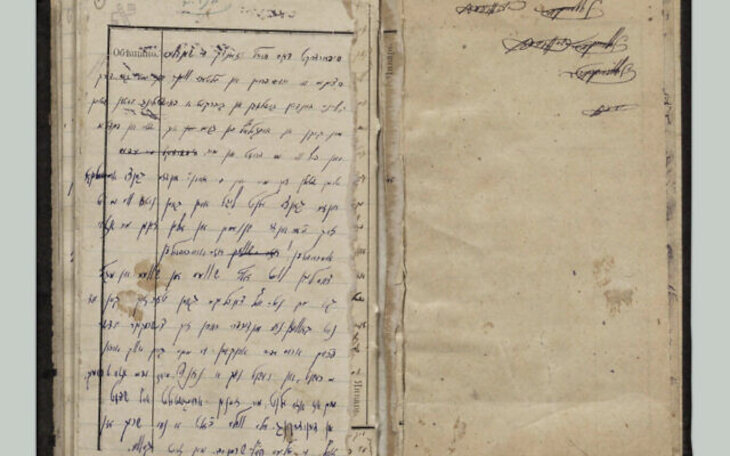 A page from the diary
Yitskhok was a non-religious Jew whose father was a typesetter for a Yiddish newspaper and whose mother was a seamstress. Like many youths in his time and place, Yitskhok naively viewed communism through romantic eyes, thinking it would answer the Nazi scourge. He had also been mentored by some of the great Jewish writers and poets of Vilna, giving him a tremendous love of Yiddish literature, which he continued to embrace in captivity. “He had a vision for his own life and for the life of others in the ghetto, influenced greatly by the vibrant culture of theater and literature in Vilna that had flowered before the war,” Zapruder added. “He loved ideas and culture and was sustained by reaching for higher thought, and what it means to be a person.”
Despite Yitskhok’s secularism, his soul responded to Jewish holidays:
20 September 1942: It is Yom Kippur eve. Sad feelings hover over the ghetto… Before the ghetto, and even now, I am very far from religion, but still I feel it deep in my heart, this ghetto celebration of a holiday drenched [last year] in blood and sorrow… sorrow hovers over the little streets, the ghetto is steeped in tears. We sit in the house and people cry. They recall the past. They kiss each other and exchange wishes, greeting each other with tears.
Brent noted that Yitskhok often wrote in his diary, “The spirit of Jewish youth will not die,” which he hopes that young people will find inspiring enough to begin to the vitality of their Jewish culture. “Many American Jews who grew up going to ballgames, listening to pop music, and focusing on making money, still had a big hole in their hearts. Coming to America created a major dislocation. But so many Yiddish plays, poems and other literature are available in translation now.”
Sore Voloshin, who found the diary, eventually moved to Israel and worked at the Yad Vashem museum. While Yitskhok was murdered in the killing pits of Ponar, the exhibit sparked by his diary introduces the public to a teen whose love of life and Jewish culture, and whose valiant efforts to chronicle the experiences of the Jews of Vilna, deserve commemoration and admiration.
Five months before his murder, his love of life and poignant youthful enthusiasm were captured in his diary entries from December 9 and 10, 1942:
I realize that today is my birthday. Today I turned 15. We don’t even realize how time flies, how it runs ahead unnoticed and disappears… Today I was deeply lost in thought. I have decided that in the ghetto I will not waste my time doing nothing and I feel fortunate in a way that I study, read and develop and see to it that time does not stand still… In the day-to-day life in the ghetto is seems to me that I am living normally, but I often get a kind of pang in my heart. After all, I could have lived better. Do I really have to see that bricked-in ghetto gate, and in the best days of my life must I really just see one alley, a few stuffy courtyards? More and different thoughts get tangled up, but I feel two things most strongly: a regret, a kind of nagging feeling. I wish to cry out to time to wait, not to run. I wish to take back the year that has passed and keep it for later, for my new life. The second thing that I feel today is strength and hope. I do not feel despair in the least. Today I turned 15 and live very much for tomorrow. I do not feel two ways about it. I see before me sun and sun and sun…
The exhibit, Yitskhok Rudashevski: A Teenager’s Account of Life and Death in The Vilna Ghetto” may be seen at www.museum.yivo.org. The full translation of the diary is available in the online museum here https://museum.yivo.org/general-docs/YR_Diary_EN.pdf.











yes this was so inspiring. how a young boy transcended his daily life in one of the most horrible places. just think what we lost. he would have been a beautiful gifted writer i’m sure !
This read is was so inspiring into the life of those unassuming teen who never go to see his life through.
Amazing - thank you for sharing this!
Thank You so MUCH for this.