







 Seven Reasons for Hope on October 8







Celia fought against the Nazis with the Soviet partisans.
In 1941, Nazi Germany was bombing Poland and putting Jews into ghettos, confined areas that were marked by starvation and squalor. One girl in the ghetto, Celia, was forced to live there with her family.
Her mother had to cook for the Nazi administrators, and she and her family once had to clear the snow from the road with no shovels – and no warm clothing to shield them from the harsh weather, either.
Celia saw suffering all around her. Her fellow Jews were dying and her family had to break up to find work and avoid starving to death.
Still, she was brave in the face of evil. She defied Nazi orders and ended up being taken to a torture chamber where she was beaten with rubber hoses. The Nazis then shot at her and the bullets missed her by a few inches – but they caused permanent damage to her hearing.
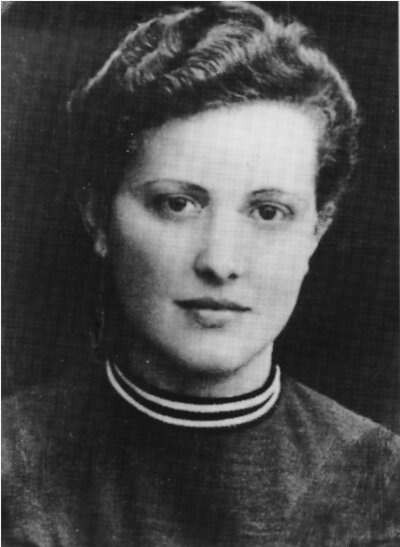 Celia Kassow
Though Celia ended up losing most of her family during the Holocaust, she never stopped fighting back. Eventually, she joined the Soviet partisans, or resistance fighters, and survived the war.
Now, her story is being told in “Fighter in the Woods,” a Scholastic Focus book for readers ages 8 to 12. Author Joshua Greene used first-person testimony that Celia’s son vetted to write the book, which is available for pre-order now and out in February.
Celia Kassow, née Cymer, was born in Szarkowszczyzna, Poland in 1923. She had six siblings and loving parents, Liba and Shmuel.
When the Nazis invaded Poland, they started randomly beating and killing Jews, and Celia and her family lived among the 1,500 Jews in the local ghetto. When Jewish community leaders urged people to flee the ghetto, many were killed, including Celia’s father. Her former classmate, who became an officer, pulled a gun on her but the gun jammed. She and her sister Slava escaped, while their other sister, 15-year-old Chaya, was murdered.
Celia and Slava returned to the ghetto after the chaos died down, but Liba urged Celia to escape to a Polish farm. That was the last time Celia saw her mother. After hiding on the farm, Celia and Slava and their brothers joined the partisans. They blew up trains and attacked German garrisons from the woods.
When liberation came in 1944, Celia got married and spent almost three years in a displaced persons camp. She and her husband moved to Connecticut where they raised their three children.
Joshua decided to write Celia’s story because it “reads like an adventure tale… but she never saw herself as a hero. Like many other young women who joined the partisans, Celia considered herself an ordinary person. She became extraordinary when tested under extraordinary circumstances, for example defying the advances of a ghetto commander at the risk of being killed, refusing to be relegated to kitchen duty in the partisan unit when she was prepared to fight, and undertaking life-threatening acts of sabotage against Nazi troops. The young scholar discovered she could also be an effective fighter.”
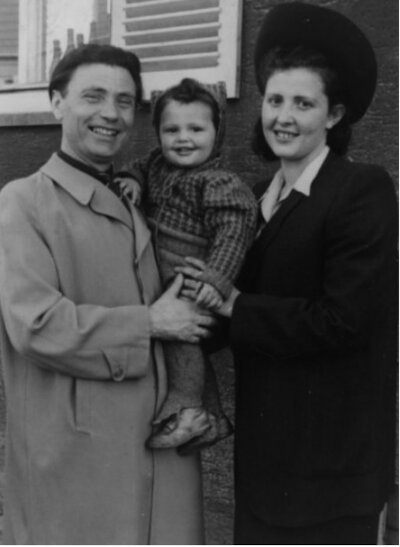 Celia and her husband
Along with telling Celia’s remarkable story, the book shows how many Jews fought back in the face of unimaginable evil.
According to Joshua, there has been a false narrative over the past 90 years, which colored the public image of Jews during World War II as being passive.
“[They were] defined more as victims than as agents of their own fates,” he said. “Responsible authors and filmmakers have begun to understand that not only is that image insulting, but it is also historically inaccurate. Books and films about partisans and other resisters help to balance that portrayal.”
Joshua has told many stories about strong Jews, including “UNSTOPPABLE: Siggi B. Wilzig's Astonishing Journey from Auschwitz Survivor and Penniless Immigrant to Wall Street Legend,” “The Girl Who Fought Back: Vladka Meed and the Warsaw Ghetto Uprising,” and “Signs of Survival: A Memoir of Two Sisters in the Holocaust.”
His books, as well as other works about the resistance fighters, are showing the other side of the Holocaust that was not previously told.
“The many recent books and productions about partisans, ghetto fighters, resistance groups, and underground organizations are beginning to ensure a more accurate portrayal,” Joshua said.
The author wanted to not only show that Jews fought back, but that resistance could mean different things.
“Resistance did not mean only shooting a gun,” he said. “Resistance also meant defying Nazi orders, for example by recording events in secret diaries and preserving Jewish culture by holding classes and religious services that were forbidden by Nazi law.”
He continued, “Other forms of resistance were equally as important, such as holding fast to religious, cultural, and humanitarian values and practices.”
Joshua, who is also a filmmaker, was brought up in a non-religious Jewish home, and said he, “did not discover the beauty and inspiration of Judaism until I was well into my fifties, primarily through literature. My wife and I attend services at our synagogue on Long Island and are active in the community.”
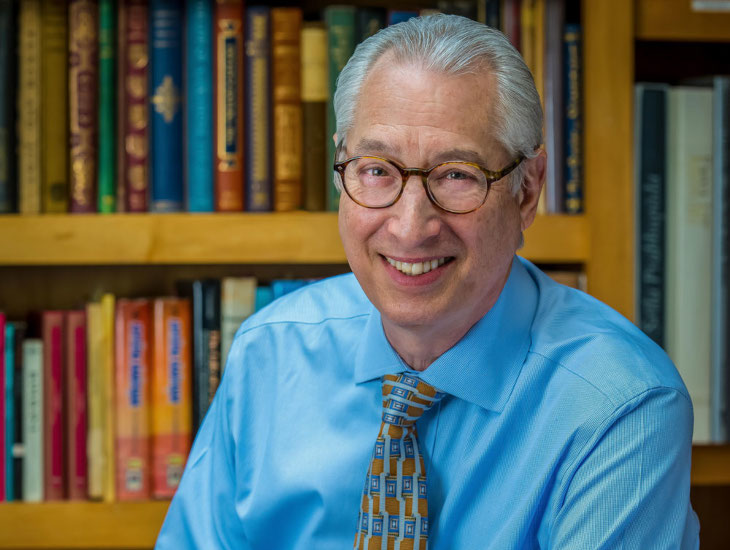 Author Joshua Greene
Joshua’s family was in the Holocaust. His aunt was in the French resistance and came to the U.S. in the 1950s, while his grandmother and her sister were the only two who survived the Holocaust from his large Polish Jewish family.
“After the war, the two sisters went back to Poland to search for family but no one was left,” Joshua said. “The stark reality of that complete loss prompted a silence about anything Holocaust-related. It was never discussed and not a part of my worldview as a young person.”
His career as a Holocaust writer and documentary filmmaker began when his late father-in-law, Alan Fortunoff, introduced him to the work of the archive at Yale he had endowed.
“I became passionate about witness video testimony as the most effective way of bringing those who were not there close to the experiences of those who were,” he said.
By writing “Fighter in the Woods” and similar stories, Joshua hopes to expand people’s views of the Holocaust and show how young people changed the outcome of it.

“Young people are never irrelevant,” he said. “Throughout history, young people motivated by noble intentions have made dramatic improvements to a problematic world.”
With all his work, Joshua is making sure that the Holocaust – and the remarkable stories from it – are always remembered.
He said, “Survivors I spoke with wanted readers to know that the Holocaust must never be forgotten and that an important way of remembering is through the testimonies of eyewitnesses who were there—eyewitnesses such as Celia Kassow.”
Join Aish for a powerful, once-in-a-lifetime experience in Poland with a Holocaust Survivor.
This subsidized trip is open to all adults ages 20+ throughout North America.
For details and registration, visit:
livinglegacy.aish.com












Thank you for this..It's so important to keep this history alive. SHL ,Toronto