
 Seven Reasons for Hope on October 8

6 min read
9 min read
5 min read





The larger Jewish picture is more hopeful than the daily headlines suggest.
Here's something you probably won't hear this week: I believe the Jewish people are in a stronger place today than we have been in generations. Three years after the worst day in Jewish life since the Holocaust, that may sound strange, even jarring. But let’s step back from the headlines, look at the whole picture, and see what you think.
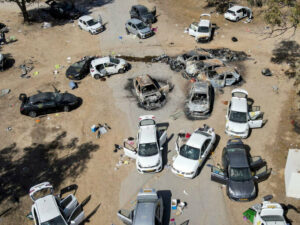
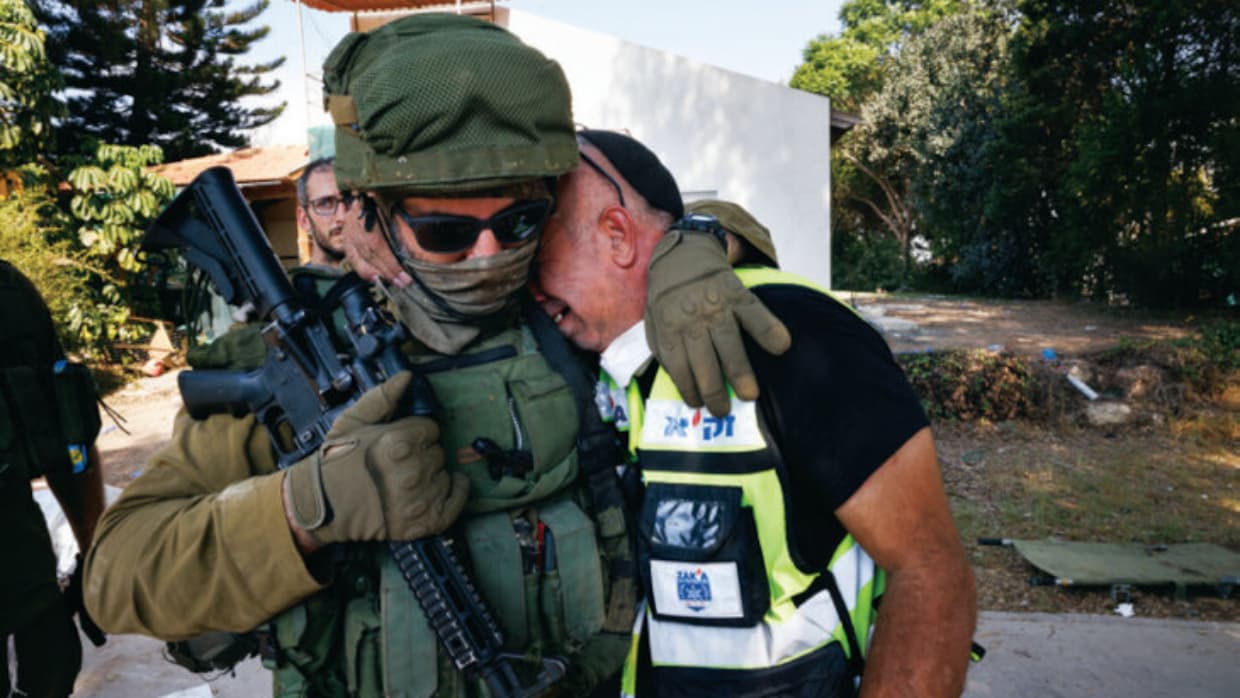
October 7 was a catastrophe. Families were slaughtered in their homes, hostages were dragged into Gaza, soldiers fell, whole communities were uprooted, and tens of thousands of Israelis still carry wounds, some visible and some not. Outside Israel, Jews took a second blow: an explosion of antisemitism and, maybe more painful still, a sense of betrayal when the people and institutions on the many Jews believed shared their basic values, suddenly couldn’t or wouldn’t apply those values when the victims were Jews.
I don’t want to minimize any of that. But an anniversary is also a moment to step back, to look at where we were heading before the attack, where we are heading now, and where we stand in the long sweep of Jewish history.
On October 6, 2023, Iran had spent two decades and billions of dollars building a ring of fire around Israel: Hamas in Gaza, Hezbollah in Lebanon, militias in Syria and Iraq, the Houthis in Yemen, and behind them all, Iran’s own arsenal of thousands of ballistic missiles and attack drones that could reach Israel. Hezbollah alone had stockpiled well over 100,000 missiles and rockets and trained elite units to cross the border. This wasn’t a loose collection of hostile groups. It was a plan, built patiently over years, to surround the Jewish state and eventually break it.
Three years later, the map looks different. Hamas has been devastated militarily. Hezbollah has been badly weakened, and much of its senior leadership, Nasrallah included, is dead. The Assad regime, Iran’s land bridge to Hezbollah, is gone. Iran itself has been hit directly, its military infrastructure damaged and its reach across the region dramatically reduced.
The danger isn’t over, but on October 8, 2023, almost no one would have predicted that a system Iran spent decades and fortunes building could be taken apart this quickly.
For decades, much of Israeli policy, beginning with the Oslo era, rested on the hope that money, diplomacy, deterrence or concessions would gradually moderate enemies whose own words and actions often said otherwise. October 7 made that impossible to keep believing. Pursuing peace was never the mistake; it was letting hope blind us to warning signs that were anything but subtle.
The West delivered its own shock. Jews watched parts of a self-described liberal world express sympathy for Hamas or march alongside people celebrating it. Hamas is a brutal terrorist regime that stands against democracy, women’s and LGBTQ rights, freedom of speech and press, most of the cherished Western values. For many Jews, seeing that contradiction pointed to something deeper than a disagreement over Israeli policy. Israel makes mistakes, like every country, but the obsession, the double standards and the singling out of the one Jewish state became much harder to explain away. To a lot of Jews paying attention, what was being sold as anti-Zionism looked more like something very old in new clothes: Jew-hatred, updated for the moral vocabulary of the moment.
These realizations hurt, but they are also clarifying: it’s better to see reality clearly than to be comforted by a falsehood.
Spend time with Israeli soldiers since October 7 and you hear the stories. A soldier moves seconds before the spot where he was standing is hit. A unit takes a wrong turn and misses an ambush. Someone shows up at exactly the moment another person needs him. Any single story can be written off as coincidence. Taken together, they are much harder to dismiss. Then there are the larger events: the pager operation against Hezbollah, Israel’s defenses holding against massive Iranian missile and drone barrages, and an air force that kept up a staggering pace across several fronts at once.
Nor were the miracles only military. Israel kept functioning while hundreds of thousands of reservists left offices, factories, startups and family businesses to serve for months at a time. Many companies were badly hurt, and some never recovered. Yet the economy absorbed the shock, held together and returned to growth. And then there is Flight 1037, whose timing and extraordinary chain of mechanical and human improbabilities made the story feel less like ordinary coincidence and more like a Divine wink.
We don’t know why some people are saved and others are not, but Jewish history has always taught us to recognize both tragedy and providence.
Before October 7, Israel was arguably more divided than at any time in living memory. The judicial reform fight had split the country down the middle. Reservists, even pilots, were threatening not to serve. Israelis themselves wondered whether the social fabric was too frayed to hold in a real crisis. Hamas watched all of it and drew its conclusions.
Then October 7 came, and Hamas got its answer. Reservists did not stay home; in many units, turnout topped 100 percent, because men who hadn't even been summoned showed up anyway. All over the world, Israelis rushed to airports, and observers could hardly believe what they were seeing. Usually when a war breaks out, the planes fill up with people trying to get out. Governments organize evacuation flights, and in those first days, foreign governments were sending planes to bring their citizens home. But on the same routes, Israel was running an evacuation in reverse. Tens of thousands of Israelis abroad, on business trips, on vacation, backpacking after the army, fought for seats on flights into a war zone. They were racing toward the danger, to put on a uniform or help however they could.A society that had spent months screaming at itself showed that when the Jewish home is attacked, its sons and daughters still come running, even from the other side of the world.
Don’t judge Jewish unity by the newspapers. Strife is news; love usually isn’t. The political fights are real, and so are the religious-secular tensions and the arguments over the government, the war and the hostages. But underneath them is something deeper. The vast majority of Jews share a deep and renewed sense of peoplehood, common values and common destiny. We are family, even when we’re furious with each other.
October 7 brought that instinct right to the surface. Israelis opened their homes to strangers. Volunteers drove south while terrorists were still on the roads. Jews around the world raised money, shipped equipment, housed displaced families and stood at the funerals of people they had never met. The media will always cover our arguments, but the deeper, lived Jewish reality is brotherhood, responsibility and love.
For too long, many Jews measured Jewish legitimacy by outside approval. Are we being reasonable enough? What will the media say? Will our friends still like us? October 7 showed where that leads.
If people can watch Jews being murdered and immediately demand that Jews explain themselves, something has gone badly wrong with the moral compass of the crowd. And when an army that goes to extraordinary lengths to limit civilian casualties is described as uniquely criminal, while ‘genocide,’ a word born in the shadow of the Holocaust, is turned against Jews fighting an enemy that openly seeks their destruction, we have no business setting our compass by theirs.
Nobody is claiming Israel is always right, but the world’s approval can’t be the yardstick for whether it is. A healthier Jewish posture is taking shape: hear the criticism, examine ourselves honestly, but don’t start from the assumption that whoever is accusing us holds the moral high ground. Moral self-confidence means knowing who we are and what we stand for without waiting for anyone’s permission. Some will call that arrogance, but I think it’s closer to maturity.
Something remarkable happened after the attack. The effort to frighten Jews away from their identity often did the opposite. People who rarely thought about being Jewish started wearing Stars of David. Students who had steered clear of Jewish organizations walked through their doors. Jews went to rallies, visited Israel, opened Jewish books and asked questions they had never asked before. The world was telling them, in effect, you are Jews. Many answered: then I want to know what that means. Pressure can crush a thin identity, but it can also send people digging for what lies underneath.
The digging goes deeper than identity. Something is stirring inside the Jewish people, especially in Israel. Part of it shows up as observance: soldiers wearing tzitzit who never wore them before, fuller Shabbat tables, packed Torah classes. But it goes beyond observance. Jews are asking basic questions about who we are, what binds us, and what the Jewish people’s purpose is beyond survival.
Years ago, the late Chief Rabbi Jonathan Sacks wrote about the emergence of a generation with an "undamaged, uncomplicated" Jewish identity, drawn to Judaism not mainly by persecution or Holocaust memory but by its spiritual depth and moral seriousness. October 7 may have sped that process up. For generations we tried to keep Jews Jewish by reminding them what had been done to Jews. The awakening happening now asks a different question: What is so precious here that people would give their lives for it, and how do I live for it?
None of this makes October 7 good. Nothing could.
Our enemies wanted October 7 to be the beginning of the end of the Jewish state. Three years later, Israel is still here, much of the military machine built to destroy it has been badly damaged, and the Jewish people have found reserves of courage, solidarity and faith that many of us weren’t sure we still had.
It’s easy to get swallowed by the headlines: the antisemitism, the infighting, the real problems in front of us. Jewish history asks us to look wider. Set against the long road from exile to sovereignty, from dispersion to ingathering, from powerlessness to the ability to defend ourselves, this moment looks very different. The larger story of the Jewish people is one of spiritual determination and resilienceA.
The prophets spoke of an ingathering of exiles and a land that would bloom when its children returned. For most of Jewish history, those words sounded like distant promises. We are living inside them. We can’t know exactly where we stand on the prophetic timeline, but the overall direction is hard to miss.
October 7 reminded us how vulnerable we still are. October 8 may be reminding us how strong we have become, where Jewish history is heading, and who we can still become.