
 What Repentance Really Means in Judaism



6 min read





Yonat Friling, a veteran reporter for Fox News, is committed to presenting accurate information and letting viewers decide for themselves.
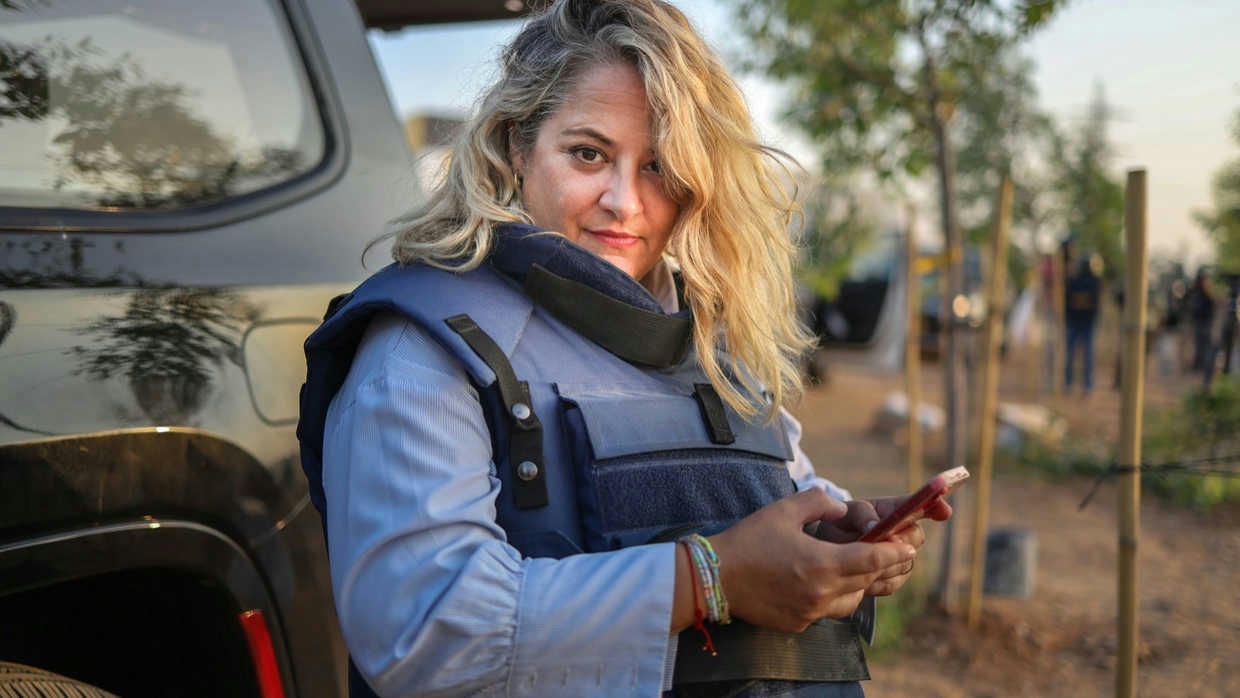
On the morning of October 7th, 2023, when Hamas terrorists attacked Israel and murdered more than 1,200 people, Yonat Friling received a phone call. It was 6:30 AM and her father was calling her to tell her that he heard gunshots near his house. Yonat, a senior field producer for FOX News, headed south with the news crew to see what was happening. Little did she know what awaited her.
There were lines of cars full of people evacuating from their communities near the border of Gaza. These areas suffered massive losses, and she could feel their pain. While her father was fine, these people were not. She hugged many of the evacuees, and over the next few days, showed the world the horrors of what had unfolded on that tragic morning.
“My heart broke on October 7th,” she told Aish. “I lost friends and colleagues, and my parents, who live not far away, were lucky to be unharmed. It changed me forever. The scenes I witnessed left an invisible scar on my skin and soul.”
As a journalist, Yonat couldn’t look away.

“We go to places others don’t and tell stories that might otherwise go untold,” she said. “I feel an incredible responsibility to get it right, knowing people across the world are watching, and that years from now, this reporting will help people understand and learn.”
Yonat grew up in Midreshet Ben Gurion in the Negev, a small community built around the branches of Ben Gurion University.
“Israel’s first Prime Minister, David Ben-Gurion, and his wife Paula are buried there,” Yonat said. “It’s one of the most beautiful places in Israel, with a wild desert landscape, overlooking the Zin Valley.”
She always wanted to be a journalist; she’s worked for Fox for two decades.
“When I was 13, I watched the fall of the Berlin Wall with my father, who’s a history professor. He told us, ‘You’re watching history.’ I said, ‘I want to be there. I want to see it with my own eyes, not just on TV.’ From then on, I started paying attention to the news and video editing, and I was hooked.”
When October 7th happened, Yonat had just returned from a trip to Morocco, where she was covering the Marrakesh-Safi earthquake that killed nearly 3,000 people. She was planning to go to therapy on Sunday, October 8th to talk about the trauma she experienced while reporting – but that never happened.
Instead, she kicked into journalist mode while in mourning with her country. She knew what she had to do: Start asking questions and reporting the facts.
“We do everything we can to report from the ground, on what we see,” she said. “When we can’t, we rely on a vast network of trusted sources and local experts. We review the information carefully, ask follow-up questions, and if we don’t feel we have the whole picture, we wait.”
Just a week after the massacre, she described what she saw in an opinion piece for Fox News.
“The scene in Israel since the Hamas attacks is grim,” she wrote. “Most of the towns and communities are empty. The streets are silent, shops are closed, and there are no people are walking around. There is a heavy army and police presence, and the smoke from the rockets and the airstrikes fills the air. In the communities that were closest to the border, the houses of Israelis living there have been torched, and there's no resemblance to the vibrant lifestyle that was there just a few days ago. I have covered many wars and conflicts here in Israel, but this is the hardest one I have encountered so far; I am at a loss for words to describe what I feel, and frankly, I haven't had the time to do so.”
Though the story of October 7th and the war is close to home, Yonat said, “I would rather be accurate than partial. Our responsibility to viewers guides us in every story, whether in the Middle East or anywhere else in the world. Our viewers hold us accountable. We take that responsibility seriously. At times, it can be challenging, but there are always ways to verify and provide accurate information.”
As a journalist, Yonat is able to see both sides of the situation. She defines her job as presenting the facts and letting people decide for themselves.
“Many people view it as a binary situation,” she said. “But it’s one of the most complex conflicts in the world, and more than one thing can be true at the same time. Zero-sum thinking, reducing everything to political agendas, only creates more division. Each side often uses sweeping generalizations about the other, which are neither accurate nor helpful.”
Along with reporting on breaking news, Yonat advocates for resilience and mental health support for reporters, based on her own experiences in conflict zones.
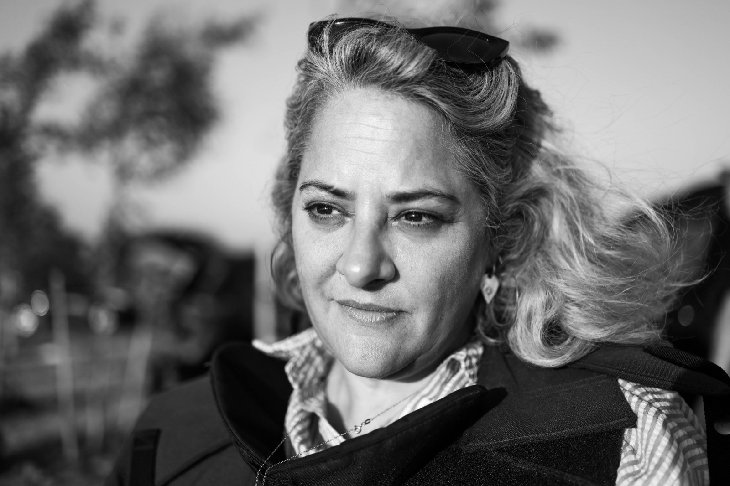
“Covering trauma, whether in global events or close to home, takes a toll,” she said. “Like the police, medical workers, or soldiers, journalists are first responders. But we're often the last to acknowledge the psychological impact. This affects not only those in the field but also those in newsrooms, who face vicarious trauma when exposed to distressing images. It impacts us professionally, mentally, and physically, and it spills over into our personal lives, affecting our families and friends. Acknowledging feelings and talking about emotions is not a weakness. It is strength and resilience.”
Despite the trauma and the difficult realities she faces as a reporter, Yonat wouldn’t trade it for anything. She believes she has the best job in the world and is honored to do it.
“I have stories to tell, and I work with an amazing team here in Israel and in our HQ in New York,” she said. “As a breaking news producer, I often encounter people in their most difficult times, during wars, conflicts, attacks, or natural disasters. We meet them in their most horrific moments, and we approach them with care, respect, responsibility, and awe. I try to shed light on the human angles often overshadowed by these circumstances, with empathy, as I learned from my mother, the most compassionate person I know. Sometimes, after spending time with people we meet, it’s hard to part ways and move on.
“At the end of the day, I ask if it was a good day and if I made an impact. That’s what leads me.”