




 Can God Create a Rock He Can’t Pick Up?



4 min read


What are we actually mourning on Tisha B'Av? It's not just ancient history. It's about home, belonging, and the hope we still carry today.
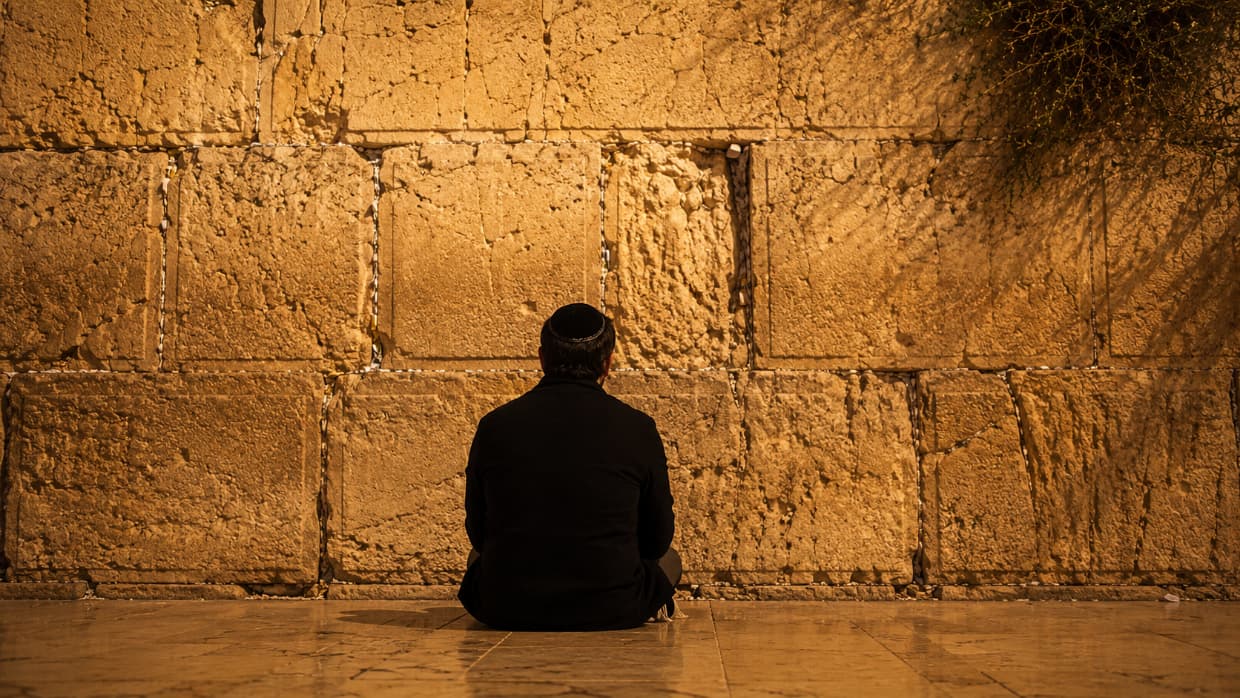
One night, many years ago, my husband and I spent the night of Tisha B'Av sleeping on benches near the Kotel, the Western Wall. Hundreds of others were sleeping there too, wanting to be close to the space where the holy Temples once stood on this day when we mourn their destruction.
We hadn't planned on staying the night until we were actually there, so we didn't bring blankets or sweaters with us. It was the first, and thankfully the last, time in my life I ever slept on a bench. And for a sliver of a moment, in the coldest, darkest part of the night, I felt the grief of homelessness, of being part of a nation that has lost its center, its home, its heart.
That feeling dissipated at dawn, but every year on Tisha B'Av, so many of us try to figure out: What is this day really about? Besides fasting, how can you connect to its meaning?
On Tisha B'Av we mourn the destruction of the First and Second Temples in Jerusalem, but the loss the Jewish people feel on this day is not just for physical structures. It's for what the Temples meant to us -- a holy center that brought us all together, a place where you could feel God's presence, a space that made you feel whole and like you belonged.
We are so far from that today that we don't even know what it feels like to have a place where every single Jew feels that sense of wholeness and belonging. In this void, on the Ninth of Av, we grieve for the heartbreaking, tragic struggles of our nation since the Temple's destruction. The pogroms, the exiles, the Holocaust, the countless wars and lives lost, October 7th and the suffering of the hostages -- our losses as a nation are too numerous to name, but this is the day we feel their heaviness most.
We also grieve for the loss of a space that unites us as a nation. Too many grieve alone. Too many can't remember ever feeling whole. And far too many can't find anywhere they truly belong.
The mourning of the Jewish people on Tisha B'Av has a purpose. It's a time to turn our brokenness into a path toward redemption. It's a chance to reflect on where we've been and where we're heading. Are you living up to your potential and contributing to the rebuilding of what was destroyed? Are you finding a way to create peace in your relationships and your community?
On the Ninth of Av, we read the Book of Lamentations in which God asks: Where are you? It's a day to remind yourself not only where you are, but why you are there. It's an opportunity to return to your deepest beliefs and values, to turn loss into meaning.
When we lost our Temples, we lost the spiritual home that always welcomed us, no matter where we were coming from. A place that gave us direction, comfort, and light.
In the darkness that followed, Jews built homes all over the world for thousands of years, and yet each of us still has a place inside that longs for home, that loving place where the warmth and laughter that echoed off the walls, where you held your children on the couch, reading them bedtime stories in what are now empty rooms.
Tisha B'Av is a day when you yearn to go home.
"Hope is mandatory," Rachel Goldberg-Polin wrote in her book, mourning the loss of her son Hersh, who was kidnapped on October 7th and later murdered by Hamas. She said those words aloud every morning as she prayed for her son to come home, and kept saying them even after he was killed.
Because hope is really all we have.
When we look back on the tragic suffering of our nation and mourn everything we've lost, we see, despite all the grief, how precious, how sacred, how meaningful our lives have been. You do not grieve for something, or someone, you didn't have the privilege of loving. That love is, and always will be, the foundation of our hope.
The hope that one day we will again have a holy space where every Jew can feel wholeness and belonging. The hope that our losses will become stepping stones for redemption. The hope that we will all truly, finally be able to return home, and transform this day of grief into song.










Hope can be a wonderful thing. However it can also be counterproductive and rather dangerous. Because hope by itself without action can drive us all to insanity. One cannot merely live on the hope that things will improve, whilst awaiting for a redemption, a miracle, to extricate us from our reality. It is incumbent upon ALL OF US to put into action that which we dream of, speak of and wish to come to fruition. Sitting around waiting in false hope and full of naivete that a building will somehow miraculously appear upon the temple mount and or that a savior messiah will fall into our lap is a huge waste of time (nearly 2000 years) and the greatest tragedy of all!