








 Those Shameful Thoughts and What They Really Say about You



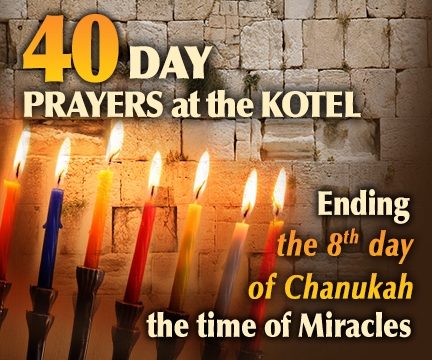



Tisha B’Av, the Jewish People’s national day of tragedy, is paradoxically a sacred festival. Discover how pain and distance can unlock the deepest closeness with God.
Tisha B'Av marks the saddest day in the Jewish calendar. It bears the weight of millennia—from our ancestors' tears in the desert to the ashes of two Temples, from medieval expulsions to Holocaust deportations.
Paradoxically, the saddest day in Jewish history is also classified as a “moed”—a sacred time of meeting with God, the same classification given to our most joyous holidays. How can a day marked by such tragedies also be viewed as a joyous festival?
The story begins in 1314 BCE with a national nervous breakdown. Our ancestors, freed from Egyptian slavery and poised to enter the Promised Land, choose fear over faith. They accept the spies' slanderous report about Israel, weeping against God and wishing they'd never left Egypt. As a result, God condemns that generation to wander for forty years and die in the desert.
More significantly, the Talmud1 tells us that God decrees that their needless tears on that day, the 9th of Av, would establish this date as a perpetual day of catastrophe and mourning for the Jewish nation.
It goes on to list four other major calamities that subsequently occurred on this day: the First Temple's destruction by Babylonians (586 BCE)2, the Second Temple's destruction by Romans (70 CE)3, the crushing of Bar Kochba's revolt (135 CE)4, and the plowing over of Jerusalem by Roman forces (135 CE)5. Centuries later, the tragedies continued—England's expulsion of Jews (1290)6, Spain's expulsion (1492)7, World War One's outbreak (1914)8, and the Warsaw Ghetto deportations (1942)9 all began on Tisha B’Av.
With all this tragedy and sadness, you might be shocked to discover that the Shulchan Aruch—the authoritative Code of Jewish Law—quoting Lamentations 1:15, designates Tisha B'Av a "Moed." This term, meaning "a time of meeting with God," typically describes our most joyous festivals: Passover, Sukkot, and Shavuot.
But how can a day of devastation deserve the same classification as our festivals?
Rabbi Yeruchem Levovits10 reveals the secret: Jewish tradition recognizes two types of divine encounters—meetings born of closeness and meetings born of distance. Both qualify as sacred appointments with the Divine.
This concept might seem counterintuitive until we consider the following analogy, offered by one of my mentors, Rabbi Dovid Steinhauer: Imagine a couple going through real struggle. For years, they ignore their issues and pretended everything is fine. But each day, the pain mounts, the resentments grow more bitter, and the end of their marriage draws near.
One day, something shifts—they catch each other’s eye and a flicker of recognition passes between them. For the first time in too long, they stop pretending. They begin to cry, and in their tears, they finally face one another. The shared acknowledgment of distance paradoxically becomes their closest moment in years—the beginning of the relationship’s repair.
On Tisha B'Av, we come face to face with the sad reality of our distance from God.
With this metaphor, we can understand the concept of a moed, festival, of distance. As a nation and as individuals, our relationship with God is far from perfect. We remain in exile, our Temple lies in ruins, and personally, we often choose convenience over commitment in our spiritual lives. On Tisha B'Av, we come face to face with the sad reality of that distance.11
In a certain sense, Tisha B'Av becomes the most real of all the holidays—we don't commemorate something that once was; we mourn for what is. Through mourning, through feeling the pain of the broken dream of our relationship with God, we find a closeness that we hardly reach any other time of the year. In the words of the great Chassidic master, the Baal Shem Tov, "He who believes he is close to God is really far, while he who believes he is far is really close.”
This perspective revolutionizes how we observe the “holiday” of Tisha B’Av. Most people approach the day by immersing themselves in historical tragedy—watching Holocaust documentaries, reading accounts of the Temple's destruction, or studying the chronicles of Jewish persecution throughout the ages. While reflecting on these historical tragedies connects us to Tisha B'Av's gravity, we mustn’t stop there. The day's transformative power emerges when we examine our personal distance from God.
The day's transformative power emerges when we examine our personal distance from God.
Ask yourself: How far am I from truly believing in God and living according to that belief? Do I only think about God when things go wrong, ignoring Him during ordinary moments that are filled with blessing? Do I stress about my future instead of turning to God with my troubles?
Sadly, we spend most of our lives distant from God. Throughout the year, God feels that separation while we remain largely oblivious to His presence. Tisha B'Av offers us the opportunity to pause, sit on the floor, and share that pain with God. Through this honest acknowledgment, we take the first step toward rebuilding our relationship.
This process of transformation doesn't happen overnight. The seven weeks separating Tisha B'Av from Rosh Hashanah represent the time needed to convert recognition into repair. The painful acknowledgment we experience today becomes the foundation for the High Holy Days' work of teshuvah (return/repentance). Without feeling how far we've drifted, we lack motivation for the difficult work of coming back.
Only from this place of authentic recognition and shared sorrow can we plant seeds for a better life and world—one filled with God's presence and our awareness of that presence.
Wishing you a meaningful fast.











Thank you …. I have a question…. Would this day be also with the making of the idol of the golden cow after they left Egypt?
Thank you!
What about the start of it all, October 7th? Palestinians slaughtered men, woman, children, and babies in the most horrific acts. Please don't distort the story. As history has it, Jewish blood is shed and excused by antisemitism.
Your facts are correct, but what are you responding to?
Tisha B’Av and persecution of Jews predate the October 2023 Massacres, the story started long before 07 October 2023.
This reading inspired me to write ✍🏾. From Solomon to Columbus departure to the Indies and imported to Turtle Island 🏝️ ( U.S). To World War One. This reading coincides with my recent studies on my financial journey. I’m currently also reading All the Presidents Bankers and I have read The Money Kings. Where Jewish immigrants departed from Europe because of the turmoil during World Wars One and Two, to become peddlers and Merchants, to later help or lead the discovery of our current Financial Banking System. I am amazed how all of these events connect and lead us to today’s financial markets events;
Seems tragedy is a universal path to redemption. It strips away arrogance, forcing us to confront our frailty and seek the only true Power, our Creator. Thank you for this post on the significance of Tisha B'Av.