







 After the Manchester Synagogue Attack, They Danced Through Their Tears
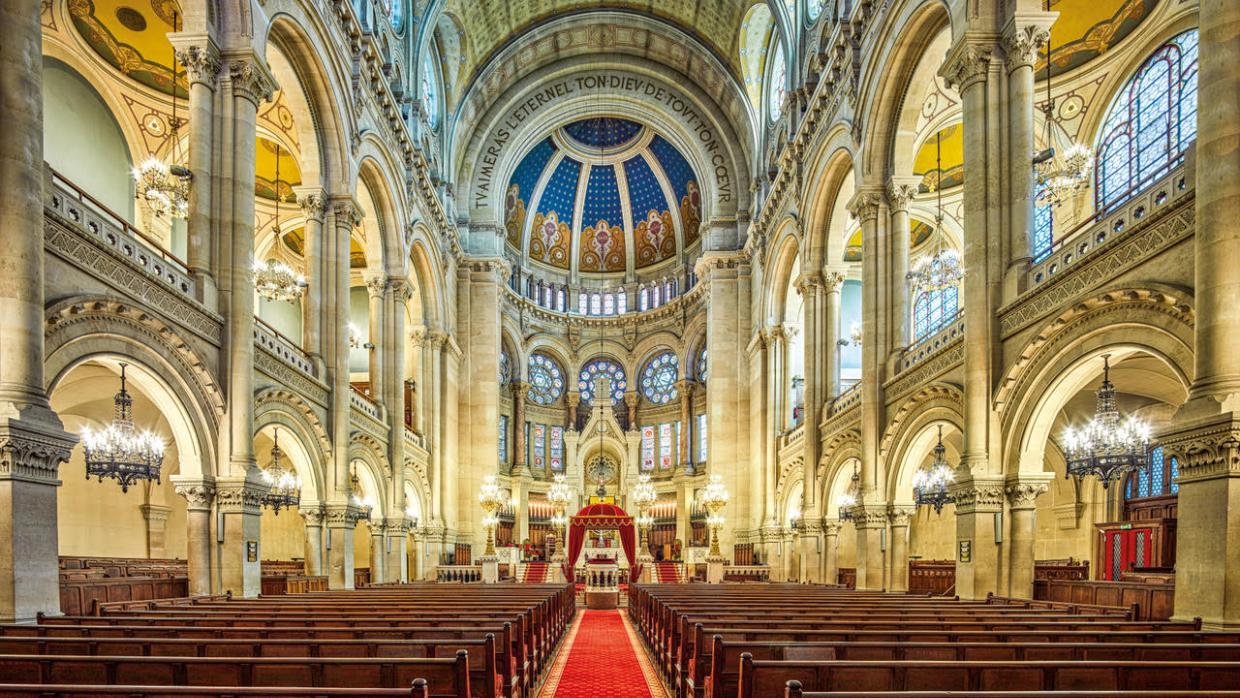








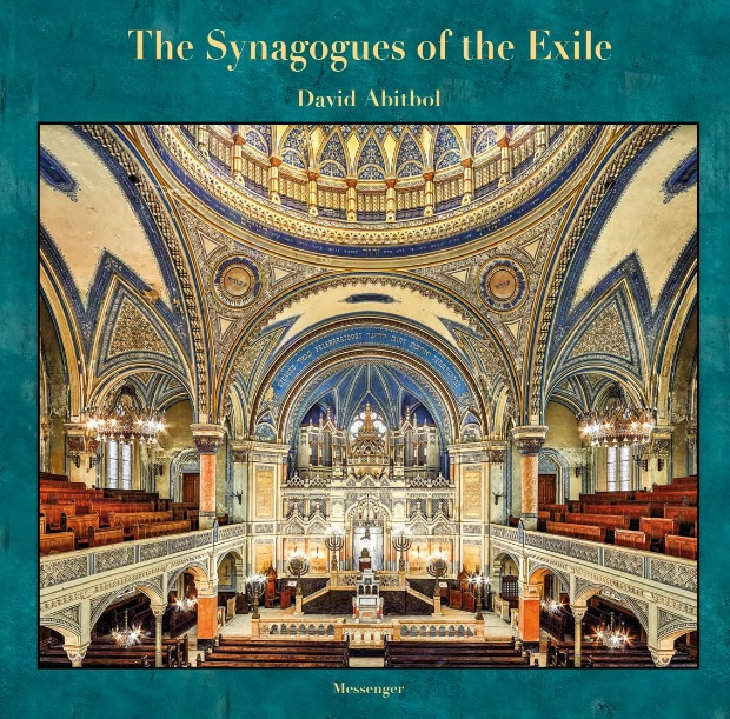
Journey through Europe’s most beautiful synagogues — timeless sanctuaries where art, history, and faith unite. These photographs reveal a heritage of beauty, resilience, and devotion.
Step into a world where art, history, and faith intertwine — a journey through the majestic synagogues that have graced Europe for centuries. These sacred spaces are more than architectural marvels; they are living testaments to the endurance, creativity, and spiritual depth of Jewish life across the Old Continent.
Each synagogue, whether standing proudly in a bustling capital or hidden away in a quiet town, tells its own story — of devotion and exile, of resilience and rebirth. From the monumental Great Synagogue of Budapest to the luminous Spanish Synagogue of Prague, from the ornate sanctuaries of Venice to the refined elegance of London and Amsterdam, these edifices reveal a Europe once resplendent with Jewish culture and community. Even the forgotten gems of Romania and the subtle harmonies of Italy’s hidden synagogues speak of a shared legacy that refuses to fade.
The following photographs are drawn from “The Synagogues of the Exiles”, an exquisite art volume illustrated with 180 never-before-seen images that capture the soul of 80 synagogues across 17 European countries, alongside five architectural treasures from North America that echo their European counterparts.
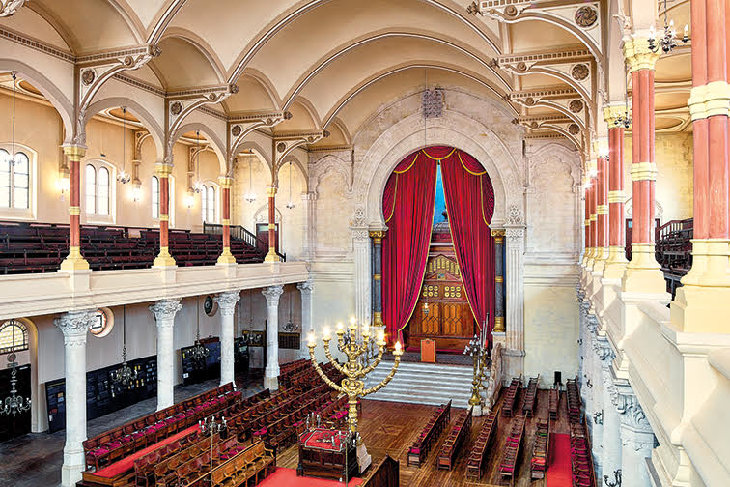
Designed by the architect Charles Durand, after nearly a decade of fundraising and negotiations, the new Grande Synagogue of Bordeaux opened its doors on September 5, 1882, offering a sanctuary for peace and prayer just before the High Holy Days.
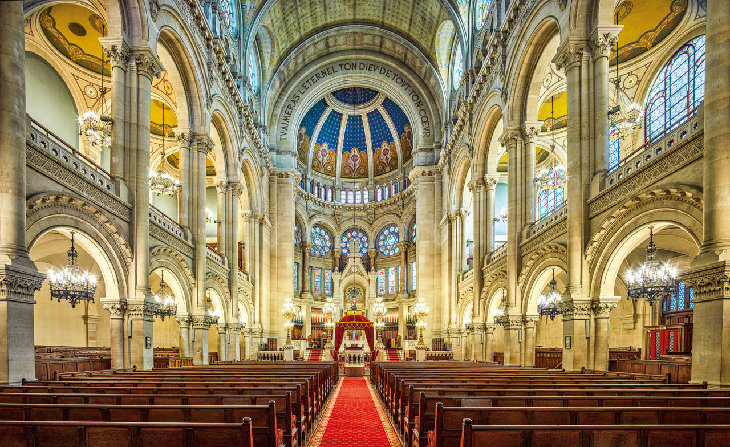
The Synagogue de la Victoire was inaugurated on September 9, 1874, just in time for Rosh Hashanah. It took a few more months to complete the interior, with the synagogue opening fully to the public in 1875. The sanctuary is the work of architect Alfred Philippe Aldrophe. A knight of the Legion of Honor and architect for the City of Paris, Aldrophe understood both the requirements of the Jewish community and their new customs. Romanesque in style, the building is adorned with Byzantine moldings and follows a basilica layout.
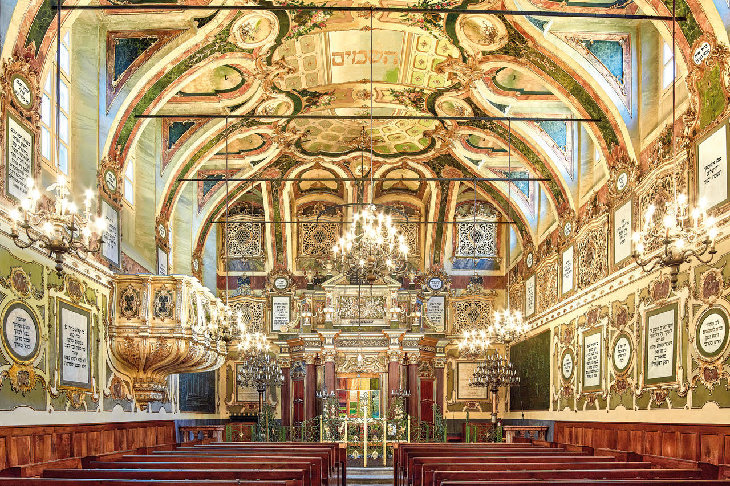
Nestled in northern Italy, between Turin and Milan, this town stood at the crossroads of countless battles from the 15th to the 18th centuries. The Jewish community, long settled here, took an active role in defending the territory — even financing the construction of its fortifications. Despite enduring many restrictions, they remained steadfast, determined never to face exile again. Their unwavering loyalty earned them rare privileges, first from Duke Gonzaga in 1560 and later from the Duke of Savoy in 1708. Yet these honors did not divert the faithful from their true source of devotion: the synagogue.
Located in an unassuming alley in the center of the Ghetto, the Synagogue of Casale Monferrato is the oldest in Piedmont. It was inaugurated in 1595 during Sukkot, as attested by the inscription: “This plaque commemorates the fact that in the year 5355-1595 this oratory was erected in honor of the God of Israel.”
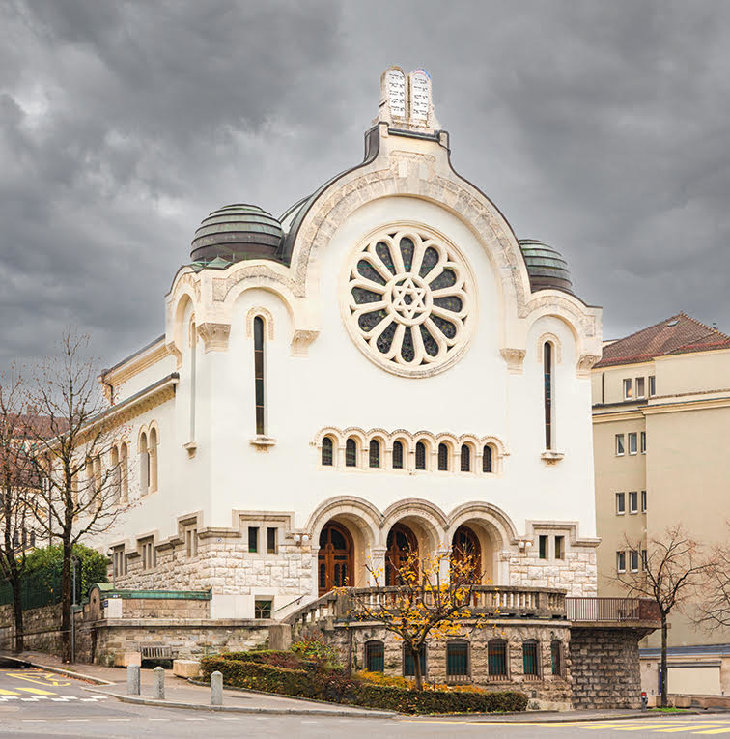
On November 7, 1910 (5 Heshvan 5671), the Synagogue of Lausanne was officially inaugurated. Situated in the prestigious Belle Fontaine district, the synagogue stands out as a beacon and a landmark, embodying both civic presence and the heart of Jewish communal life.
The synagogue was the result of collaboration between renowned architects Charles Frédéric Bonjour, Adrien Van Dorsser, and Oscar Oulevey.

In 1913, the community entrusted the realization of this modern and ambitious project to the young Jewish architect Fritz Landauer. Collaborating with Dr. Heinrich Lompel, they conceived a building that embraced Art Nouveau with Moorish and Art Deco influences. During Kristallnacht in November 1938, the temple suffered significant damage but survived. During World War II, its proximity to a fuel depot spared it from the bombings. A near-miraculous survival, as countless other Jewish places of worship were utterly destroyed by the Nazi regime. Majestic, charismatic, and deeply moving, the Augsburg Synagogue stands as one of the city’s most important monuments.
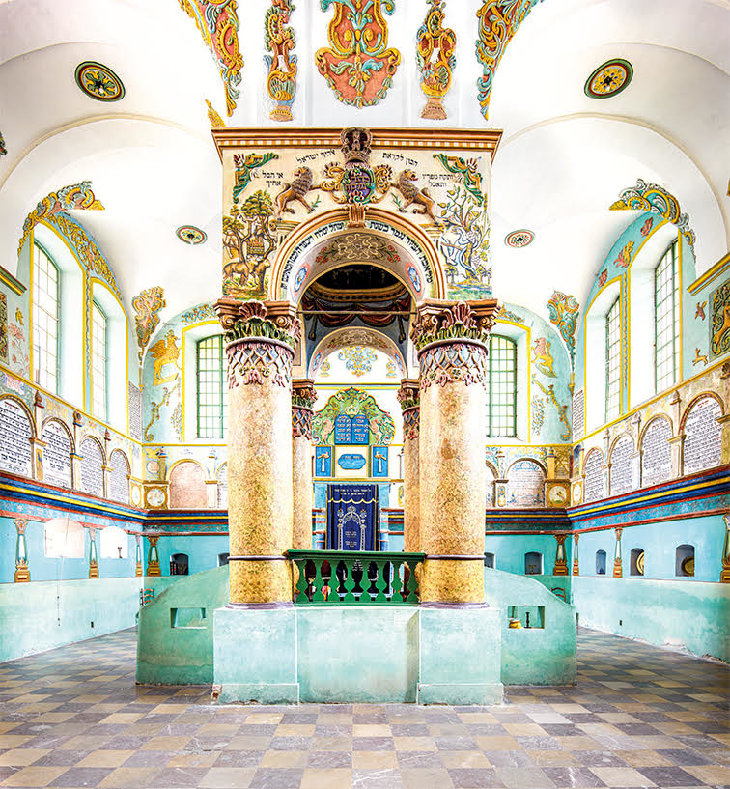
The Łańcut Synagogue is one of the few surviving examples of Poland’s rich Jewish architectural heritage. It epitomizes the four-pillar synagogue style with majestic vaulted ceilings found throughout the region. While most of its original interior has been lost, a watercolor painted after 1786 by Polish landscape artist Zygmunt Vogel (under the pseudonym Ptashek) offers a rare glimpse of its past glory. The stone edifice measures 18 meters by 15 meters and stands on land that once belonged to the Lubomirski family, members of Poland’s high nobility and longtime owners of the city. Its modest exterior façade belies the stunning polychrome decorations, stucco work, and Torah scenes that adorn its interior. The synagogue’s floor, located below ground level, reflects a clever architectural workaround to comply with Church restrictions on synagogue height. Descending a few steps from the entrance, worshippers would enter a bright, airy prayer hall.
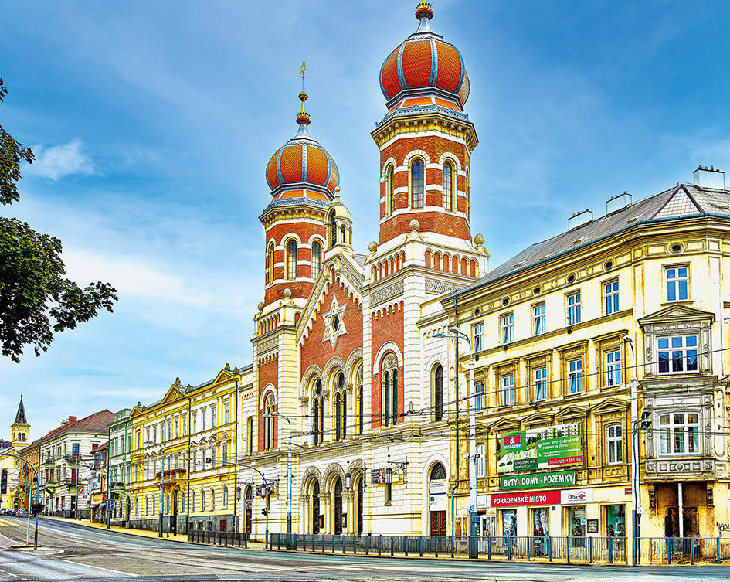
In 1867, a new constitution granted Jews political and religious equality, paving the way for the magnificent synagogue. With a population of 3,000, the Jewish community of Plzeň embarked on building a sanctuary as sumptuous as it was monumental. Their ambition was first entrusted to Viennese architect Max Fleischer, who envisioned towers soaring 65 meters high, reminiscent of Budapest’s Great Synagogue. However, this grandeur exceeded both the project’s budget and the city council’s approval, as nothing was to overshadow the skyline dominated by St. Bartholomew’s Cathedral. A more measured approach was taken with architect Emanuel Klotz, who revised the plans, lowering the towers by 20 meters and optimizing the space to accommodate 1,200 seats. Construction began in 1888, with the cornerstone laid on the 40th anniversary of Emperor Franz Joseph I’s coronation. A few years later, the Velká Synagoga opened its doors on Thursday, September 7, 1893, just in time for the Jewish New Year, 5654.
Interior view: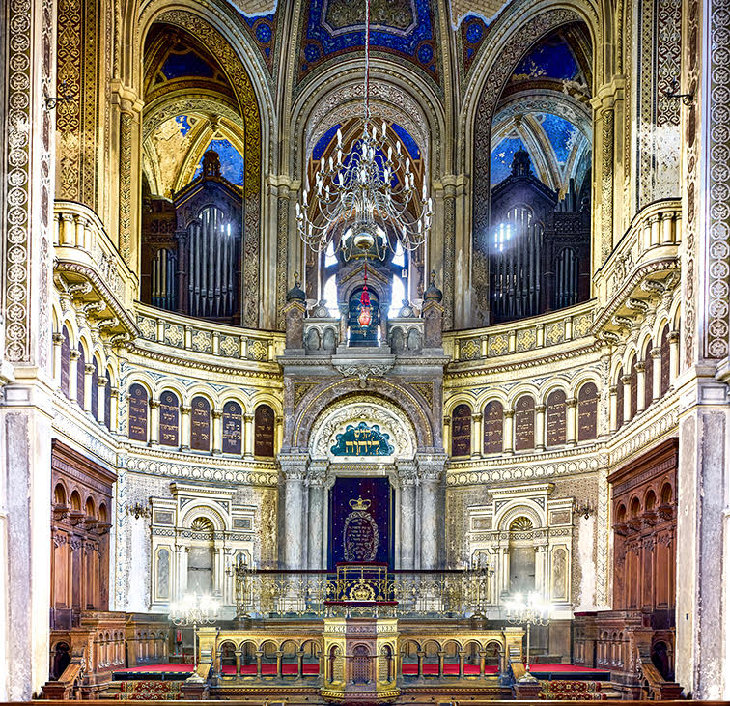
Texts and photos are from the book “The Synagogues of the Exiles”










Thank You so much
An incredibly in-depth and so full look at the history of synagogues in Europe. The pros flows like short stories and paints this great picture of the evolution of Jews and Judaism during a very tumultuous time. It’s incredibly descriptive and smart and is often times a love letter and poem to the history of these incredibly beautiful and sacred Buildings that has untold stories of faith and community
Just amazing, cannot stop looking and enjoying these photos. Truly truly Great!!
Thank you so much
Gorgeous photos!
Thank you