
 The Synagogue Was Attacked and Our Children Were Watching

6 min read
6 min read


5 min read


When 140 Jewish children were evacuated from a burning synagogue in Michigan, every parent faced the same question: now what do we say?
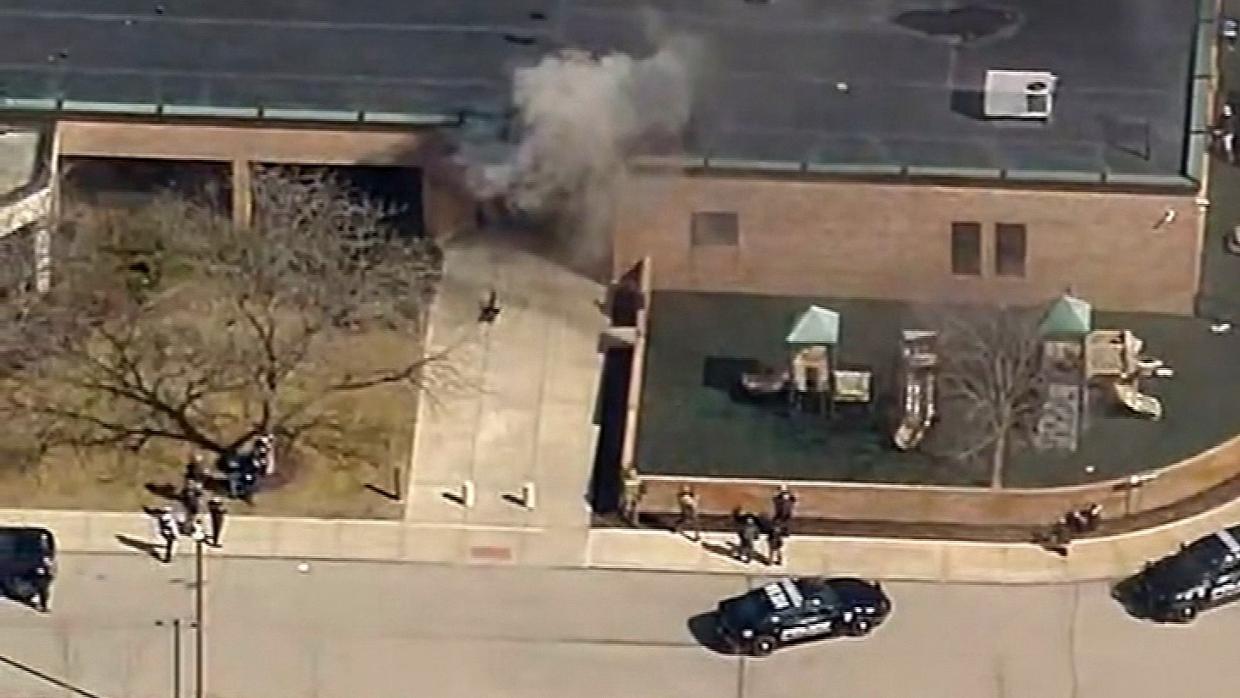
On a Thursday morning in West Bloomfield, Michigan, 140 children were sitting in their classrooms at Temple Israel when a man rammed a truck loaded with fireworks into the building. Security guards exchanged gunfire with the attacker, the truck caught fire and attacker took his own life.
The children and teachers were evacuated. It was a normal day at their Jewish day school until it wasn't.
Children don't wait for a formal conversation to understand the world. They watch. They listen for the hesitation in a parent's voice when something comes on the news. They notice when the kitchen conversation suddenly changes direction. And when 140 kids are rushed out of a synagogue by their teachers, something registers — in them, and in every Jewish child who hears about it afterward.
An adult processes the security failures, the attacker's biography, the political context. A child processes something more direct: people who look like me, in a place like mine, had to run.
What happens next — the conversations, the silences, the explanations adults choose to give or avoid — becomes the actual lesson.
Silence is never neutral. It's part of the curriculum.
What's changed isn't that antisemitism exists. It's that it's no longer hiding. Across North America and Europe, Jewish families are navigating harassment in schools, graffiti in public spaces, and demonstrations where antisemitic chants ring out openly in the streets. And more violent attacks on Jewish institutions. The hostility that once operated behind closed doors has moved into plain sight.
Harassment in schools, graffiti on walls, antisemitic chants in the streets, and now a truck driven into a synagogue full of children. The hatred is out in the open.
This changes things inside Jewish homes. Parents now face a question that used to feel theoretical: how much do we explain, how much do we shield, and what does protection actually mean?
Some parents respond with caution. Keep a lower profile. Think carefully before speaking about being Jewish in public. These instincts come from genuine concern for safety, and no one can fault a parent for wanting to reduce risk.
But children hear the emotional message underneath the words. When caution becomes the dominant tone, identity starts to feel like something to manage rather than something to own. A child learns that expressing who he is requires calculation.
Other families take a different approach. They talk openly about Jewish history — not to frighten, but to provide context. They explain that Jewish life has always included moments when dignity required clarity rather than retreat. They teach that belonging to the Jewish people means standing inside a story far older and more enduring than whatever hostility exists in the present moment.
That child walks into a classroom differently.
Neither approach makes the world safer. Both are attempts to prepare the next generation. The difference is what a child believes about himself when he gets there.
Schools, universities, and civic organizations shape the moral climate children grow up in. When antisemitic incidents occur, how leadership responds communicates values far beyond the immediate event.
The real test is consistency. When institutions respond swiftly to discrimination against some groups and cautiously to hostility toward Jews, children notice. Young people are careful observers of fairness. When the standard shifts depending on who the target is, the message lands clearly — and it isn't a good one.
Jewish communities deserve the same moral clarity extended to everyone else.
Jewish parents in cities across North America have found themselves having harder conversations more often since October 7. Children ask direct questions: Why do people hate Jews? Why does this keep happening? What should I do if it happens to me?
The answers that work aren't the ones that minimize. They're the ones that give children a framework larger than their own fear.
The answers that work aren't the ones that minimize. They're the ones that give children a framework larger than their own fear.
Jewish history is that framework. Teach your children that hostility toward Jews didn't begin in their lifetime — and that Jewish life didn't disappear because of it. Across centuries and continents, Jewish families preserved their identity not by hiding it but by transmitting it: stories, values, and responsibilities passed from one generation to the next even when public expression carried real risk.
That transmission is still the job. And it's more urgent now than it was five years ago.
The Goal Is Character, Not Fear
A child who understands his identity and his responsibilities carries himself differently through the world. He recognizes hostility when it appears. He also knows that his identity isn't defined by the hostility of others.
That's the goal — not a child who is fearless, but a child who is grounded. One who has been taught that being Jewish is something to stand inside, not something to manage around.
Those 140 children evacuated from Temple Israel will remember that day for the rest of their lives. What they carry forward — fear or groundedness, shame or pride, silence or clarity — depends largely on what the adults around them do next.
Your children are watching how you respond. Make it count.