




 Why Hitler Saw Jews as a Threat to Humanity






7 min read


My grandfather hid his family in the sewers of Nazi-occupied Lvov for 14 months. What kept them human down there is something I'm still trying to understand.
What does a Jew do when the sky disappears?
For years, that question was my grandfather’s daily reality. For 14 months, Ignacy Chiger lived beneath the streets of Lvov, in the sewers, hiding from the Nazis with his wife and two young children.
Before the war he was a businessman in Lvov, disciplined and deliberate, proud of the life he had built. Lvov was bursting with a vibrant Jewish life, pulsing with Torah learning, argument, enterprise, and culture.
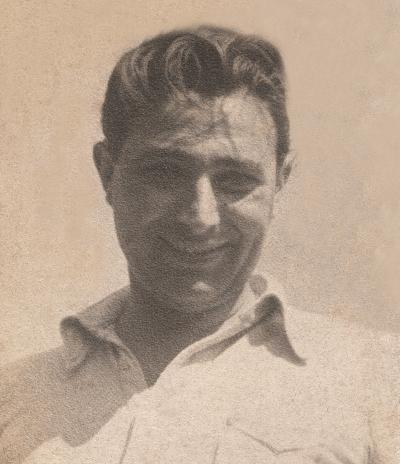 Ignacy Chiger
Before the Nazis’ boots and the ghettos, first came the terror of the Soviets who invaded Lvov on September 17, 1939. That day was Yom Kippur. As a Jew under Stalin, my grandfather learned to fear his neighbors and his coworkers, even the knock at the door that could end his life. Interrogations blurred into days of paralyzing uncertainty.
Overnight my grandfather lost his business and his home. Strangers arrived to share the family flat. Living spaces became tight and tensions between the dwellers grew. The State took everything. So Ignacy adapted, watched, and calculated.
Then in June 1941, Germany invaded the Soviet Union. The Red Army retreated east and the Germans entered Lvov. The Ukrainians, craving blood, mercilessly took revenge on the retreating Soviets. There was no shortage of bloodlust for the Jews.
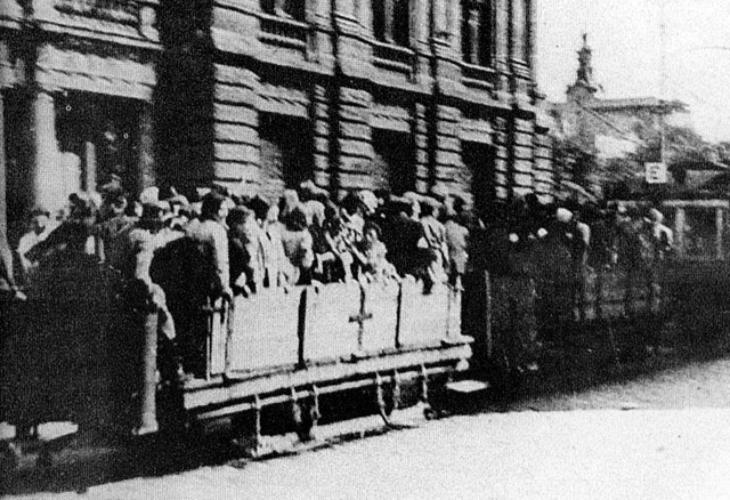 June, 1943, Ghetto transport to Janowski Camp
When Germany invaded Poland, brutality turned absolute. My grandfather writes, “Out of the frying pan and into the fire.” Ignacy recounts Nazi officers whose names became synonymous with terror; soldiers who saw killing as sport. Yet even amid such madness, the unending desire to survive remained and strategies were clear. Hide, move, build, adapt–or die.
The Soviets had constricted Jewish life. The Nazis came to extinguish it. 150,000 Jews called Lvov their home before the war. By May 1943, only 7000 remained.
The Descent
On May 30th the liquidation of the Lvov ghetto began. The Chiger family’s fate was sealed. With nowhere left to hide, Ignacy made a decision that saved their lives: he led his family into the sewers of Lvov, into the filthy blackness, a world without time or sky.
Prisoners dig tunnels to escape captivity. My grandfather, along with two other men, dug to enter it, breaking open the thick concrete vaulting of the sewer system.
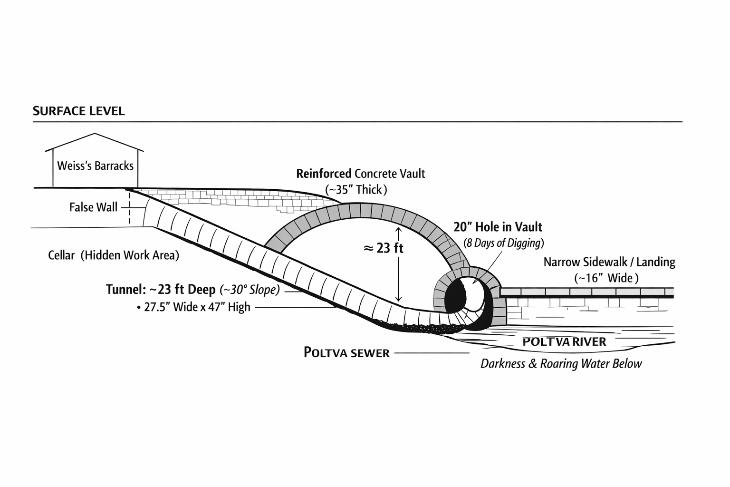 Escape tunnel diagram
Ignacy calculated gradients by memory of the city’s layout. Three men who hardly knew each other dug through the hidden confines of a barracks basement nearest the Poltva, through damp earth and concrete. Ignacy descended with his wife Paulina, with seven-year-old Krystyna (my mother) and with three-year-old Pawel (my late uncle).
Krystyna understood danger. Pawel understood fear. In the sewer, silence was survival.
Imagine telling a three-year-old he must not cry when rats crawl across his body.
Imagine asking a seven-year-old to suppress a scream when boots echo overhead.
Imagine a mother holding her child’s mouth closed so breath does not become sound.
The sewers were tunnels of filth and darkness. No daylight. No seasons, only changes in temperature and precipitation. Water dripped endlessly, the air was thick and foul. Time lost meaning.
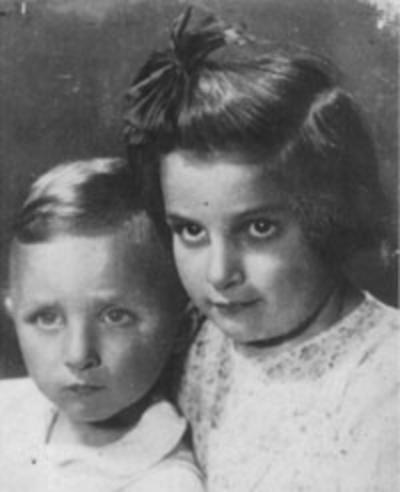 Kristina and Pavel Chiger
The Chiger family was not alone. Nearly 70 Jews descended into that underground network during the frenzy while the ghetto burned. Families, individuals, desperately clinging to the wet walls.
Seventy quickly became 20. Disease, starvation, flooding, drowning, fire, and rats… so many rats! Along with psychological collapse and the constant threat of discovery.
Only ten emerged. For 14 months they never saw the sky. In a place engineered to strip away humanity, my grandfather insisted on preserving it. He organized survival, rationed food and wrote satires to feel human. He absorbed panic. He kept Krystyna and Pawel alive. He stood beside Paulina in a partnership of endurance.
Among those who entered was a pregnant woman. In the darkness, a baby was born. No sterile room or light. Out of necessity, Ignacy assumed a new role as midwife. The infant did not survive. The baby’s mother made sure of that. Surely, the baby’s cries would have endangered the entire group. The sewer became both a womb and grave.
And there was Leopold Socha, a Polish sewer worker, a petty thief, a man of rough edges.
At first, he helped for money. He, and two other workers, guided the Jews through the labyrinth and were paid for their knowledge. Survival demanded realism.
But when the money ran out, Socha revealed his angelic side and continued. He descended into the sewers repeatedly, risking execution, to bring bread and news. If discovered aiding Jews in occupied Poland, he would have been shot. The punishment was immediate death.
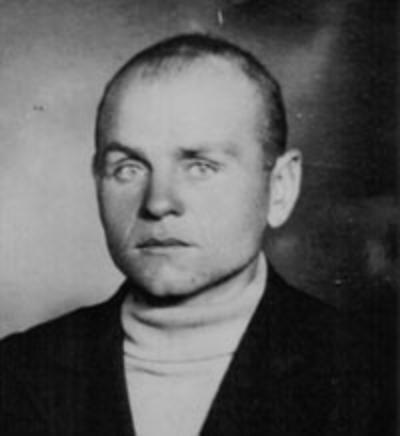 Leopold Socha
He brought potatoes and crusts of bread, along with rumors from the front lines and fragments of hope.
At some point the transaction transformed into commitment. Socha made a pact with God to absolve him of all his past sins. He would continue his mission to the end.
Judaism calls such souls Chasidei Umot HaOlam, the righteous among the nations. Socha earned the title in darkness.
In July 1944, as the Soviet army advanced and the Germans retreated from Lvov, the moment of emergence came. On July 27th, 1944, Leopold Socha led the survivors into daylight, to freedom.
The sunlight was blinding. The sky itself felt unnatural. Little Pawel was terrified. He cried to go back home… to the safety of the sewer.
Ten people emerged. Half the group did not. One of those who emerged was my mother, Krystyna.
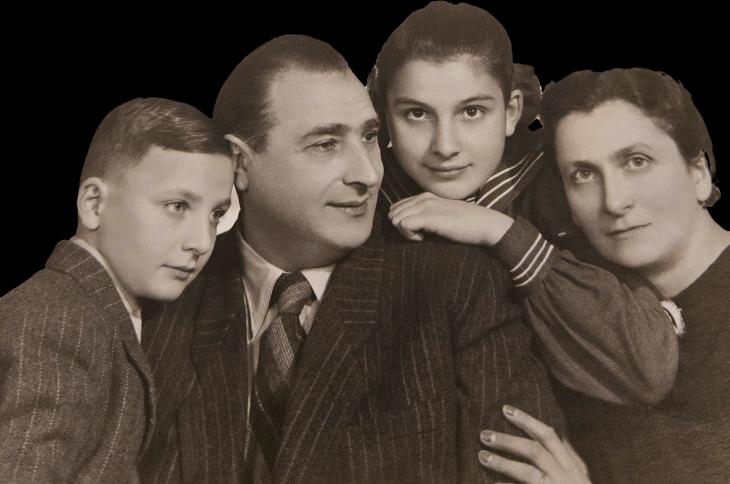 The Chiger Family, Krakow 1947
After the war my grandfather rebuilt his life, briefly in Lvov, then in Krakow, and finally in Israel. For a man who had lived 14 months underground, standing beneath the open sky of a sovereign Jewish state carried meaning beyond description. The descent beneath Lvov did not end in darkness. It led, improbably, toward Jerusalem.
Nearly 30 years later he sat at a Polish typewriter and began to reconstruct what had happened. I watched curiously as he typed, day after day, but I did not understand the urgency.
He wrote from memory; the images remained exact. Six months after the memoir was complete, Ignacy suddenly passed away. The manuscript was eventually published in Poland in 2011 under the title Świat w Mroku, A World in Darkness.
In 2026, it appears in English for the first time as Beneath the Lightless Sky. In my foreword, I call my grandfather “a real-life superhero.” Ignacy outwitted interrogators, evaded deportation, engineered the survival of a small underground community, and kept alive the faintest flicker of hope in a place where even light could not enter.
The memoir insists that he was not alone in this work of survival. Socha’s courage, shared by fellow sewer workers who helped, remind us that even in cities engineered for destruction, moral choice remained possible.
The memoir demands that we consider not only how Jews survived, but who risked everything to help them, and what those choices meant in a world collapsing into violence.
Ignacy does not romanticize suffering; he bears witness to it, revealing the strength of resilience.
From the father whose story gave rise to my mother’s own book, The Girl in the Green Sweater, the memoir that inspired Agnieszka Holland’s Academy Award–nominated film In Darkness, comes this newly revealed testament to one family’s struggle against annihilation.
I share his story because memory without responsibility is just nostalgia. And what we do with memory shapes the future. The sewers of Lvov were built to conceal waste. They became instead a vault of moral choice, proof that even when the sky disappears, a Jew can still choose light.










I Leah Kalichman youngest child of Gibor Yisroel -Sole survivor of his Kalichman family in Shetel Yizofov Poland has once again cried sincere tears of the Churban Hagodol. We children are the Nekama to Hitler and the German Nazi beasts and collaborators. I look forward to to reading these two important testimonies. To bear witness and to never forgive and forget modern day “cultured” Amalek. Thank you for sharing such important words. From the niece of the Kodesh Leah Kalichman. She was just 22 years old - my father Yoske Kalichman’s older sister , when the Polish collaborator - my father’s classmate in public school showed the Nazis where the Kalichman women and girls were hiding. Only to be brought out to be murdered outside Yizofov.My father met this Polak collaborator after the war.
Thank you for sharing your family’s version of this remarkable story. Reading it was deeply moving. The way you tell it gives the story powerful meaning beyond the history itself.
I am another of the indirect descendants of Leopold Socha’s courage. My uncle and aunt were among the group who survived those months in the sewers of Lvov. I heard about their experience many times from my first cousin. In our family, the original book about it was In the Sewers of Lvov.
Coming from another “branch” of the survivors, it is especially meaningful to see the story told through your family’s lens. In many ways, preserving and sharing these stories is the strongest answer to the evil the Nazis tried to inflict and their attempt to erase us and our memory.
Thank you!
I had heard of the story , and now finally I will be able to read it.
Thank you so much for this post.
Wow, unbelievable. Such courage against such evil. Baruch Hashem. Leopold Socha, Hashem sent him as an angel in the dark to help. I'm so glad your family survived. May Hashem avenge the others who did not....
Such an uplifting beautiful story of resilience. And Baruch Hashem for the non Jew who helped bring food and other things for the people living in the sewer. Thank you again for bringing another story of significance to light. ❤️
There aren’t words; Am Yisrael Chai!
Absolutely amazing.
Such courageous people….a man who understood how precious life really is….A hero…..
As a Jew who has wondered the world visited the concentration camp of Auschwitz and felt both of Power in the sadness of 6 million Jews being lost the story touched me deeply. Thank you.