






 For 44 years, Yehuda Katz’s Family Refused to Give Up Hope

13 min read
10 min read
4 min read



8 min read


For eight years as a refusenik, Ira Dashevsky turned everyday motherhood into quiet defiance against a regime built to erase her faith.
The story of the Soviet Jewish refusenik movement is often told through the courageous men who challenged the Communist regime, taught Torah in secret, and fought for the right to leave for Israel. Less often told is the story of the Jewish women who bravely sustained their families and communities. Their resistance was often a private matter, but without them, the movement could never have survived.
Among those remarkable women was Ira Dashevsky. Born in Odessa in 1958 and raised near Moscow before moving to Moscow, Ira grew up in a society where Judaism was suppressed, religion was mocked, and antisemitism was part of everyday life. As a child, she watched peers ridicule Jews and destroy letters her parents had sent her at summer camp.
Yet rather than diminish her identity, those experiences strengthened her determination to understand what it truly meant to be Jewish.
One childhood memory stayed with Ira for the rest of her life. When she was ten years old, she was walking home from school with a classmate who suddenly asked, "Is it true that there is no God?"
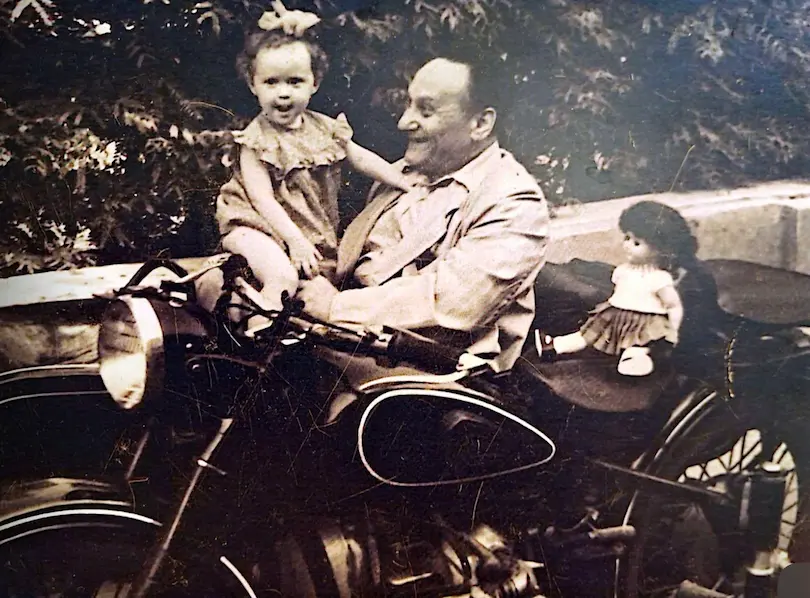 As a baby with her grandfather
Ira answered simply, "I don't know." Looking back, she reflected, "It seemed like an insignificant conversation between two children. But at school we were taught that, of course, God did not exist. After all, Yuri Gagarin had flown into space and had not found Him." That simple exchange planted a question that no amount of Soviet propaganda could answer.
Her Jewish awakening came gradually. Her grandmother quietly preserved fragments of Jewish tradition, singing Hebrew songs she had learned as a child and standing for hours in the freezing cold each year to obtain matzah from Moscow's synagogue. Her father, astrophysicist professor Ze'ev Dashevsky, lost his scientific career after applying to emigrate to Israel. He was 13 years refusenik. Forced to work menial jobs, he secretly translated Jewish philosophical works, taught Judaism underground, and later in Israel became one of the founders and head of the Jewish educational center Machanaim.
In seventh grade, Ira was accepted into Moscow's prestigious Mathematical School No. 2, and her family moved to the capital. Although she spent much of her youth there, she never felt she belonged. "I never considered Moscow my city. I always felt like an outsider."
Around that same time, she took another step in her search for her Jewish identity. "It was 1971 when I first walked into the synagogue on Arkhipov Street. I was not driven by religious motives, but by curiosity and a desire to find my own people. What I remember most was the smell of old books and the beautiful Jewish faces of the people gathered outside the synagogue."
That first visit gave her a sense that she belonged to a people with an enduring history and future.
As a teenager, Ira met Michael Kara-Ivanov, another young Jew searching for his roots. Together they immersed themselves in Jewish learning, studying with elderly Jews who had preserved Torah through decades of Soviet oppression. Their shared commitment would shape the rest of their lives.
Ira met her husband Michael in ninth grade at a mathematics school. They studied in parallel classes and were part of a large, close-knit circle of friends, most of whom were Jewish. Pushing back against the surrounding falseness, they all searched intensely for truth and for themselves.
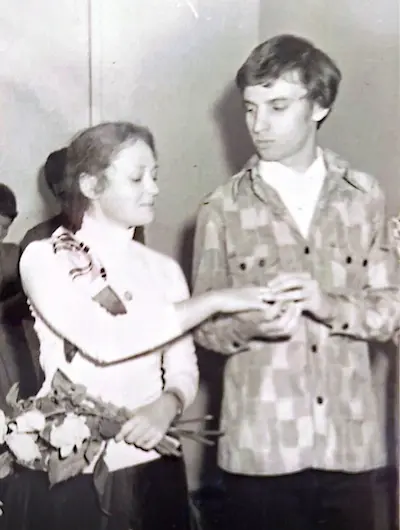 At their underground wedding
During their student years in 1978 they decided to marry. At age 20, an underground chuppah took place in their apartment. Together they studied Judaism and Hebrew, and took their first steps in observing the commandments. It was she who first led Michael toward the idea of connecting with the Jewish world, but he was the one who began observing first, and he soon had students who came to him on Saturdays to learn. And so, both separately and together, they moved toward a way of living as a family — toward deciding what values they wanted to raise their future children with.
As soon as they finished university, they applied to emigrate as a young couple without children. Instead of receiving permission, they became refuseniks. What they expected might be a brief delay turned into eight years of uncertainty.
Eight years later they arrived in Israel with four children.
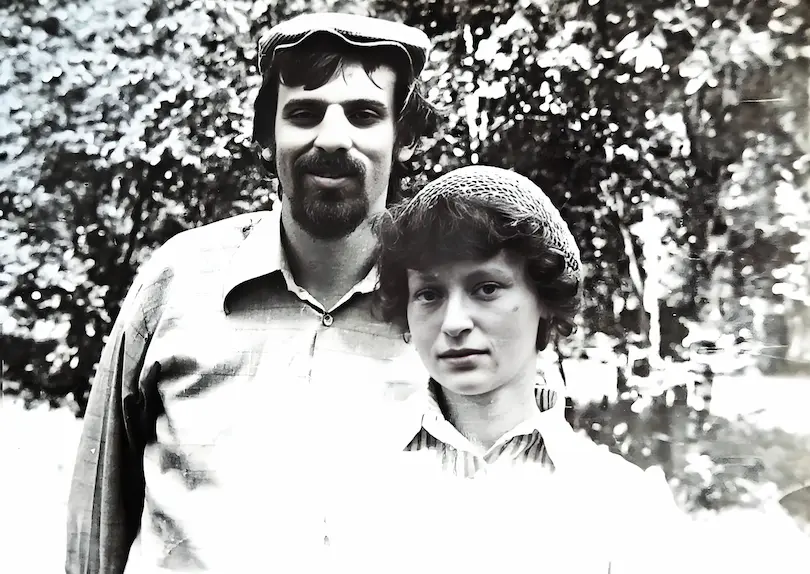 Ira and Michael in Moscow, 1984
Those years transformed ordinary family life into an extraordinary act of faith.
While Michael taught Torah in secret, rescued forbidden Jewish books, and prepared himself for the possibility of imprisonment, Ira carried another mission that was equally vital. She created a Jewish home in a country determined to erase Jewish identity.
Together they raised four young children while moving through 11 rented apartments. Some landlords forced them out after visits from the KGB. Others became frightened by accusations that the family was spreading Zionist propaganda. After one women's Torah class held in their apartment, KGB officers spent an hour trying to break down the door before questioning everyone inside. The next morning, the landlord demanded they leave within 24 hours.
Yet the Torah classes continued.
Ira refused to place her children in state kindergartens, unwilling to expose them to the relentless atheist and anti-Jewish propaganda she had experienced herself. Instead, she raised and educated her children at home while helping build an underground Jewish community alongside Michael.
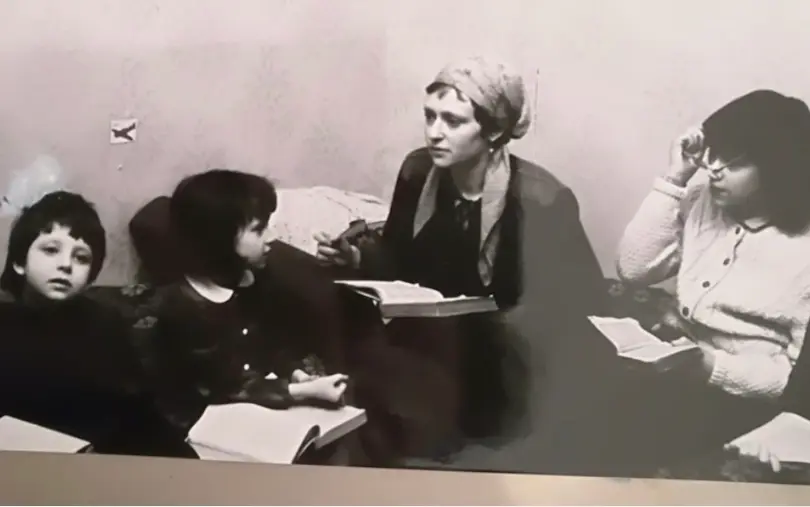 Teaching an underground Torah class
Daily life required remarkable ingenuity and perseverance. Without a car, Ira bundled four young children into heavy winter coats, scarves, boots, and mittens before pulling the youngest on a sled through the snow in search of kosher food. If word spread that one store had received fish or canned vegetables, she hurried across Moscow before the shelves were emptied.
Preparing for Shabbat was a labor of love. Kosher meat was scarce and chickens were rarely available.
At the time, there was only one mikvah in all of Moscow, located inside the synagogue on Arkhipov Street. It was in poor condition and wasn’t opened every day. Women often had to make special arrangements just to have it opened. In 1979, only six women regularly immersed there, one of whom traveled by train from Ukraine. Despite the obstacles, these women remained steadfast in preserving Jewish family life, quietly passing on traditions that the Soviet regime had tried to erase.
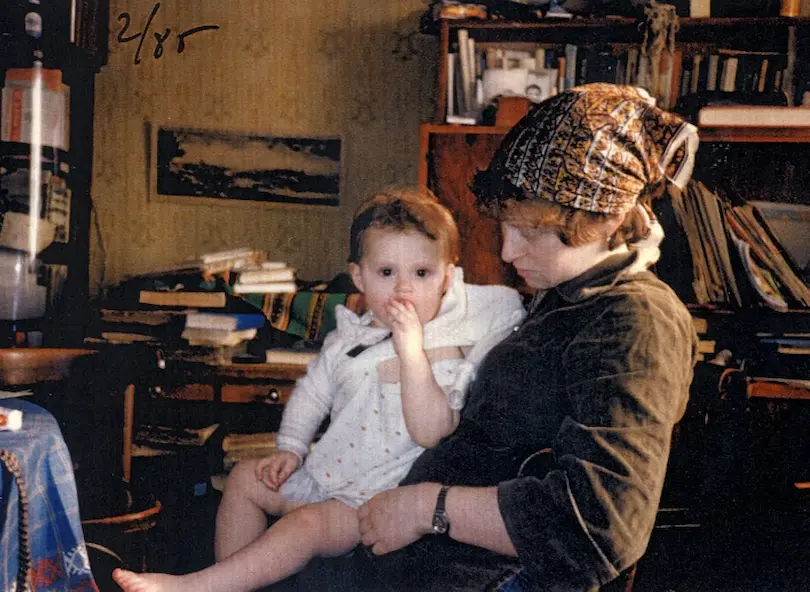 With her daughter in Moscow in 1985
Jewish emissaries from Israel, the United States, Canada, and Europe regularly arrived to Ira’s home, carrying Torah books, kosher food, medicines, and messages from the outside world. They often called unexpectedly from public telephones after arriving in Moscow. Within hours, Ira and other women organized meals, found places for them to teach and meet the refuseniks, arranged classes in different apartments, and quietly contacted participants without attracting the attention of the KGB.
Every detail required secrecy. Torah classes were never discussed over the telephone. Even conversations inside the Moscow subway were considered dangerous. Meetings were arranged only while walking outdoors. Jewish books were referred to by code names. They might say, "Bring the grandmother," code word to bring a volume of the Talmud.
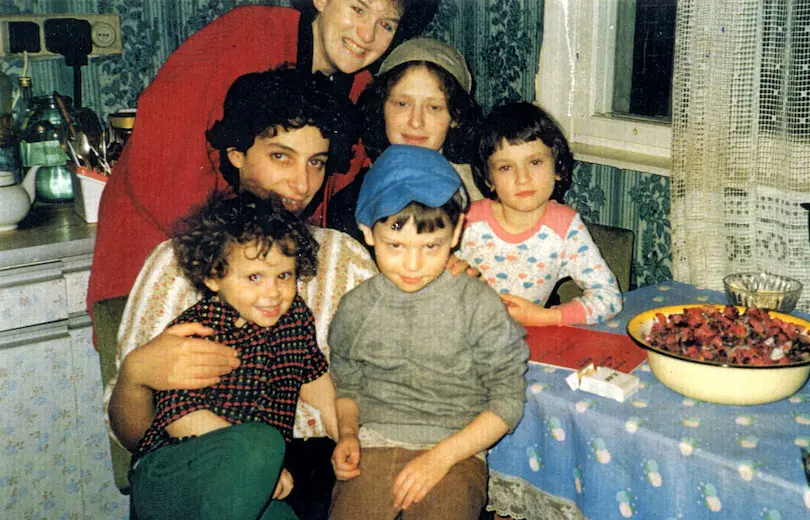 A visiting emissary from the US and a family friend
Ira also became a teacher in an underground Jewish Sunday school. Children from across Moscow quietly gathered in constantly changing apartments where volunteer teachers introduced them to Judaism, Hebrew, Jewish history, music, and Jewish traditions.
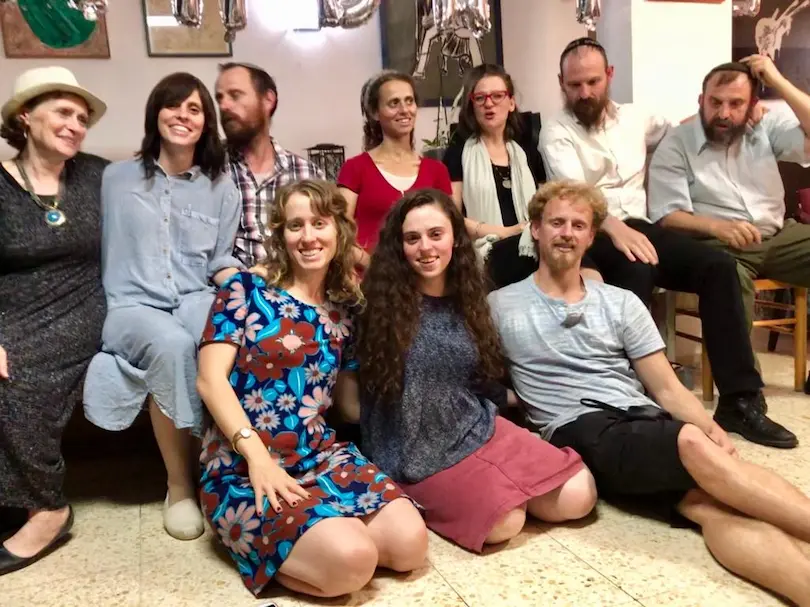 Ira and Michael with their 8 children in Jerusalem
Ira looks back at those difficult years with remarkable humility. "At the time, it felt as though we were changing history. Looking back 40 years later, I realize we were simply entrusted with preserving one chapter of Jewish life so the next generation could carry it forward."
In 1987, after eight years of waiting, Ira and Michael finally received permission to leave the Soviet Union. They arrived in Israel with their four children, where four more children were later born. The Jewish home they fought so hard to preserve behind the Iron Curtain continued to flourish in freedom.
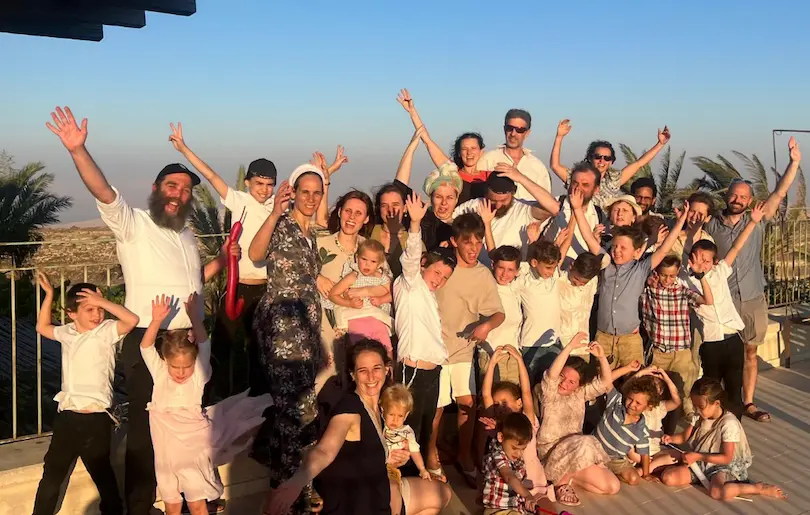 The family living in Israel today
Today, Ira and Michael are surrounded by their children and grandchildren in Israel, the homeland they dreamed of reaching for so many years. The Jewish identity they bravely nurtured under Soviet oppression has blossomed into a family deeply rooted in the Land of Israel, free to live as proud Jews.













Sofya, another wonderful and inspiring story. It lifts my heart to read of the bravery and determination of those refuseniks. I don’t know where you find these stories, but every one makes me a proud Jew.
That is such an inspiring and beautiful life story. I would love to meet the family when my husband and I get to go to Israel. That would be precious.
I'll be happy to meet you. My email address is iradashevsky@gmail.com
In 1985 along with a friend, I spent a week in the USSR as it was then, visiting Refuseniks in both Leningrad (St Petersburg today) and Moscow.
We visited apartments where conversations were conducted in writing because the apartments were bugged.
We visited people who had very little but their hospitality was generous.
But, most of all, we visited people whose faith was relentless.
One moving story I will share. We visited an apartment that, when we leaving, we saw a travel poster for the newly reconstructed centre of Yaffo showing a restaurant. Our host said that it was his dream that on arriving in Israel, he would eat at that restaurant. We wished and prayed that he made it and lived his dream.
What a blessing that your efforts were rewarded!
How extraordinary was their faith, commitment and courage. They are inspirational and and make my heart and Neshama burst with pride at their love for Judaism
It's so good to be Home in our beautiful, tiny, often crazy, blessed Israel. Thank you, dear G_d!