




 The Only Orthodox Jew in the Room
9 min read
7 min read
7 min read
6 min read



5 min read


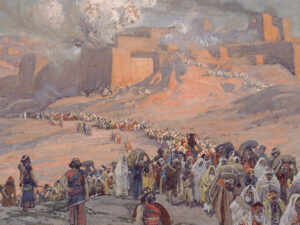
For over 2,000 years, scattered Jews have yearned for and returned to this small patch of land. Why?
From a purely personal perspective, this Yom Ha'atzmaut feels different. The last several months have included regular sirens and rushing our kids into the safe room. So having a moment to reflect on my family’s blessing to actually live in our homeland is a welcome shift.
Interestingly, both celebrating Yom Ha’atzmaut and being under attack raise the same question: Why do we want to be here? Why did we move here?
One of the things I love about walking the streets of Israel is seeing the extraordinary range of people and wondering about each person's journey. Jews from radically different backgrounds, all sharing the same pull to return.
What motivated thousands of Ethiopian Jews to trek on foot through jungles and deserts for weeks, watching the elderly die of exhaustion and children of hunger? A single, powerful idea: that after 2,000 years, the dream of returning to Zion was finally within reach. Even while hiding their identity in Sudanese refugee camps, that idea kept them going.
What motivated Chassidic rabbis and their followers in the mid-1700s to board rickety boats, fully aware they might sink? They weren't chasing safety or money. They were driven by a deeper conviction that the Jewish mission, being a moral and spiritual force in the world, is most fully realized when Jews stand together as a nation on this specific land. They chose sacrifice over exile because they believed, with certainty, that Israel was the only place they truly belonged.
What motivates a 22-year-old American Jewish college graduate today, with every opportunity ahead of her, to move to a country where she barely speaks the language and has no job lined up?
The desire to be part of a Jewish story that is unfolding in real time.
Different eras, different people, all driven by the same core vision: that the Jewish people have a specific and necessary purpose to be what the Torah calls "a kingdom of priests and a holy nation," a people that brings morality and meaning into the world. This is a mission that can only be accomplished as a nation that functions together as a society. In the Diaspora, an individual Jew can live a meaningful Jewish life, but the Torah was given to a people with a shared mission. The moment that mission was entrusted to the Jewish people, at Sinai, the Torah describes them camping together "as one man with one heart" (Exodus 19:2). That unity wasn't incidental. It was the precondition.
The Torah also makes clear that this national mission is rooted in the Land of Israel. Of the 613 commandments in the Torah, approximately 200 are tied specifically to the Land of Israel, mostly through agricultural laws and the laws connected to the Temple in Jerusalem.
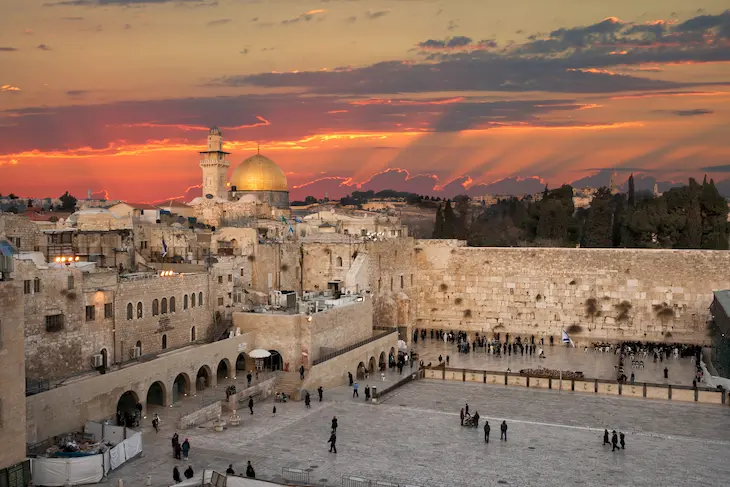
The Temple was a place of tangible spirituality and Godliness. In addition to the regular prayers and service in the Temple, open miracles occurred there. The Talmud records that rain never extinguished the fires on the Temple altar, signifying how fire and water, two opposites, can coexist in harmony for a greater spiritual purpose. And during the three pilgrimage holidays (Passover, Shavuot, and Sukkot), when every Jew was commanded to visit the Temple in Jerusalem, the Temple courtyard was so packed that people's feet literally lifted off the ground. Yet when everyone prostrated themselves during the service, miraculously there was room. The lesson: physical space is limited, but spiritual space is not. There is room for everyone who wants in.
Living in Israel today, it's hard not to see echoes of these open miracles. On the first night of the Iranian missile attack, I stood on my apartment balcony watching missiles fly overhead and watching Israel's defense system light up the sky, shooting them down one by one. It was astonishing. We felt as if we were seeing God’s hand protecting the Jewish People, missile by missile. We were watching something more than military technology at work.
While we can understand the need for the mitzvot connected to the Temple to occur in the Land of Israel, why are the agricultural laws mainly focused on the Land of Israel? Shouldn’t they apply anywhere?
The answer is that there is something unique about this land itself. History shows that the physical land, while described as the land of milk and honey during Biblical times with a Jewish presence, became desolate and barren during the Jewish exile. When they returned in modern times, the desert literally bloomed again. Israel is now lush with farmland and agriculture, a transformation that began only with the Jewish return. It's as if the land was waiting for the Jewish people.
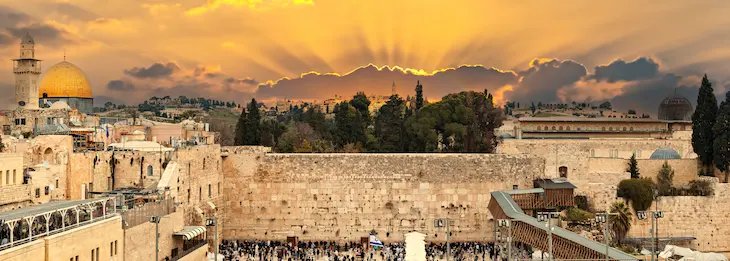
The Talmud says that the Temple Mount in Jerusalem is called the "Gate of Heaven," the point from which all prayers ascend.
So why has the Jewish People over 2,000 years of exile and every conceivable obstacle remain steadfastly longing to return to the Land of Israel? Because the most significant mission that any people can have, uplifting the world morally and spiritually, can only be fulfilled by the Jewish People here in this land. And incredibly, the land, it seems, knows it and responds in kind.











This was beautifully written: Hashem, Israel and the land are one package, inseparable!