








 Seven Reasons for Hope on October 8
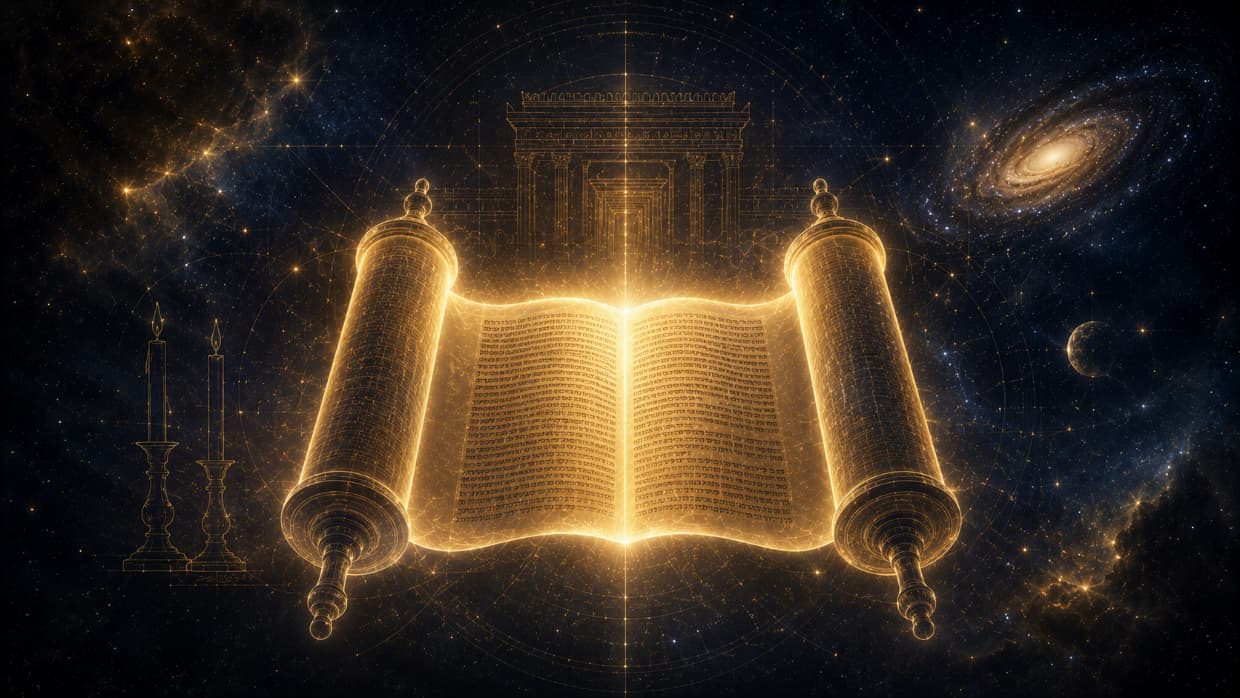






Most people spend their lives chasing meaning without a map. Shavuot celebrates the moment the map was handed to us.
In his groundbreaking book Authentic Happiness, Dr. Martin Seligman, one of the founders and leaders of Positive Psychology, identifies three distinct levels of happiness:
The Pleasant Life: The lowest level, focused on immediate pleasures and short-term gratification. These enjoyable sensations and momentary delights, while pleasant, are ultimately fleeting and leave us wanting more.
The Good Life: A higher level involving effort and accomplishment. Here, you engage your strengths, set goals, and experience the deeper satisfaction that comes from genuine achievement.
The Meaningful Life: The highest level, reached by connecting to something beyond yourself. The larger that connection, the more meaning and genuine happiness you experience. This level transcends both pleasure and personal achievement to find purpose in something eternal.
The holiday of Shavuot fits squarely in the highest level of happiness. It marks the pivotal moment when the Jewish people received what might be called the ultimate guide to a meaningful life—the Torah. It offers comprehensive wisdom on how to infuse every relationship, every endeavor, and every moment with deeper significance and connection.
The Torah isn't simply a religious text; it's a blueprint for connecting to God—the infinite source of all meaning and existence. It transforms ordinary activities—eating, working, loving—into opportunities for transcendent connection. It elevates the mundane to the sacred.
Many traditions claim to offer a path to meaning, so what makes Torah different? Most religious frameworks provide inspiration and general moral guidance, but the Torah goes further: it gives you specific, actionable instructions for every dimension of life. It doesn't just tell you that kindness matters—it tells you how to practice it at the dinner table, in the marketplace, and with the stranger you've never met. It makes the sacred accessible in the ordinary. And uniquely, the Torah presents itself not as a human interpretation of the Divine, but as God's direct communication to humanity, an unbroken chain of wisdom linking you to something infinite.
Ask most people to name a Jewish holiday symbol, and they'll answer easily: Rosh Hashanah has the shofar, Passover has matzah, Sukkot has the sukkah. But Shavuot? It often draws a blank.
Unlike other holidays, Shavuot has no specific ritual object attached to it—no shofar to blow, no sukkah to build, no matzah to eat. Why is that?
Shavuot doesn't need its own symbol because it is the source of all the other symbols. It is the holiday that makes every other holiday possible.
Every other holiday symbol exists because the Torah commanded it. The shofar, the matzah, the sukkah—none of them would exist without the Torah that gave them their meaning and purpose. Shavuot, then, doesn't need its own symbol, because it is the source of all the other symbols. It is the holiday that makes every other holiday possible. Giving Shavuot its own ritual object would be like giving the sun its own light source. The absence is the point.
So how does an ancient text connect you to something larger than yourself in practical, felt ways?
The answer lies in the mitzvot—the commandments that structure Jewish life. Each mitzvah is a point of connection between you and God, between you and the Jewish people across time, and between you and your deepest self.
When you light Shabbat candles, you are joining every Jewish family that has done the same for three thousand years, and dedicating a moment of your week to something beyond productivity and achievement. When you give tzedakah, you are enacting a divine principle that your resources are not entirely your own, that you are a steward of something larger. When you study Torah, you are entering into a conversation with God and with generations of seekers who asked the same questions you're asking today.
As the blueprint for all existence, the source of the spiritual DNA throughout the universe, the Torah builds meaning into the architecture of your day, your week, your year.
As the blueprint for all existence, the source of the spiritual DNA throughout the universe, the Torah builds meaning into the architecture of your day, your week, your year. Every blessing before eating reminds you that sustenance is a gift. Every Shabbat creates a weekly island of transcendence. Every lifecycle event—birth, coming of age, marriage, death—is held within a framework that connects the personal to the eternal. The Torah gives you a daily practice for experiencing that meaning firsthand.
Hunger for meaning has never been stronger. Research consistently shows that the number one thing people seek from their careers isn't money or status—it's meaning. Organizational Psychologist Adam Grant has shown that when people find meaning in their work, they become more motivated, more productive, and more fulfilled.
And as Viktor Frankl demonstrated through his own harrowing experience surviving the Holocaust, the search for meaning is a fundamental human need. Shavuot celebrates our possession of a time-tested guide to infusing every dimension of life with meaning and transcendent connection.
The beauty of Torah is that it meets you exactly where you are. Whether you're deeply observant or just beginning to explore Jewish wisdom, the path to meaning is open. Every step toward greater connection—every mitzvah, every moment of study, every Shabbat candle—expands your capacity for that highest level of happiness.
If there was ever a time to celebrate the beauty and significance of Jewish life, it's Shavuot, the holiday that makes all other holidays possible. In a world desperately seeking meaning, you have been entrusted with its ultimate source.
What greater gift could there be?














The Torah reveals the HOLY ONE of Israel. The One true G-d who is far more wonderful and far more precious than words can express.G-d is everything! Every good thing we have - family and friends is from our very precious, most wonderful Creator.
Positive psychology, as propounded by Martin Seligman, is by no means universally accepted in the psychology profession. Dr. Lynn needs to view it in a more nuanced, critical light.
I beg to differ. Positive psychology is now in its own right a branch of psychology with the scientific study of wellbeing. Check out Tal Ben-Shahar from Harvard as well.
Outstanding