




 Unity: The Driving Force Behind the Jewish People





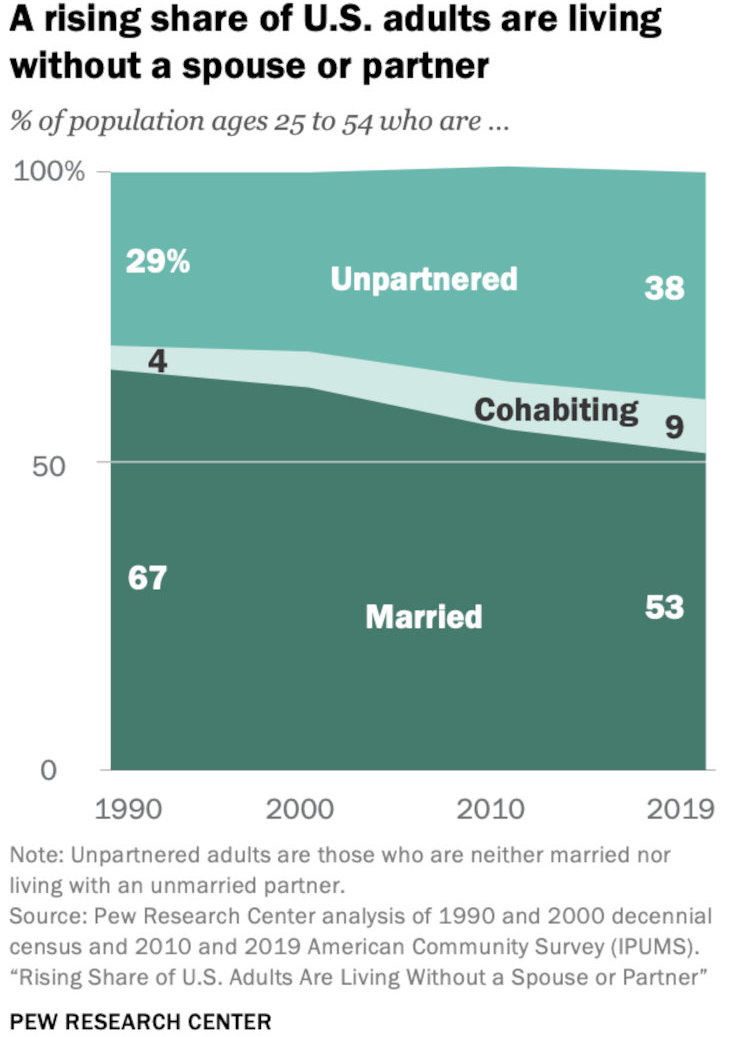
How important is marriage? A recent survey by Bradford Wilcox reveals a troubling disconnect: 75% of adults ages 18-40 consider making a good living crucial to life fulfillment, while only 32% view marriage as essential. Approximately 40-50% of first marriages end in divorce, with subsequent marriages facing even higher failure rates. With marriage rates plummeting and nearly half of marriages still ending in divorce1, we've clearly lost sight of something fundamental.
Modern marriage fails because we've forgotten a fundamental truth: successful relationships require ruthless prioritization. We treat marriage like a hobby—something to nurture when work calms down, when finances stabilize, when life becomes convenient.
Judaism offers a radically different approach.
Three thousand five hundred years ago, this week’s Torah portion established a revolutionary principle that has strengthened Jewish families for millennia:
"When a man has newly taken a wife, he shall not go out with the army or be assigned to it for any purpose; he shall be exempt for the sake of his household for one year, to give happiness to the woman he has taken" (Devarim 24:5)
Many young couples fail to realize that a relationship in its infancy—delicate and fragile like a newborn baby—requires maximum care, love and attention. They go about their lives, prioritizing their career and their other obligations, failing to nurture the most essential aspect of their lives. This mitzvah of nurturing the first year, Shana Rishona, teaches the foundation of successful marriage: your spouse must come first. Not sometimes. Not when convenient. Always.
Rabbi Samson Raphael Hirsch explains: "The husband must forgo not only individual achievement, but even the welfare of the whole." When the Torah exempts newlyweds from military service—the highest civic duty—it establishes an uncompromising hierarchy: marriage success determines national success, not the reverse.
How seriously does God take this priority system? Rabbeinu Bachya reveals an extraordinary insight: the final letters of "נקי יהיה לביתו שנה" (he shall be exempt for his household for one year) spell out God's four-letter name—the Tetragrammaton. The Creator literally signed His name on this commandment!
Even more remarkably, Rabbeinu Bachya observes that God practiced what He preached. After the "wedding" at Mount Sinai, the Divine Presence remained stationary for one year before traveling with the Jewish people—God's own Shana Rishona, first year of marriage with His chosen nation.
This divine endorsement reveals why prioritizing marriage isn't just relationship advice—it's cosmic law.
But why should marriage rank above career, military service, and personal ambitions? The first time God declares something "not good" in the Torah concerns solitary man: "It's not good that man be alone" (Genesis 2:18). Rabbi Hirsch explains:
The goal of perfection, which the terrestrial world is to attain through man, cannot be attained in full, as long as man is alone. The completion of the good was not man, but woman; only when woman was created was the good completed - for man and for the entire world. As our Rabbis teach us (Yevamos 63A): Only husband and wife together are called "Adam - אדם" as is stated, 'Male and female He created them…and called their name Adam' (Genesis 5:2).
Marriage doesn't just create families; it creates fully realized human beings. Jewish law demonstrates this profound truth: the Code of Jewish Law2 teaches that when a child is born, the parents make a blessing to express gratitude to God.3 But remarkably, the text of the blessing does not mention the creation of a new human being. We reserve that blessing for when husband and wife unite under the chuppah. The first of the seven wedding blessings declares, "Baruch Ata Adonai, Yotzer Ha'Adam - Blessed are You, God, who creates man.” When man and woman enter the bond of marriage, they are born anew, unified as their complete self.
Taking this idea a step further, Kabbalah reveals marriage's deepest purpose: training for our relationship with the Divine. When we learn to constantly think about our spouse, desire closeness, and search for ways to show love—we're actually learning how to relate to God Himself.
This week, examine where marriage actually ranks in your life's priorities. Do your calendar, budget, and attention reflect the Torah's hierarchy? If you're single, consider how you'll rearrange these priorities when you find your spouse. The ancient wisdom of Shana Rishona offers a clear guideline: treat your spouse's happiness as your primary mission, and watch both your marriage and your spiritual growth flourish.
Shabbat Shalom!
Avraham