







 Those Shameful Thoughts and What They Really Say about You

7 min read
2 min read
6 min read





A new documentary reveals the quiet bravery of non-Jews who risked everything to save Jewish lives.
“This Ordinary Thing” is a riveting documentary that uncovers haunting stories of non-Jewish people who miraculously helped save thousands of Jewish lives across Europe during World War II.
“Until I began this project, I had no idea how many non-Jews had helped rescue Jews during the Holocaust,” acknowledged director Nick Davis, who combined never-before-seen archival footage with the testimonies of over 40 brave souls who secretly helped Jewish strangers from almost certain death.
“I was utterly ignorant of the scope and variety of people who, working independently in so many different countries across Europe, and at great personal risk to themselves and their families, chose to do what they believed was right,” Davis told Aish.com.
“Many of us would regard their actions as heroic and courageous, and I simply had no real sense of the depth and breadth of that story.”
Davis said that as a Jew, he felt he had previously avoided looking too closely at the Holocaust for much of his life “because the enormity and horror of it felt overwhelming.”
The film project–which is narrated by celebrities like F. Murray Abraham, Eric Bogosian, Ellen Burstyn, Carrie Coon, Hope Davis, Stephen Fry, Joanna Gleason, Marcia Gay Harden, Mamie Gummer, Jeremy Irons, Helen Mirren and Lily Tomlin–offered a way for Davis to approach that history from a different angle.
“One that might even allow people to find a measure of hope in the midst of all that darkness – to hear about these pockets of goodness in a sea of evil,” he said.
One of the many heroes Davis learned about, which stayed in his mind long after the film was completed, was Irene Gut Opdyke, a Polish nurse who assisted persecuted Polish Jews during the Holocaust.
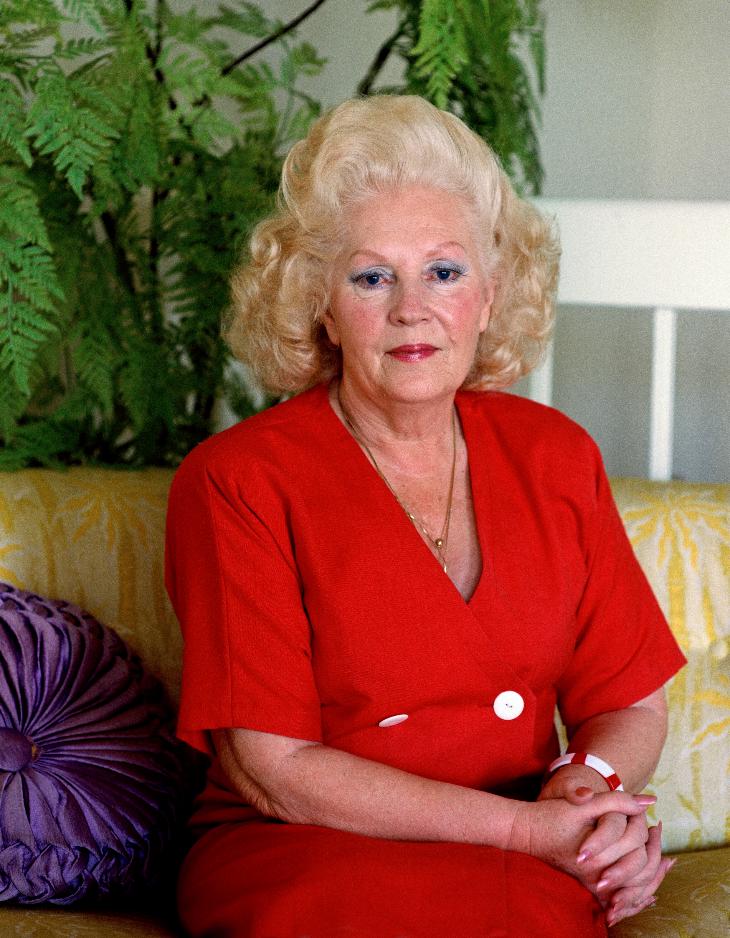 Irene Gut Opdyke
Angered after seeing a Nazi officer murder a Jewish baby, Opfyke became an active participant in the fight to save Jewish lives. For months, she would gather leftover food and smuggle it through the barbed wire fences and started smuggling Jews out of the ghetto into the forests.
One of the senior army majors promoted her to be his housekeeper in a villa, which had been taken over by the Germans. It had a large cellar where Opdyke hid 12 Jews who were due for deportation to the gas chambers. They assisted with her responsibilities and came out of the basement each day.
“When the old German major came home early one day and discovered them hiding there, he told Irene that he would stay quiet and keep them safe on one condition: that she agree to be ‘his - and willingly, too.’ She did it, despite the horror (‘not just because he was an old man’), because, as she put it, ‘she had 12 lives depending on her.’”
Davis continued: “She made an incredible decision; the horror of what she endured, and the unthinkable situation she placed herself in…the idea of a young woman carrying that kind of responsibility is something I still can’t quite get my head around…”
There are so many stories, each filled with a kind of bravery that is hard to fathom.
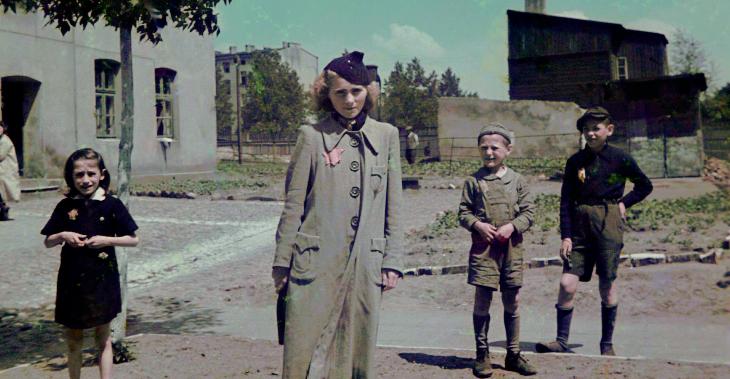 Woman with Star of David
“One woman hid a Jewish boy in her couch, and she gave him codeine to help suppress a cough. One day, the German soldiers were in her house, and one said that he was going to shoot up the couch to make sure no one was hiding there. Thinking fast, the woman replied blithely that that was fine with her, so long as he first signed a piece of paper guaranteeing that the Nazis would replace the couch once they had destroyed it. The German backed down and the soldiers left.”
The smaller, quieter details also linger in Davis’ mind.
“Stories of Jews darning all the socks in the house of their rescuers because they knew that the woman in the house didn’t like to do that task, and it was something, however small, they could do to repay them. Another woman describes that she and the Jews she rescued set aside one hour - and only one hour only - every day to talk about food, because the rest of the time it was too painful - ‘and who remembers what a banana is? Is it food?’”
Another rescuer talks about the quotidian details of life, like how the Jews would go to the bathroom.
“Since the outhouses were outside, this woman had to carry a bucket of waste downstairs from the attic and empty it outside every night, and one night the bucket spilled all over her. But again and again, rescuers describe an astonishing moral calculus — only one of them actually says it in the film, but many said they realized that the risk was simple - death. And since they would be killed for harboring one Jew, many decided, ‘If they kill us for one, they’ll kill us for two,’ and so, took in even more people. As one said, ‘When the sister came - well, why not? And that’s the way it went - until there were 37 people.’ Those lines have never left me.”
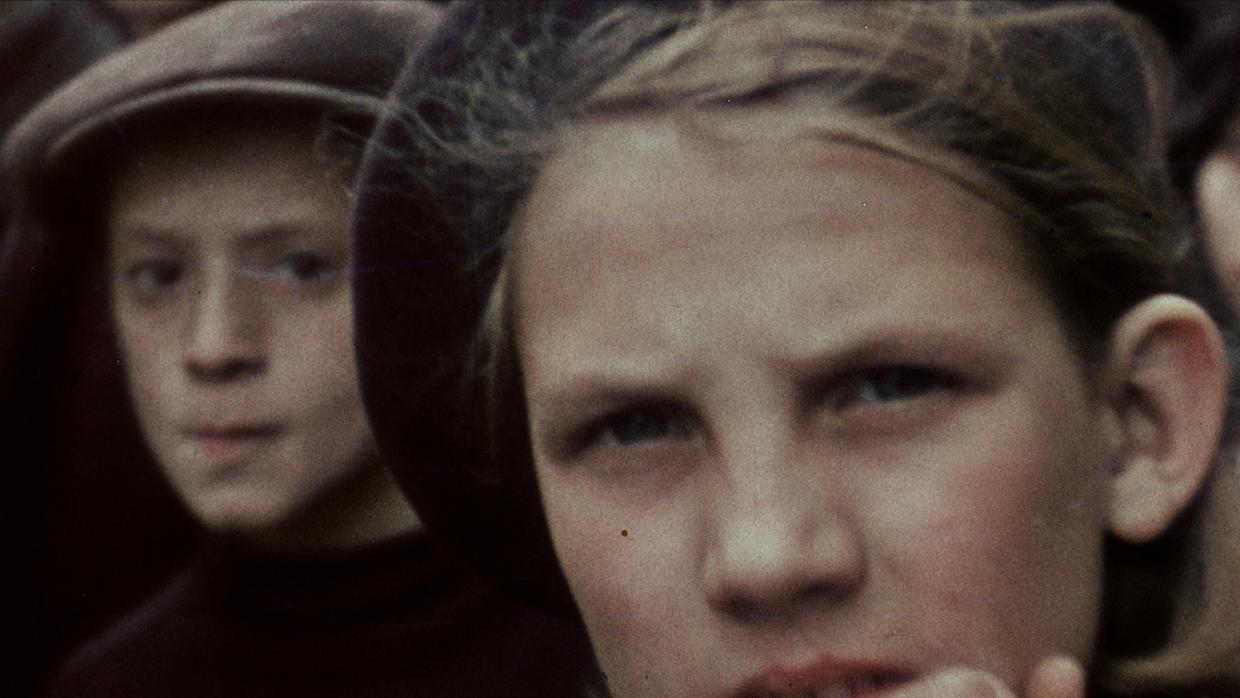
Davis was stunned the first time he saw the portraits of these rescuers, simply by the fact that they were in color. “I had a very basic but powerful realization: the Holocaust did not happen in black and white, it happened in color.”
Especially with their archival research work, Davis and his team focused on finding color footage of ordinary Europeans doing ordinary things in the 1930’s and ’40s — swimming in lakes, riding motorcycles and sitting in cafés.
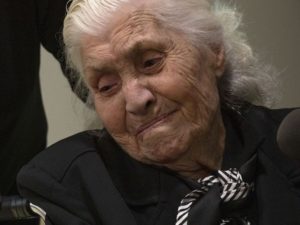
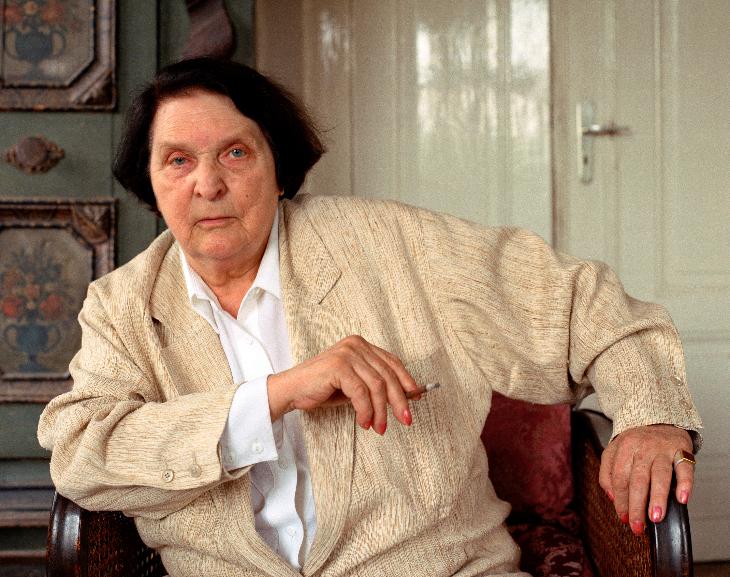 Maria Countess Von Maltzan who is featured in the film
“It was important to locate as much actual color material as we possibly could. I wouldn’t claim that we unearthed anything earth-shatteringly new, but I do think the approach was new: an attempt to bring this history to life in the most immediate, real way possible. That goal guided everything we did, from the research through the archival selections, to hiring the finest actors we could find to read these incredible testimonies.”
In the documentary, Yad Vashem, Israel’s Holocaust museum, appears both visually and in the memories of some of the rescuers.
“That felt important; to acknowledge the place where so much of this remembering and honoring is being done. In fact, the title of the film owes itself to a quote from a former director of Yad Vashem, who tells one of those who had saved Jews, when he was downplaying his accomplishments: ‘All of you say the same thing – but if that’s true, why didn’t everybody do this ordinary thing?’”
The museum has always been a kind of touchstone for Davis and his team, even if they didn’t work directly with their present-day staff in making the film.
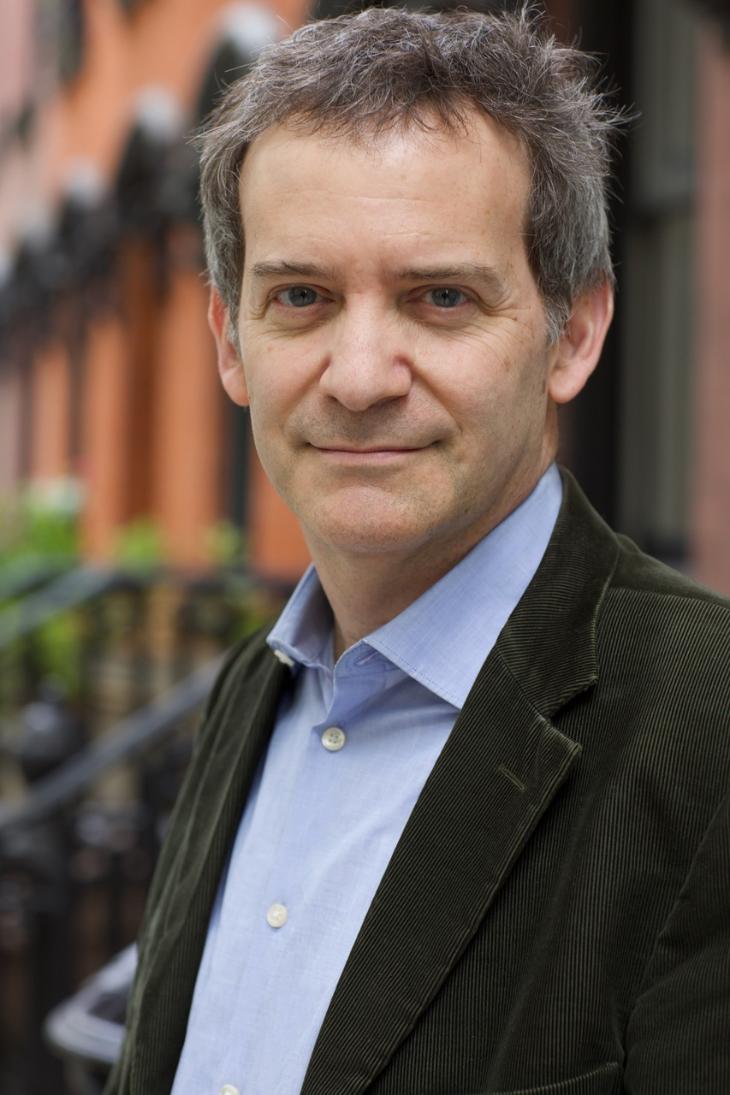 Filmmaker Nick Davis
“As the central repository for so much of this history, and in particular for the stories of the Righteous Among the Nations, their work in identifying and honoring rescuers created part of the framework within which we were operating. We’ve since learned that the film will be housed in Yad Vashem’s archives, which is incredibly meaningful to us. In a way, it feels like bringing these stories back to one of their primary homes.”
Davis hopes audiences of all religions will be immensely inspired after seeing the film.
“At a time when so many of our institutions, our politics, and our online lives seem dedicated to dividing us into starkly opposing teams — often based on nothing more than accidents of birth — I hope audiences see these stories as a reminder of our shared humanity.”
He continued: “These are stories of people who chose to help other people who were, in many ways, ‘different’ from them — religiously, culturally, nationally — and yet felt a deep obligation to act. Why? Because what divides us isn’t nearly as important as what unites us.
“We’re here for a really short time - I hope the film gets people to consider some of these issues and be reminded of the essential sameness of all human beings.”
“This Ordinary Thing” will premiere at the Miami Jewish FF Premiere on January 28, 2026. The film will also have its VOD release on March 31st.









Unfortunately they were not enough people to do the right thing, most of the righteous gentiles are talked about in Yad Vashem and get a honor
Thank you for sharing stories of courage concerning people who are risking their life to be able to save other lifes.
Thank you for sharing. I've seen other movies. And read books about this. And never get tired of people being able to escape. Even people on my Mom's side of family. Who may be among them.
It’s remarkable to hear there there were decent people that sacrificed their lives for others and common decency
There should of been more decent people like them
Thank G-D for ordinary, decent people.
‘Rescuers: Portraits of Moral courage During the Holocaust’, by Gay Block and Malka Drucker, is the source of the photograph of the rescuer. The exhibit and accompanying book covered this worthy topic decades ago.
The organization, Jewish Foundation for the Righteous, has told the story of these brave rescuers for many years. The organization helps provide financial support to the rescuers and honors their courage and sacrifices. The organization's website, http://www.jfr.org, contains a wealth of information about these brave people who risked their own safety and that of their families in order to save Jews during the Holocaust. The Slomo and Cindy Silvian Foundation, Inc. - of which I am the President - has been a proud supporter of Jewish Foundation for the Righteous for many years.
What a powerful topic! I'd like to know more about this, hear more stories. Thank you!