







 Those Shameful Thoughts and What They Really Say about You
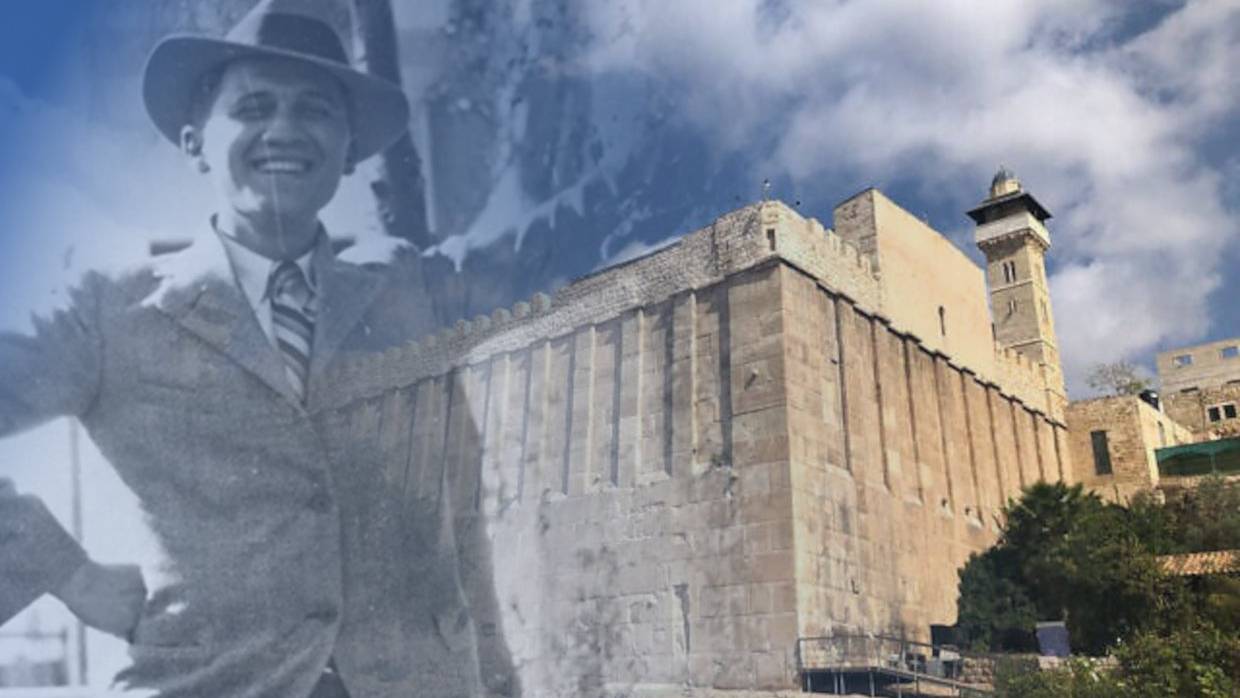





Surprising his non-religious family, Memphis-born David Shainberg, 23, left Wharton School of Business to learn Torah in the Land of Israel in 1928.
Journalist Yardena Schwartz’s “Ghosts of a Holy War” brings to light the 1929 Hebron massacre when inflamed Arabs murdered 67 Jews, rampaging their homes and synagogues.
Schwartz shares the story of 23-year-old Memphis-born David Shainberg, who was a student at Hebron’s famed Slabodka Yeshiva.
Long before Jewish outreach took off, Shainberg was inspired by a Rabbi Georges Baccarat, a charismatic French Hassid who inspired him to leave the Wharton School of Business in order to devote himself to Torah study. This was an unusual choice. Shainberg's parents, proud but not particularly observant Jews, were not pleased with the change in their son, especially after he left for Palestine.
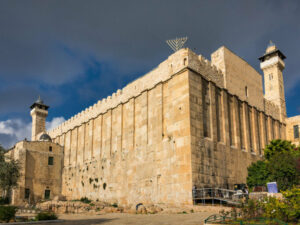
Hebron in those years had a tiny Jewish community who lived amid 20,000 Arabs, the mostly Sephardic Jews occupying a locked and walled one-acre space, which Schwartz says was Palestine’s only medieval-style ghetto.
“They (Shainberg’s parents) didn't really understand his transformation or why he wanted to leave Memphis,” writes Schwartz. In the ten-page letters he sent home each week, Shainberg tried to reassure them. “He would write to them about the yeshiva, his life, and his classes. He really wanted them to have the same enthusiasm for these teachings,” said Schwartz.
He also expresses his deep love for the yeshiva and its students, whom he describes as young men of “the highest imaginable” sort. “I thank God every minute of the day that He brought me to the yeshiva here in Hebron. Here, not only can I best acquire the knowledge which I seek, but I am in a thoroughly Jewish atmosphere and on holy ground.”
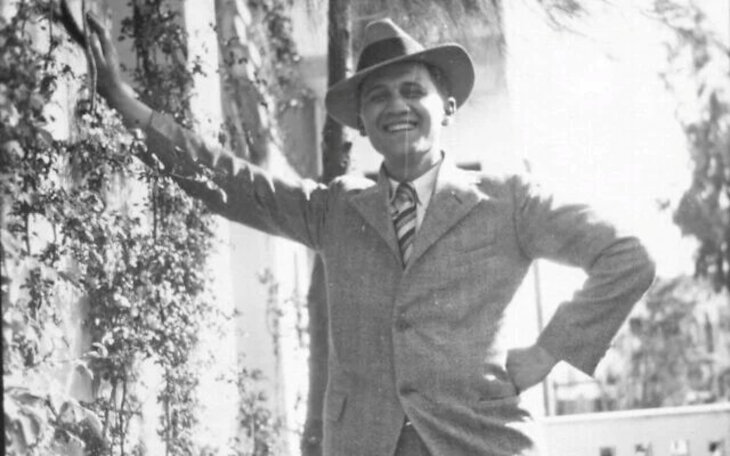 David Shainberg, shortly after arriving in Palestine, 1928 (Courtesy of Shainberg family)
The love was mutual. The only student at the yeshiva from a relatively secular background, Shainberg was widely admired by his teachers and fellows. “They admired him for turning his back on the wealth that awaited him in Memphis to devote himself to the Torah,” writes Schwartz.
Shainberg reciprocated, helping his fellow students using money his father sent him for his own upkeep to create an anonymous charity fund on their behalf. “No one would discover that David was the one behind it until a year later when it was too late to thank him,” writes Schwartz.
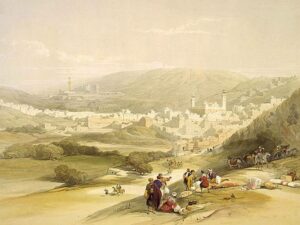
It wasn’t just the yeshiva that Shainberg loved; it was Hebron itself, which, because of its cool mountain air and graceful hills and valleys, was one of the Holy Land's loveliest spots.
“Hebron,” wrote Shainberg “is paradise itself. It would require your imagination to picture a Garden of Eden any more beautiful.”
It wasn’t just scenic—it was safe. Amazingly, in that era Hebron was widely considered to be the safest place in Palestine, a point which factored into the yeshiva administration's decision to relocate there from its previous home in Kovno, Lithuania.
The safety wasn’t absolute. Even then, Arab youths regularly pulled beards, threw stones or cursed at the town’s Jews who they, writes Schwartz, “treated as an inferior class subservient to the city’s Muslim majority,” In time, yeshiva staff succeeded in uplifting that relationship considerably to a friendlier and more respectful footing.
In one of his letters, Shainberg describes how that happened.
“Friendly relations started in the following manner,” he writes. “A young Arab pelted the Rabbi’s home with stones—injuring two members of the family and causing considerable damage. He was arrested and brought to trial. The Rabbi went before the judge and pleaded that the culprit be set free. Ever since then, there has been no trouble whatsoever, and the Arabs treat the yeshiva students with the utmost respect and courtesy.”

In his letters, Shainberg describes Arab Sheiks dancing alongside the rabbis and yeshiva celebrations, and yeshiva students attending Arab celebrations and even studying Arabic to better understand their neighbors.
That would end on the so-called Black Sabbath of August 23, 1929, when 3000 Arab men and boys went on a killing rampage, murdering 67 Jews, among them David Shainberg.
In one of the books’ most chilling sections, Schwartz describes Shainberg’s last day. Knowing that trouble was afoot, Shainberg joined his yeshiva friends at the home of one of their rabbis. Pushing heavy furniture against the door, they recited Shabbat prayers. “At first the furniture kept the mob out until they discovered they could tear the shutters off the windows,” writes Schwartz.
Shainberg and the others fought valiantly but they were outmanned and outgunned.
The massacre made headlines around the world but Shainberg’s name wasn’t included among the dead. Still, the family sensed that something was terribly wrong. On the night of the murder, neighbors reported seeing a shadow moving through their home with lights going on and off. “They called the police because they thought someone was burglarizing the house,” said David’s grand-niece Judy Green. “My uncle’s spirit was at their home when he passed away.”
The loss was devastating. “When you have someone so special, and he is destroyed in that way, it’s hard,” said Green. “David was brilliant and handsome. He had the world at his fingertips. Everyone’s hearts were broken,” said grandniece Lisa Kaufman.
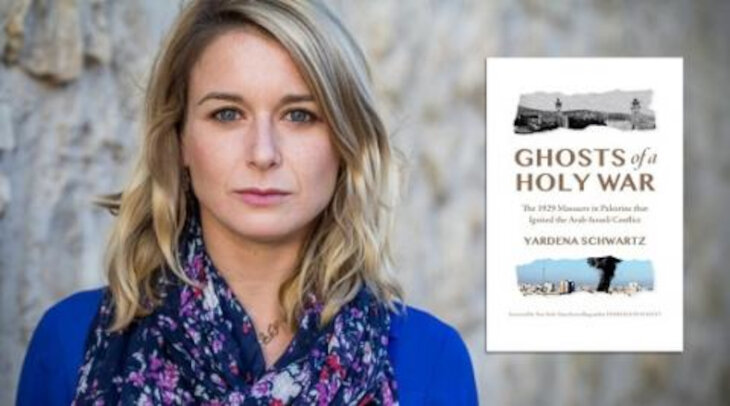 Yardena Schwarts (Yair Golov)
As most people did in those days, the family tried to bury their hurt, hardly speaking of their lost loved one. “I didn’t hear a lot of stories,” says Green. Yet even Shainberg seemed to hover over his family, several of whom named their children after him and followed his spiritual path, including Green, who eventually made aliya.
For more than 80 years, David’s letters and a diary sat in a box until another great niece, Jill Notowich, stumbled over them while helping her mother, David’s niece, clear out her attic.
“They were in a white box that folded onto itself,” she recalls “On the box in handwriting was a note that said ‘Don’t throw away.’”
Notowich didn’t. Realizing that she had found a treasure, she scanned each one, eventually storing them in an archival library vault and also sharing them with family.
“We were blown away by the beauty of his enlightenment and calling,” says Notowich. Believing that she had found material for a book or documentary, she reached out to Yossi Klein Halevi, who connected her to Schwartz who shared her feelings. “It was tragic to read about how incredible this young man was,” says Schwartz. “How many people he might have touched had he been given the chance.”








Follow this link for the full text of the (out of print)
"The Martyrs of Hebron by Leo Gottesman"
The Martyrs of Hebron by Leo Gottesman - FULL TEXT | The Jewish Community of Hebron
Thank you so much for sharing this important story!
Regrettably, the Jews trusted their arab neighbors, wanting to believe they would not be harmed. Most arabs hate Jews. But those Jews in hebron deluded themselves and would up being slaughtered. Pity.
Ther was an additional problem then of someone who riled them up by stating that we own the land. Big problem. Jews are supposed to keep a low profile, and only in case of real self-defense need should we make any "noise".
I want to say this!
You ended this beautiful, inspiring and poignant piece with the question, how many lives he would have touched had he lived?
Thanks to your testimony, he is doing this right now to all of us!!
My uncle, a’h, Rabbi Leo Gottesman from Jersey City, had been a student in Chevron the year before and he wrote a slim volume called The Martyrs of Chevron where he memorialized the victims. I will try to locate my copy ( it’s out of print) and send a copy of what he wrote. His younger brother, Harold, a’h, was a student at the yeshivah then, but had gone into Jerusalem to shop. On his way back, he sensed something was wrong with his fellow Arab passengers and he ran away, saving his life. Rabbi Leo Gottesman’s son,Rabbi Meir Uri Gottesman, himself a published author of Judaica novels, is in his early eighties and lives in Toronto. I think he would welcome hearing from the author. I hope to locate the book, but you could also ask Meir Uri if he could copy the relevant chapter.
Wow! I would love to read his letters. Are they available to read?
Amazing!