




 On the Ground in Venezuela



9 min read


The Webers hid on a German farm for two years, and were separated upon arrival in America.
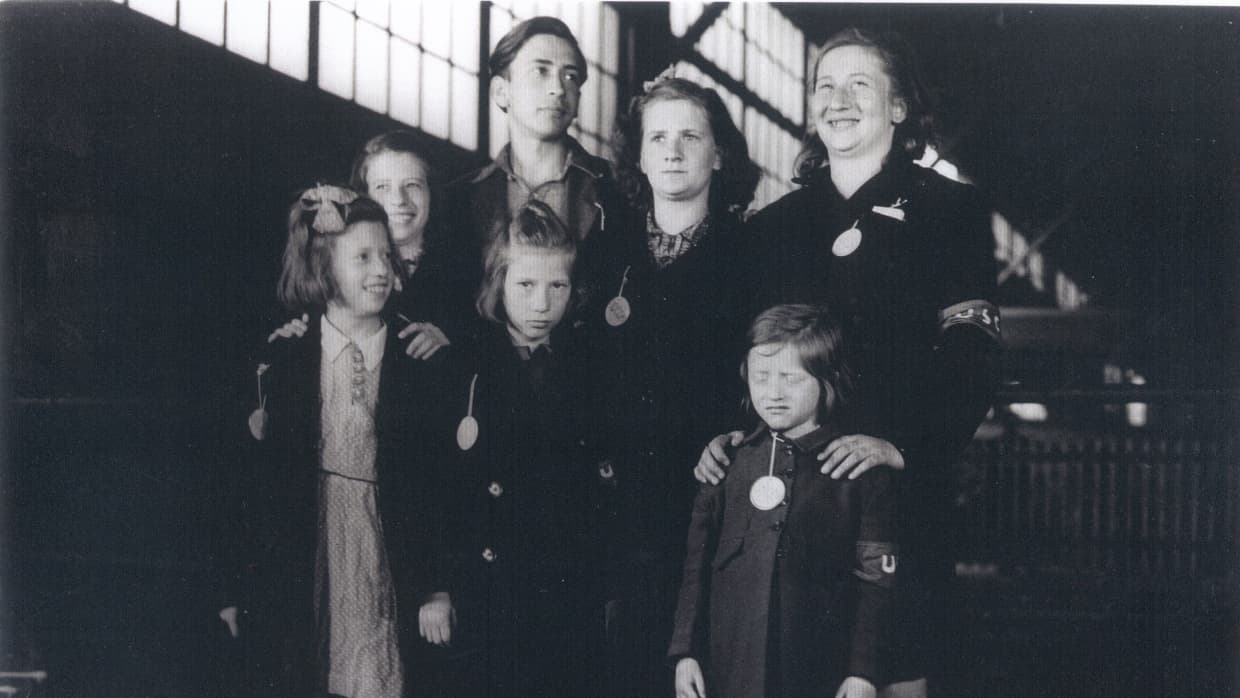
Eighty years ago, seven Jewish children boarded the first boat out of Bremerhaven, Germany, bound for New York. The Weber siblings were the only family to leave together, without being separated. Alfons, Senta, Ruth, Gertrude, Renee, Judith, and Bela managed to evade capture and stay alive.
Born in Berlin to a German Catholic father and a Hungarian Jewish mother, the siblings were raised Jewish.
Their mother, Lina, had been part of the Jewish resistance until the Gestapo arrested her and sent her to Auschwitz, where she was murdered. Left without their mother, the seven children, ages 3 to 15, were hidden for two years on a German farm by Paula and Arthur Schmidt, a kind, courageous couple who risked everything to save them.
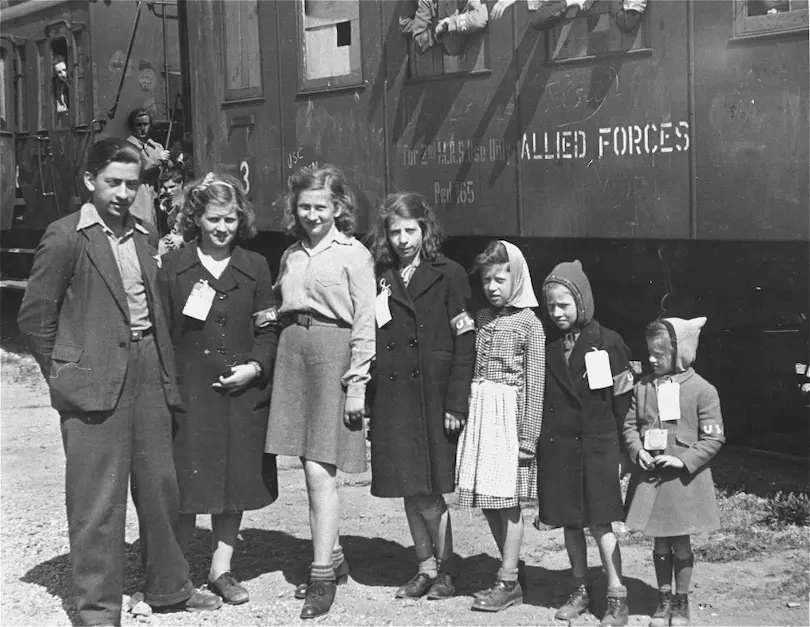 The Weber Siblings, 1946, Bremerhaven, Germany
During that time, the children were cut off from their father, Alexander, and had to deal with immense hardship, including hunger, sadness and narrowly escaping bombing raids.
Even though Ginger Lane (birth name Bela) was just a little girl since she last saw her, mother, she still remembers her presence. “My memories of her are limited and fragmentary, as they tend to be when you are very young and the world around you is in chaos,” she told Aish.com.
But certain impressions remain vivid.
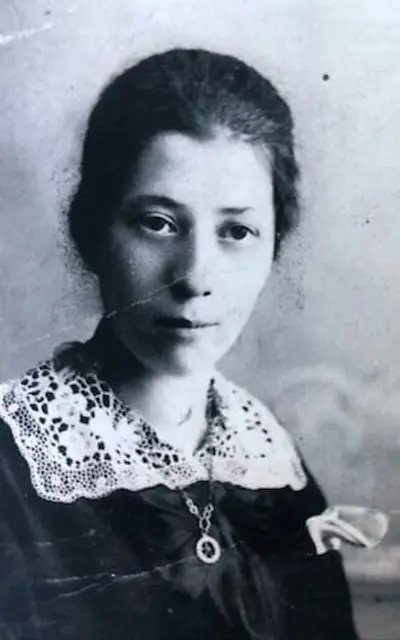 Lina Weber, Germany, 1933
“She had very dark hair and a small, delicate face; a woman of tremendous energy — social, fearless, and deeply connected to her community,” said Lane, who is the youngest sibling. “She played cards with neighbors and maintained a wide circle of friends. Many of them were fellow Hungarian Jews whom she helped smuggle out of Berlin, working quietly and courageously for the underground.”
Describing her as a “dynamo” who carried “no visible fear of authority,” Lane said her mother would gather her children for any task that was needed.
“She called us her ‘swallows,’ bringing us along on everything she did, foraging for food, securing clothing, and doing the quiet, dangerous work of protecting people. She was doing all of this at once, and she did it with confidence and strength.”
Lane also remembers her time hiding on the farm, playing alone in the fields, digging for potatoes and reaching for fruit in the trees.
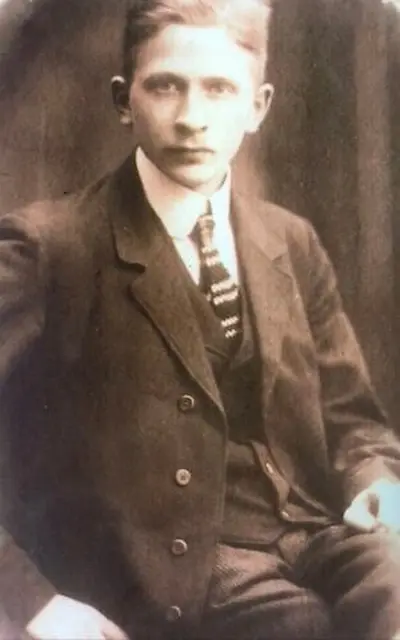 Alexander Weber, father of the Weber siblings. Germany, c. 1933. He was incarcerated in German concentration camps but survived the war. He was not permitted to join his children in the US until a decade after the war’s end.
“It was both nourishment and occupation, because I had no one to play with. I was always alone, and I remember asking myself, over and over: Why am I so alone? Where is Mama?’”
Lane was very fond of Arthur Schmidt. “He was the one who took us out to his farm — really a fruit orchard — because he understood that we could not remain safely in Berlin, and that our father could not care for seven children. To me, Herr Schmidt was like a grandfather, or a father. He was warm and outgoing, and he was, in the truest sense of the word, our rescuer.”
Arthur’s wife, Paula, was more reserved. “She provided us with bedding and clothing, but she lived in understandable fear of what discovery would mean. She kept her distance from us, and we from her.”
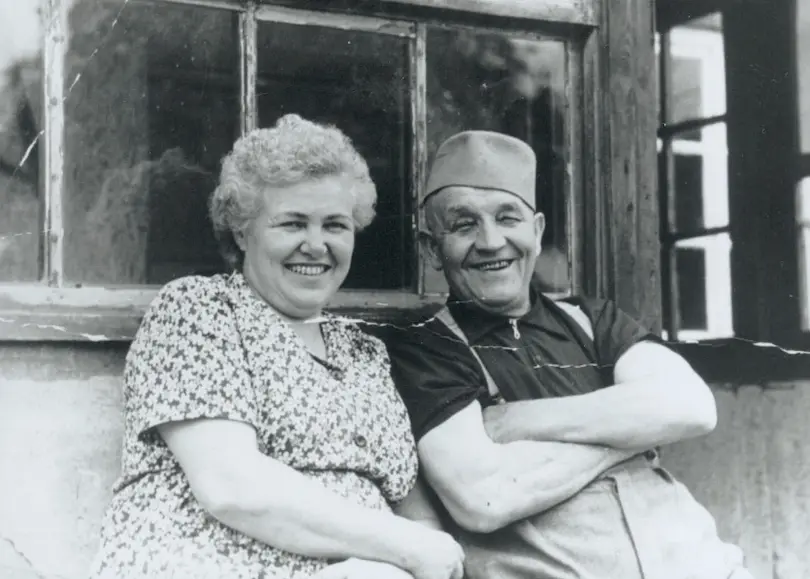 Paula and Arthur Schmidt
She added: “There was no laundry done for us — we managed that ourselves. My sisters and I have talked about this over the years, and none of us can fully account for how meals were prepared or who provided them. That part simply does not live in our memories.”
Schmidt saved the Weber siblings not once, but three times.
“The first was bringing us to the farm in the first place — removing us from Berlin when remaining there meant certain danger. The second was returning us to Berlin when he learned that Russian forces were advancing directly through our village in the final weeks of the war, two weeks before Germany’s surrender, during what became known as the Battle of Seelow Heights. He knew they would destroy everything in their path and acted swiftly to move us to safety.”
The third time was perhaps the most dramatic.
“Back in Berlin, a bomb scored a direct hit on our building. We had taken shelter in the basement, which had been converted into a makeshift bunker, but the blast left us buried under rubble with no way out. My brother, away at work, returned to find the building destroyed. He must have known instantly where we would be. He found Schmidt, and the two of them dug us out with their hands.”
Lane is sad she never got the chance to thank the couple for their assistance.
“I believe one or two of my sisters did write to them. The Schmidts were not looking for thanks, they were a very ordinary German couple who did what they did because it was the right thing to do."
When the siblings arrived in America, they were quarantined in the Bronx for one month to ensure they were not carrying communicable diseases. “Some of us still had lice, which, given everything we had been through, was hardly surprising,” Lane said.
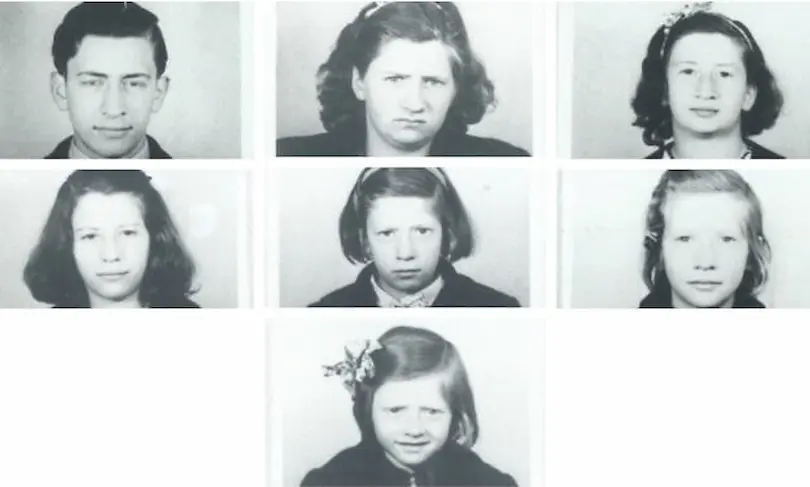 Weber siblings’ i.d. cards from Germany, 1946. Top row from left: Alfons, Senta, Ruth. Middle row from left: Gertrude, Renee, Judith. Bottom: Bela (Ginger).
“After that month, we boarded a train to Chicago and were brought to the offices of the Jewish Children’s Bureau. There was ice cream and photographs, and then we were placed into separate taxicabs and driven — each of us alone —to different foster homes.”
Lane got adopted soon after by Rosalynde and Joshua Speigel. (Her first name was then changed from Bela to Ginger.) While the couple were interested only in adoption, not foster care, the fact was Alexander, their father, was still alive.
“Our father was still living in Berlin —very much alive. When we left Germany, we had been instructed to declare ourselves orphans because that was how we were able to leave as early as May 1946. I carried that secret faithfully, not realizing that the Jewish Children’s Bureau already knew. The Speigels knew. Everyone, it seems, knew — but we all maintained the quiet pretense, and as the youngest, I was not told many things.”
When the Speigels asked if I wished to be adopted, Lane said yes.
“I was somewhere between six and a half and seven years old. The process was entirely legal; my father had to sign papers formally releasing his parental claim before the adoption could proceed. The Speigels took me downtown to meet a lawyer, a kind man and a friend of theirs, and I signed my naturalization papers. I was happy. I was going to be their daughter — their legitimate daughter.”
Because she was having issues adapting to her new life, the Bureau misguidedly advised that the Speigels should cut off the connection Lane had with her brother and sisters.
“They did the very best they could in finding seven Jewish foster homes for seven Jewish children,” Lane acknowledged. “To bring any refugee to America, you must have an American citizen sponsor them and formally assure the government that they will not become a financial burden on the state. The Jewish Children’s Bureau stepped forward to cover that responsibility. In a technical sense, we were at their mercy — but we were profoundly grateful that anyone at all was willing to sponsor us.”
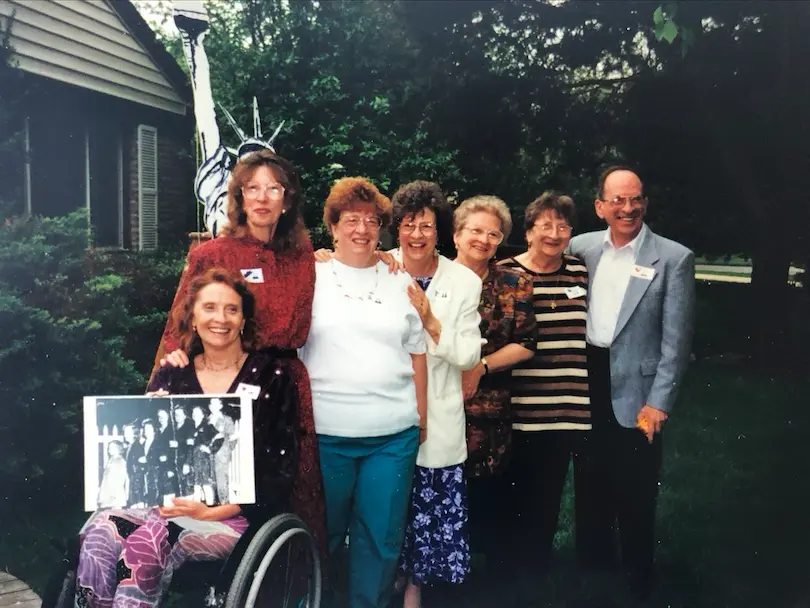 The Weber Siblings reunited in 1996, on their 50th anniversary landing in NY
Fortunately, decades later, the siblings were able to reunite for their 40th New York arrival anniversary and remained close ever since, until one by one, they passed away.
In 2025, Lane’s daughter, Beth directed/produced “UnBroken,” a documentary on the Weber siblings and the Schmidts’ acts of bravery. Over three years, she conducted interviews with family members, historians, and museum curators, putting together the events that happened in Worin, Germany, where the Schmidt’s farm was.
“The film communicates the depth of gratitude we carry for every upstander along the way — every person who chose conscience over fear, and whose choices made our survival possible,” Lane asserted. “I would invite anyone who wants to understand what all of this has meant to watch and feel it for themselves.”
Beth was thrilled with how well the documentary has been received.
“On October 8, 2023—less than 24 hours after the massacre in Israel—’UnBroken’ had its world premiere. The timing was surreal. One week later, it won Best Documentary Feature Premiere. That single moment ignited a 40-city tour, a national theatrical release and a Netflix debut on Yom HaShoah, Holocaust Remembrance Day. Within 24 hours, the documentary soared to #5 in the Top 10 movies in the U.S. on Netflix. To date, over 1.5 million people have streamed our film.”
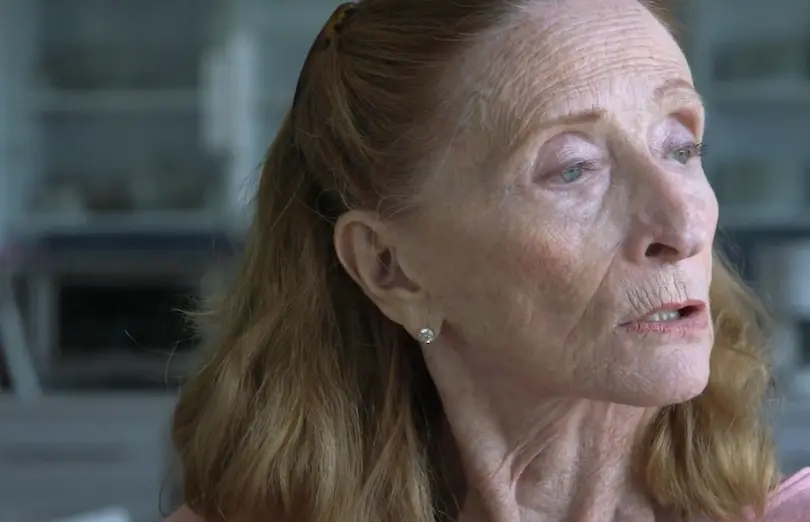 Ginger Lane
Beth views her film as a sustained act of gratitude and witness to the heroism of Paula and Arthur Schmidt.
“What is remarkable is that the Schmidts never spoke of what they had done — not even to their own son. They took their secret to their graves. When I traveled to Wörin and met townspeople whose parents had known the Schmidts, I encountered people who had long suspected the truth and had quietly, faithfully kept that secret as well. It was a humbling reminder that moral courage can ripple outward in ways we never see.”
Attending the ceremony honoring the Schmidts in the Garden of the Righteous Among the Nations at Yad Vashem was an experience that Beth will always carry with her.
“As my Aunt Ruth says in ‘UnBroken,’ ‘when you help others, you help yourself.’ The Schmidts could go to their graves knowing they had done right by their fellow human beings. That is no small thing.”
She continued: “Of course, we turn to the Talmud: whoever saves a single soul, it’s as if he had saved an entire world. And the question they faced is no longer theoretical. We are confronted with its modern equivalent every single day — in America, in Israel, and across the world. The obligation to protect the vulnerable, to choose conscience over self-preservation, is perennial.”
Ginger Lane and her daughter Beth invite you to visit the Weber Family Arts Foundation to learn more about their mission and access their educational toolkits. You can see the documentary, “UnBroken” on Netflix and Amazon Prime.














What happened with the dad?
What a great story.
THANK YOU!
It is so true that when you help your fellow human being you actually help yourself.