

 The Scientific Revolution, Genesis and Jewish Mysticism







GOOD MORNING! This upcoming Friday night, September 25th, begins the seven-day holiday of Sukkot (eight days outside of Israel). This holiday is unique in many ways, not the least of which is that it is known as “zman simchateinu – time of our joy.” Although the word “joy” is sometimes used interchangeably with the word “happy” they are actually very different words.
Happy is a description of a momentary state of being; how you are feeling at a given moment. A person can be happy, sad, angry, jealous, etc. These are generally outcomes caused by a specific event or occurrence. I am reminded of the quote, “Some people bring happiness wherever they go; and others whenever they go.”
However, joy is a state of mind that comes from lasting relationships, working towards meaningful goals and achievements, and living with a set of values and ideals.
Of course, a joyous person will also experience happiness more often. But this happiness is derived from being able to focus on the simpler pleasures in life; a great cup of coffee, a walk on the beach in the early morning, or experiencing a spectacular sunset.
People often believe that they “will be happy” when they get rich, marry the right person, have an expensive car, or a ten-million-dollar home. Obviously, this is terribly wrong.
Research actually shows that the “sweet spot” for being able to experience happiness is a household income somewhere between $90,000-$120,000. Beyond that threshold, increases in income do not produce commensurate increases in personal happiness (N.B. When I first looked at this metric six years ago the figures were $60,000-$95,000).
In other words, things and external situations do not magically produce happiness; if you are unhappy when single, you will not suddenly become a happy person when in a relationship. Being happy comes from finding internal joy, and this is the true message of Sukkot.
The Torah tells us, “The festival of Sukkot shall be to you for seven days when you gather from your threshing floors and your wine cellar. You shall rejoice in your festival [...] for the Almighty will bless you in all of your produce and in all of the work of your hand and you shall be completely joyous” (Deuteronomy 16:13-15).
The name “Sukkot” is derived from the Torah mandated obligation to live in a “sukkah – a temporary outdoor hut,” which symbolizes that the Almighty sheltered the Jewish people when they left Egypt.
“So that your future generations will know that I sheltered the Children of Israel when I brought them out of Egypt” (Leviticus 23:43).
The word sukkah comes from the materials that we use as a temporary roof to cover these huts – the schach (meaning to shelter). We are enjoined to live these seven days in our sukkah: to eat, sleep, and generally try to spend as much time in it as possible.
Sukkot is celebrated as a harvest festival, a time when we look at all the “fruits” of our labors. It is a chance to step back and appreciate all that we have achieved through our hard work. But it is also a time to appreciate all the good that the Almighty has bestowed upon us.
It is no accident that farmers – people who work the earth – are amongst the most religious of people; continually trusting in the benevolence of the Almighty (see Tosfos Shabbat 31a). They take a perfectly good seed that could be eaten and they stick it in the ground not knowing whether there will be rain, drought, floods, or pestilence. They put forth hard work for with no guarantee of return. They trust in the Almighty for their food and their very existence.
The mitzvah of dwelling in the sukkah teaches us that our lives are totally intertwined with God. We often lose sight of this key element of our existence. We tend think that our possessions, our money, our homes, and our intelligence will protect us.
But during the holiday of Sukkot we are exposed to the elements in a temporary hut outdoors. Living in a sukkah puts life into perspective. Our possessions, and even our very lives are transient – and our corporeal beings are even more transient than our possessions.
Life is vulnerable. Jewish history has borne out the transient nature of our homes and communities. No matter how well-established, wealthy, and “secure” we have become in a host country, in the end it too has been a temporary dwelling. Our trust must be in the Almighty who sheltered us when He took us out of Egypt and continues to do so every day of our lives.
Sukkot is one of the “Shelosh Regalim – Three Festivals” (the other two are Pesach and Shavuot), where the Torah commands all Jews to leave their homes and travel to Jerusalem to celebrate at the Temple. For the last 2,000 years, since the destruction of the Temple, we’ve been unable to fulfill this mitzvah. (May we soon be able to fulfill this mitzvah once again in its entirety!)
In the times of the Temple, during Sukkot, 70 offerings were brought – one for each nation of the world – so that the Almighty would provide for them as well. The Talmud tells us that if the nations of the world understood the value of what the Jewish people provided them, they would have sent their armies to defend our Temple in Jerusalem to keep it from being destroyed!
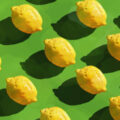
Aside from the mitzvot of eating and sleeping in a sukkah, we have another unique mitzvah on the holiday of Sukkot. The Torah informs us in Leviticus 23:40 of a special commandment for Sukkot: to take the “Arbah Minim – Four Species.” The four different species that we are commanded to take are 1) etrog – citron, 2) lulav – a branch from a date-palm, 3) hadassim – myrtle branches, and 4) aravot – willow branches.
As Sukkot is a harvest festival, it is only natural that we collect different things that grow and incorporate them into our prayer services on this holiday. In the prayer section known as Hallel we gather these four species in our hands and wave them in the four directions of the compass as well as up and down. There are several symbolisms to this waving; including the reminder that the presence of the Almighty is everywhere.
Still, we must try to understand why these four species are designated for this mitzvah.
Our rabbis teach that each one of these four species represents a different type of Jew. The etrog (citron) has both a fragrance and a taste and it represents those Jews who have both Torah wisdom and good deeds. The lulav (date palm branch) has a taste (from the dates) but no fragrance, so it represents those Jews who have Torah wisdom but no good deeds.
The hadassim (myrtle branches) have a fragrance but no taste, so they represent those Jews who have good deeds but no Torah wisdom. Lastly, the aravot (willow branches) have neither a taste nor a fragrance and represent those Jews who are lacking in both Torah wisdom and good deeds. I once heard from my father a beautiful lesson related to this concept.
My father pointed out a very interesting contradiction to this teaching. According to Jewish Law, if one is present at the precise time that another Jew passes away one is obligated to do “kriah” – a several inch tear of the outer garment that is over the heart (generally a shirt). This is similar to the kriah that mourners typically do after burying a loved one.
The great medieval commentator known as Rashi explains the reason for this. “There is no Jew who passes away that doesn’t have some Torah knowledge or mitzvot for which their soul is credited.” Therefore, when a Jew passes and one is present at the very moment when the soul leaves the body, a sign of grief is required, which is fulfilled by kriah.”
“If this is true,” asked my father, “How is it possible that the lulav represents the Jews without mitzvot or that the hadassim represent Jews without Torah knowledge or that the aravot represent Jews who have neither Torah knowledge or mitzvot? Rashi just explained that every Jew has some Torah knowledge and some mitzvot!”
My father explained the contradiction with a fundamental principle of Judaism: “It’s absolutely true that every Jew has at least some Torah knowledge and some mitzvot. But the message that we learn from the four species is that there is also a taste and a smell related to the study of Torah and the performance of mitzvot.”
Taste and smell are attributes that relate to how an item impacts something else positively or negatively. Unfortunately, there are many Jews who have Torah knowledge, but they may not impact others in a positive way. Likewise, there are many Jews who rush to do mitzvot, but sometimes it comes at the expense of others (I often see people rushing to prepare for Shabbat; meanwhile, they double park in the middle of the street and inconvenience everyone else because they are in a hurry to get their challah).
These people may have Torah knowledge and have fulfilled many mitzvot, but they don’t have the pleasant “smell” of the Torah or the beautiful “taste” of the mitzvot. Consequently, a person may actually have significant Torah knowledge and a multitude of mitzvot, but on the whole they are still represented by the “lowly” arava – the one species with no taste or smell.
But even with all our shortcomings as a people, on Sukkot we are commanded to bring all four species together as a single entity. To complete the mitzvah, we need all four of them to be held together at the same time when making the blessing. Thus, if any are missing there is no mitzvah.
The message here is very clear. We must recognize that each and every Jew is integral to the unity of the nation. Whether a person is as big a scholar as our teacher Moses, or as ignorant as a child who has yet to start school, all are a necessary component of the “body” of the Jewish people. If either one is not included in the group, we, as a people, are incomplete.
We symbolically bind together and recognize every Jew as an integral part of the Jewish people. Whether or not we agree with everything they do or how they comport themselves, if even one is missing, the mitzvah is incomplete.
Our people are one. We must do all we can to bind together, strengthen the Jewish nation, and create a joyous future!

I have seen great intolerance shown in support of tolerance.
- Samuel Taylor Coleridge
Dedicated in Deep Appreciation to
Sonia Moreno and her Family