




 The Laundromat and the Drunk Antisemite
9 min read
7 min read
7 min read
6 min read



5 min read


Judaism isn’t about winning or losing. There’s only showing up, growing, and doing better than you did yesterday.
I love football. Not just the excitement of big plays or the adrenaline rush of a last-second touchdown—I love the rhythm of the game. The structure. The way every moment, from practice drills to the championship, matters. The more I thought about it, the more I realized that living a Jewish life isn’t all that different.
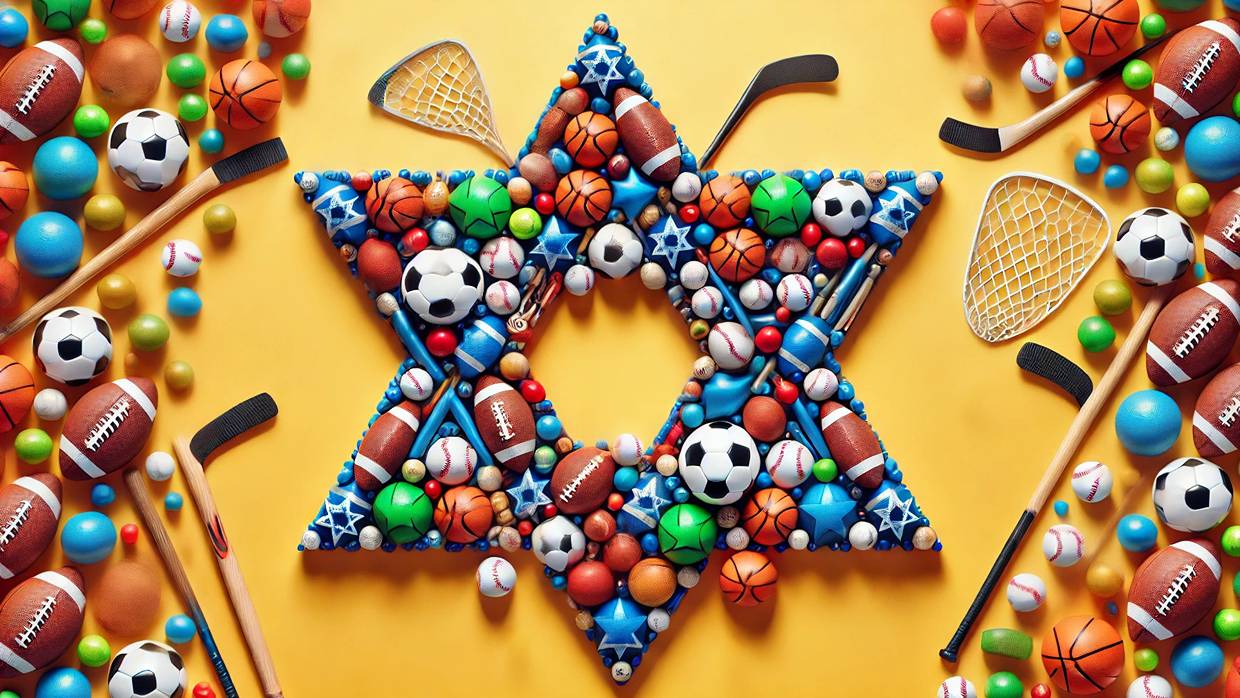
In fact, Judaism is the ultimate sport.
Every day, we show up for practice. Every week, we suit up for game day. And once a year, we play in the championship of all championships—the Super Bowl of the soul.
Let me explain.
Back in middle school, my classmates and I would play touch football with Rabbi B during breaks from class. But Rabbi B wasn’t just someone who taught us Talmud (Jewish rabbinic discussions on law, ethics, and tradition)—he taught us about ourselves. He helped us uncover our strengths and face our struggles.
Those games weren’t about winning or losing. They were about pausing, resetting, and refocusing our energies. Running across the field, calling plays, and laughing with friends wasn’t a break from learning—it was part of it.
In sports, even the greatest athletes spend hours practicing routines that look mundane to the untrained eye. The repetition isn’t glamorous, but it’s where champions are made.
Judaism gives us our own practice drills: daily prayer, mitzvot, acts of kindness, study, reflection. Some days, these rituals feel powerful. Other days, they feel routine. But that’s the point. The practice isn’t just about big moments; it’s about consistency, discipline, and showing up even when you don’t feel like it.
Just like athletes suit up for practice, Jewish tradition offers us ways to “suit up”—literally. We are commanded to wear:
These aren’t just ritual objects—they’re a spiritual uniform.
The beauty of Judaism is that we’re not expected to be perfect. We’re expected to show up.
And here’s the truth: even though I grew up in a traditionally observant home, my own Jewish practice has ebbed and flowed over the years. But that’s okay. It’s called practicing a religion, not perfecting one.
The beauty of Judaism is that we’re not expected to be perfect. We’re expected to show up.
But we don’t practice for the sake of practice. We practice to play.
That’s where Shabbat comes in. Shabbat isn’t practice—it’s game day.
Shabbat begins every Friday at sunset and lasts until Saturday night. It’s a sacred time to rest, reflect, and reconnect. Think of it like game day: the lights come on, the team gathers, and we take everything we’ve been working on all week and put it into action. We are taught to:
I’ve had Shabbat dinners that felt like championship victories—full of laughter and connection. And I’ve had Shabbats where I was distracted or going through the motions. But just like with sports, you don’t have to win every game.
The game isn’t about victory. It’s about showing up and doing better each time.
And the best part? We’re not playing to win. We’ve already won.
Shabbat isn’t about achieving anything. It’s about being.
If Shabbat is game day, then Havdalah is the post-game press conference.
Havdalah, meaning “separation,” marks the end of Shabbat. Just like athletes reflect after a game, Havdalah helps us process Shabbat—what we gained, how we grew, and how we’ll carry that into the week ahead. We make blessings over:
It’s a reflective pause before diving back into the hustle.
Every season has its biggest game. In the Jewish calendar, that’s Yom Kippur.
Yom Kippur (Day of Atonement) is the holiest day of the year—our Super Bowl. It’s a 25-hour period of reflection, prayer, and fasting. We stand before G-d, reviewing our personal playbook, reflecting on where we fell short and where we can improve.
You can’t “fail” Yom Kippur. The only way to miss the mark is by not showing up.
Many focus on fasting, the long hours in synagogue, and the seriousness of the day. But Yom Kippur isn’t about deprivation—it’s about clarity.
We’re not playing to win some cosmic scorecard. We’re playing to grow.
And here’s the best part: you can’t lose.
The beauty of Judaism is that there’s no “off-season.” After Yom Kippur, we jump right back into the cycle. We celebrate Sukkot (Festival of Booths), we dance with the Torah on Simchat Torah, and then we return to our daily practices.
The rhythm of Jewish life isn’t linear—it’s cyclical. We’re always practicing, always playing, always growing.
Just like those middle school touch football games with Rabbi B, life isn’t about winning every play. It’s about showing up, having heart, and leaving the field better than when you found it.
So here’s the takeaway:
There’s no winning or losing.
There’s only showing up, growing, and doing better than you did yesterday.
That’s what it means to live a Jewish life.














I! Love!! This!!! Thank you Rabbi Eric!!!!
Excellent observations from Rabbi Eric Leiderman ! There’s no winning or losing.
There’s only showing up, growing, and doing better than you did yesterday.
That’s what it means to live a Jewish life. Congrats and best: stephen
I am making a good salary from home 7580 Bucks 9065/week , which is amazing, under a year ago I was jobless in a horrible economy.➤ PAYRICHE.COM
Refreshing and challenging and encouraging
The “suiting up” described is a practice of men only. How about a column that better speaks to women….
Women are encouraged to dress with tznius -- in a way that shows their self-respect.
I do dress in modest clothing, but there’s nothing specifically Jewish about that. Clothing that is bought from department stores is not comparable to ritual items worn by Jewish men.
Wow! Beautiful, meangful analogies. Wonderful article!