




 Indigenous Peoples Call Israel the World's Greatest Decolonization Story

6 min read


How one woman’s vision transformed healthcare in Israel and sparked a worldwide women’s movement that continues to save lives today.
With more than 300,000 members and supporters across the United States, the Hadassah Women’s Zionist Organization of America is the largest Jewish women’s membership group in the world. For over a century, its network has raised funds, built institutions, and mobilized women around a singular mission: the health and future of the Jewish people.
The results are visible across Israel. The Hadassah Medical Organization, with its two flagship hospitals in Jerusalem, is a cornerstone of the country’s healthcare system. The Tipat Halav (“drop of milk”) clinics—where generations of Israeli mothers have brought their babies for check-ups, vaccinations, and reassurance—are part of that same legacy.
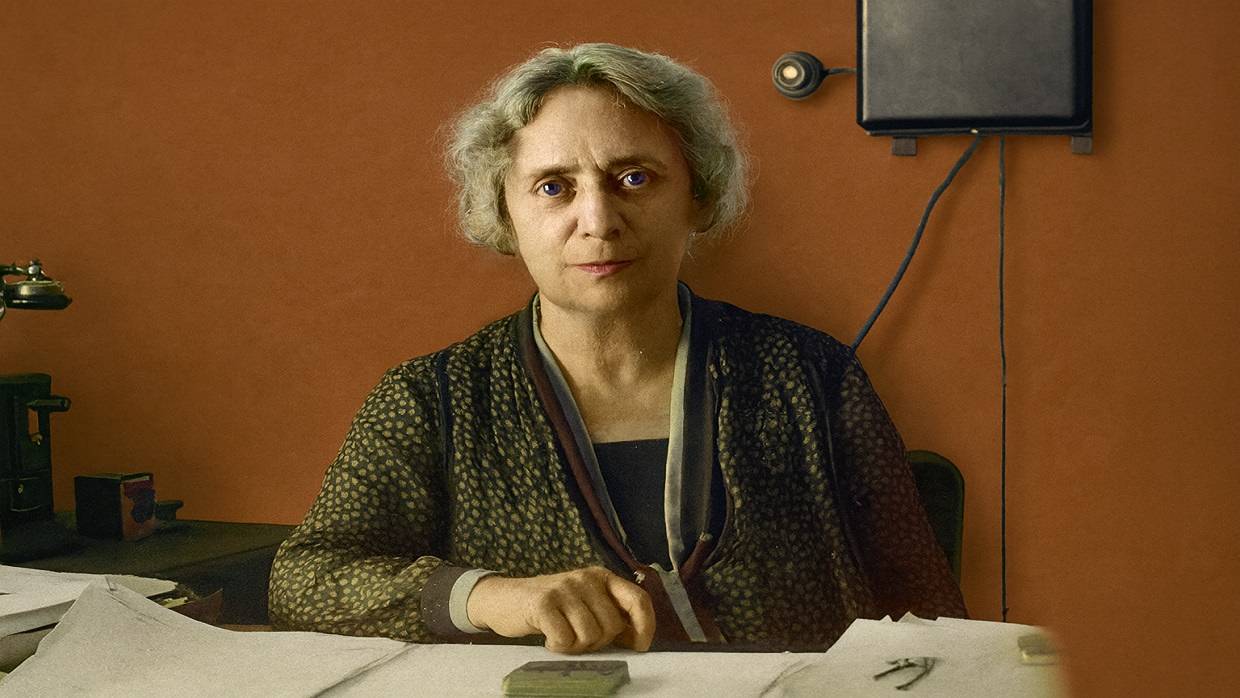
Yet all of this—the hospitals, the clinics, the global women’s movement—can be traced back to one extraordinary woman: Henrietta Szold.
Labors of Love
Filmmaker Abby Ginzberg captures her story in Labors of Love: The Life and Legacy of Henrietta Szold, a documentary that blends archival footage, dramatic reenactments, and narration by Broadway actress Tovah Feldshuh. The film reveals how Szold’s vision, resilience, and capacity for leadership created an institution that changed not only the face of medicine in Palestine but also the role of Jewish women in North America.
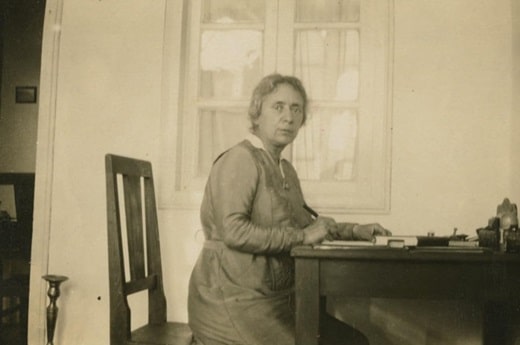
The title Labors of Love reflects not only Szold’s mission but also Ginzberg’s devotion to the film, which she worked on for two decades while producing other projects. Known for her award-winning documentaries on social justice, Ginzberg is distantly related to Szold and the granddaughter of Professor Louis Ginzberg, a central figure in Szold’s personal life.
Eldest of 8 Daughters
Henrietta Szold was born in 1860, at the start of the U.S. Civil War, the eldest of eight daughters—four of whom died young. Her father, Rabbi Benjamin Szold, a graduate of the famed Pressburg yeshiva of the Hatam Sofer, led a congregation in Baltimore where Henrietta grew up. Lacking a son, Rabbi Szold turned his brilliant eldest daughter into his study partner.
Like his daughter, Rabbi Szold was a natural social worker. In the late 19th century, during the peak years of Jewish immigration, he would often meet Russian Jews at the Baltimore docks, with Henrietta by his side. Though raised in an affluent German-Jewish environment, Henrietta felt a deep spiritual kinship with these Yiddish-speaking immigrants. In her early twenties, she founded a night school to teach them English and help them adjust to America—an unprecedented initiative that became widely imitated.
“When she encountered a problem, she took it upon herself to find a solution,” observes filmmaker Ginzberg.
Love and Loss
Although Szold longed for marriage and children, she never married. The film does not focus on this aspect, but historian Devorah Hakohen recounts in her biography To Heal a Broken World that while traveling in Europe with her father, Henrietta received a promising marriage proposal. She turned it down, unwilling to leave her parents.
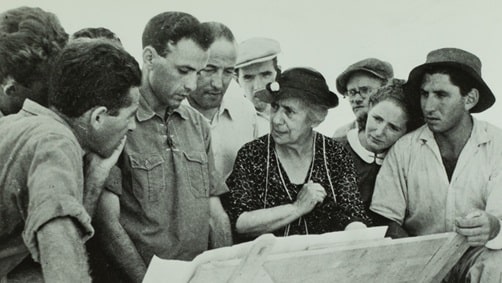
After her father’s death, Henrietta and her mother moved to New York to assist Ginzberg’s grandfather, Professor Louis Ginzberg, with his scholarship. Thirteen years older than him, Henrietta fell deeply in love, but her affection was not returned. When Louis became engaged to another woman, Henrietta sank into a severe depression.
This heartbreak altered the course of her life. “If Ginzberg had married her, she would probably have stayed home making matzo ball soup,” says the filmmaker. Instead, in what she called divine providence, the rejection redirected Henrietta’s energies toward Zionism. To lift her spirits, her mother took her to Europe and Palestine, where Henrietta was horrified by the conditions she witnessed. Jerusalem, she wrote, was “full of flies and beggars and eyes blinded by trachoma.”
Founding Hadassah
It was Henrietta’s widowed mother who urged her to act. On her return to New York, Szold founded Hadassah. The early organization, funded largely through cake sales, was always run by women and quickly attracted affluent, educated members. Its aura of dignity and class endured for generations—I recall how proud my own mother, a Holocaust survivor, was to attend the Manhattan chapter’s annual luncheons from the 1960s through the early 2000s.
Hadassah’s first major undertaking came in 1913, two years before World War I, when it sent two nurses from the U.S. to Palestine. At first, both Jews and Arabs resisted their efforts, but through patience and persistence, the nurses earned trust, reduced infant and maternal mortality, and fought widespread trachoma by inspecting schoolchildren’s eyes daily.

With the outbreak of war, the nurses were forced to leave, but after the armistice Szold returned at age 60, this time bringing 44 doctors and nurses. In 1921 she established the Hadassah nursing school and, inspired by France’s Goutte de Lait clinics, opened the first Tipat Halav well-baby clinic, staffed by Hadassah-trained nurses.
Saving the Next Generation
By 1933, when Hitler rose to power, Szold was in her mid-seventies. Together with German Jewish activist Recha Freier, she co-founded Youth Aliyah, a rescue effort that brought 7,300 teenagers out of Nazi Germany and Austria to Mandatory Palestine. Just as her father had once greeted immigrants in Baltimore, Henrietta welcomed these young refugees at the Haifa port. One survivor recalled how Szold, unlike others, asked his mother about her life in Germany and even her hobbies. Learning she was musical, Szold gave her a violin.

Though often exhausted, Szold continued working tirelessly until her death in 1945 at age 84. She was laid to rest on the Mount of Olives.
A Legacy That Lives On

Like nearly every citizen of Israel, I feel indebted to Henrietta Szold. Several of my own children were born at Hadassah, and, like all Israeli children, were weighed, examined, and vaccinated at Tipat Halav clinics. When my youngest son suffered a brain hemorrhage after a head injury, it was a Hadassah neurosurgeon who saved his life—all thanks to the vision of Henrietta Szold.
For those unfamiliar with her story, Labors of Love offers a powerful introduction to a life of purpose and devotion. And for the hundreds of thousands of Hadassah women in North America—and the millions touched worldwide by their efforts—it is a reminder that their volunteer movement is not only about luncheons and fundraising, but about carrying forward the legacy of one woman who turned compassion into a global force for healing.
May Henrietta’s memory be a blessing.







This destructive, ignorant no name needs to be in the hospitals to see their miracles.
I am a life member now for 60 years and still donate every year. Two of my Granddaughters are nurses in the hospital at Mt Scopus.
Self hating Jews are dangerous/
Hello all-
I strongly recommend an informative & educational book "Raqula" by "Ruth Gruber."
an entire chapter dedicated to Ms. H. Szold (may both Henrietta's and Ruth's name be of a blessing)
Shabbat Shalom,
Henrietta Szold had an awesome vision and from that came Hadassah.
TODAY'S Hadassah looks NOTHING like the one that she had envisioned. It supports gun control, abortion, and liberal political maneuvers.
It NO LONGER represents what she had envisioned, and has lost its' way. Another Jewish organization that has fallen to liberalism and a loss of faith in Gd's path for humanity...very sad indeed for women everywhere.
My mother, born in 1910, was national secretary of Junior Hadassah. Thirty-seven years ago I had an ectopic pregnancy that ruptured. My life was saved with emergency surgery at Hadassah Hospital (Dr. Lauffer).
I have been a member of Hadassah since I was in Junior Hadassah...back in the mid '60's. I have been a life member ever since. Only - now, I'm Hadassahless....chapters near me have closed, folded, shut down. 🙁
There is a tv ad on i24 about hadassah - who is the narrator ?
To learn about a well travelled, well healing, Jewish intelligent woman
Thank you Carol Ungar for an informative and well written article. I suggest 1 small correction, the title of the book by historian "historian Devorah Hakohen recounts in her biography To Heal a Broken World" is To Repair a Broken World.
And I look forward to reading more of your articles!
Beautifully well-written - as are all of Carol Ungar's articles - about a beautiful personality.