








 What Repentance Really Means in Judaism







A Chinese teenager falls in love with Fiddler on the Roof and converts to Judaism. Acupuncture leads a burnt-out Jewish woman back to Judaism. Coincidence -- or something more?
In 1979, Vera Schwarcz packed her bags for China.
The daughter of Holocaust survivors, Schwarcz had grown up in Communist Romania in a family shadowed by losses nobody talked about. Her mother had lost a husband and child in the Holocaust; her father had lost his wife. Yet the past remained largely unspoken.
Vera became fascinated with “the other.” She learned Mandarin, studied Chinese history and eventually headed to Peking University as a Far East scholar.
One travels light when relocating halfway around the world. But for reasons she could not quite explain, she brought along a book by Elie Wiesel about the Holocaust.
When Yom Kippur was around the corner, Schwarcz was overtaken by an impulse. She had no intention of fasting on the holiday but she decided that Tiananmen Square and the Cultural Revolution unfolding around her could wait. She would spend that day in her apartment reading Wiesel.
As part of her research, she was gathering oral histories from Chinese people who had suffered terribly during the Cultural Revolution. Something unexpected began happening.
“I found they were talking to me so openly about their horrible experiences,” she later recalled. “I realized I was unconsciously carrying languages and stories about national suffering and the Chinese were picking that up.”
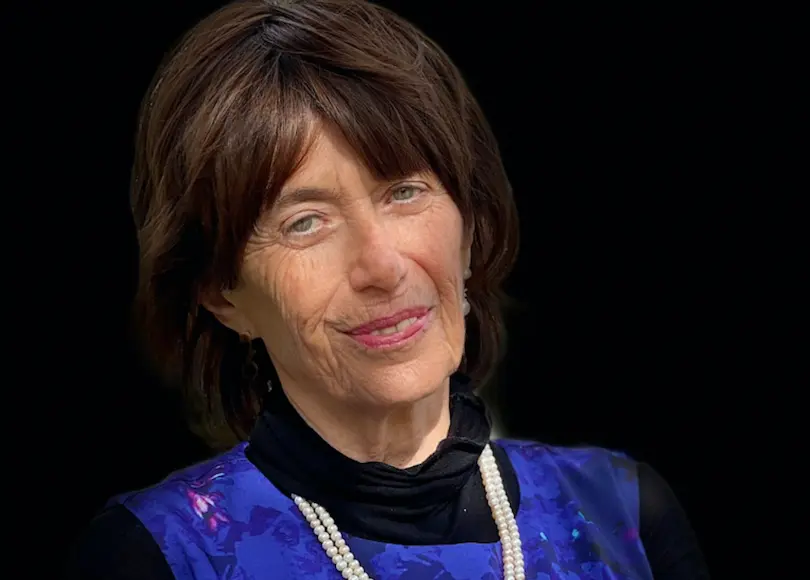 Vera Schwarcz
Schwarcz had gone to China to study another civilization. Instead, China began turning her attention toward her own family’s ancestral trauma.
“There is something about Chinese culture that sends us back to ourselves,” she observed.
Eventually, Schwarcz became a distinguished historian of China, writing Bridge Across Broken Time: Chinese and Jewish Cultural Memory, a book that considers how traumatic memory is transmitted and healed in two ancient civilizations. Today she lives in Jerusalem as an observant Jew and feels that her immersion in Chinese culture ultimately led her home.
“I took the journey to Jewish memory and Jewish culture and observance through my China studies,” she said.
Her journey may sound extraordinary, but look closely at the encounters between these two ancient civilizations and something curious begins to emerge. It has happened again and again.
Consider Leo Hu.
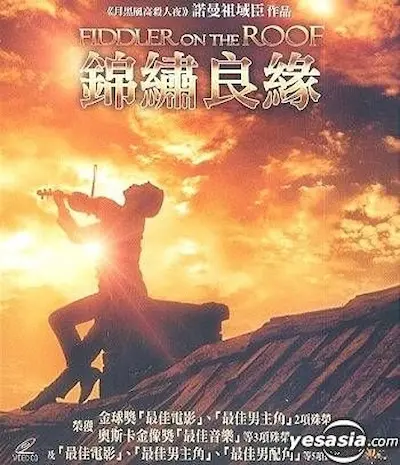 Hu grew up in Tianjin, China, in an atheist family. His unlikely journey toward Judaism began, of all places, with Fiddler on the Roof.
The musical captivated him. He was struck by Tevye’s ongoing conversation with God and by a question at the heart of the story: What happens when an ancient tradition encounters a rapidly changing world?
Eventually Hu moved to New York where he was drawn to explore Judaism in Jewish homes and communities. He became fascinated by Daf Yomi, the worldwide practice of studying a page of Talmud each day.
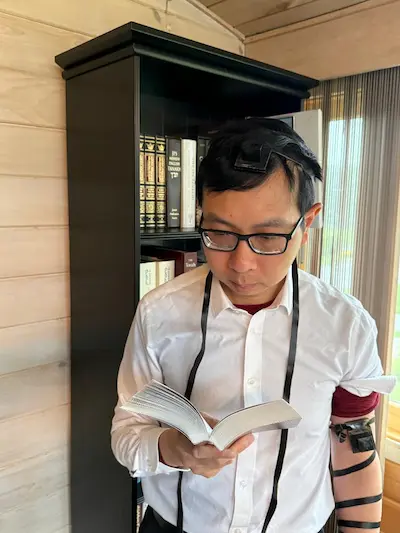 Leo Hu
The English was difficult for him, so Hu turned to artificial intelligence to help render the material into Mandarin. He began learning Talmud in Chinese.
And there he encountered something strangely familiar.
Hu compared the Talmud with the Analects of Confucius. Both preserve teachings, conversations and debates among sages, allowing later generations to enter into an ongoing dialogue rather than simply handing them a list of conclusions.
What started with Fiddler on the Roof has led him to convert to Judaism.
And then there is Nicholas Zane.
Zane is ethnically Chinese. His great-grandmother was once a wealthy Shanghai socialite married to a silk producer. In the late 1940s, she happened to be travelling outside China when the Communist takeover closed the country.
Her five children, including Zane’s then-five-year-old grandfather, remained behind.
She was unable to regain entry to China. She tried everything; nothing worked.
Desperate and eventually broke, she emigrated to New York, where the former heiress worked as a housecleaner. Later she found employment with a legendary Jewish family: the Grossingers of Catskills fame.
Years passed. When China eventually reopened to the West, she located her five children, now adults with families of their own.
The Grossinger family sponsored all her descendants, bringing family members to the United States, including the child who would become Nicholas Zane’s mother.
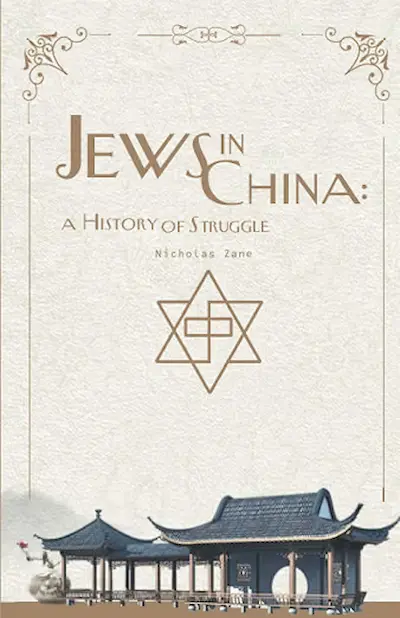 “A Jewish family’s act of grace would transform the trajectory of the Zhang family,” Zane later wrote, “and our lives would never be the same.”
But the story doesn’t end there.
At 15, Zane was attending an Anglican boarding school in Britain. Having grown up in Hong Kong, he had never met a Jewish person, yet he became engrossed in Jewish history.
The stories he had heard had left their mark. He became fascinated with the historical relationship between Chinese and Jews. He researched Jews in China, wrote books on the subject and became a public advocate for greater understanding between the two peoples.
One Jewish family helped one Chinese woman.
Decades later, the kindness was still travelling.
There is something almost magical about these stories.
Bring the Jewish and Chinese worlds together and people discover pieces of themselves in the other.
Bring the Jewish and Chinese worlds together and unexpected things seem to happen. People discover pieces of themselves in the other. Kindness crosses cultures and reverberates through generations. A journey toward one civilization somehow leads a traveler deeper into the other.
Perhaps these are simply beautiful coincidences, but there are so many of them. Looking backward, the coincidences begin to resemble a pattern.
There was Morris “Two-Gun” Cohen, a rough-and-tumble Jewish immigrant whose intervention on behalf of a Chinese restaurant owner in Canada helped establish his reputation in the local Chinese community. Cohen eventually became involved with the Chinese nationalist movement and Sun Yat-sen. His unusual Chinese connections would later be leveraged to help secure China's cooperation regarding the establishment of the State of Israel.
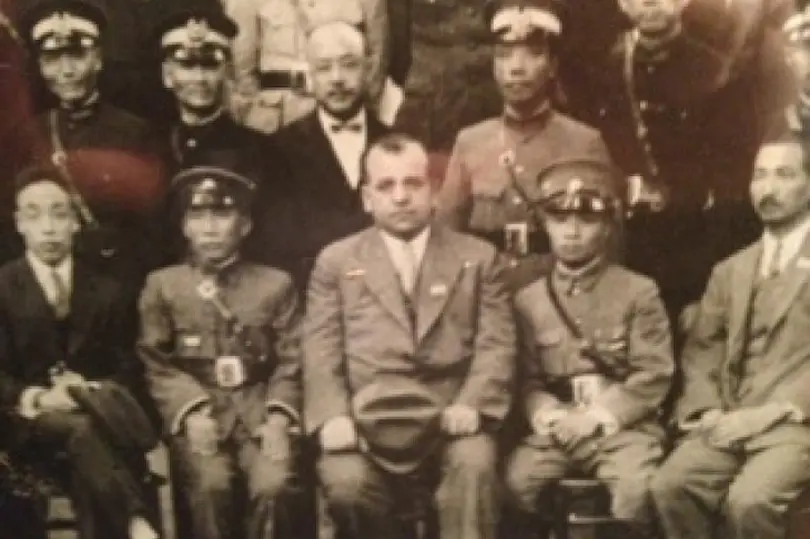 Two-Gun Cohen, in the white suit, seated with President Chiang Kai-Shek on his right
There were the thousands of Jewish refugees who found sanctuary in Shanghai during the Holocaust. Among them was violinist Ferdinand Adler. China helped save his life; Adler, in turn, taught Chinese students to make music. One of those students, an orphan, went on to a career in Shanghai’s musical world. Generations later, their families would reconnect, the children piecing together a story that had begun long before either of them was born.
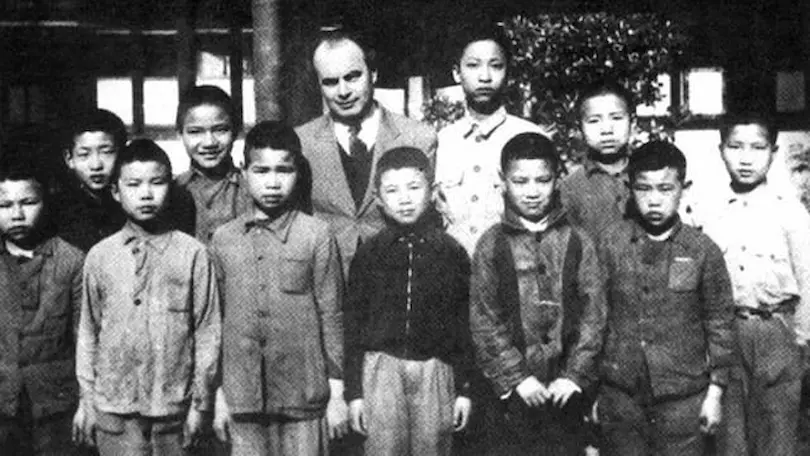 Ferdinand Adler, center
The Lubavitcher Rebbe, Rabbi Menachem Mendel Schneerson, encouraged efforts to bring Jewish sources to Chinese readers and saw value in building bridges of understanding.
That interest continues to surface in contemporary Jewish life. Today, a Chinese reader can open a Chinese edition of Psalms published by Koren, containing the Hebrew Psalms, a simplified-Chinese translation and a Chinese translation of Rabbi Jonathan Sacks’ commentary. Its translator, Aaron Waldman, was born in Tianjin and later made aliyah, becoming a Torah scholar in Israel.
At Yeshiva University, the Chinese-Jewish Conversation was created to place these two civilizations into sustained dialogue. Its programs explore questions that have occupied both cultures across the centuries: education and family, classical texts and their transmission, tradition in confrontation with modernity, and the complicated relationship between homeland and diaspora.
Why does this conversation keep resurfacing? Perhaps because Jews and Chinese are similar enough to recognize something in one another, yet different enough to see things in each other that we cannot always see in ourselves.
Jewish and Chinese civilizations are not interchangeable. Their theologies, histories and cultural assumptions differ profoundly. Yet both are ancient civilizations that have carried an intense relationship with their past into the modern world. Both have traditionally emphasized learning, family, transmission between generations and reverence for foundational texts and teachers. Both have wrestled with the question of how to preserve a distinctive civilization through enormous historical upheaval and into a rapidly changing modern world.
Sometimes similarity creates recognition. Difference can provide something equally valuable: perspective.
Put two slightly different lenses together and something else becomes possible: depth perception. Binocular vision.
I know something about that personally.
I became religious in my early twenties through Aish. A few years later, serious health problems overwhelmed me and I gave up observance. Searching for help, I turned to Traditional Chinese Medicine and underwent acupuncture treatment for several years.
I didn’t go to an acupuncturist looking for a route back to Judaism, but something happened. The treatment opened something in me and, slowly and unexpectedly, I found myself returning to Jewish observance. I ended up back at Aish, reawakening my love for Torah.
China, in its own way, had brought me home.
I subsequently began studying Chinese wisdom, fascinated by the points of resonance I encountered between Jewish and Chinese ideas. Over the years, I collected sources exploring concepts of balance and flow, water and wisdom, cycles and time, the cultivation of character and the relationship between Heaven and human conduct.
Years later, after working in antisemitism advocacy, I found myself longing for another kind of Jewish activism. Fighting hatred is necessary. But I wanted to spend some of my energy building something beautiful.
Then I saw an online interview featuring Chinese supporters of Israel, including a young woman who was both Chinese and Jewish.
I was mesmerized. Suddenly the pieces I had been collecting for years pointed toward something larger: What if Jewish advocacy didn't consist only of fighting our enemies? What if we also went looking for friends?
That question led to the creation of the Chinese-Jewish Exchange, an initiative of the Canadian Antisemitism Education Foundation.
The project grew from a simple recognition: again and again, encounters between Jewish and Chinese people have set unexpected things in motion.
A daughter of Holocaust survivors travels to China and discovers the unspoken Jewish memory she has carried within her. A Chinese teenager encounters Fiddler on the Roof and eventually finds his way to Orthodox Judaism. A Jewish family’s kindness to one Chinese woman reverberates through generations. Traditional Chinese Medicine brings a struggling Jewish woman back to Torah.
In each case, the encounter does more than introduce one culture to another. It awakens something. One civilization becomes the unlikely lens through which a person sees more deeply into the other, and sometimes more deeply into themselves.
The bridge between the Jewish and Chinese worlds has been quietly forming for generations, built through sanctuary, scholarship, gratitude, curiosity and kindness. Most of its builders did not know that they were building anything at all.
Perhaps our task now is to recognize the friendship that has been taking shape all along and to stop leaving its future entirely to chance.
The Chinese-Jewish Exchange, an initiative of the Canadian Antisemitism Education Foundation, is preparing programs and a free heritage display for Jewish Heritage Month and Asian Heritage Month in May 2027. We invite individuals and organizations to help bring the display to synagogues, schools, libraries, community centres and other public spaces. To learn more or become involved, visit The Chinese-Jewish Exchange.










What an interesting story and the development of wonderful human relationships. Thank you. Will you please, however, correct the sentence that begins, "Years later, after working in antisemitism advocacy, . . ."
I do not think the writer intended to readers that this was about someone devoted to advocating for antisemitism.
At the beginning of this article you speak of coincidence. I firmly believe that coincidence is G-d’s way of remaining anonymous.
Agreed, and well stated, except that I'd put "coincidence" in quotation marks to emphasize that there's really such concept if you believe in Divine providence.
Always said Jews like Chinese (and I married one).
With the rise of anti-semitism in America and the West, Israel should turn East towards India and China, the Hindus and the Buddhists who have never once been anti-semitic.
When we start exploring life's cultural cuisines recipes - we can recognize - that G-D - put together - all the palatable ingredients - to make an international cultural cuisine - that would be appealing to those - He - shows to try the recipe & & bring them to follow His Written Torah Commandments & Laws. Fortunate - are those who choose to try it.
Haven't the Chinese been referred to as the "Jews of the Orient" because of many cultural similarities?
I don't know but the food sure is good.
You must meal kosher Asian food!
Thank you for this amazing article! I myself experienced a wonderful life-changing transformation via Jewish-Chinese encounter. See "Chicken Soup with Chopsticks" by Jack Botwinik (also featured on Aish.com).