







 Seven Reasons for Hope on October 8


7 min read





Jewish reggae singer Matisyahu stands proudly with Israel and vows to bring light into the darkness through his music.
Since October 7, Matisyahu has shown support for Israel on stage, in interviews, and on social media. From interviews with CNN to singing a casual duet with Montana Tucker in L.A., to singing at the March for Israel rally in Washington D.C., Matisyahu does it all. But even this peaceful, down-to-earth musician has fallen victim to the raging antisemitism across the world. Multiple shows in Matisyahu’s recent “Hold the Fire” tour were canceled mere hours before the shows were about to begin, with barely a reason given to Matis and his crew. Apologizing to his fans, Matisyahu donated the money he made from the venues to organizations supporting Israel: Bring Them Home Now, an organization of the families of the hostages, and United Hatzalah of Israel.
Aish recently had the privilege of speaking with Matisyahu about his new acoustic EP, “Hold the Fire”, that was released on July 5. It is a beautiful, soulful version, with Matisyahu singing and beatboxing, accompanied by Adam Weinberg, an Aish alum, on the guitar.
Aish: This is not the first time you were singled out because of your Jewish identity. In 2015 at the Rototom SunSplash in Spain, you were canceled and then brought back. Your performance of "Jerusalem" before that hostile crowd was epic. Please talk about that experience.
Matisyahu: We were on tour performing in Poland, at Auschwitz…we did some pretty intense kind of shows. And while we were on that tour, we found out that they wanted me to sign something saying that I was against Israel's occupation of Palestine. I don't remember exactly what it was, but I obviously declined and said I was not going to sign that and no other artists on the bill were being asked to sign anything about politics. I felt singled out and just told them thank you very much, but I won't be signing that, so they threw me off the festival.

I didn't even mention it – I was just gonna head to the next show. But they mentioned it themselves, on their website to try to get the BDS off their back and basically it backfired on them. It's kind of interesting, because ten years ago, the climate of canceling an American Jewish artist for not signing something against Israel was obviously considered pretty drastic. There was a lot of people who spoke out against it and within 24 hours the Spanish government was threatening to shut down the festival and backers were threatening to pull out of the festival and they offered an apology and asked me to come back and play, which I did.
It was very powerful for me, because there were still protesters there in the audience that were holding up signs saying things like ‘Nazi-yahu’ and trying to make a human pyramid to block the rest of the crowd from seeing me, so it was kind of a very powerful experience - the feeling of opposition. That was not the first time I felt that in my life and my reaction to that feeling is kind of an instinctive reaction. It's not a flight, but it's one of fight and it definitely sparked something within me at that time. After that we went to Israel and I performed with a Muslim-Palestinian artist in Jerusalem. Later on that year, I went on tour with a Palestinian artist across college campuses to promote cultural understanding and such between Jewish and Palestinian groups on campuses. That was something that we were doing like ten years ago, so in today's day and age it seems like it would be way harder to do that. We're obviously in a different place after October 7. Everything has changed and this was something that I started feeling and going through about ten years ago.
Aish: You did an acoustic tour of Israel earlier this year and performed at army bases, kibbutzim, and other places. What was the mood at those performances and how have things changed in Israel since then?
Matisyahu: When we played for the Golani troops down by the border of Gaza it was a very intense day for me and my wife, having visited the kibbutzim and the Nova site and having just arrived in Israel that morning. We were pretty exhausted and the soldiers were exhausted from fighting and that night being told that they were being moved to the north. So, it was kind of low energy and kind of a tough thing and we just started playing music and you could see by the end of the concert the transformation and the inspiration and aliveness and joy that the soldiers and myself felt…feeling connected and feeling that someone's out there caring what's going on.
When we played in Israel and just being in Israel, it was such a feeling and experience of unification, of being connected with the people there. We played shows there and it just felt really special.
Aish: David Draiman from Disturbed raised money online to pay for security after a number of venues canceled your shows. Please talk about his support (have you been in touch with him), as well as the support you've been receiving in general from the Jewish community. Has the reggae community and/or others stepped up as well?
Matisyahu: We knew we were going to have some protests on the tour and we started having them, and they started getting a little bit more angry and intense. David Draiman, at that time, reached out to me to see how I was doing after the cancelation of the first two shows. I spoke with him on the phone and it was sort of like speaking to a brother who was looking out and wanted to make sure I was okay. He asked if we had security and I mentioned we didn't and that was the end of the conversation.
I’ve never spoken to him before. That evening, my wife said to me, “Did you know that David Draiman put up a Go Fund Me page for you and it's raised already $20,000 for your security guard?” The next day, I was on the phone with David and he sent over someone that he was connected to – a security guy who came on the tour bus and was with us for the rest of the tour. That was an incredible show of support, the kind of thing you see going on right now, you’re starting to see that – whereas some other communities, for example, like in the reggae community or any of the jam communities, really, you don't feel that kind of support. On the contrary, I've had situations with people not wanting to announce me performing because they're afraid of protesters and it's been tough for me in that sense.
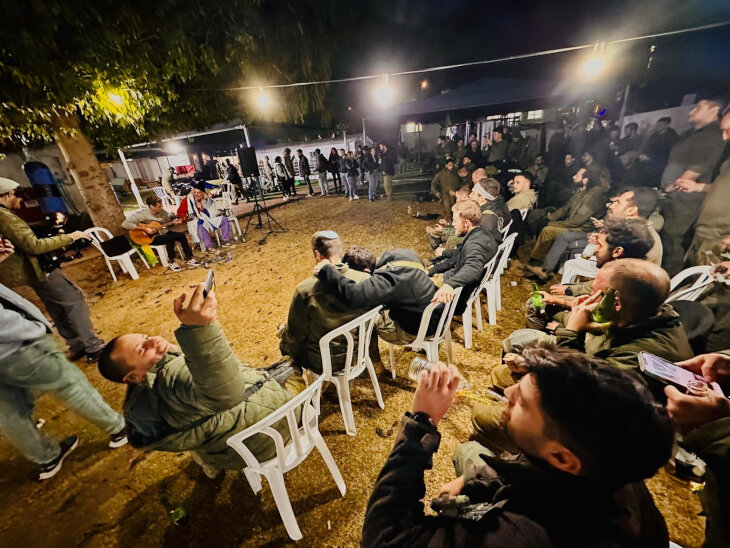 Matisyahu and Adam playing for Golani troops
The Jewish community has really come through and we've been playing a lot of shows for the Jewish community and that seems to be the main focus right now – strengthening our people and creating awareness about what the facts and the truth of what's happening in Gaza and in Israel right now. It's become a mission and a responsibility and it's one that I feel blessed to be able to contribute to try to bring people together and create some kind of healing as we're going through this really terrible time.
Aish: Venues canceling on Jewish performers is a new tactic (the staff of the Sinclair in Cambridge MA walked out on Ishay Ribo earlier this year as well, and local organizers staffed the show themselves). What are your thoughts on that? How has it impacted your ability to book shows going forward? What changes have you had to make in terms of how you operate?
Matisyahu: Well, we're still out there booking shows. My agent, Ira, is a proud Jew and my co-manager, Adam, is a proud Jew and a Zionist, and we are out there still trying to do what we can do. Many of the promoters are still booking shows with us. In terms of the walkouts… it's a new reality for American Jews. It's something that Israelis have been dealing with for ten, 20 years or more. In some way it unifies us; it brings the Israeli and Jewish American community and the world Jewish community together. And when the Jews come together, the light that we produce, I believe, is stronger than any of the darkness that this world can create through its confusion and antisemitism. So, we’re still out there and we're still trying.
Aish: You recently released a new acoustic version of “Hold the Fire”. Why did you decide to release an acoustic version? Did you feel there was more music or ideas in those songs you wanted presented in a different way? Anything you can share about the difference between the two EPs that is important to you?
Matisyahu: We released “Hold the Fire” in February and once the tour ended in March, we spent most of April, May and June doing duo sets. That’s become a big part of what I do and I felt it would be good to play the songs for everybody how they are actually being performed nightly – sometimes without a band and just in the duo setting. It’s guitar going through pedals, looping, acoustic guitar or electric guitar, and then me beatboxing and looping the beatboxing. It's a unique thing; kind of a really cool vibe. We improvise, we do old songs and new songs, but I felt like this was a great opportunity to record new or duo versions of the last batch of songs.
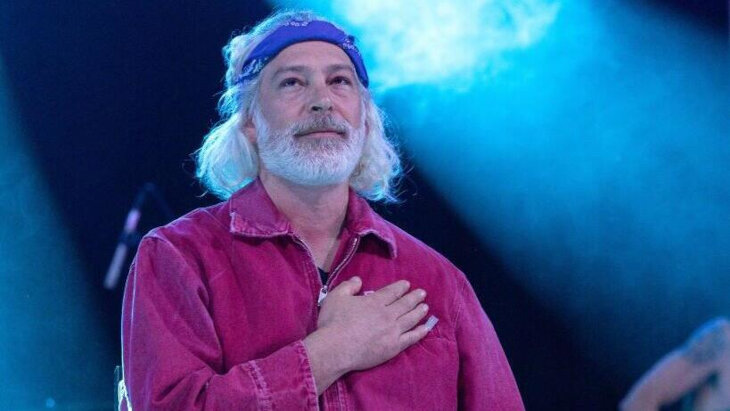
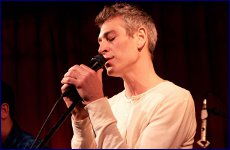
 Matisyahu, with Adam Weinberg on guitar
Aish: You have said that some of the songs in “Hold the Fire” are inspired by a ‘fire dream’ from the Torah. Which fire from the Torah are you referring to and can you explain how that inspired the overall approach to the lyric writing for the album?
Matisyahu: I've often referenced this burning bush concept in the Torah and it's something that I always felt was really interesting – that Moses, the leader of the Jewish people, who was considered to be humble and to have qualities like water. In Hebrew, Moses means drawn from the river, as he was drawn from the river by Pharaoh's daughter, and my lyrics reflect that in “Fireproof”. But I also had a dream where I was in an old Sephardic synagogue in Morocco or somewhere in North Africa, and I was there praying. I was playing with a baby tiger and the mother tiger was shooting fire out of her eyes. I caught on fire and I was scared, and then I looked down at my hand and I realized I wasn't burning and that it was made out of water. That became an idea for me in my early thirties and continuing until now – I'm in my mid-forties. The idea being about stamina, longevity, or the term in Hebrew and the Kabbalah, netzach – endurance. For an artist, that's something that's very important; something that I've tried to balance – the different elements of fire and water. And, I think that to be a leader it's very important as well.
Aish: In the song, “Fireproof”, there is a line, “When I was lost in my solitude, found my gratitude”, that seems to really resonate with your fans. Is there an experience in your life where this idea became apparent or more meaningful in your life?
Matisyahu: I think that there's been multiple times in my life where I've had some experience of solitude, whether it was by choice or not and I feel that that those experiences were beneficial. Starting with vision quest solos that I took in my wilderness therapy years, where you'd spend three days in one spot in the woods, sometimes fasting, sometimes not, but definitely not distracted by anything and just kind of being with yourself. You sort of have an internal war that happens, but when you come out the other side, the idea is that you found a new level of peace within yourself and within your environment around you. Then there's been other times in my life where I felt alone, or felt I was disconnected from the people around me to some extent, and in those times I turned to God and tried to connect in that way with God and I think that was beneficial as well.
Aish: Can you discuss some of the meaning behind the focus track “Lifeline”, as well as “Fool’s Gold”?
Matisyahu: “Lifeline” is a song that the chorus is quite anthemic, but it's about standing up for yourself, standing up for your people.
“In my strength I put my toes down
As we go round and round
Can’t escape all that I know now
This love it must be found
Who feels it knows no pain
Everyone yes they can relate
Make no mistakes or vowsMe and my tribe
Positive vibes
I keep them close
Don’t ever let go
Hold the Fire
It's my lifetime
I don't wanna rush tonight
I just want to see you shine”
Those are lyrics that I feel are about community, about the Matisyahu community and the Jewish community at large, and about being united and standing up for ourselves, and trying to shine through all the darkness. “Fool's Gold” is about not judging yourself based on what other people think about you, whether it's good or bad, but really trying to be honest with yourself.
Aish: Can you tell us a little bit about your feelings in a world post-October 7 and how it has changed you as a person and your relationship to Judaism?
Matisyahu: I feel that after October 7, for myself and for the world at large, there's been somewhat of a paradigm shift. It seems like before October 7, especially in America, there's been a separation between the religious Jewish communities and the liberal and non-religious communities. But it seems like after October 7 it's really less relevant whether you're religious or not religious. Every Jew has been forced to take an accounting, look inside themselves, and make a decision whether or not they feel Jewish or not, or they feel connected to Israel or not and they feel connected to the attacks and the horrors that happened to the people in Israel, or not.
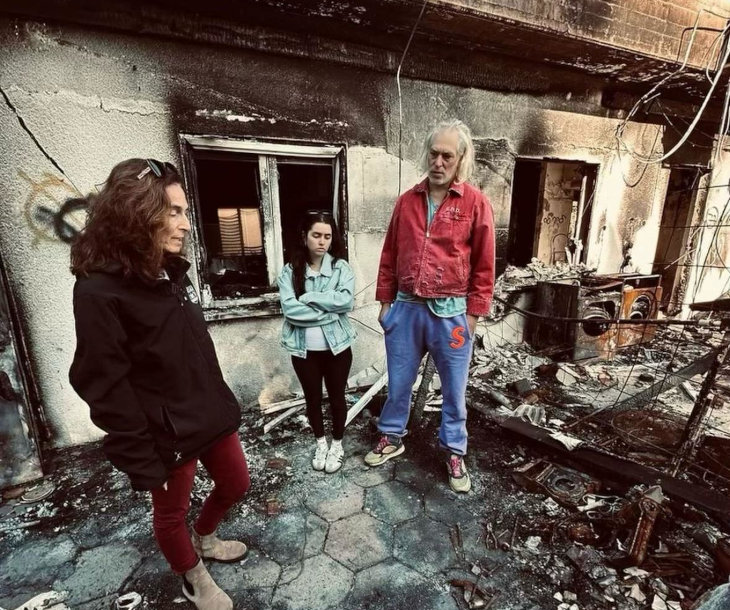 Matisyahu visiting the carnage in Southern Israel
There's obviously lots of Jews with different ideas about what it means to be Jewish. It's a unique thing that it's a religion, but it's also a people. I think after October 7 everyone is really forced to choose a side and what we've seen is a lot of Jews step up and really feel deeply connected to their Jewish roots, want to learn more, understand more about their own history, understand more about Israel. And for those of us that do have a pretty in-depth understanding, we feel that now is the time to really come forth.
Aish: You released the song “One Day” in 2008 and it’s still relevant today. How do you feel about it becoming the ‘theme song’ of pro-Israel rallies all over the world?
Matisyahu: I feel wonderful about it. Every time that song is used, whether it's Jews and Arabs and Christians coming together like in the Koolulam [a social-musical initiative in which large groups of non-professionals come together to form a collaborative musical creation], or whether it's being used for a video about mitzvahs, or whether it's kids singing it at camp. It's always meaningful for me the connection that people have to that song and I feel honored that I was able to bring it out into this world. It's a powerful song and it connects deeply to the idea of a vision of peace and even in the hardest times it's the most important thing that we don't lose sight of what we're fighting for, which is ultimately to live in peace and harmony.
Aish: I understand that you wrote the song “Ascent” after Kanye West began his antisemitic rhetoric back in October 2022. When you released the song and the music video for “Ascent” in March 2024, you included footage of your trip to Israel. Can you talk about writing this song in 2022 and what it meant to release it months later, post-October 7?
Matisyahu: I wrote this song after the Kanye anti-Jewish/antisemitic rhetoric. It was something that I've written about before…I've written in different ways about antisemitism, but it felt really current and the feelings were very potent after that incident. I felt like it was necessary to release it, but there was no rush, because antisemitism, unfortunately, isn't going anywhere fast. And after October 7, I really felt it was necessary for people to hear it and that people would get strength from it and it’s not really the kind of time to hold back songs if you know that they're going to help people.
Aish: Can you talk about your new documentary, “Song of Ascent”, that was recently premiered at the LA Jewish Film festival? Will it be available for public viewing?
Matisyahu: We just premiered our movie, “Song of Ascent”, which is based on the last seven to eight months of my life after October 7: going to Israel and seeing the atrocities of the Nova festival and the kibbutzim and all the attacks, speaking to families of the hostages and survivors of the festival and performing shows for soldiers and Israelis. We had a very powerful experience, a life changing experience, then came back out on the tour and we were faced with protests and cancelations. We were also exposed to a lot of light and a lot of unity and unification and Jewish unity and pride. All of that we captured and then went back to Israel after this 35-city tour and played again some bigger shows. A lot of it is hearing the stories from people as we were hearing them in real time and there's a bunch of musical scenes from the performances. I think it's a pretty powerful piece; most people that have seen it have been affected pretty deeply and we are in the process now of figuring out how we are going to share it with the world, but we are planning to share it as soon as possible and as far as possible.











Music - for those who appreciate it - & it's history - can note how different types of music mediums - & lyrics - resonates with the heart & soul - of various people(s). How it can & does illicit - a variety of emotional responses - including - aggression - & hedonisim. Scientific studies of animals (like milk cows) - have shown that - those that have had softer style music played for them - give milk that's healthier & some say sweeter. I like almost all genres of music - BUT - if I have a chance to listen to BOOGIE WOOGIE - I'm all ears.
I am a gigantic fan of Matisyahu having promoted him on my black American facebook site. I am saddened however that he doesn't appear to have considered the suffering of people in Gaza and other places. Even the American Jews that helped mold my political views as a young black American and elder, my neighbors and friends here in New Jersey have a problem with" Bibi" as they call him. Stand true to your faith and politics of social justice! The Asheknazi Jews in Israel and in Europe and America have done a tremendous amount for people of color around the world. I try to tell people that Bernie Sanders and Mike Bloomberg are true Saints. Don't forget who you are. And God bless, God bless God bless!.
Dana - if you take off the blinders - you'll see that ALL JEWS - one way or another - follow G-D's Written Torah Commandments - to "Love our Fellow - as we love ourselves". WE - do NOT DESIRE that Gazan's - or anyone else - that's made is G-D's IMAGE & LIKENESS - is ever harmed. However - we also follow what our ancestors did to OBEY G-D - & when He instructed us to go to war with them - we did. Even today - we send ADVANCED WARNINGS - to the Gazan - Lebanon etc., populace - what we're going to TARGET - BEFORE - we retaliate for the INDISCRIMINATE KILLING OF JEWS - the indiscriminately aimed missiles & rockets that they send toward us. IF you can - check out - Non-Liberal & biased news sources - who report more truthful news - not from self hating Jews.
Music is a great way to unify people. Keep up the good work, bless you.
I'm a big fan of Matisyahu and have been for a long time. Thank you so much for your interview with him and sharing it. It takes so very much courage to live and share so much of your private/internal struggles and wrestlings publicly through the amazingly healing and unifying medium of music. Straight ahead, Matisyahu. Side note, I hope you come back to Arkansas soon, I'll be there!!